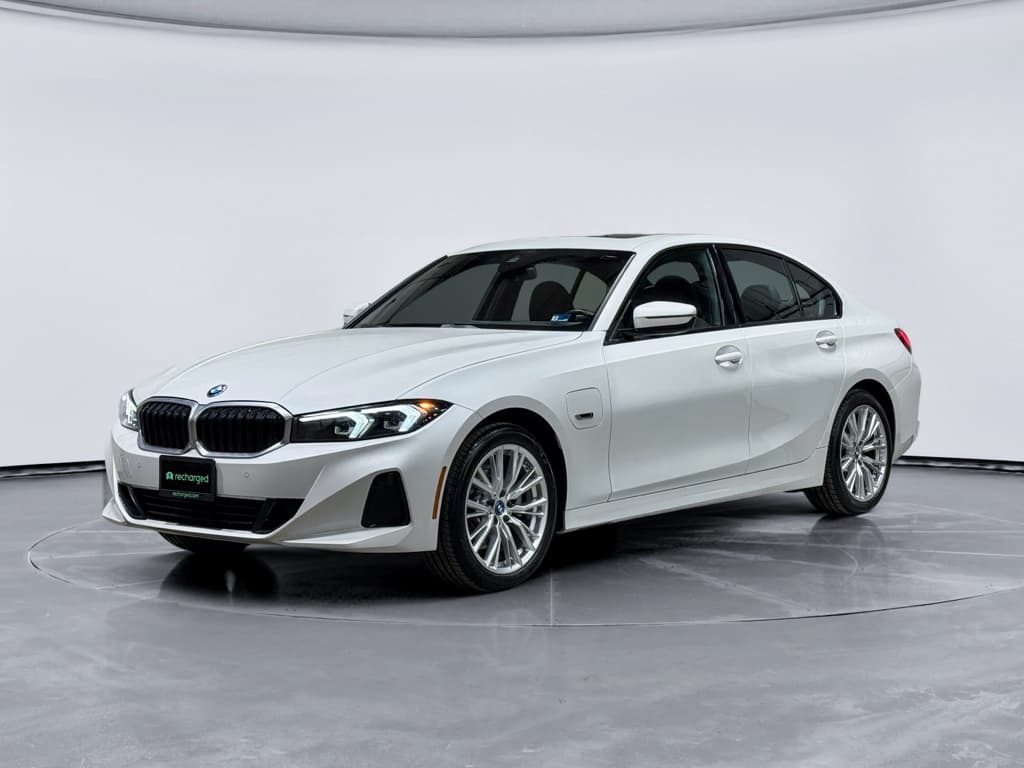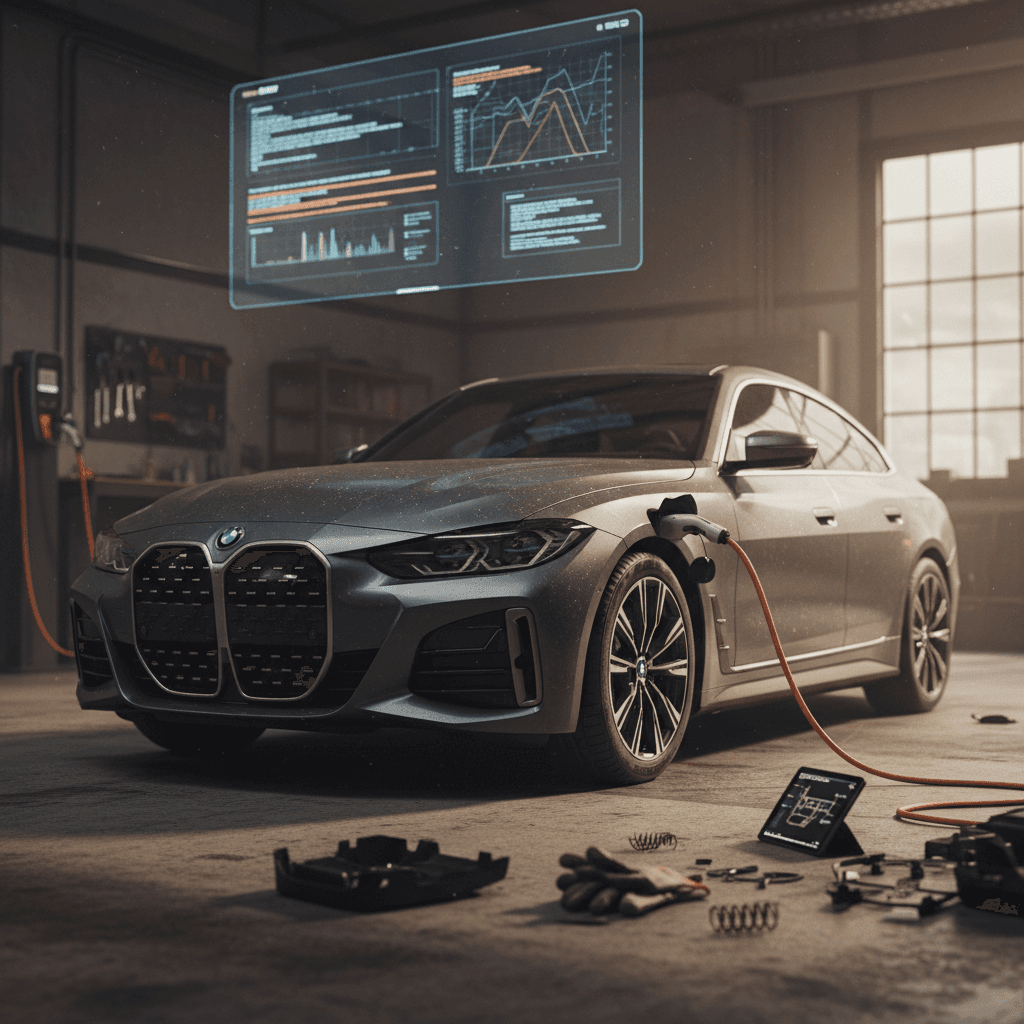
The 2023 BMW i4 is a lovely contradiction: a sharp‑handling, 3‑Series‑adjacent EV with the soul of a sport sedan and the temperament of a beta app. If you’re hunting for a used 2023 i4, you’ve probably heard about software bugs, charging problems, and a handful of recalls. This guide pulls together the most common 2023 BMW i4 problems and fixes so you know what’s normal, what’s fixable, and what should send you walking back to the lot.
Big picture on 2023 i4 reliability
Overview: Are 2023 BMW i4 Problems a Dealbreaker?
2023 BMW i4 Reliability Snapshot
If you strip away forum horror stories and look at the trend lines, the 2023 i4 lands in a familiar EV pattern: electronically fussy, mechanically stout. Problems tend to show up as warning messages, failed over‑the‑air (OTA) updates, or charging sessions that mysteriously stop, not blown motors or failing gearboxes. That’s cold comfort if your car is the one with a “Drivetrain malfunction” message, but it matters when you’re evaluating a used car: many issues are software‑solvable or already addressed by recalls.
Most Common 2023 BMW i4 Problems
Most Common 2023 i4 Issues at a Glance
The patterns that keep appearing in owner reports and service records.
1. Software & iDrive glitches
Frozen or laggy screens, half‑functional Apple CarPlay/Android Auto, profiles that won’t stay logged in, and driver‑assist features randomly greying out.
2. Charging behavior problems
Cars that won’t start Level 2 charging after a software update, picky behavior with some DC fast chargers, or sessions that drop out prematurely.
3. Warning lights & fault messages
“Drivetrain malfunction,” brake system warnings, or high‑voltage errors that may clear with a restart, or require dealer diagnostics and a software flash.
4. Brakes, tires, and ride
Premature tire wear on M50s, some brake‑by‑wire complaints (warning lights or inconsistent pedal feel), and squeaks/rattles on rough pavement.
How to read i4 horror stories
Charging Problems on the 2023 BMW i4 (and Fixes)
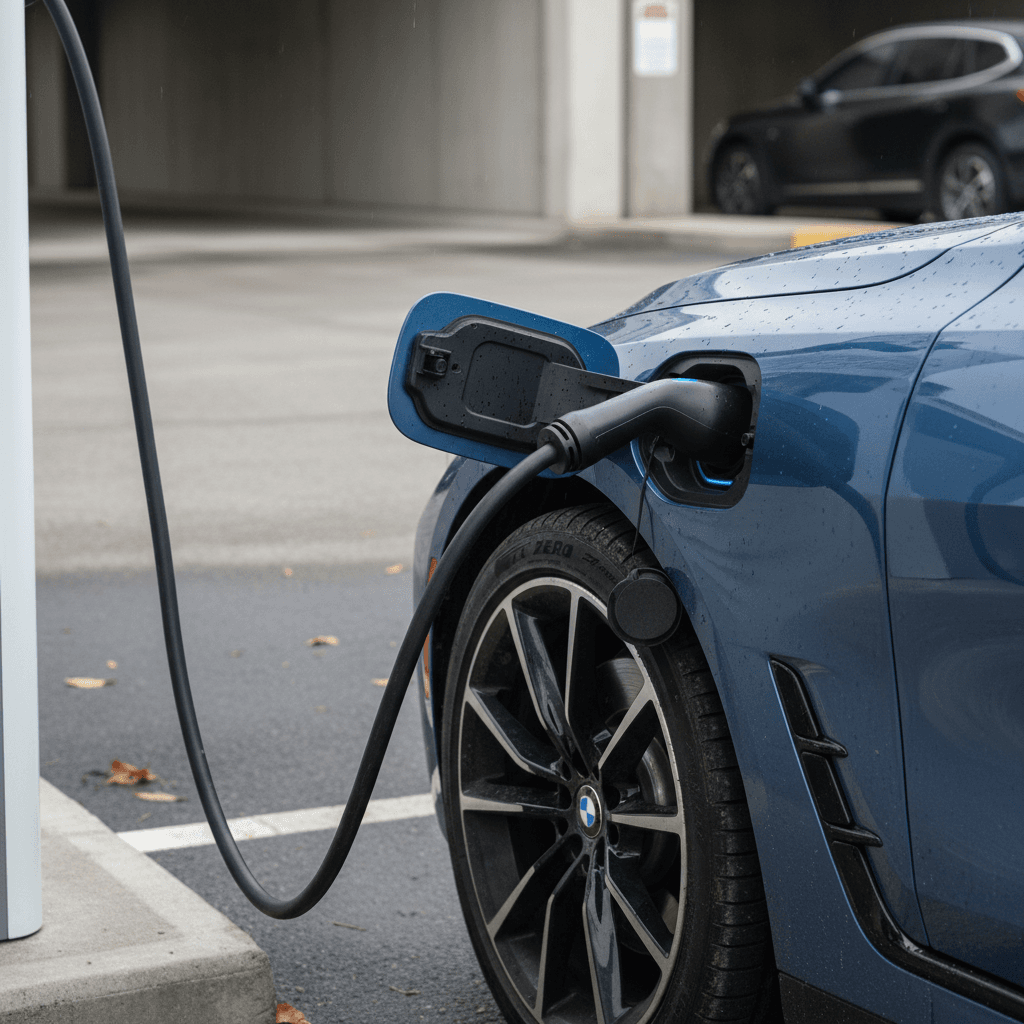
Charging is where many 2023 i4 owners lose faith, especially after certain OTA updates. Reported issues range from mild (slower‑than‑expected Level 2 speeds) to maddening (the car simply refuses to charge on 240V at home after an update). There are also sporadic stories of DC fast‑charging handshake failures at specific networks and, more rarely, hardware failures in the car’s charging electronics.
- Won’t charge on Level 2 at home after an OTA update, but 120V Level 1 still works.
- Car stops Level 2 charging intermittently or won’t charge with specific wallboxes.
- Charge‑port door sticking or not responding to touch.
- Charging faults or errors when using some DC fast‑charging networks, even though other cars charge fine.
Likely causes
- Software mismatch between the car’s charging control unit (CCU) and the latest iDrive version.
- Faulty charge control module or onboard charger, occasionally requiring replacement.
- Third‑party EVSE quirks, grounding, communication, or firmware issues that don’t play nicely with BMW’s sensitivity.
- Mechanical issues at the charge port door or latch.
Typical fixes
- Dealer software update or reflash of the CCU and related modules.
- Replacement of the charging control unit under warranty if software won’t resolve Level 2 failures.
- EVSE firmware updates or trying a different Level 2 or DC fast‑charging brand to confirm whether the car or station is at fault.
- Port lubrication or latch replacement if the door is sticking.
If your 2023 i4 won’t Level 2 charge at all
If you’re test‑driving a used 2023 i4, insist on a proper charging demo. A seller who can’t or won’t show you successful Level 2 charging at 30–40 amps is handing you an electrical mystery you probably don’t want to solve yourself.
Software, iDrive & Warning-Light Glitches
The 2023 BMW i4 runs BMW’s iDrive 8, which tries to do everything, navigation, climate, driver profiles, app integration, OTA updates, and occasionally succeeds. Owners most often complain about laggy responses, broken CarPlay, profiles that forget settings, and driver‑assist features disappearing after software updates. Then there are the unnerving one‑off messages: “Drivetrain malfunction,” “High‑voltage system error,” or brake warnings that pop up and vanish like jump scares.
- Center screen or instrument cluster freezing, requiring a reboot or key‑cycle.
- Apple CarPlay / Android Auto disconnects or refuses to connect after an update.
- BMW ID profile not loading properly, forcing you to regularly re‑scan the QR code and lose seat/climate presets.
- Lane‑keeping or adaptive cruise options suddenly greyed out.
- Intermittent “Drivetrain malfunction” or high‑voltage warnings that clear after a restart.
The old “shut it off and lock it” trick
Common 2023 i4 Software Problems & Practical Fixes
What owners typically report, and what usually cures it.
| Symptom | DIY Steps to Try First | When to See a Dealer |
|---|---|---|
| CarPlay/Android Auto drops repeatedly | Delete and re‑pair phone; ensure latest OS; try USB vs wireless; reset network settings on phone. | If issues started after an OTA and persist more than a week, request an iDrive software update or reflash. |
| Driver‑assist features greyed out | Check for cameras obstructed by dirt/ice; clean sensors; verify correct driving mode. | If multiple systems are disabled with no visible cause, have dealer scan for faults and recalibrate sensors. |
| Random drivetrain or HV warning that clears | Note mileage, conditions, and exact text; perform full vehicle sleep cycle and monitor. | If the same message appears twice, or car limits power, do not continue long‑distance trips, schedule service. |
| OTA update fails or loops | Ensure strong LTE/Wi‑Fi, sufficient battery charge, and car parked as instructed; try again once. | Repeated failures or a car that won’t boot properly after an update require dealer intervention. |
Many software issues are more annoying than dangerous, but persistent warnings should still be checked by a BMW technician.
When a warning light is not negotiable
Brakes, Tires and Ride-Related Complaints
The i4 is a heavy car with serious thrust, especially the M50, and it leans on its tires and brakes accordingly. Most “mechanical” complaints are not catastrophic failures but accelerated wear or gripes about brake feel and noise.
- Premature tire wear on M50s, especially with staggered performance tires and enthusiastic driving.
- Brake‑by‑wire systems that feel inconsistent at low speeds, or exhibit an occasional grabby sensation.
- ABS or brake system warning lights triggered by wheel‑speed sensor faults or software oddities.
- Squeaks, rattles, and trim noises over poor pavement, especially with larger wheels.
EV weight is hard on rubber
On a used 2023 i4, uneven tire wear, chronic pull to one side, or repeated brake warning lights in the service history are worth probing. They’re often resolved with alignment, fresh rubber, and sensor replacements, but they can also hint at curb strikes or undiagnosed suspension damage.
Battery Pack & High-Voltage Issues
For all the ink spilled on EV fires, the 2023 i4’s battery story is mostly boring in the best possible way. Real‑world data so far suggests modest degradation over the first 2–4 years. The scarier cases, like a high‑voltage battery module failure or a car sidelined by a pack‑related recall, are uncommon but deserve your full attention if you’re shopping used.
- Earlier recalls on 2022–2023 i4s for potential high‑voltage battery defects and fire risk, often fixed by inspecting or replacing affected modules and instructing owners to park outside until repaired.
- Isolated reports of high‑voltage battery module failure on 2023 cars, typically replaced under warranty at relatively low miles.
- Owner anxiety around DC fast charging at certain networks after a handful of highly publicized failures. Most cars fast‑charge for years without drama, but a problem session understandably sticks in the memory.
How to screen for hidden battery drama
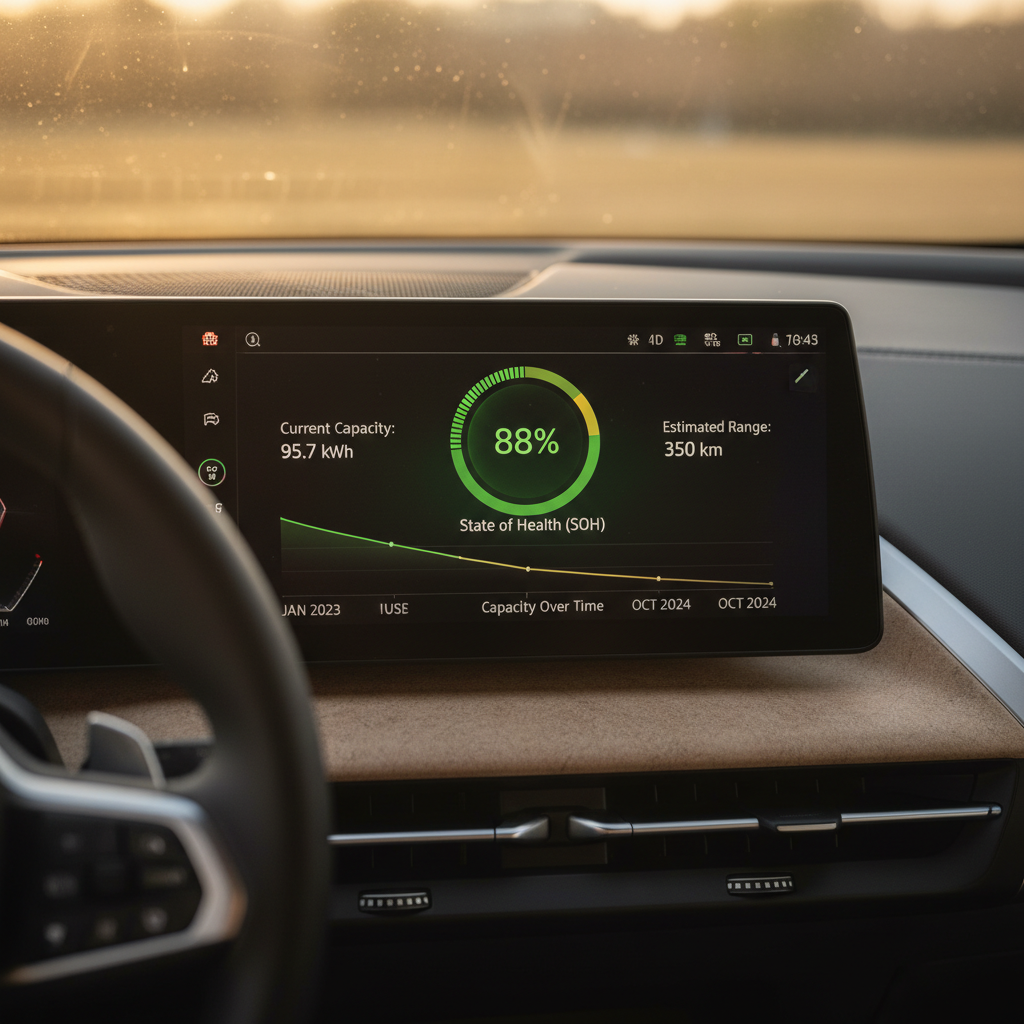
If you’re buying from a private seller, consider having a third party perform a detailed battery‑health check. At Recharged, every i4 we list gets a Recharged Score battery health report so you can see how the pack has aged, not just how the previous owner talks about it.
2023 BMW i4 Recalls You Should Know About
By early 2026, the 2023 BMW i4 had been covered by several U.S. safety recalls, many shared with the 2022 model. Most involve software or specific hardware modules rather than wholesale design flaws, but you should assume any used i4 has recall history and verify that all campaigns are completed.
Key Recall Themes for 2023 BMW i4 (U.S.)
This is a simplified, owner‑friendly summary, not a legal or exhaustive recall list. Always run the VIN on the official NHTSA site or BMW’s recall checker.
| Recall theme | What could happen | Typical fix |
|---|---|---|
| High-voltage battery module defect / fire risk | Certain cells or modules could short, potentially leading to a thermal event. Owners were often instructed to park outside until repaired. | Inspection of pack, replacement of affected modules or entire battery, plus updated software and monitoring. |
| Electric drive motor software issue | Software fault could, in rare cases, cause a sudden loss of drive power. | Update electric motor control software, possibly plus related module programming. |
| Brake system / ABS software problems | Incorrect software calibration may illuminate warning lights or affect ABS/ESC function. | Reprogramming brake and stability‑control modules, plus sensor checks. |
| Seatbelt / airbag / restraint issues | Sensor or wiring faults could compromise restraint performance in a crash. | Inspection and replacement of affected components; updated diagnostics software. |
BMW and NHTSA maintain the definitive record of recall campaigns; always verify by VIN before purchase.
How to check a 2023 i4 for open recalls
How to Diagnose and Fix 2023 i4 Problems
The good news: many 2023 BMW i4 problems are solvable with methodical diagnosis and the right shop. The bad news: this is not a 1990s Civic, you can’t fix most of it with a socket set and optimism. Here’s how to approach issues intelligently.
Smart Playbook for Fixing 2023 i4 Issues
1. Start with simple resets
For non‑critical glitches, perform a full car sleep cycle: shut down, exit, lock, wait 10–15 minutes, then restart. Many transient software burps never return.
2. Document everything
Write down warning messages verbatim, note temperature and driving conditions, and take photos of the instrument cluster. Good documentation speeds diagnosis and strengthens warranty claims.
3. Try another charger
If charging fails at home, test a different Level 2 and DC fast charger brand. If the car misbehaves everywhere, the issue is more likely in the i4; if it’s one finicky station, you’ve found your culprit.
4. Use a BMW-specialist dealer or indie shop
Software‑heavy EVs demand proper tools. Use a BMW dealer or independent shop with current BMW diagnostics and EV training, this is not generic OBD‑II territory.
5. Push for software updates first
Ask the service advisor to confirm you’re on the latest approved software for your VIN. Many charging, infotainment, and warning‑light issues disappear after a comprehensive software campaign.
6. Leverage warranty & goodwill
A 2023 i4 should still have factory coverage on most major components. For borderline cases just outside warranty, documented repeat issues and a calm, persistent approach can sometimes secure goodwill repairs.
How Recharged handles known i4 issues
Ready to find your next EV?
Browse VehiclesUsed 2023 BMW i4: Problems Checklist Before You Buy
Shopping used is where knowledge of 2023 BMW i4 problems really pays off. You’re not just kicking tires; you’re auditing software, charging hardware, and a 300‑plus‑volt battery pack. Use this checklist as your field manual.
Pre‑Purchase Checklist: 2023 BMW i4
1. Run the VIN for recalls and service history
Confirm all safety recalls are closed and look for repeated visits for the same concern, especially charging, high‑voltage, or brake system faults.
2. Inspect the battery and charging story
Ask how the car was charged (mostly home Level 2 vs constant DC fast charging), request any available battery‑health reports, and watch the car complete a 20–80% Level 2 session without errors.
3. Stress‑test the software
Pair your phone, test CarPlay/Android Auto, switch driver profiles, run navigation, and cycle key driver‑assist features. You’re looking for freezes, dropouts, and functions that mysteriously vanish.
4. Check tires, brakes, and alignment
Look for even tire wear, no unusual vibrations at highway speed, and a straight‑tracking steering wheel. Test brake feel at low speed and note any warning lights or grinding noises.
5. Scan for warning lights and stored messages
Before and after your drive, verify the dash is clean: no persistent brake, ABS, airbag, or high‑voltage warnings. Ask the seller to disclose any recent fault messages, even if they cleared themselves.
6. Look for signs of flood or collision damage
Water lines in the trunk, musty smells, misaligned panels, and overspray are red flags on any EV, but especially one that hides a large battery pack under the floor.
Buying from Recharged vs private party
When 2023 BMW i4 Problems Are a Dealbreaker
Some 2023 i4 problems are just the price of admission for an early‑generation German EV: the occasional software burp, a picky public charger, a rattle that comes and goes with the weather. Others are a hard no. If a car’s history reads like a medical chart for a Victorian consumptive, believe it.
Dealbreaker vs. Manageable Problems on a Used 2023 i4
Use this as a gut‑check when a specific car gives you mixed feelings.
Likely dealbreakers
- Repeated high‑voltage or drivetrain faults across multiple visits.
- Unresolved safety recalls, especially battery‑ or brake‑related.
- Documented high‑voltage battery replacement followed by more electrical issues.
- Severe water damage, flood branding, or suspiciously cheap pricing.
Usually manageable
- One‑off software glitches fixed by an update.
- Charging issues clearly traced to a specific station brand.
- Normal tire/brake wear consistent with mileage and driving style.
- Minor trim rattles or infotainment quirks with documented fixes.
In the EV era, the question isn’t “Will I ever see a warning light?” but “How gracefully does the car recover when the inevitable glitch appears?” The 2023 i4 is mid‑pack on that score: not saintly, not scandalous.
If you like the way the 2023 BMW i4 drives, and it drives beautifully, its problems and fixes are less a horror story and more a syllabus. Know the common charging and software issues. Verify recall work. Demand clean high‑voltage behavior and a solid paper trail. Whether you buy from Recharged or elsewhere, a little homework turns the 2023 i4 from a nervous gamble into what it should have been all along: a deeply satisfying electric sport sedan with a modern, if occasionally moody, brain.