Search data is messy. When people type “EVs car” into Google, what they’re really asking is: “Are electric cars actually better, how do they work day-to-day, and can I buy one without getting stuck with a dead battery and a massive bill?” This guide is here to answer that, in plain English, with a particular focus on the growing used EV market.
Quick take
What do people actually mean by “EVs car”?
In most conversations, “EVs car” just means an electric vehicle you can buy and drive like any other car. No special license, no science project in the driveway, just a car whose primary fuel is electricity instead of gasoline.
EVs car in one minute
The idea is simple, the implications are big.
Electric motor, not engine
You “refuel” by charging
Lower emissions, quieter drive
From there, things get more nuanced: some “EVs cars” are fully electric, some use gas as backup, and some are essentially gas cars with electric assist. Understanding the types matters, especially when you’re shopping used.
Types of EVs: From hybrid to fully electric
How today’s EV mix looks globally
Main types of EVs cars
Four acronyms you’ll see on window stickers, and what they actually mean.
| Type | What it stands for | How it works | Best for |
|---|---|---|---|
| BEV | Battery Electric Vehicle | Runs only on electricity stored in a battery pack. You must plug in to drive. | Drivers who can charge at home and want maximum efficiency & lowest maintenance. |
| PHEV | Plug‑in Hybrid Electric Vehicle | Battery + gasoline engine. You can plug in; once the battery is low, gas takes over. | People with short commutes who want to do most miles electric but keep gas for long trips. |
| HEV | Hybrid Electric Vehicle | Gasoline is primary. Small battery assists but can’t be plugged in. | Drivers who want better MPG but don’t care about driving electric or plugging in. |
| FCEV | Fuel Cell Electric Vehicle | Uses hydrogen to generate electricity on board; rare outside a few regions. | Niche buyers with access to hydrogen stations (mainly parts of California). |
BEV is the purest EV experience; PHEV and HEV sit between gas and electric.
Shopping shortcut
How EVs cars really drive and feel
Instant torque, no shifting
Even modest EVs feel eager because the motor delivers maximum torque from 0 rpm. There’s no gear hunting, no transmission kickdowns, just a smooth, linear rush when you press the pedal.
For city driving, that responsiveness makes an EV feel more expensive than it is. A used compact EV can jump away from a light like an old V6 sedan, just without the drama.
Quiet, heavy, composed
With no combustion noise, wind and tire sound become the soundtrack. The big battery pack down low acts like a keel, keeping the car planted. The result is a calm, almost serene commute, until you floor it.
The flip side: EVs are heavy. You feel that on rough roads and under hard braking, though modern stability and regen systems do a good job masking the mass.
The daily‑drive reality
Charging an EVs car: Home, public and fast charging
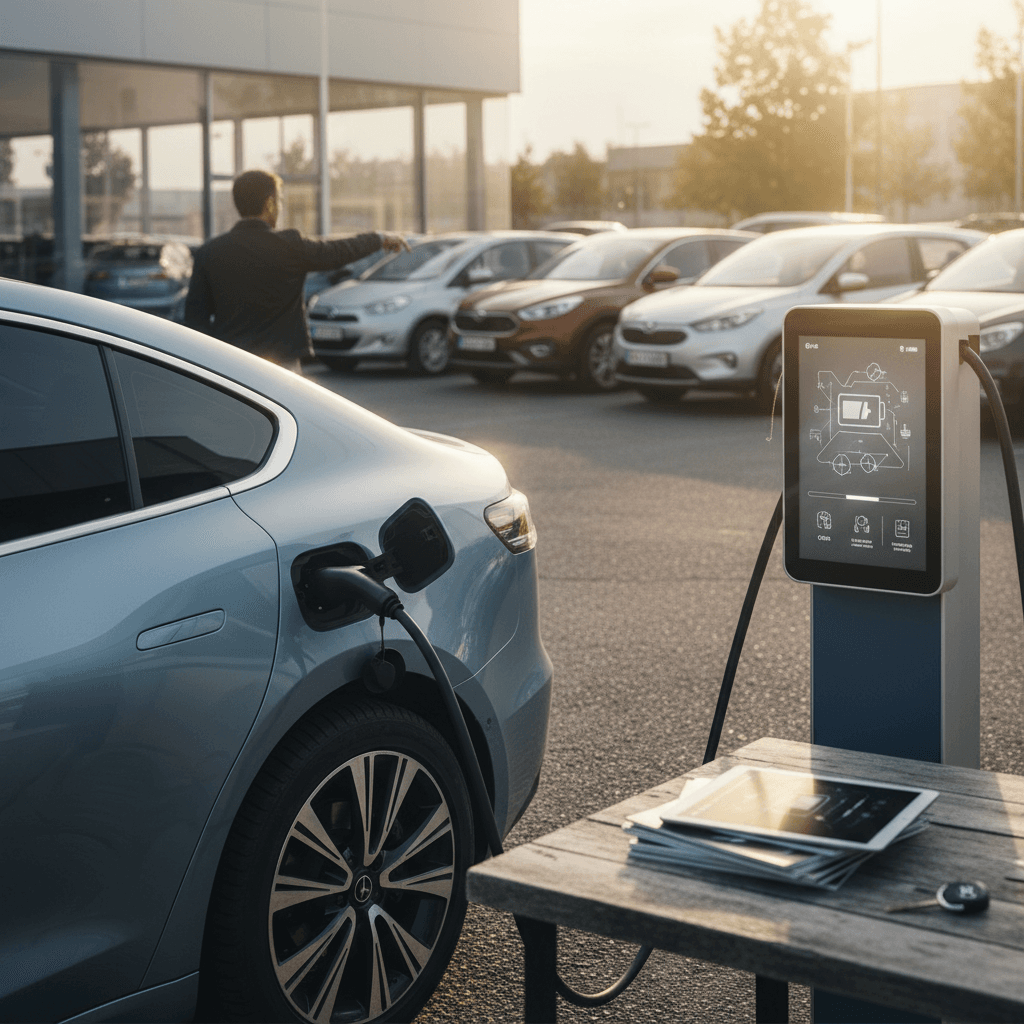
Charging is where EV ownership either becomes delightfully simple or maddening, depending on how well it fits your life. Think of it as three layers: Level 1, Level 2, and DC fast charging.
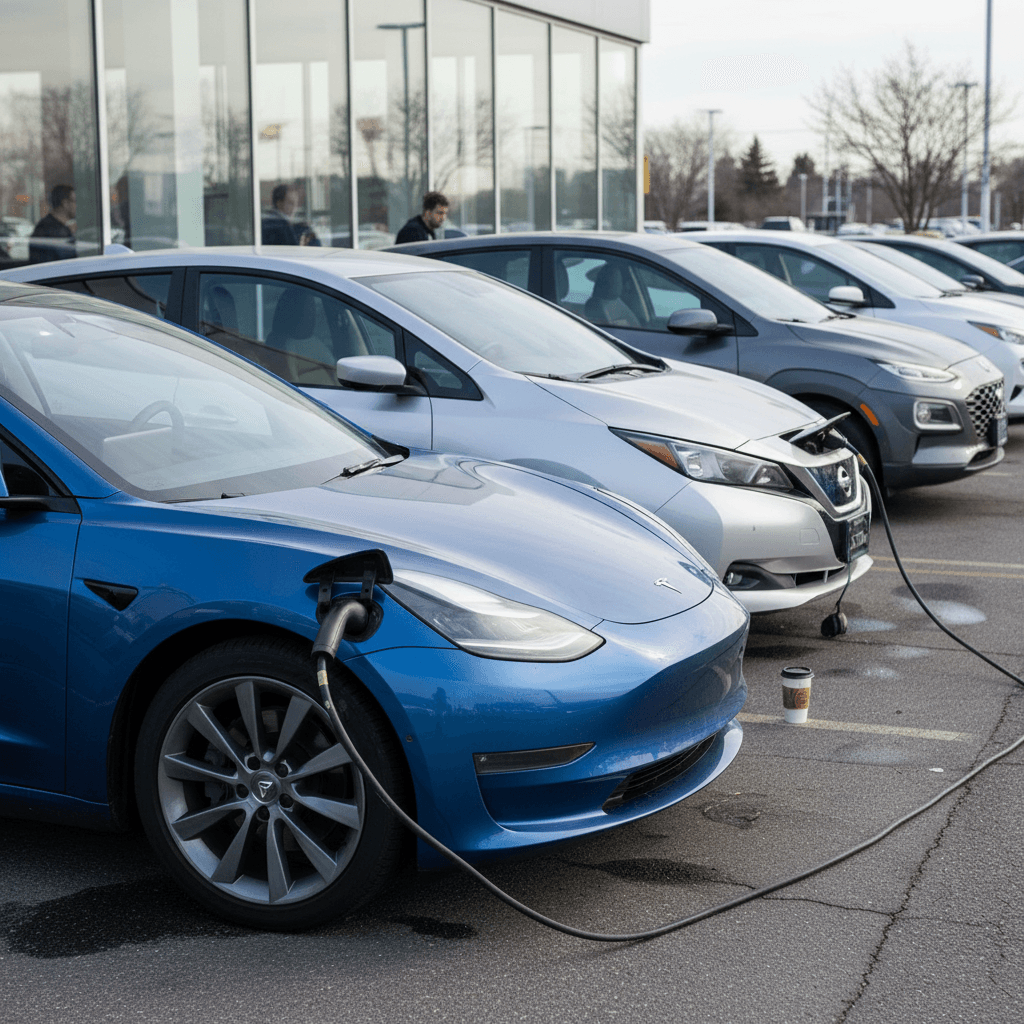
Charging levels for an EVs car
How long it really takes to charge, and where each level fits.
| Level | Power source | Typical speed | Where it makes sense |
|---|---|---|---|
| Level 1 | 120V household outlet (~1.4 kW) | 2–5 miles of range per hour | Apartments without 240V, plug‑in hybrids, or very low daily mileage. |
| Level 2 | 240V circuit (7–11 kW typical) | 20–40 miles of range per hour | Most home setups, workplace charging, many public stations. |
| DC fast | High‑power DC (50–350 kW) | 10–80% in ~20–40 minutes for many EVs | Road trips and quick top‑ups; not a daily charging solution. |
Home charging (Level 1 & 2) covers daily use; DC fast is for road trips and emergencies.
5‑point checklist: Are you ready to charge at home?
1. Off‑street parking
A driveway or garage where your EV can sit for several hours is ideal. If you rely on street parking, you’ll lean more on public charging and DC fast stations.
2. Access to a 120V outlet
Level 1 charging from a standard outlet can be enough if you only drive 20–30 miles per day. It’s slow, but it works, especially for plug‑in hybrids.
3. Option to add a 240V circuit
If your electrical panel has capacity, an electrician can add a 240V circuit and wallbox. That turns your EV into a ‘full tank every morning’ experience.
4. Local charging map
Check apps like PlugShare, ChargePoint or your automaker’s app to see what’s near work, home, and along your regular routes.
5. Utility off‑peak rates
Many utilities offer cheaper electricity overnight. Pair that with scheduled charging in the car or charger app to cut fueling costs even further.
Don’t treat DC fast like a gas pump
The true cost of owning an EVs car
Sticker prices get the headlines, but what matters is total cost of ownership: purchase price minus incentives, plus energy, maintenance, and eventual resale. This is where EVs quietly pull ahead of many similar gas cars.
Where EVs save you money
You pay more attention up front, then less for years.
Fuel costs
Maintenance
Incentives & tax credits
About those incentives…
When an EVs car is cheaper than gas
If you drive 10,000–15,000 miles per year, charge mostly at home, and keep the car for several years, the EV’s higher sticker price is often offset by lower running and maintenance costs.
Used EVs exaggerate this advantage: prices on many 3–5‑year‑old models have fallen sharply, but they still deliver modern tech and low fuel bills.
When gas can still win
If you drive very little, lack home charging, or frequently road‑trip through areas with thin charging coverage, a conventional hybrid or efficient gas car can still make financial sense.
The trick is aligning the car’s strengths with your actual life, not an idealized one.
Battery life and degradation: Should you worry?
Battery health is the single biggest psychological barrier for EV shoppers, and the reason many people hesitate to buy used. The good news: modern liquid‑cooled packs are aging better than early experiments, and replacement costs are heading in the right direction.
Battery trends that matter for shoppers
Battery health rule of thumb
What matters is not guessing. You want an objective measurement of battery health, not a shrug from the seller. That’s exactly why Recharged includes a Recharged Score Report with verified battery diagnostics on every EV it sells, so you know what you’re buying before you wire a dollar.
Why used EVs cars are getting so cheap
If you’ve browsed used listings lately, you’ve probably noticed something strange: a two‑year‑old electric crossover can cost less than a similar gas SUV that’s five years old. That’s not an illusion; it’s the market catching up with reality.
Three forces pushing used EV prices down
Together, they’re creating real opportunities for smart buyers.
Lease tidal wave
Residual value miscalculations
Battery & tech progress
Why this is good news for you
How to buy a used EVs car without getting burned
Buying a used EV isn’t like buying a used gas car. There’s no transmission fluid to sniff, but there is a five‑figure battery pack to think about. The trick is to focus on the few things that really matter and ignore the noise.
10‑step checklist for a used EVs car
1. Start with the right models
Favor EVs with liquid‑cooled batteries and strong reliability records. Be cautious with early air‑cooled designs that lived in very hot climates.
2. Verify battery health, don’t guess
Look for a <strong>third‑party battery health report</strong> or a platform like Recharged that provides a Recharged Score with detailed diagnostics. Avoid cars where the seller hand‑waves this away.
3. Check remaining battery warranty
Note the in‑service date and mileage. Many cars still have several years of factory battery coverage that transfers to you, which reduces risk.
4. Review fast‑charging history
Heavy DC fast charging isn’t necessarily a deal‑breaker, but a car that lived at highway chargers its whole life deserves closer scrutiny.
5. Inspect tires and brakes
EVs are heavy and powerful; cheap tires or neglected brakes are a red flag. Budget for quality replacements if needed.
6. Test all charging ports and cables
Plug into Level 2 and, if possible, a DC fast charger during your test period. Make sure charging is stable and free of error messages.
7. Confirm charging standard and adapters
In North America the industry is moving to NACS (Tesla’s connector). Check what port your car has and whether an adapter is included or needed.
8. Evaluate range in your real use case
If the car was rated for 260 miles when new and now reports ~225, ask: Is that enough for your commute plus bad‑weather margin? If yes, stop obsessing over the missing 35 miles.
9. Look for software support & updates
Make sure the manufacturer still supports over‑the‑air updates, apps, and navigation for the model. Abandoned software ages a car quickly.
10. Factor in home charging costs
Get quotes for a 240V circuit or wallbox if you don’t already have one. Rolling that into your financing, as Recharged can help you do, often makes more sense than waiting.
Red flags worth walking away from
This is exactly the pain Recharged is built to remove. Every EV on the platform comes with a Recharged Score Report that includes verified battery health, fair‑market pricing, and expert EV‑specialist support, plus financing, trade‑ins, and nationwide delivery, all handled digitally if you prefer.
Who an EVs car is perfect for, and who should wait
Great candidates for an EVs car
- Daily commuters driving 20–80 miles per day with access to home or workplace charging.
- Two‑car households where the EV handles most miles and a gas or hybrid car covers edge‑case road trips.
- Rideshare and delivery drivers in cities where public fast charging and Level 2 stations are plentiful.
- Tech‑curious buyers who value quiet, smooth driving, and modern safety and infotainment features.
Who might want to wait (for now)
- Drivers who rely exclusively on street parking and have no realistic charging solution at home or work.
- People who routinely tow heavy loads long distances, beyond the comfort zone of current battery ranges.
- Road‑warriors in regions with sparse charging infrastructure and harsh winters, where planning every stop would be a chore.
- Buyers who simply don’t have the mental bandwidth right now to think about charging, apps, and new habits. That’s okay; the market will only improve.
FAQ about EVs cars
Frequently asked questions about EVs cars
Bottom line: Is an EVs car right for you?
EVs are no longer exotic hardware for early adopters. An EVs car is just a car, quieter, often quicker, and much cheaper to run, wrapped in a slightly different ownership pattern. If you can charge where you park, drive a typical number of miles, and choose a model with verified battery health, an EV will likely make your life easier and your costs lower, not higher.
Where things get interesting is the used market. Off‑lease EVs and falling battery costs mean you can now buy genuinely modern electric cars for the kind of money that used to buy you a wheezy rental‑spec sedan. The caveat is that you need real information, not sales patter. That’s where a platform like Recharged, with its Recharged Score battery diagnostics, expert EV guidance, financing, trade‑ins, and nationwide delivery, can turn a complex decision into a confident one.
If this sounds like it fits your life, the next step isn’t memorizing more acronyms. It’s narrowing down a short list of models, checking how they fit your charging reality, and then insisting on transparent battery health and fair pricing before you buy. Do that, and your first EVs car won’t feel like a gamble at all, it’ll feel like the car the future promised you, just arriving a little ahead of schedule.