When something goes wrong with your electric car, the **EV warranty claim process** can feel more intimidating than the problem itself. Batteries, software, power electronics, suddenly you’re stuck between a service advisor, a call center, and a 20‑page warranty booklet written by lawyers.
Good news for EV owners
Why EV warranty claims feel so confusing
With a gasoline car, a warranty claim usually means “engine or transmission trouble.” With an EV, you’re juggling **battery capacity guarantees, high‑voltage components, software bugs, and connectivity issues**, and each can fall under different parts of the warranty. On top of that, many repairs are controlled by remote diagnostics and over‑the‑air updates, which makes the process feel opaque.
What’s unique about EV warranty claims
- Battery health and capacity (kWh, state of health) matter as much as outright failures.
- Claims may hinge on charging behavior and software logs, not just broken parts.
- Techs often need special tools and training, so only certain dealers or service centers can help.
What’s basically the same as gas cars
- You still need good documentation and service records.
- The manufacturer decides what is and isn’t covered.
- If things go badly, you may end up in arbitration or lemon‑law territory, just like with an ICE vehicle.
EV warranty basics you should know first
EV warranty coverage at a glance
Before you dive into the **EV warranty claim process step by step**, it helps to understand the three big buckets of coverage your car likely has:
- Basic (bumper‑to‑bumper) warranty – 3–5 years, covers most non‑wear items (screens, HVAC, electronics, interior hardware).
- Powertrain / EV system warranty – usually 5–10 years, focused on motor(s), inverter, gearbox, high‑voltage components.
- Battery warranty – at least 8 years/100,000 miles on new EVs, often with a capacity guarantee (for example, if usable capacity drops below around 70%, the pack is repaired or replaced).
Always check your specific car
EV warranty claim process step by step
Step 1: Confirm your EV warranty coverage
Your first move isn’t calling the dealer, it’s confirming that your issue is potentially covered. That keeps you from wasting time arguing over something that’s clearly out of warranty.
Quick coverage check
1. Gather your core details
Write down your VIN, current mileage, in‑service date (when the car was first sold), and whether you’re the first or a subsequent owner. Warranty clocks usually start at the original in‑service date, not when you bought the car used.
2. Find the actual warranty booklet
Look in your glovebox, owner’s app, or the manufacturer’s website for a PDF of your warranty guide. Search for sections labeled “EV system,” “high‑voltage components,” or “battery capacity” as well as basic and powertrain coverage.
3. Check time and mileage limits
Confirm that today’s date and your odometer reading are clearly within the stated years and miles for the coverage you think applies, basic, powertrain, and battery.
4. Confirm transferability (used EVs)
Some extended powertrain or battery warranties are reduced or not transferable to second owners. If you bought used, verify that you still get the full term.
Step 2: Document the problem like a lawyer
Warranty decisions often come down to evidence. Think like a lawyer: your job is to **prove what’s happening, when it happens, and that you didn’t cause it through abuse or neglect**.
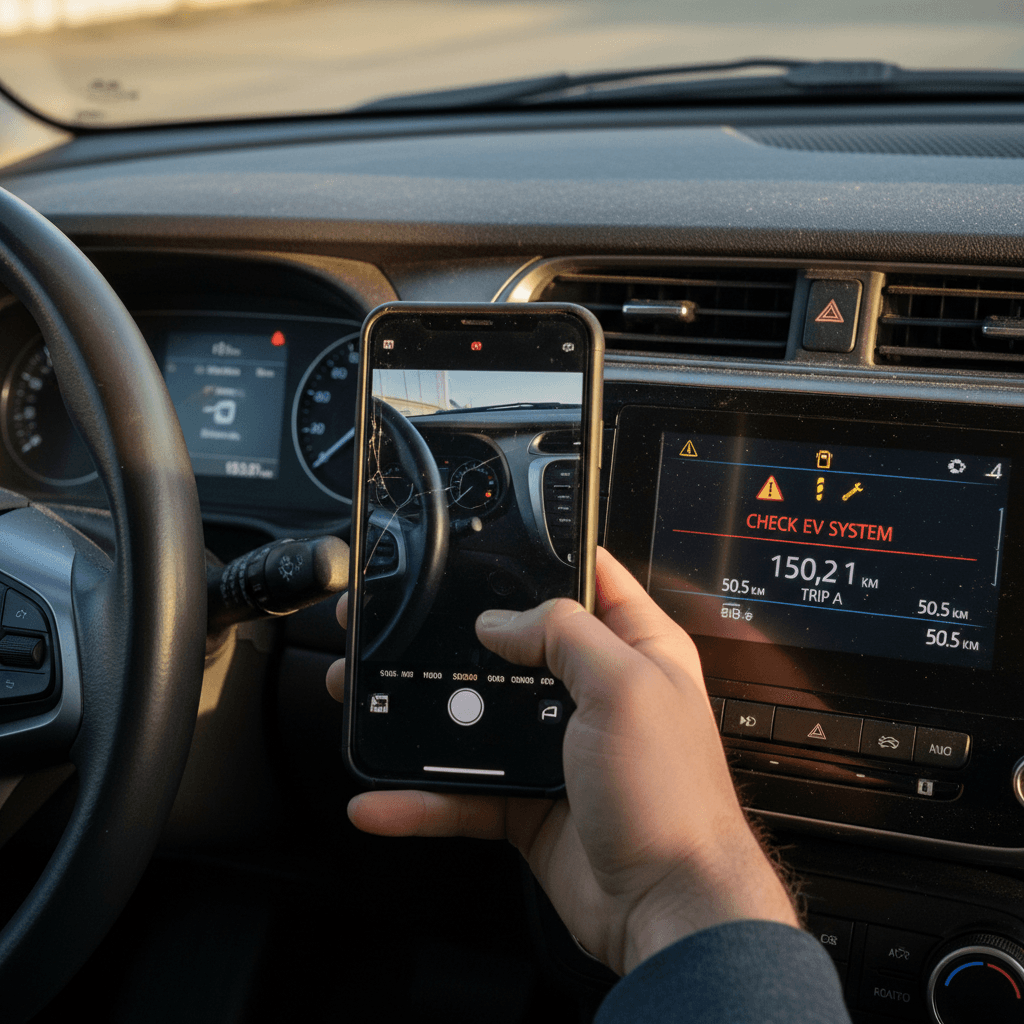
- Take photos or video of any warning lights, error messages, or odd behavior (charging failure, sudden loss of power, range drop).
- Keep a simple log: dates, mileage, outside temperature, how you were driving or charging, and what exactly happened.
- Screenshot your charging app history (home charger, public fast chargers) if the issue seems related to charging or range.
- Collect prior service records, especially for anything related to the battery, charging, or high‑voltage system.
Tip: Don’t sanitize the story
Step 3: Contact the right service channel
Next, you need to get your car in front of someone who can both diagnose the issue and submit a warranty claim to the manufacturer. For most brands, that’s a franchised dealer; for Tesla and a few others, it’s a factory‑run service center.
Who to contact for an EV warranty claim
Pick the path that matches how your brand handles service
Dealer‑based brands
If you drive a Ford, Hyundai, Kia, GM, VW, etc., your first call is a factory‑authorized EV dealer. Ask for a warranty appointment and describe the symptoms, don’t just say “car not working.”
Direct‑to‑consumer brands
For Tesla, Rivian, Lucid and similar, use the in‑app service request or online portal. Attach your photos, videos and notes right in the request.
Roadside & tow decisions
If the car may be unsafe to drive (no power, stuck in gear, severe warnings), use roadside assistance included with your warranty or insurance and have it towed to an approved service location.
Mention the word “warranty” early
Step 4: Get a diagnosis and estimate in writing
At the service visit, a technician will attempt to reproduce your issue and run diagnostics. On EVs this often includes pulling high‑voltage system codes, checking logs, and running automated battery health tests.
What to walk away with from the first visit
Whether the repair is covered or not, insist on documentation.
| Document | Why it matters | What to look for |
|---|---|---|
| Repair order (RO) | Official record of the complaint and diagnosis | Your symptoms described in your words, not watered‑down tech speak. |
| Diagnostic report | Evidence of what the car reported | Battery state of health %, error codes, thermal or charging data if applicable. |
| Estimate / invoice | Shows costs and who pays them | Line items tagged as warranty, goodwill, or customer‑pay, plus parts and labor rates. |
| Service advisor notes | Narrative of what they saw and did | Mentions of intermittent issues, test drives, conditions where they couldn’t reproduce the fault. |
Strong paperwork is your leverage if the claim is denied or the problem keeps coming back.
Don’t authorize expensive work blindly
Step 5: Review the decision and approve work
Once diagnostics are done, the service center submits a claim to the manufacturer. You’ll typically see one of three outcomes:
- Approved warranty repair – Parts and labor are covered; you may owe only taxes or shop supplies, if anything.
- Partial coverage / goodwill – The manufacturer covers some costs (often parts), you cover the rest (often labor) as a gesture of goodwill, especially if you’re just out of warranty.
- Denied claim – The repair is deemed out of warranty due to time, mileage, or an exclusion (abuse, modification, accident damage, etc.).
If the claim is approved
- Confirm that all related issues (not just the one code) are being addressed.
- Ask whether replacement parts or a new battery pack come with a separate parts warranty.
- Get the estimated repair timeline and whether a loaner vehicle is available.
If the claim is denied
- Ask the advisor to point to the exact exclusion in the warranty booklet.
- Request all diagnostic reports and notes printed or emailed.
- Politely say you’ll be seeking a second opinion and may escalate with the manufacturer or an arbitrator.
Step 6: Escalate if your EV warranty claim is denied
If your gut says, “This should be covered,” you may be right. The warranty booklet often spells out an escalation path, and many automakers participate in third‑party dispute programs.
How to push back on a denied EV warranty claim
1. Talk to the service manager
Calmly walk through the decision and your documentation. Sometimes miscommunication or incomplete notes sink a perfectly valid claim.
2. Call the manufacturer’s customer care line
Most brands list an escalation number in the warranty booklet. Have your VIN, mileage, repair order number, and service records in front of you.
3. Use the automaker’s dispute or arbitration program
Many manufacturers use independent programs to resolve warranty disputes. You file a claim, submit your evidence, and an arbitrator reviews both sides.
4. Explore lemon‑law or legal advice
If repeated repair attempts fail or the car is out of service for long periods, state lemon laws or consumer‑protection attorneys may be your next step.
Documentation is your superpower
Battery-specific EV warranty claims
Battery claims are a different beast. You’re usually not dealing with a sudden failure but with **capacity loss**, when your real‑world range shrinks faster than it should.
How a battery capacity warranty claim usually works
Exact details vary by brand, but the pattern is similar.
1. Track real‑world range
Log your typical commute or highway drive from 100% to 10–20% several times. Note miles driven, climate, tire setup, and driving style so you can show consistent range loss over time.
2. Request an official SOH test
Ask the dealer or service center to run a state of health (SOH) test on the high‑voltage battery. This is the number that matters for most warranties, not the dashboard’s guess.
3. Compare to your warranty threshold
Most brands consider a pack defective if usable capacity falls below around 70% of original within the warranty period. If your official SOH is under the threshold, that’s strong claim ammo.
4. Expect repair or replacement
If the claim is approved, the automaker may replace modules rather than the entire pack, or swap in a remanufactured pack that meets the capacity standard.
Fast charging rarely voids warranties by itself
Common reasons EV warranty claims get denied
When a claim goes sideways, it usually isn’t random. The denial almost always points back to **time, mileage, exclusions, or lack of maintenance**.
- The car is out of time or mileage for the relevant coverage, even if not by much.
- The problem is categorized as normal wear and tear (tires, wipers, brake pads, upholstery, cosmetic trim).
- There’s evidence of modifications or abuse, aftermarket tuning, unauthorized battery work, damaged charge port, collision damage.
- Required maintenance, software updates, or recalls were ignored, and the manufacturer can tie that directly to the failure.
- The issue can’t be reproduced or is labeled “operating within spec,” especially for noise, vibration, or minor range complaints.
Be careful with aftermarket mods
How EV warranty claims work for used EVs
If you bought your EV used, whether from a dealer, a private seller, or a marketplace like Recharged, the factory warranty may still be your best friend. The key question is how much of it transfers to you.
What usually transfers
- Federal battery coverage (8 years/100,000 miles) is typically transferable to subsequent owners.
- Most mainstream brands also transfer their EV powertrain warranty to the next owner, sometimes with the same term.
- Basic bumper‑to‑bumper coverage transfers too, what’s left of the years/miles.
Where it gets tricky
- Some long “lifetime” or 10‑year warranties apply only to the first owner or shorten for later owners.
- If prior owners skipped required maintenance or updates, coverage can be jeopardized.
- Poor documentation makes it harder to prove what’s been done and when.
How Recharged helps with used EV warranty claims
Ready to find your next EV?
Browse VehiclesChecklist: Before you file an EV warranty claim
Pre‑claim checklist for EV owners
1. Read the right section of your warranty
Find the clauses that apply to your exact issue (battery, drive unit, infotainment, etc.) and confirm you’re within the time and mileage limits.
2. Gather ownership and service records
Have your registration, purchase documents, and maintenance records ready. If you bought used, include any inspection reports or battery‑health tests, such as a Recharged Score.
3. Build a symptom log
Write down when the issue happens, how often, and under what conditions. Include photos, videos, and screenshots from apps or the car’s display.
4. Back up all digital evidence
Email photos and logs to yourself or store them in the cloud so you have them even if you change phones or lose access to an app.
5. Choose the right service location
Book a visit with an authorized EV service center, not a generic shop. Note that roadside tows often must go to approved locations to keep coverage clean.
6. Decide your walk‑away point
Before you go in, decide how much out‑of‑pocket you’re willing to accept if coverage is partial, and when you’ll escalate or seek a second opinion instead.
EV warranty claim FAQ
Frequently asked questions about EV warranty claims
The bottom line: Make the warranty work for you
An EV warranty is a promise, but it’s also a contract written by people who’d prefer not to pay for mistakes they didn’t make. If you understand the coverage, document issues carefully, and follow the **EV warranty claim process step by step**, you dramatically improve your odds of getting the repairs you deserve.
If you’re still shopping for an EV, especially a used one, pay close attention to how much factory coverage remains and how strong the battery warranty is. That’s exactly why Recharged builds battery health and fair‑market pricing into every listing: so you can see, up front, how protected you’ll be years into ownership, and avoid nasty surprises when it’s time to make a claim.