If you grew up in the Rust Belt, you were probably taught one winter rule: undercoat your car or the salt will eat it alive. Now you own, or are shopping for, an electric vehicle, and you’re wondering if EV undercoating rust protection is really needed, or if it could actually cause trouble around that pricey battery pack.
Quick answer
Do EVs Really Need Undercoating and Rust Protection?
Automakers know their vehicles will live in rain, snow, and road salt. That’s why today’s EVs, like modern gas cars, leave the factory with galvanized steel, e‑coatings, seam sealers, and plastic shields already in place. For the first few years, that built-in protection is usually enough for most drivers.
Where the debate starts is in harsher environments, think Midwest and Northeast winters with salty slush, or year-round coastal humidity. Corrosion experts and roadside-assistance groups now warn that road salt can still quietly chew on underbodies and exposed hardware over time, and EVs add a twist: the high-voltage battery sits low in the chassis, surrounded by cooling lines, connectors, and aluminum housings that hate corrosion just as much as you do.
So the honest answer is nuanced: you probably don’t need a thick, tar-like undercoating on a brand-new EV, but you do need a plan. That plan can be as simple as regular underbody washes plus spot protection, or as involved as professional, EV-specific corrosion treatments on an older car.
EV Rust & Corrosion: Quick Context
How EVs Are Built to Fight Rust From the Factory
Before you spend a dime on rustproofing, it helps to understand what protection your EV already has. Under the paint and plastic, most modern electric vehicles use the same basic corrosion strategy as late-model gas cars:
- Galvanized or coated steel panels that resist surface rust far better than old-school bare steel.
- E‑coat (electrocoat) primer on the body shell, baked on in the factory to seal metal before paint goes on.
- Seam sealers in joints and welds where moisture likes to creep in.
- Plastic wheel-well liners and underbody shields that act like mudguards for the undercarriage.
- Strategic use of aluminum and composites, which don’t rust like steel but can still corrode if untreated metal meets salty water.
For the first several winters, that cocktail of coatings and plastics is usually enough, assuming you’re not ignoring thick, white salt crust under the car for months at a time. That’s why many EV specialists and service networks say extra undercoating is rarely necessary on a brand-new EV unless you live in a worst‑case environment.
Check your owner’s manual first
Unique EV Rust Risks: It’s Not Just Body Panels
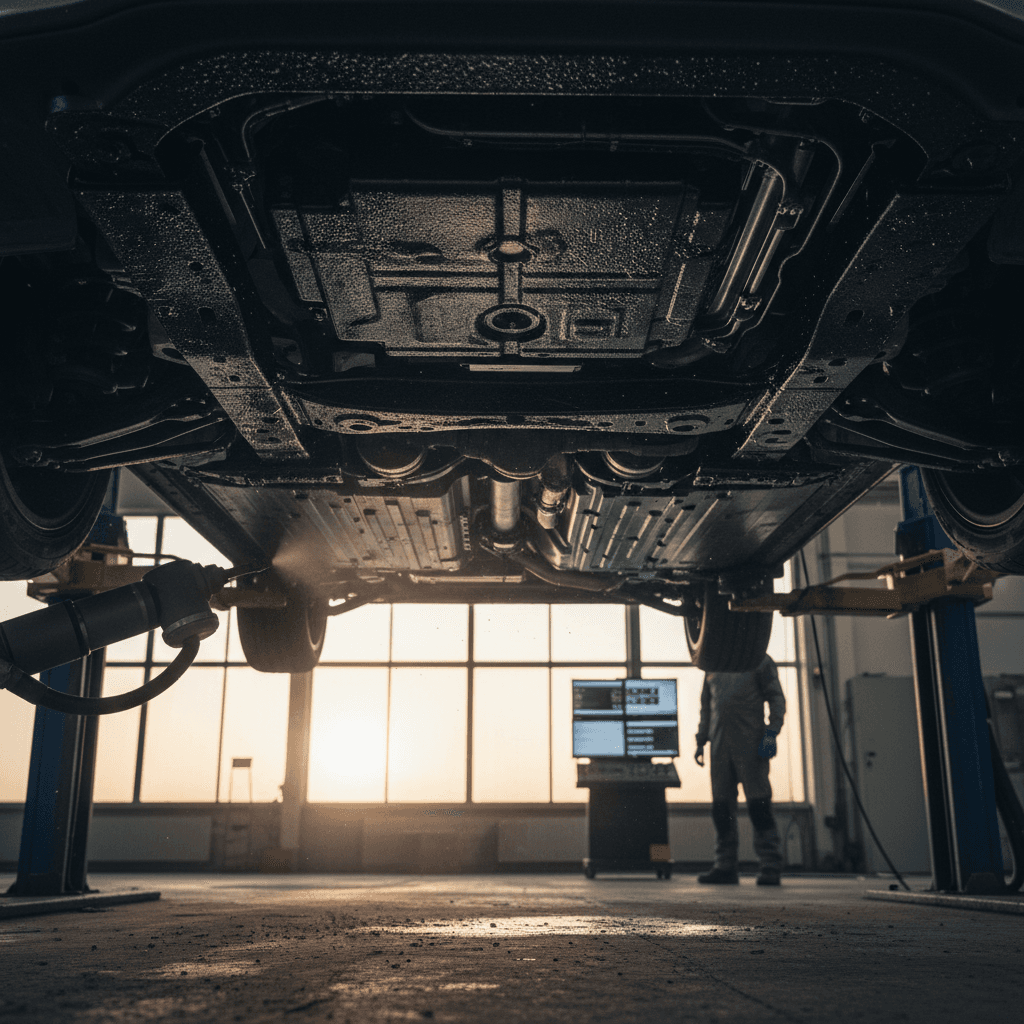
Where EVs differ from gas cars is what’s hiding underneath. The battery pack, high-voltage cabling, and power electronics sit low in the chassis, exactly where winter slush, road salt, and standing water like to live. Corrosion here isn’t just ugly; it can be expensive.
- Battery pack enclosure: Often aluminum or mixed metals; corroded housings, seams, or fasteners can compromise sealing or cooling.
- Cooling lines and fittings: Rust or galvanic corrosion at joints can lead to leaks or poor thermal performance.
- High-voltage connectors and junction boxes: These are sealed, but damaged gaskets or coatings can let in moisture over time.
- Suspension and subframes: Same story as gas cars, salt and grime can attack steel arms, bolts, and mounting points.
- Brake lines and parking brake hardware: Corroded lines or seized mechanisms can sneak up on you in snow country.
Shops that service EVs are already reporting battery-pack corrosion issues on vehicles exposed to years of road salt and moisture. The good news: you can prevent most of this with washing, inspection, and smart, EV-safe protection, not blind spraying.
When EV Undercoating Actually Makes Sense
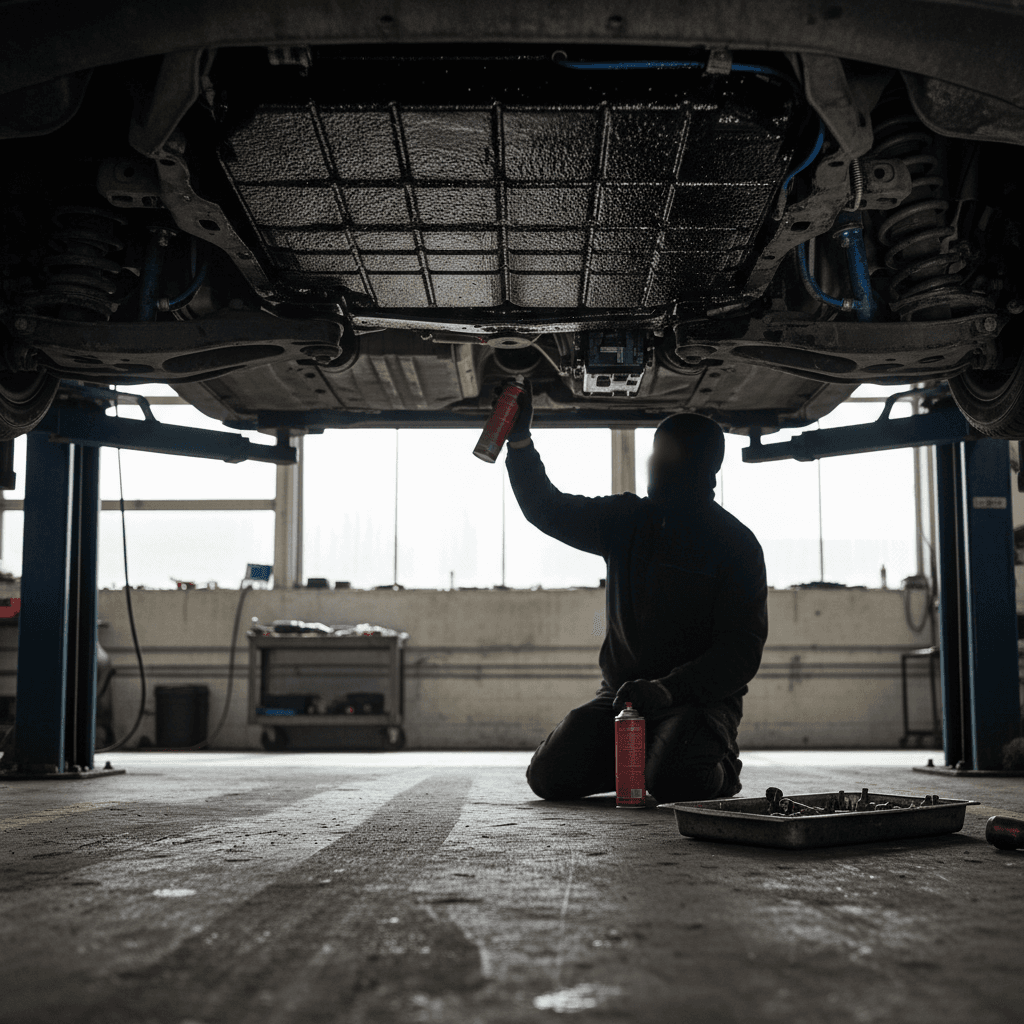
The question isn’t just “Is EV undercoating rust protection needed?” It’s really “For which EVs, in which climates, and using what products?” Here are situations where professional, EV-aware rustproofing can be a smart move.
Good Candidates for EV Undercoating or Rustproofing
Think climate, age, and how long you plan to keep the car.
1. Rust Belt daily driver
If you live where winter means brine on the highways for months, your EV’s underbody sees constant salt spray. Over 5–10 years, that can attack suspension hardware, subframes, and even battery fasteners. Professionally applied, EV-safe products can add a sacrificial layer of protection.
2. Coastal & humid regions
Salty sea air and damp climates are slow-motion corrosion factories. Even without snow, exposed steel hardware will oxidize faster near the coast. A thin-film, creeping rust inhibitor in seams and cavities can slow that process dramatically.
3. Older EV you plan to keep
Once an EV is 5–8 years old, factory coatings start to show their age. If you’re planning to drive it well past the warranty, a careful underbody cleaning and application of a flexible, non-hardening inhibitor can help it age more gracefully.
In these cases, you’re not trying to mummify the whole underside in tar. You’re looking for targeted protection on exposed metal and vulnerable seams, applied by a shop that understands EV layouts and knows what must stay dry and uncovered.
What a good EV-safe treatment looks like
When Undercoating an EV Is a Bad Idea
Not all undercoating is created equal, and some of the old-school techniques that made sense on a ’92 pickup are exactly what you don’t want sprayed near a six-figure battery pack. Here’s when to think twice, or walk away.
Red Flags: Undercoating That Can Do More Harm Than Good
Thick, tar-like coatings over everything
Hard, asphalt-style coatings can crack over time. When they do, they trap salty water against the metal instead of protecting it. They also hide developing rust, so problems go unnoticed until they’re serious.
Spraying directly on battery housings & high‑voltage parts
Your battery pack is designed with its own sealing and cooling strategy. Coating its casing or blocking cooling paths and drains can interfere with heat management and moisture control.
Blocking drain holes and weep paths
Every rocker panel, door, and hatch has tiny drain paths. If a tech fills those with undercoating, water has nowhere to go and rust starts from the inside out.
Drilling into structural or battery areas
Some legacy rustproofing systems used drilled access holes. Drilling into or near an EV’s battery enclosure or high-voltage cabling is a fast way to void warranties, and invite trouble.
No mention of EV compatibility
If the shop’s literature doesn’t say a word about EVs, battery enclosures, or electronics safety, they may be treating your car like any other undercoating job. That’s not good enough anymore.
Warranty watch-out
EV Rustproofing Options Compared
If you decide your climate and driving justify extra protection, you’ll quickly run into a wall of brand names and opinions. Strip away the marketing and there are really three families of products, each with pros and cons for EVs.
Common Rust Protection Approaches for EVs
Use this as a conversation starter with your shop, not a substitute for reading your owner’s manual.
| Method | How it works | Pros for EVs | Cons / Risks for EVs | Best use case |
|---|---|---|---|---|
| Factory coatings only | Galvanized steel, e‑coat, sealers, and plastics applied at the plant. | Designed and tested with your specific EV; zero warranty drama; no added cost after purchase. | Protection slowly diminishes with age; heavy salt or coastal exposure can still attack hardware and seams. | Mild climates, first years of ownership, leased vehicles. |
| Thick underbody coating | Tar/rubber-style shell sprayed onto exposed metal. | Good abrasion and noise dampening; familiar from older trucks and SUVs. | Can crack and trap moisture; can hide rust; risky if sprayed on battery pack, wiring, or over drains. | Off‑road trucks; rarely the right choice for modern EVs unless used very selectively. |
| Thin-film cavity / underbody inhibitor | Light oil or wax-based spray that creeps into seams and around hardware. | Reaches tight seams and welds; stays flexible; EV-specific formulas avoid blocking drains and harming electronics. | Needs periodic reapplication; results depend heavily on installer skill and EV knowledge. | Older EVs in salty or coastal climates; targeted protection on subframes, seams, and hardware. |
The safest play for most EVs is a thin, EV-safe inhibitor used selectively, not a thick blanket over everything.
Ask this before you book
Low-Risk Ways to Protect Your EV From Rust
Whether you ever touch undercoating or not, a few simple habits go further than any can of goop. These apply to every EV, from a brand-new crossover to a high‑mileage hatchback you just bought used.
- Wash the underbody regularly in winter. Use a car wash with an undercarriage spray every 2–4 weeks when roads are salted, and especially after big storms.
- Don’t let salt sit for months. That white crust on suspension arms and brake lines is your cue, it’s time for a wash.
- Clean wheel wells and rocker panels. Packed slush and mud trap moisture against steel for days at a time.
- Park under cover when you can. A garage or carport lets salty water dry faster and reduces constant moisture exposure.
- Repair chips and scrapes promptly. Exposed bare metal on rocker panels and wheel arches can start rusting surprisingly fast in salty climates.
- Inspect the underbody yearly. Ask your shop to put the car on a lift and photograph any early rust, damaged shields, or missing fasteners.
Don’t forget the charging port
Used EV Buyer’s Rust & Corrosion Checklist
Shopping used is where the EV undercoating conversation really matters. You’re not just buying a battery and a spec sheet, you’re buying years of winters, driveways, and car‑wash discipline (or lack of it). Here’s how to size up a used EV’s rust situation.
7 Things to Check Before You Buy a Used EV
1. Peek underneath, even if you’re not a mechanic
Bring a flashlight. Look at the visible suspension arms, subframes, and pinch welds. Surface rust is normal; heavy flaking or holes in structural areas are not.
2. Check wheel wells and rockers
Run your hand along the rocker panels and look at the inner wheel arches. Bubbling paint, crunchy edges, or missing plastic liners are warning signs.
3. Inspect the charging port area
Look for corrosion on metal hardware, cracked seals, or obvious impact damage around the charge door. These can hint at poor care or water intrusion.
4. Ask where the car spent its life
A Southern car that just moved north is a different story from one that’s done eight winters next to a salted freeway. Use the registration history if you can.
5. Request lift photos or an inspection
If you’re buying remotely, ask the seller or dealer for underbody photos on a lift. At Recharged, our Recharged Score Report includes this kind of detail along with battery health data.
6. Look for compromised splash shields
Loose or missing underbody panels expose more of the chassis to spray and debris. Replacements aren’t always cheap on EVs.
7. Pair rust with battery health
A clean underbody doesn’t help if the battery is tired, and vice versa. Consider both together when judging the value of a used EV. This is exactly why Recharged combines structural and battery diagnostics in one report.
How Recharged Evaluates Rust and Battery Health
If you’re buying privately, you’re playing detective with a flashlight in the seller’s driveway. When you buy through Recharged, you’re leaning on people who do this every single day.
- Every vehicle on Recharged comes with a Recharged Score Report that covers both structural condition and verified battery health, not just a quick visual once‑over.
- Specialists inspect for underbody damage, rust, missing shields, and prior repairs, all the stuff that gets expensive when it’s overlooked.
- Battery diagnostics go far beyond a dash readout, so you know whether that pack has been babied or hammered.
- If you have a rust-heavy trade‑in, Recharged can still help with an instant offer or consignment, and we’ll be transparent about how corrosion affects value.
- Nationwide delivery and a fully digital experience mean you can shop clean, solid used EVs from your couch instead of rolling the dice locally.
Thinking about selling a salty survivor?
Ready to find your next EV?
Browse VehiclesFAQ: EV Undercoating and Rust Protection
Common Questions About EV Undercoating & Rust
Bottom Line: Is EV Undercoating Rust Protection Needed?
If you drive a modern EV in a mild climate and keep up with washing, you probably don’t need extra undercoating. Your car left the factory with serious corrosion defenses already built in. Where things get interesting is with older EVs, long-term ownership in salty or coastal regions, and used cars with unknown histories.
In those cases, the smart move is not to blindly say yes or no to undercoating, but to inspect first, then protect. A good winter wash routine, a set of lift photos, and an EV-savvy shop can tell you whether a light, flexible rust inhibitor makes sense, or whether you’re just paying to hide problems.
And if you’d rather not play rust detective at all, buying through Recharged gives you a used EV with verified battery health, transparent underbody condition, and expert guidance from people who live and breathe this stuff. That way, you can spend less time worrying about corrosion and more time enjoying silent, instant-torque miles.