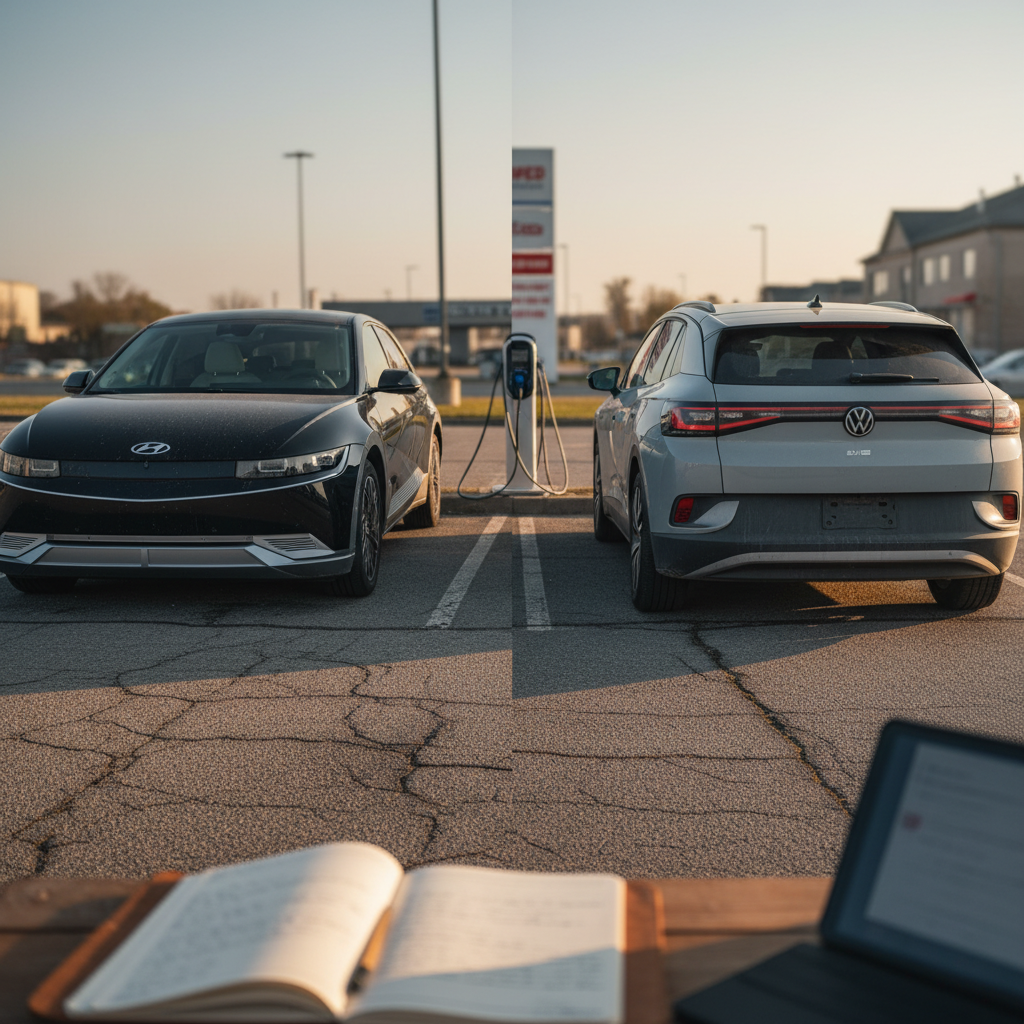
If you’re trying to figure out the EV tax credit in Georgia for 2026, you’ve probably run into a mess of half-updated blog posts, dead links and wishful thinking. Georgia once had one of the richest state EV tax credits in the country. Then it killed it, slapped on extra annual fees, and left a lot of drivers wondering whether going electric still pencils out.
Quick truth check
Overview: EV tax credit in Georgia for 2026
Georgia EV incentives at a glance (2026)
There are three buckets of money (and costs) that matter if you’re buying an EV in Georgia in 2026:
- Federal tax credits for new and used clean vehicles. These are still very real in 2026, though some are scheduled to sunset after 2026 under current law.
- Georgia state incentives that apply mostly to chargers and certain business uses, not to buying a personal EV.
- Georgia-specific penalties and fees, especially the annual EV registration surcharge, that claw back some of the gas tax you’re no longer paying.
Where Recharged fits in
Does Georgia have its own EV tax credit in 2026?
Let’s clean up the biggest misconception first: Georgia’s famous $5,000 state EV income tax credit is long gone. That credit applied only to qualifying zero-emission vehicles purchased before July 1, 2015. Lawmakers killed it in the 2015 Transportation Funding Act and replaced it with higher registration fees for EVs.
Georgia’s state EV income tax credit: then and now
How Georgia went from nation-leading EV subsidies to zero state purchase incentives.
| Period | State EV income tax credit | Who it applied to | Status in 2026 |
|---|---|---|---|
| Before July 1, 2015 | Up to $5,000 (20% of purchase price) for zero-emission vehicles | Individuals and businesses buying new qualifying EVs registered in GA | Credit can still be carried forward if unused, but only for those older purchases |
| July 1, 2015 onward | $0 for new EV purchases | All Georgia buyers | No state income tax credit for buying an EV |
| 2026 | Still $0 for purchases | All Georgia buyers | You rely on federal credits + non-tax incentives instead |
Note: Date ranges are simplified for shoppers trying to understand what applies in 2026.
Don’t bank on rumors
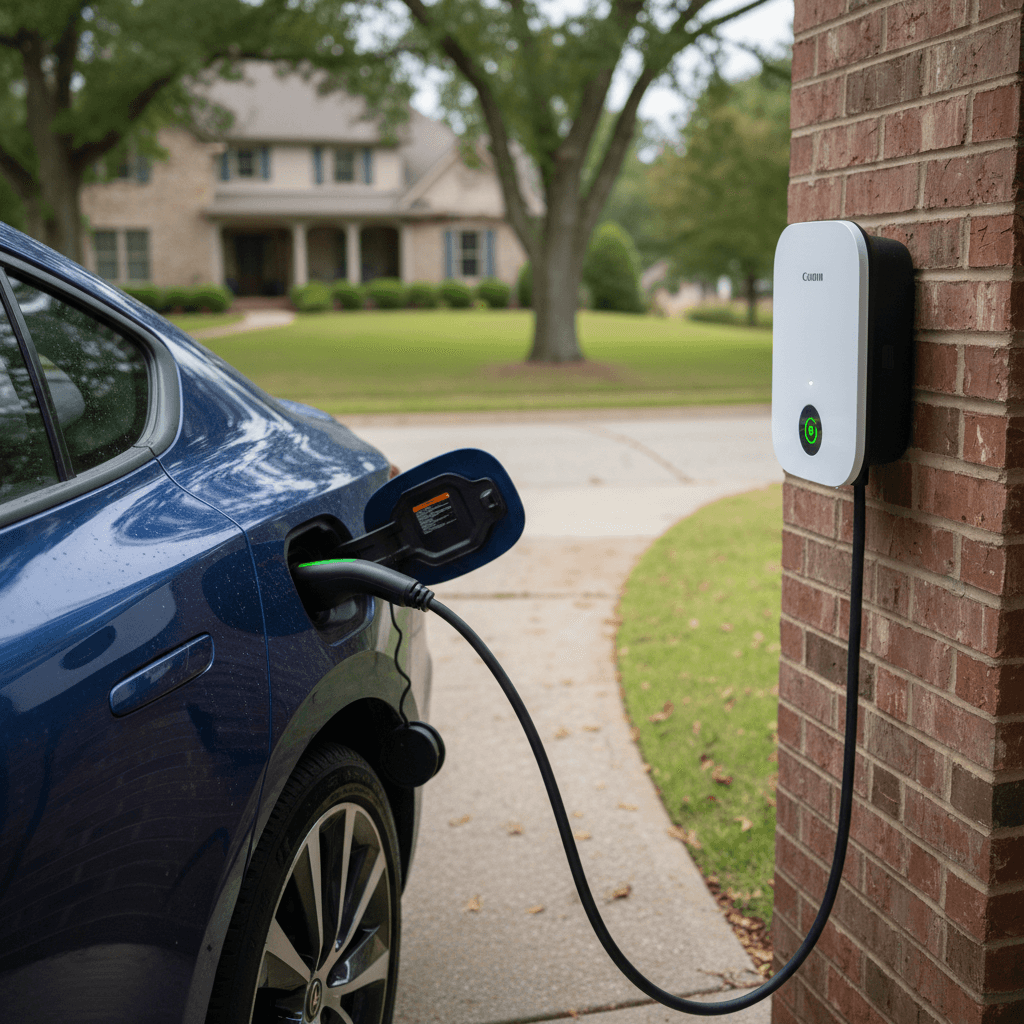
What Georgia does still have is an income tax credit for certain EV charging equipment and some incentives targeted at business fleets and infrastructure projects. Those matter if you’re installing chargers or electrifying a fleet, less so if you just want a cheaper Model 3 or IONIQ 5.
What Georgia EV drivers can still get from the feds
For a Georgia resident in 2026, the real money is in federal incentives. Thanks to the Inflation Reduction Act, most of the country is playing by the same rules:
Federal EV incentives available to Georgia buyers in 2026
These programs are nationwide; Georgia residents qualify on the same terms as everyone else.
New Clean Vehicle Credit
Worth up to $7,500 off a qualifying new EV or plug-in hybrid.
- Final assembly in North America
- Battery sourcing rules
- Income and price caps
Previously Owned Clean Vehicle Credit
Worth up to $4,000 off a qualifying used EV.
- Vehicle must be at least 2 years old
- Sold for $25,000 or less
- First-time-use credit for the VIN
Home EV charger credit
Federal credit for 30% of charger + install costs, up to a cap, for eligible taxpayers.
Scheduled to end for most areas after June 30, 2026 unless Congress extends it.
Point-of-sale credits
New Clean Vehicle Credit rules for 2026 (new EVs)
The New Clean Vehicle Credit is the headline act: up to $7,500 for a qualifying new EV or plug-in hybrid. It’s available to Georgia buyers in 2026 if you, and the car, clear several hurdles.
Checklist: Can you claim the $7,500 new EV credit in 2026?
1. You buy, not lease, OR your lease passes savings through
The full credit is for buyers; some leasing companies reduce your payment using a separate commercial credit. Ask how much of that benefit is passed on in the lease quote.
2. Final assembly in North America
The vehicle must be assembled in North America to qualify as a "clean vehicle" under current rules. Many but not all popular EVs meet this requirement, check the VIN on FuelEconomy.gov or the IRS list before you sign.
3. Battery sourcing rules
A chunk of the $7,500 depends on where the critical minerals and battery components come from. Many models in 2026 still qualify for the full amount, some only for half, and some for nothing.
4. Income limits
Your modified adjusted gross income must be under federal caps. For most buyers in 2026 that means roughly: $300,000 for joint filers, $225,000 for heads of household, and $150,000 for single filers.
5. MSRP caps
There’s a ceiling on sticker price: typically around $80,000 for SUVs, pickups and vans, and around $55,000 for most other cars. If the vehicle’s MSRP is above the limit, no credit.
6. Time-of-sale paperwork
The dealer must submit a <strong>time-of-sale report</strong> through the IRS Energy Credits Online system. You should leave with a copy; you’ll need it when you file your taxes.
Income whiplash risk
If you’re shopping used, and that’s Recharged’s home turf, the rules look different but friendlier for middle-income buyers.
Used EV tax credit in Georgia for 2026
The Previously Owned Clean Vehicle Credit is quietly one of the best deals in the showroom, especially in a state like Georgia that no longer sweetens the pot with its own credit. In 2026 you can still get up to $4,000 off a qualifying used EV, and Georgia buyers are fully eligible under the same federal rules.
Key rules for the used EV tax credit in 2026
What has to line up for a Georgia buyer to claim the Previously Owned Clean Vehicle Credit.
| Requirement | Rule in 2026 | What it means for you |
|---|---|---|
| Credit amount | Up to $4,000, capped at 30% of sale price | Buy a $20,000 qualifying used EV and you can get $4,000; buy a $10,000 EV, the cap is $3,000 (30%). |
| Vehicle age | At least 2 model years old | In 2026, a 2024 model doesn’t count as "used" for this credit; a 2023 or older can. |
| Sale price | Must be $25,000 or less | If the dealer’s sale price is $25,500, you’re out of luck, no partial credit. |
| Where you buy | From a licensed dealer, not private sale | Buying from your neighbor or Facebook Marketplace doesn’t qualify. |
| Buyer income limits | Lower than for new EV credit | Generally around $150,000 joint / $112,500 head of household / $75,000 single; check the latest IRS thresholds when you shop. |
| Frequency | Once every 3 years per taxpayer | If you claimed a used EV credit for a 2024 purchase, you can’t claim another until 2027. |
| VIN history | No prior clean vehicle credit for that VIN | If the car got a used EV credit before, it can’t get another. Dealers should disclose this. |
These are federal rules and apply nationwide, including Georgia.
Why used often wins in Georgia
Ready to find your next EV?
Browse VehiclesAt Recharged, our platform is built around used EVs that are excellent candidates for the federal used credit. We verify title history, price caps and age, and our specialists can quickly tell you which cars on your shortlist are likely to unlock that $4,000.
Georgia EV fees and taxes that surprise buyers
Here’s the part of the story dealer ads tend to whisper, if they mention it at all: Georgia doesn’t just withhold an EV tax credit; it actually charges EV drivers extra every year. Think of it as the state collecting gas tax from you in one lump sum.
- Annual EV registration surcharge: For 2026, expect roughly $210–$235 per year on top of normal registration for a battery-electric passenger vehicle in Georgia. The exact amount changes slightly year to year with inflation.
- Plug-in hybrid fee: Plug-in hybrids typically owe a lower extra fee than full EVs, but still more than a gas car.
- Per-kWh tax at public chargers: Georgia also layers a tax on electricity used at public charging stations, plus regular sales tax, so roadside fast charging can feel pricier than the sign suggests.
Don’t ignore the EV fee in your budget
The good news is that even with the fee, many Georgia drivers still come out ahead on total operating cost, especially if they charge mostly at home on a decent electric rate and avoid overusing DC fast chargers.
Georgia incentives for chargers and business fleets
Now for the part Georgia actually does subsidize: EV charging infrastructure and certain alternative fuel vehicles, especially for businesses.
Georgia incentives that still exist in 2026
Not a purchase credit, but still real money if you qualify.
Business EV charger tax credit
Georgia offers an income tax credit to business enterprises that purchase or lease and install a qualified EV charger in the state.
- Worth up to 10% of the charger cost
- Capped at $2,500 per charger
- Credit cannot exceed your GA income tax liability
Alternative fuel & converted vehicles
Georgia’s tax code also includes credits for converting conventional vehicles to alternative fuels and some low- or zero-emission vehicles, mostly of interest to commercial and fleet operators rather than individual EV buyers.
Small business owner in Georgia?
How much can a Georgia driver really save?
Let’s put some not-crazy numbers on this. Imagine two Georgia shoppers in 2026: one buying new, one going used with Recharged.
Scenario A: New EV in Georgia
- Vehicle: New compact crossover EV, MSRP $48,000, fully qualifies for $7,500 federal credit.
- Upfront benefit: $7,500 off at the dealer as a point-of-sale credit (assuming you’re under the income limit).
- Ongoing costs: ~$220/year EV surcharge + typical registration, plus home charging electricity.
- Net effect: Big discount up front, but the Georgia EV fee slowly eats into the fuel savings over time.
Scenario B: Used EV with Recharged
- Vehicle: 3-year-old used EV listed at $22,000 on Recharged, qualifies for the used credit.
- Upfront benefit: $4,000 federal credit (30% of price is $6,600, but you’re capped at $4,000).
- Effective price: About $18,000 before taxes and fees after the federal credit.
- Ongoing costs: Same EV surcharge, lower depreciation, and you start with a lower monthly payment.
- Net effect: For many buyers, the used EV winds up thousands cheaper over the first 5 years than a similar new EV, even without any Georgia state credit.
Where Recharged shifts the math
Step-by-step: how to claim EV tax credits
Claiming incentives isn’t hard, but the sequence matters, especially if you want the credit at the time of sale instead of waiting for tax season.
Playbook for a Georgia EV purchase in 2026
1. Decide new vs used first
The rules, income limits and savings differ. If you’re on the fence, run side-by-side quotes on a new EV with the $7,500 credit and a comparable used EV with up to $4,000 off.
2. Verify the vehicle’s eligibility
For new EVs, confirm final assembly, MSRP and battery sourcing. For used EVs, confirm age, sale price under $25,000, that it hasn’t already had a used credit, and that you’re buying from a dealer.
3. Check your income against IRS limits
Look at your most recent return and realistic expectations for 2026. If you’re close to the cap, be cautious about transferring the credit at the dealership, you might have to pay it back.
4. Get the time-of-sale report
Make sure the dealer submits the sale through the IRS Energy Credits Online system and gives you a copy of the accepted time-of-sale report. Keep it with your purchase documents.
5. File the right IRS forms
When you do your 2026 taxes in 2027, your preparer or software will use Form 8936 and its schedules to reconcile the credit. If you transferred it at the dealer, this is where you prove you were eligible.
6. Ask your tax pro about charger and business credits
If you’re installing a home charger or buying the EV through a business, loop your CPA in early. You may be able to combine federal incentives with Georgia’s business charger credit.
Common pitfalls for Georgia EV tax credits
Most headaches we hear from Georgia EV owners boil down to a handful of preventable mistakes, often encouraged by rushed or under-informed salespeople.
- Assuming Georgia still has a state EV credit. It doesn’t for 2026 purchases. Anything a dealer says to the contrary should come with a statute citation or you should walk.
- Ignoring the VIN’s credit history. For used EVs, the VIN can only get the used credit once. If a previous owner already claimed it, you can’t. Reputable dealers should check this; at Recharged, it’s part of our intake process.
- Letting the dealer “handle the tax credit” without documentation. You should always leave with a copy of the time-of-sale report and a clear item on the buyer’s order showing the credit transfer.
- Overlooking the EV surcharge in total cost of ownership. That annual fee is real money. A Recharged advisor can help you compare lifetime costs to a similar gas car, including fuel, maintenance and fees.
- Buying a used EV just over $25,000. Paying $25,900 for a used EV that otherwise qualifies can be a $4,000 mistake. Often you’re better off negotiating the price under the cap or finding a different car.
If a deal sounds too sweet…
FAQ: EV tax credit in Georgia 2026
Frequently asked questions about the 2026 EV tax credit in Georgia
Bottom line for Georgia EV shoppers in 2026
In 2026, the phrase “EV tax credit Georgia” is a bit of a misdirect. The state isn’t handing out checks for buying an electric car anymore; if anything, it’s quietly taxing you for the privilege with that annual EV surcharge. The real leverage is federal, up to $7,500 off a new EV or $4,000 off a qualifying used EV, plus some charger and business incentives around the edges.
If you’re a Georgia driver, the smartest move is to treat incentives as icing, not the cake. Start by choosing an EV with solid efficiency, realistic range for your life and, crucially, a healthy battery. That’s where a used EV from Recharged, backed by our Recharged Score and battery diagnostics, often outperforms a shiny new model with a bigger rebate on the hood.
From there, work with a tax professional, not a sales brochure, to confirm exactly which 2026 credits you can claim and whether point-of-sale transfer makes sense for your income. And if you want help running the numbers on specific used EVs, Recharged’s specialists can walk you through pricing, incentives and total cost of ownership so you’re not just buying an electric car, you’re buying the right electric car for Georgia, in 2026’s tax reality.