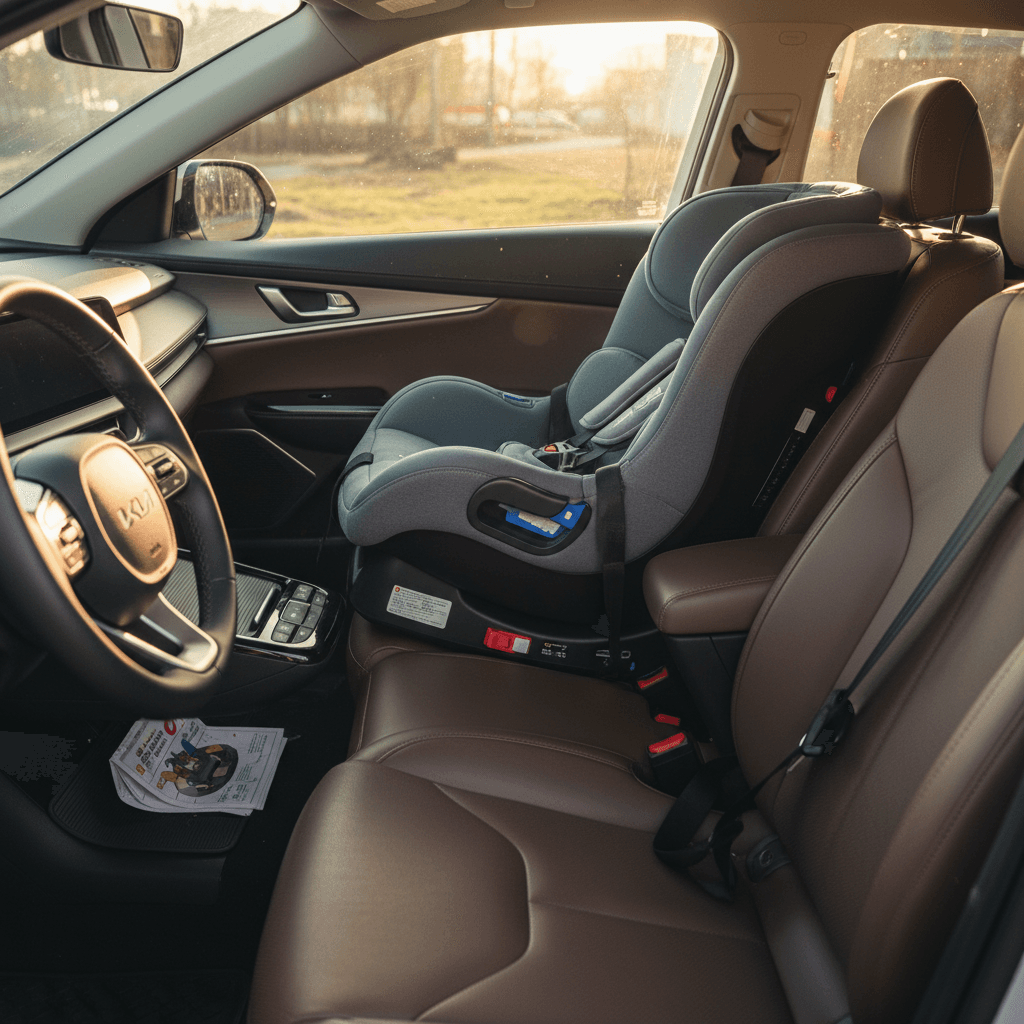
You don’t buy a Tesla Model S for the cupholders. You buy it because it’s quick, quiet, and strangely serene at 70 mph. But if you’ve got kids in car seats, the next question is always the same: will my child seats actually fit, and fit safely, in a Model S? This Tesla Model S child seat fit guide walks you through LATCH locations, rear- and forward-facing setups, booster fit, and even three‑across strategies so you can turn your electric rocket ship into a genuinely family-ready car.
Quick safety reminder
Why a Tesla Model S child seat fit guide matters
The Model S is a mid-size luxury sedan, not a three-row SUV. The sleek roofline, bolstered rear seats, and evolving headrest designs make it a bit different from the boxy crossover you may be used to. That has real implications for rear-facing leg room, booster head support, and three‑across installs. The good news: with the right seats and a careful install, the Model S can be a very safe, very usable family car.
Model S child seat fit at a glance
Model years, seat designs, and why they matter
Tesla has quietly updated the Model S rear seat several times since 2012. From a child‑seat perspective, you can think of them in three broad eras:
How rear seats changed across Model S generations
The basics stay the same, LATCH outboard and 3 tethers, but the details matter for fit.
2012–early 2014: Gen 1 seats
- Flat rear bench with small, low head restraints.
- Two outboard LATCH positions plus a rare center LATCH option on some cars.
- Very car‑seat‑friendly for bulky convertibles; easy three‑across with slim seats.
2014–2020: Updated rear bench
- Bolsters added, slightly more sculpted cushions.
- Outboard LATCH only; center uses seat belt + top tether.
- Roofline starts to pinch headroom for very tall high‑back boosters.
2021–present: Plaid & refresh
- Individualized rear seats; center seat slightly raised.
- LATCH anchors tucked behind flaps with improved covers.
- Smaller center head restraint; matters for backless booster height.
Know your generation
LATCH and top tether locations in the Model S
Every Model S has two sets of lower LATCH anchors in the rear outboard seats and three top tether anchors across the back of the rear seat. That means you can secure a forward‑facing seat or a booster with a top tether in any rear position, even if you’re using the seat belt instead of lower anchors.
- Outboard seats (left and right): lower LATCH anchors in the seat bight plus a top tether anchor behind each seatback.
- Center seat: no dedicated lower LATCH on most cars, plan on a seat belt install plus the center top tether.
- Anchor access: on newer cars you lift or slide a small flap at the seat crack to expose the lower anchors; older cars may have anchors more exposed but still marked with the ISOFIX/LATCH icon.
- Weight limits: Tesla’s manual follows typical guidance, once the combined weight of child + seat exceeds about 65 lb, you switch from lower anchors to a seat belt install while still using the top tether.
Seat belt vs. LATCH for heavier kids
Infant seats: rear-facing setups that work
Infant seats are generally the easiest fit in a Model S. The challenge isn’t width, it’s front‑to‑back room when you install the base in a more reclined position for a newborn.
Best positions for infant seats
- Passenger‑side outboard is usually the sweet spot: you can slide the front seat a notch forward and still keep an adult comfortable.
- Driver’s side outboard works too, but tall drivers may feel cramped with a reclined newborn install.
- The center seat gives more front‑seat room but requires a seat belt install in most Model S years and can make loading trickier.
Practical tips for infant installs
- Start with the base in the passenger‑side outboard position using LATCH; check that the base doesn’t push into the front seatback.
- Use the built‑in recline indicator on the base; don’t rely on the eye test on a sloped EV driveway.
- If space is tight, try a compact infant seat and avoid the huge travel‑system thrones aimed at SUVs.
Signs of a good infant seat fit
Convertible seats: rear- and forward-facing tips
Convertible seats, those that can face rearward for toddlers and then turn forward, are where the Model S’s sleek design starts to negotiate with physics. The key variables are seat height, shell length, and how far you recline it.
Convertible seat strategies in a Model S
Different orientations, different challenges.
Rear-facing toddlers
- Most average-height rear‑facers fit fine behind a front passenger.
- Slim convertibles or those with lower bases give you more headroom under the sloping roofline.
- If a tall driver needs max leg room, consider rear‑facing behind the passenger or in the center with a seat belt install.
Forward-facing harnessed seats
- Any rear position can work; always use the top tether.
- Outboard LATCH is convenient until you hit the weight limit, then switch to a seat belt install.
- Check that the seat’s headrest doesn’t jam into the ceiling when you raise it.
Comfort & access
- The low, wide Model S door openings make getting big kids into harnessed seats easier than many SUVs.
- Watch out for door‑side bolsters; they can tip a seat toward the center if you don’t press straight down when tightening.
Use the center wisely
Boosters in a Model S: high-back and backless
Boosters are where the Model S’s roofline and headrests really matter. Your job with a booster isn’t just to make it fit; it’s to make sure the belt fits your child, low across the hips, crossing the middle of the chest and shoulder, not the neck.
High-back boosters
- Pair best with the outboard positions, which offer full‑size head restraints.
- In 2017+ cars, very tall boosters with big headwings can bump into the sloping roof before reaching maximum height.
- Look for slimmer models if you plan to run two boosters plus a third seat.
Backless boosters
- Work well in outboard spots where the built‑in head restraints are tall enough to reach at least the tops of your child’s ears.
- In newer Plaid‑era cars, the center headrest is shorter; be careful using a backless booster in the middle with a tall child.
- Slim backless boosters (around 15–17 inches wide) help with three‑across plans.
When not to use a backless booster
Can you fit three car seats across in a Model S?
Short answer: yes, but it’s a game of millimeters and model choices. Owners and child‑safety techs commonly report that three narrow seats, often 17 inches wide or less, can work across the back of a Model S, especially in earlier flat‑bench cars. Think Diono‑style narrow convertibles or slim high‑back boosters, not the plush armchair specials.
Three-across planning checklist for the Model S
Use this to sanity‑check whether your three‑across idea is realistic before you start sweating in the driveway.
| Factor | Good sign | Red flag |
|---|---|---|
| Seat widths | Each seat 17" wide or less, or two narrow + one average | Two or more seats 19"+ wide |
| Mix of seat types | At least one narrow booster or convertible in the middle | Three bulky convertibles or integrated cupholders everywhere |
| Seat belt access | You can easily buckle boosters with the other seats installed | You have to un‑install a seat to reach the buckle tongue |
| Headroom | Boosters can extend headwings without touching the roof | Roofline stops you from raising booster to proper height |
| Install method | At least one center seatbelt install to use the full width | All three seats fighting for the same LATCH anchors |
Measurements are approximate; always verify width and fit with your actual seats.
Mock it up before committing
Common fit pitfalls in a Model S, and how to fix them
Typical Model S child-seat fit problems
And the quick fixes most parents miss.
Seat tilting toward the center
The pronounced side bolsters on the rear bench can cause a car seat to lean inboard.
- Press straight down where the child’s feet would go while tightening.
- Check from behind that the base is evenly supported.
- If it still leans, try switching that seat to the other outboard side or the center.
Roofline vs. tall seats
The sloping roof can interfere with tall convertibles or boosters.
- Install the tallest seats in the center position where the roof is highest.
- Choose a seat with a lower overall shell height if your child is long‑torsoed.
Hard-to-access buckles
In three‑across installs, booster kids may not reach the buckle.
- Use rigid booster LATCH where available to keep the booster from sliding.
- Try swapping which position is booster vs. harnessed seat.
- If you still can’t buckle, three‑across in this combo may not be safe.
Installing and routing tethers correctly
In a crash, the top tether can dramatically reduce how far a forward‑facing child’s head travels. Tesla gives you a tether anchor behind every rear seating position, but you need to route the strap correctly around the head restraint.
Top tether rules for Model S owners
1. Always tether forward-facing seats
Whether you install the seat with LATCH or with the vehicle belt, you still attach and tighten the top tether for any forward‑facing harnessed seat allowed to use one.
2. Route over or around the headrest as designed
On most Model S seats, straight tethers go <strong>over the top</strong> of the head restraint; V‑shaped tethers route around each side. Double‑check both your vehicle and seat manuals for diagrams.
3. Find the anchor behind each seating position
Reach behind the seatback; you’ll feel or see the metal anchor or a plastic cover. Don’t clip to cargo hooks or anything that isn’t clearly labeled as a tether point.
4. Tighten until there’s no slack
After the main install is snug, pull the tether until the strap is firm. The goal is to limit forward head movement, not just to attach it loosely.
5. Re‑check after folding seats
If you ever fold the rear seatbacks to haul cargo, make a habit of re‑checking that tether hooks are still correctly routed and fully latched afterward.
Using the optional rear-facing third row
Early Model S cars offered an optional rear‑facing third row in the trunk, designed specifically for older children: roughly 35–77 lb and at least 37 inches tall, with height capped so the child’s head can’t contact the hatch glass. It’s not a traditional car seat location, but it is a built‑in child restraint.
Third-row reality check
- You can’t add aftermarket car seats to those third‑row positions; they’re meant to be used as‑is with the built‑in harness.
- Crash forces are different back there, so reserve these spots for kids who clearly meet the label limits and can sit correctly for the whole ride.
- If you’re shopping a used Model S with the third row, inspect the harnesses, buckles, and hinges for obvious wear or damage before trusting them.
Shopping used Model S with kids in mind
If you’re considering a used Model S as your family hauler, treat the rear seat and anchor setup as seriously as you treat battery health and range. You want a car where your real‑world child seats fit as well as the idealized ones in marketing photos.
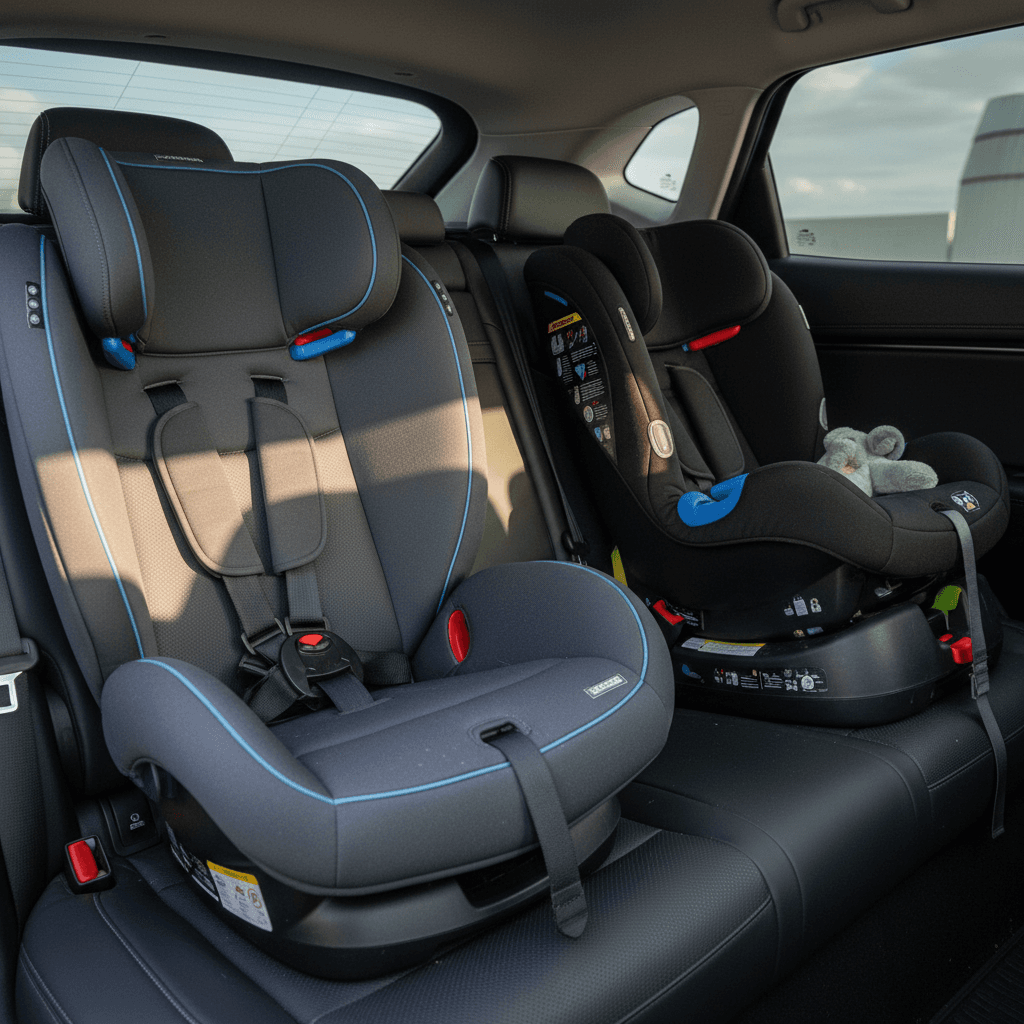
Family-focused checklist for a used Model S
Battery health matters, but so do anchors, belts, and kids’ comfort.
Verify anchors & belts
- Check that all three rear top tether anchors are present and undamaged.
- Locate both outboard LATCH sets; make sure flaps or trim pieces aren’t broken.
- Ensure all rear belts retract smoothly and latch with an audible click.
Test your actual seats
- Bring at least one of your child seats to the test drive.
- Try your trickiest seat (bulky convertible, tall booster) in the worst‑case position, usually behind a tall driver.
- Check door closing clearance with the seat installed.
Lean on expert help
When you shop through Recharged, you get a Recharged Score battery health report, fair‑market pricing, and access to EV specialists who can walk you through day‑to‑day realities like charging, and yes, how your child seats will fit for school‑run duty.
Frequently asked questions: Tesla Model S and child seats
Tesla Model S child seat FAQ
Bottom line: making your Model S family-ready
The Tesla Model S is a slipstream luxury sedan that also happens to be a credible family car, as long as you respect the constraints of physics and headroom. Two child seats are easy; three can be done with the right gear and some patience. The constants are simple: know your model year, use the right anchors the right way, and prioritize a rock‑solid install over a particular brand or Pinterest‑ready look.
If you’re already a Model S owner, take an afternoon to re‑evaluate your current setups using this guide and your manuals side by side. If you’re still shopping, consider working with Recharged for a used Model S: you’ll get transparent battery health, fair pricing, and access to EV specialists who understand what it means to bolt real‑world family life, car seats and all, onto an electric flagship. That’s how you turn your Model S from a fast car into the right car.