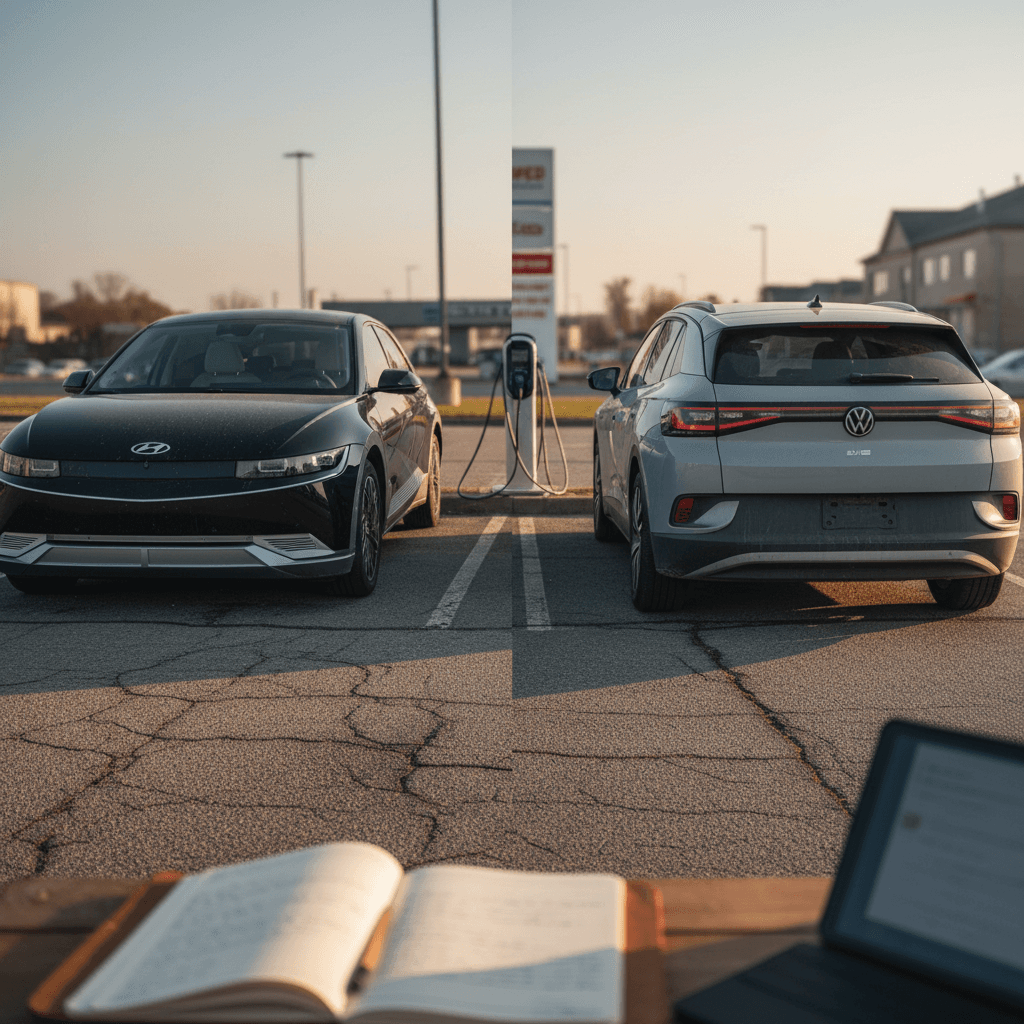
If you’re cross-shopping a used Hyundai IONIQ 5 vs VW ID.4, you’re in the sweet spot of the used EV market: compact electric SUVs with real range, usable space, and sensible pricing. But they don’t age the same. Platform tech, charging performance, recalls, and software support all matter more for a used EV than a used gas car, and that’s where these two diverge.
Quick takeaway
Overview: Used IONIQ 5 vs VW ID.4 in a nutshell
How these two used EVs differ at a glance
Same basic format, very different personalities and charging behavior
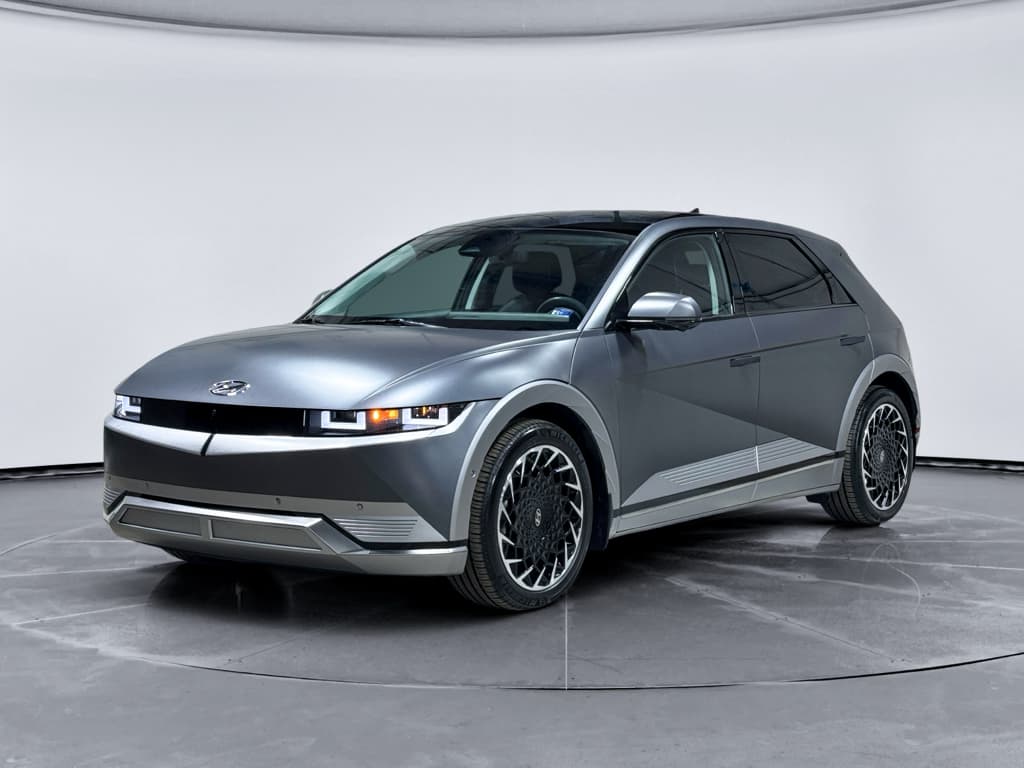
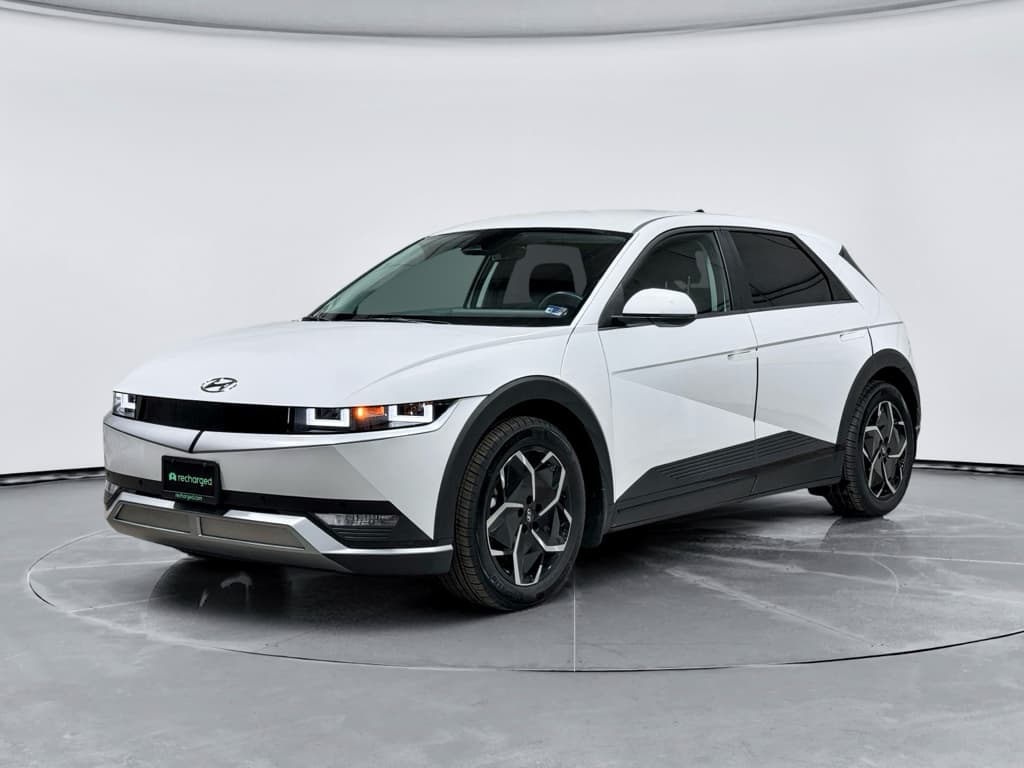
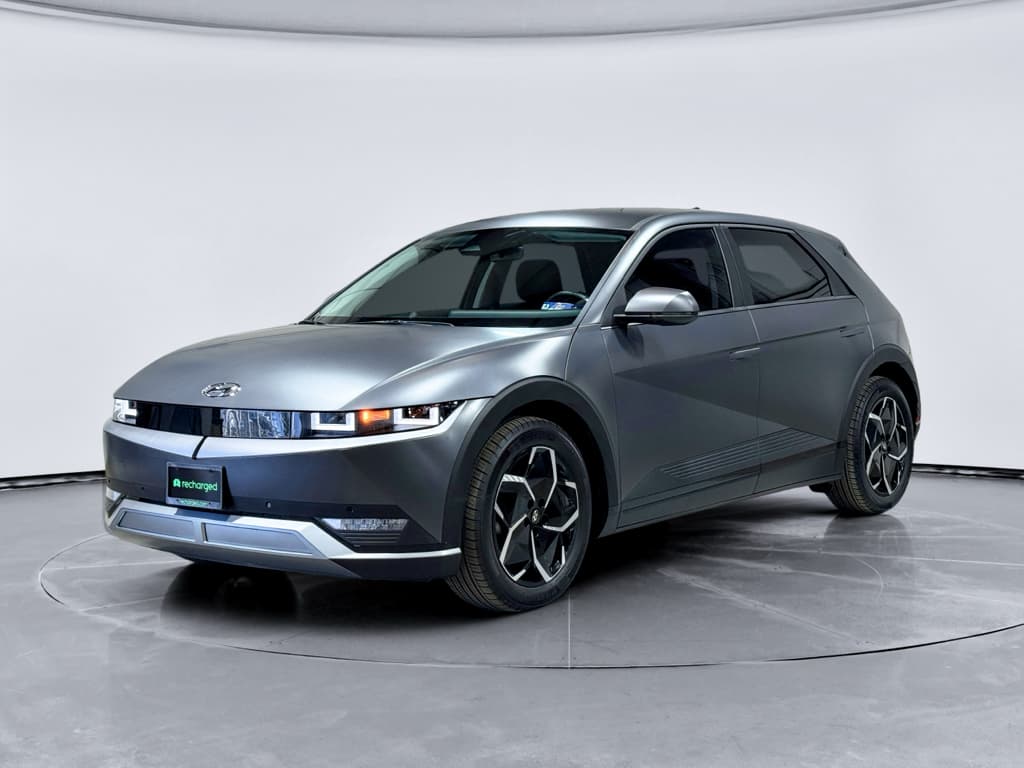
Hyundai IONIQ 5 (2022–2024 used sweet spot)
The IONIQ 5 rides on Hyundai’s 800V E-GMP platform, which delivers standout DC fast charging speeds and competitive range. On the used market, it skews a bit more premium, with a lounge-like interior and strong tech story. Later models add support for Tesla’s NACS fast-charging standard via adapter.
Volkswagen ID.4 (2021–2024 used sweet spot)
The ID.4 is a more conventional-feeling crossover with comfortable ride and solid space. It uses a 400V architecture with slower DC charging than the IONIQ 5 but can be priced aggressively used, especially earlier 2021–2022 builds and higher-mileage examples.
Used-market reality
Key specs at a glance
Used Hyundai IONIQ 5 vs VW ID.4: core specs (typical U.S. trims)
Approximate specs for common U.S. models you’ll see used (2022–2024). Always verify exact trim and equipment on the specific car you’re considering.
| Spec | Hyundai IONIQ 5 (58–77.4 kWh packs) | VW ID.4 (62–82 kWh rated packs) |
|---|---|---|
| EPA range (typical) | ~220–303 miles depending on battery and RWD/AWD | ~209–291 miles depending on pack and drivetrain |
| Battery architecture | 800V class, up to ~239 kW DC on most trims | 400V class, generally ~125–175 kW max DC depending on year |
| 0–60 mph (popular trims) | ~7.3 sec RWD / ~4.5 sec AWD | ~7.5–8.5 sec for most non-GTX U.S. trims |
| On-board AC charger | Up to 10.9 kW Level 2 | ~11 kW Level 2 |
| Drive layout | RWD or AWD | RWD or AWD |
| Notable features | Ultra-fast charging, Vehicle-to-Load (V2L) power export on many trims | More conventional SUV ergonomics, sometimes lower used prices |
Specs vary by model year and trim; use this as a directional comparison, not a VIN-level spec sheet.
Spec sheet trap
Range, batteries, and real-world efficiency
Hyundai’s IONIQ 5 has earned a reputation for efficient highway cruising and honest range. Standard Range models use a ~58 kWh pack rated around 220 miles, while the larger 77.4 kWh pack delivers EPA ranges up to just over 300 miles in RWD form. Real-world highway drivers typically see a bit less than the EPA number, especially in cold weather, but the IONIQ 5 tends to hold its own among non-Tesla EVs.
The VW ID.4, depending on year and pack (roughly low 60s kWh usable for smaller packs and around mid‑70s usable for larger ones), is usually EPA-rated in the 209–291 mile band. It’s reasonably efficient, but its heavier curb weight and less advanced thermal management strategy can hurt winter range more noticeably than in the Hyundai. Early software also managed charging and range estimates more conservatively, which some owners perceive as “shorter range” versus newer builds.
When a used IONIQ 5 shines on range
- RWD long‑range trims (77.4 kWh) make excellent commuters and occasional road‑trip cars.
- Efficient powertrain plus fast charging means you can run the battery deeper without trip anxiety.
- Later‑model cars with NACS access widen your reliable fast‑charging options.
When a used ID.4 is "good enough" on range
- If your daily driving is mostly urban or suburban, even lower‑range trims cover most real‑world needs.
- For drivers who plug in every night at home, the range gap vs IONIQ 5 is less noticeable.
- However, repeated long‑distance highway travel exposes its weaker charging and winter range losses.
Cold-weather note
Charging performance: where the IONIQ 5 pulls ahead
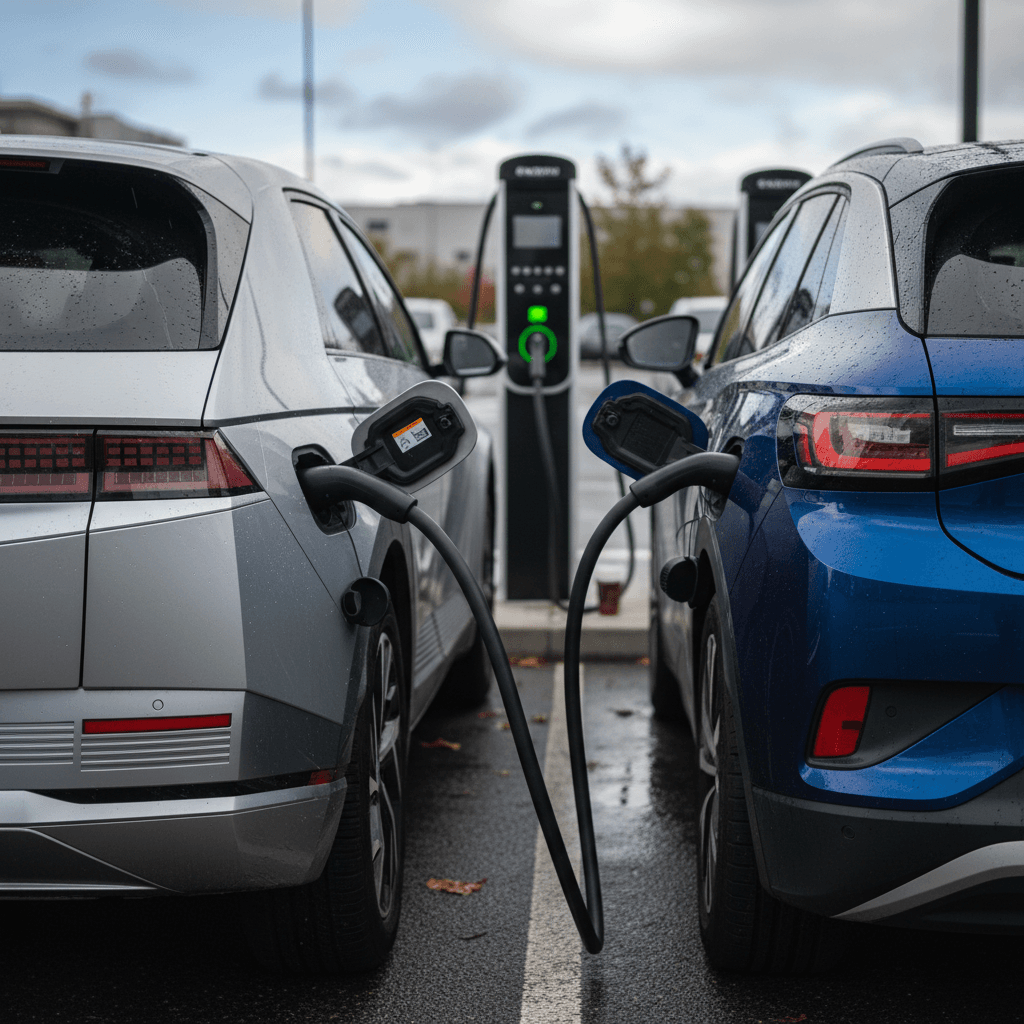
For used EVs, charging speed ages better than styling. This is the single biggest practical difference between a used IONIQ 5 and a used ID.4.
Typical DC fast-charging experience (when new)
The IONIQ 5’s 800V platform isn’t just marketing. On a typical 150–350 kW DC fast charger, it can take you from low state of charge to 80% in about the time it takes to grab coffee and use the restroom, assuming the pack is warm. The ID.4, on the other hand, hits decent peak speeds but spends more time at lower power levels, stretching sessions into the half‑hour plus range.
Road‑trip winner
On the AC side, both vehicles have roughly 11 kW on‑board chargers, so home Level 2 charging feels similar: expect a typical overnight session to comfortably refill a depleted battery on a 40–48 amp circuit.
Interior space, comfort, and practicality
IONIQ 5: Lounge on wheels
The IONIQ 5 leans into a modern, lounge‑like cabin: flat floor, long wheelbase, sliding rear seats, and available reclining front “relaxation” chairs in some trims. Straight lines and bright materials make the interior feel airy and futuristic. Families appreciate the generous rear legroom and wide‑opening doors.
Cargo space is competitive for a compact SUV; the only caveat is that its styling makes it look larger than it is. If you’re coming from a midsize ICE SUV, check the hatch area in person to make sure it fits strollers, dogs, or sports gear the way you expect.
ID.4: Familiar crossover feel
The ID.4 feels more like a traditional compact SUV. Seating position is upright, visibility is good, and the cargo area is boxier and easier to pack. Materials are mixed, some trims feel solid, others a bit cost‑cut in places, but overall it’s a comfortable place to spend time.
If you prefer a conventional cockpit layout and a calmer design language, the ID.4 may feel more “normal,” which some used buyers actually prefer over the IONIQ 5’s concept‑car vibe.
Family‑use tip
Tech, driving feel, and everyday usability
On the road, the IONIQ 5 and ID.4 live in the same segment but appeal to different tastes. The Hyundai tends to feel quicker, more responsive, and more refined in how it delivers its power. Even non‑performance trims with the big battery have brisk acceleration, especially in AWD form. Steering is light but accurate, and the ride is generally comfortable, though the big wheels on some trims can transmit sharp impacts.
The ID.4 prioritizes a calm, easygoing demeanor. Acceleration is perfectly adequate for daily driving but less entertaining than the IONIQ 5, and the chassis tuning leans more toward comfort than engagement. For many buyers, that’s a positive: it feels like an ordinary compact SUV that just happens to be electric.
Infotainment and controls: strengths and annoyances
Software ages quickly; this matters more for a 3–5‑year‑old EV than for a gas car.
Hyundai IONIQ 5 tech
- Dual wide screens with relatively straightforward menus.
- Physical buttons and knobs for key climate and volume functions.
- Hyundai’s driver‑assist suite is mature and confidence‑inspiring.
- Later models improve navigation and charging‑station data.
VW ID.4 tech
- Heavier reliance on touch sliders and capacitive controls, which some owners dislike.
- Software updates have gradually improved speed and stability, but early cars can still feel laggy.
- Assist features are competent, though lane‑keeping tuning can feel less natural than Hyundai’s.
Software frustrations live on
Reliability, recalls, and battery risk on the used market
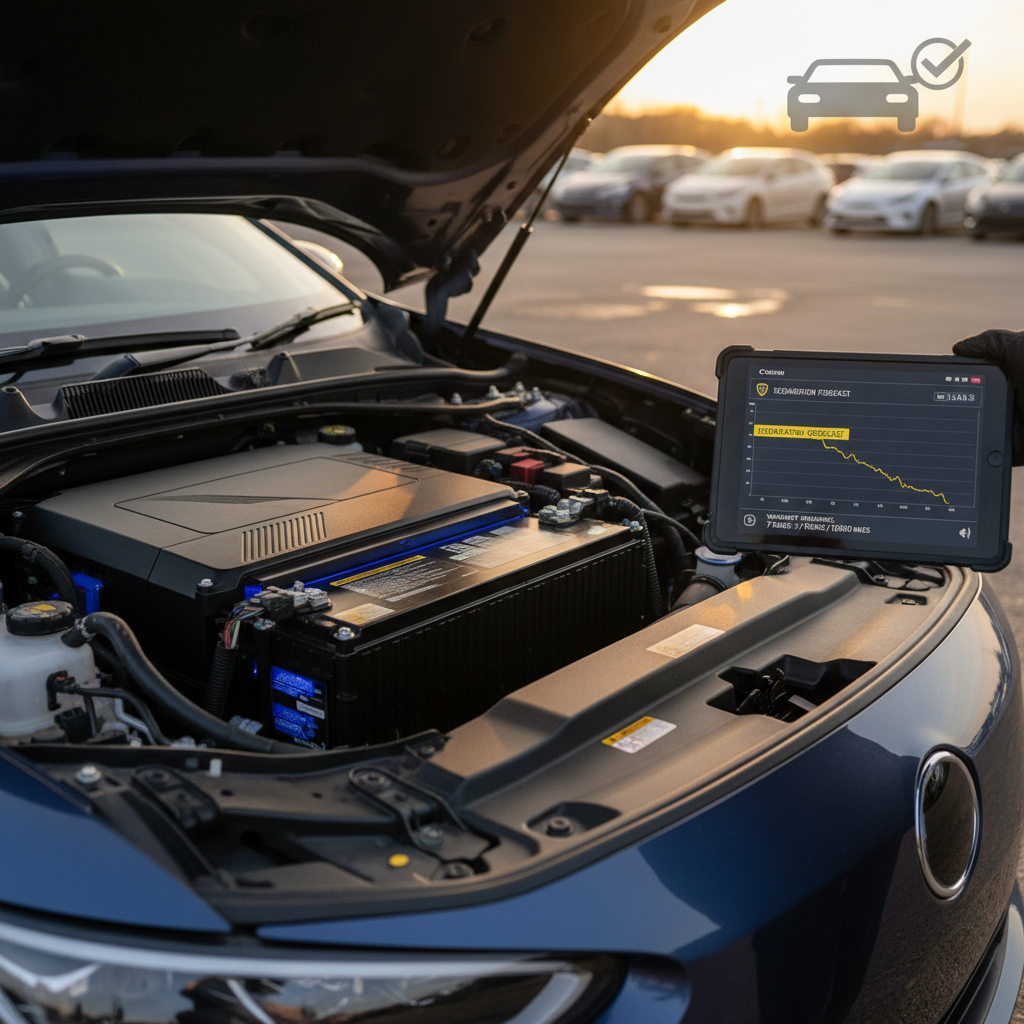
Neither of these EVs is old enough to have a full lifetime reliability profile the way a decade‑old hybrid might. That said, we do have meaningful data on software bugs, early build issues, and, in the ID.4’s case, a significant high‑voltage battery recall for certain 2023–2025 vehicles related to fire risk. For those affected, VW is instructing some owners to limit state of charge, avoid DC fast charging, and in some cases is replacing packs or modules at no cost once parts and procedures are ready.
The IONIQ 5 has had its own garden‑variety recalls and software campaigns, typical for a modern EV, but nothing on the same scale or severity as an HV‑battery fire‑risk recall to date. Its E‑GMP pack design and thermal management strategy have generally performed well in the field so far, though long‑term degradation data is still emerging.
Used‑buyer risk profile
What to watch closely before you commit.
Hyundai IONIQ 5 risk notes
- So far, no systemic HV‑battery fire‑risk campaign comparable to recent ID.4 recalls.
- As with any EV, individual cars can have degraded packs, especially high‑mileage DC‑fast‑charged ones.
- Software and infotainment issues exist but are less notorious than VW’s.
VW ID.4 risk notes
- Recent recall covering tens of thousands of ID.4s for potential HV‑battery fire risk, with some owners advised to limit use until fixes are complete.
- Early‑build quality bugs (water intrusion, window issues, infotainment freezes) are better understood now but still worth checking.
- Battery packs themselves are generally robust once sorted, but recall and campaign history should be non‑negotiable in your due diligence.
Don’t ignore recall status
Ownership costs: depreciation, incentives, and charging
Used EV economics are volatile, but a few patterns are clear. The ID.4 sold in higher volumes through aggressive leases and incentives, which tends to push used values down faster. That’s good if you’re buying, less good if you’re the second owner watching values continue to slide. The IONIQ 5, with its stronger enthusiast following and charging advantage, often holds a price premium, especially for well‑equipped trims with the larger pack.
On the running‑cost side, both vehicles offer similar home‑charging economics: your cost per mile will be dominated by your local electricity rates. Public fast‑charging will usually be more expensive per kWh than home charging, but the IONIQ 5’s faster sessions can reduce how much peak‑pricing time you actually spend plugged in. Insurance and tire costs will be comparable for similarly‑priced trims.
Leverage used‑EV incentives
Which should you buy used: IONIQ 5 or ID.4?
Choose based on how you actually drive
Neither EV is universally better; one will map more cleanly to your life.
Pick a used Hyundai IONIQ 5 if…
- You plan to road‑trip or rely on DC fast charging regularly.
- You care about future‑proofing with strong charging hardware and emerging NACS access.
- You want a more distinctive design and lounge‑like interior.
- You value quicker acceleration and more refined driving dynamics.
Pick a used VW ID.4 if…
- You mainly charge at home and treat DC fast charging as a rarity.
- You find a significantly cheaper, well‑documented example with clean battery and recall history.
- You prefer a conventional SUV feel and simpler packaging.
- You’re comfortable taking extra time to verify recall completion and software updates.
If you strip away brand loyalties and focus purely on usability, the IONIQ 5 is the stronger used‑EV choice for most American drivers who will ever use public fast charging. Its 800V platform, competitive range, and relatively polished tech stack age well. The ID.4 can be a rational buy when the price is right and the VIN history checks out, but you’re taking on more homework to get to the same confidence level.
How Recharged helps you de-risk the choice
Ready to find your next EV?
Browse VehiclesChecklist: How to shop a used IONIQ 5 or ID.4 smartly
Used‑EV shopping checklist for IONIQ 5 and ID.4
1. Pull a detailed battery health report
Don’t rely on dash range estimates. Use a seller that provides <strong>independent pack diagnostics</strong> (like the Recharged Score) so you can see estimated remaining capacity, DC fast‑charge history, and any abnormal cell behavior.
2. Verify all open recalls and campaigns
For the ID.4 especially, demand documentation that <strong>HV‑battery and software recalls</strong> have been completed. For either vehicle, ask the seller for printouts from a franchised dealer or service system, not just verbal assurances.
3. Check DC fast-charging behavior during a test
If possible, arrive at a DC fast charger with the battery around 20–40% and watch how quickly it ramps. An IONIQ 5 should climb rapidly to high power levels; an ID.4 should reach and hold its expected peak. Sudden drops or very low power on a healthy, warm pack are red flags.
4. Evaluate software and controls for livability
Spend time in menus, navigation, and driver‑assist settings. If the infotainment interface or touch‑sensitive controls annoy you in the first 10 minutes, that’s your future daily experience talking. Don’t ignore it just because the deal is good.
5. Inspect tires, brakes, and suspension
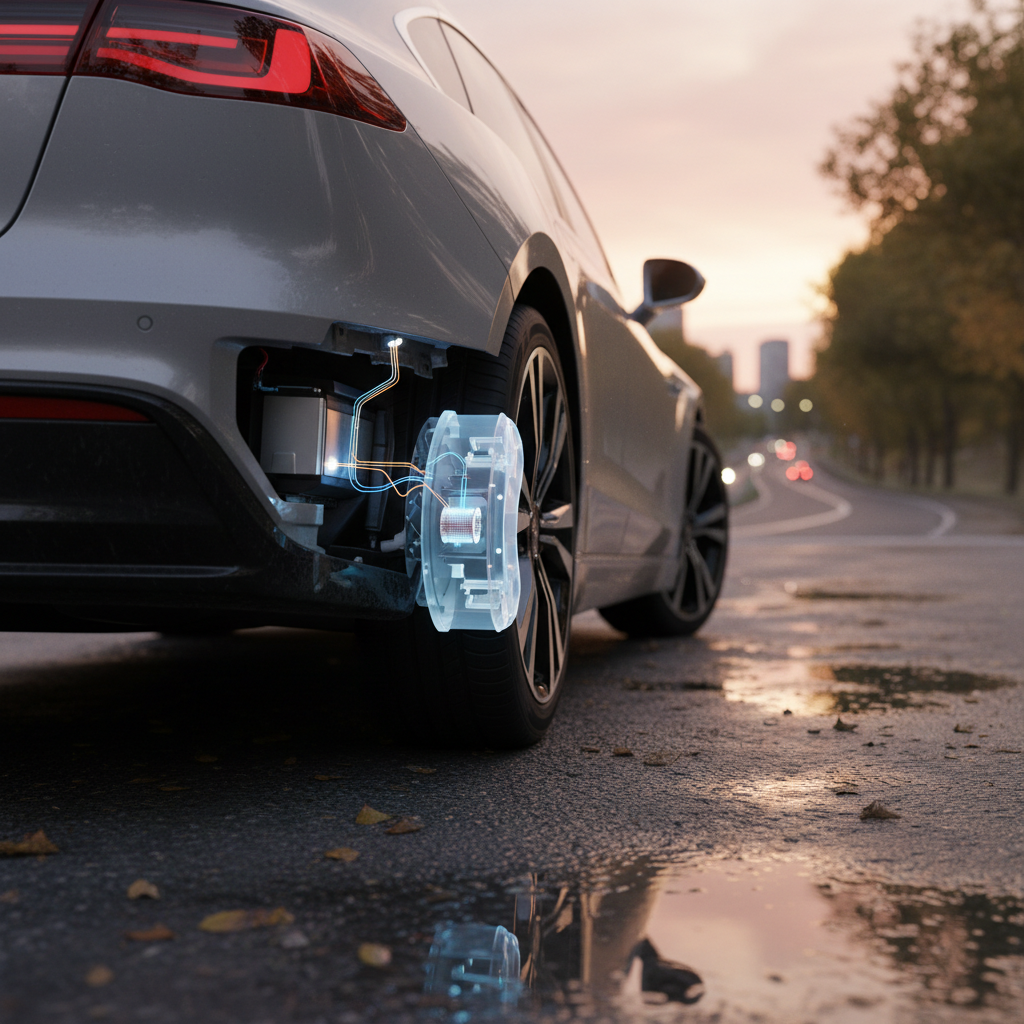
EVs are heavy; they can chew through tires and suspension components faster than gas counterparts. Uneven tire wear, clunks over bumps, or steering wander should prompt a <strong>pre‑purchase inspection</strong> or re‑negotiation.
6. Run the total cost of ownership
Look beyond the sticker: factor in insurance quotes, likely charging mix (home vs public), potential incentives, and financing terms. Recharged can help you <strong>finance a used EV, value your trade‑in, and arrange delivery</strong> so you can compare real monthly costs across vehicles.
FAQ: Used Hyundai IONIQ 5 vs VW ID.4
Frequently asked questions about used IONIQ 5 vs ID.4
The used EV market is finally mature enough that you can be picky, not just about price, but about platform, charging curve, and long‑term livability. Between a used Hyundai IONIQ 5 and a VW ID.4, the Hyundai generally wins on fast‑charging performance, refinement, and future‑proofing. The Volkswagen can still be a rational buy when the numbers work and the history is clean, but it demands more homework. If you’d rather spend that effort comparing great options than dodging bad ones, shopping through Recharged, with verified battery health, transparent pricing, financing, and nationwide delivery, takes a lot of the uncertainty out of choosing your next electric SUV.