Shopping for EV rooftop tent compatible models is not as simple as “slap a tent on the roof and go find some trees.” EVs add three extra layers of homework: roof‑load limits, aero drag that eats range, and driver‑assist systems that don’t love having a fiberglass suitcase strapped to their heads.
Quick reality check
Why EVs and rooftop tents are trickier than you think
On a gas SUV, a rooftop tent is mostly a question of taste and fuel money. On an EV, it’s also a question of usable road‑trip range and whether the car’s structure and software are on speaking terms with that tent.
- EVs are heavy already, so you’re closer to suspension and tire limits before you add a 150–200 lb tent and camping gear.
- High drag is a bigger deal: an EV’s efficiency lives and dies by aero. A tall soft‑sided tent can knock 15–25% off your highway range in the real world.
- Many EVs have full glass roofs and delicate trim; you can’t just clamp anything, anywhere, and call it good.
- Driver‑assist and 360° camera systems often rely on roof‑mounted antennas and sensors that can be blocked by a tent or rack.
So the real question isn’t just “Can I mount a tent?” It’s, “Which EVs handle a rooftop tent gracefully, and which ones make you pay for the vibe with anxiety at every DC fast charger?”
How to read roof-load ratings (dynamic vs static)
If you remember nothing else from this article, remember this: dynamic is the roof‑load number that matters for rooftop tents on the road, not static.
Roof-load terms you must understand
These numbers decide whether your EV and rooftop tent are a match
Dynamic load
The maximum weight the roof rack can safely support while driving. This includes the tent, crossbars, and any gear onboard.
Typical EV SUV values are 150–220 lbs; Rivian goes higher.
Static load
The maximum weight the roof can hold when parked, that’s tent plus people plus bedding.
Often 3x the dynamic rating, so 600–800+ lbs on some trucks/SUVs.
System weight
The sum of the tent, crossbars/rack, and any cargo up top.
This is what must stay under your dynamic rating while driving.
Don’t ignore the fine print
As a reference point, Rivian’s own documentation and accessory makers quote around 250 lbs dynamic and roughly 780 lbs static per crossbar pair on the R1T/R1S when using factory mounting points. That’s plenty for a 150–180 lb hard‑shell tent plus two adults once you’re parked, as long as you respect the on‑road limit.
Best EVs for rooftop tents today
Let’s start with the good news: a few EVs are genuinely rooftop‑tent friendly, not just technically compatible after three pages of disclaimers. These are the models that overlanders are actually running with tents, racks, and muddy kids in the back.
Standout EV platforms for rooftop tents
Rivian R1T: the EV rooftop‑tent benchmark
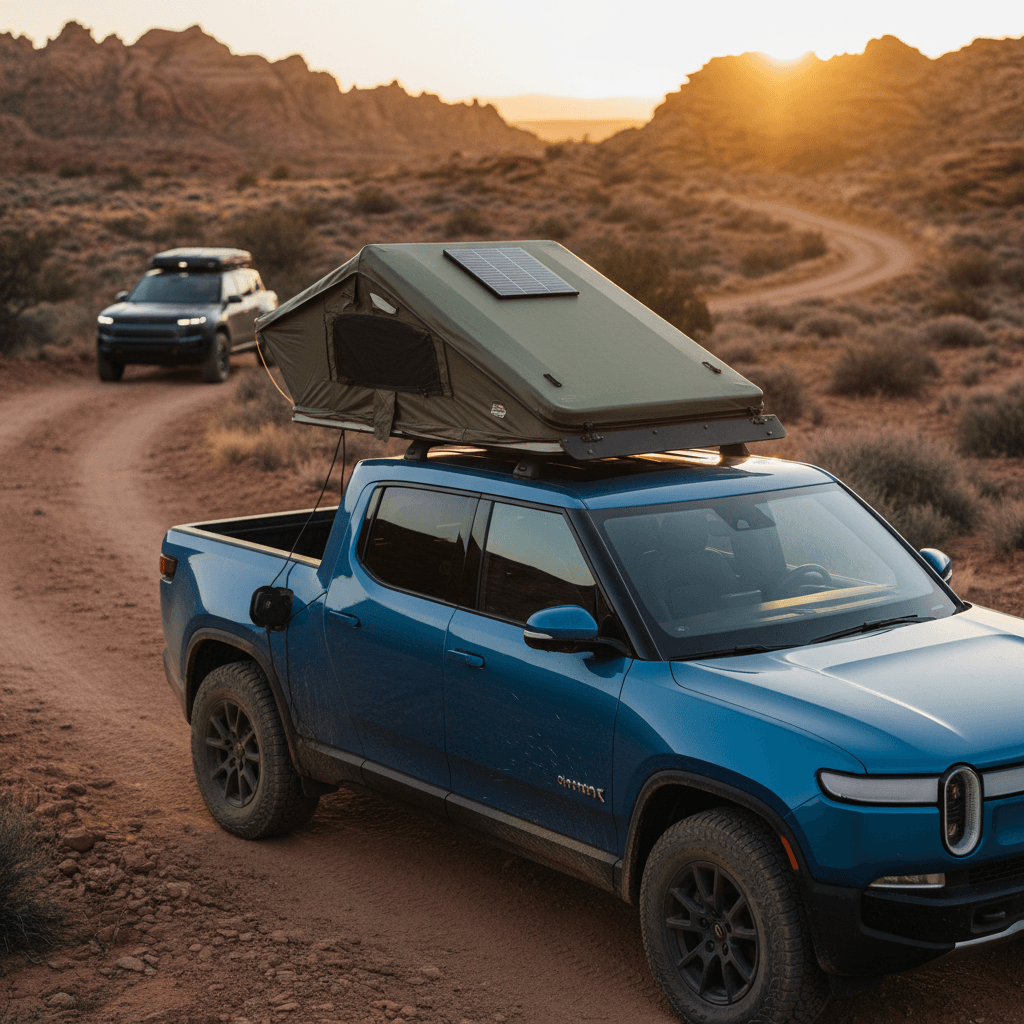
If you built an EV specifically to wear a rooftop tent, you’d end up very close to a Rivian R1T. It has stout factory mounting points at the roof and bed, healthy roof‑load ratings, and a suspension calibrated for off‑road camping rather than mall‑crawling.
- Factory and aftermarket racks commonly cite ~250 lbs dynamic and ~780 lbs static per crossbar pair on the R1T, giving plenty of margin for a hard‑shell tent and campers once parked.
- A popular setup is a hard‑shell iKamper or Roofnest tent mounted over the bed rack, which keeps aero drag down and avoids the shark‑fin antenna and glass roof.
- Owners who keep the tent behind the cab report minimal range hit, often just a few percent, compared to cab‑over installs that act like a sail and can bite much deeper into range.
- Rivian has even partnered with iKamper on a bed‑mounted Skycamp Mini variant designed specifically not to wreck range or eat the bed.
Bed over roof, every time
Rivian R1S: full-family electric overlander
The R1S trades the pickup bed for a traditional SUV silhouette and a panoramic glass roof, but it’s still a rooftop‑tent favorite. Crossbars attach to reinforced points along the roof rails, and the rack manufacturers who cater to Rivian owners design around rooftop tents as a primary use case.
- Rivian and aftermarket racks commonly work within that same ~250 lbs dynamic / ~780 lbs static guidance, more than adequate for tent plus two adults when parked.
- Owners routinely run hard‑shell clamshell tents (Thule, iKamper, Roofnest, etc.); the main complaint isn’t strength, it’s height, you’re often nudging 8 feet overall, which can limit older parking garages.
- Anecdotal testing from R1S drivers shows 20–25% highway range loss with a full‑size tent on the roof, even with a wind deflector, especially at interstate speeds.
- Bed‑style options obviously don’t exist here, so you’re accepting a bigger aero penalty than with an R1T bed rack setup.
Watch the shark fin
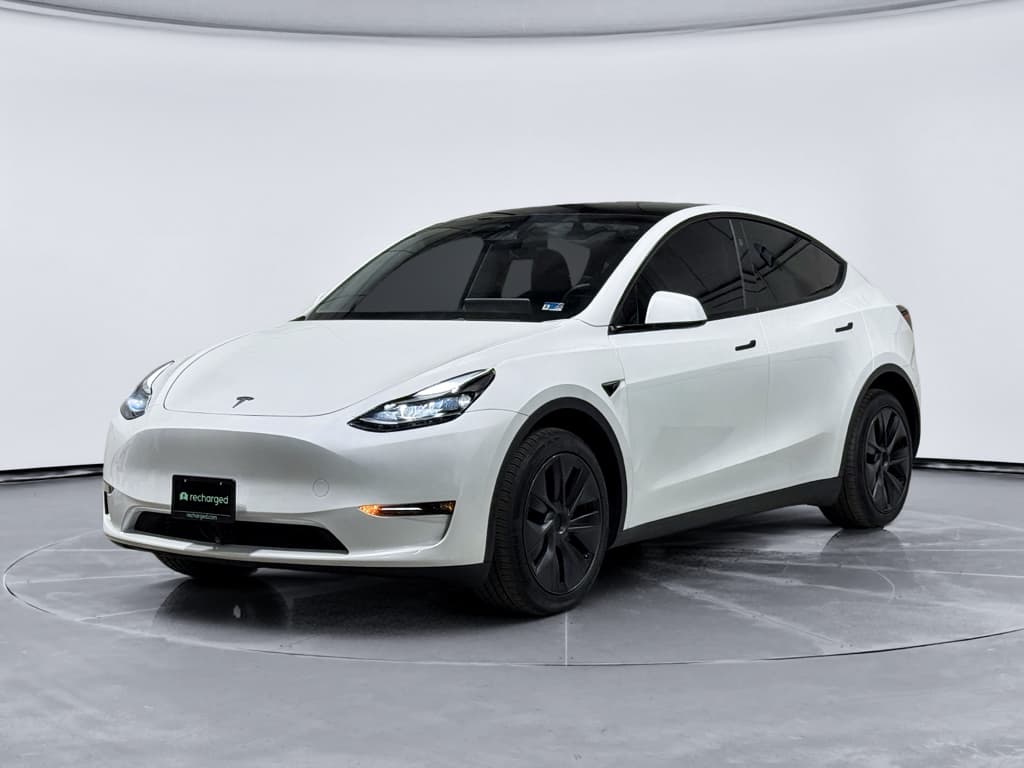
Tesla Model Y: doable with a compact tent and the right rack
The Tesla Model Y has become the de facto family EV, and people understandably want to turn it into an electric Westfalia. It can work, but you’re playing with less margin than in a Rivian.
- Tesla’s official roof‑load rating for the Model Y with factory rails and crossbars is in the neighborhood of 165–175 lbs dynamic. That has to cover the tent, crossbars, and any extra gear up top.
- That rating makes the Y a good candidate for smaller hard‑shell or soft‑shell tents in the 110–140 lb range, not giant four‑person condos.
- The all‑glass roof means you should stick to Tesla’s own rack or well‑tested aftermarket systems that use the factory mounting points, no universal clamp‑on hardware.
- Expect a noticeable efficiency penalty at highway speeds; 10–20% is a sensible planning estimate depending on tent size and how fast you drive.
Tesla warranty gray zone
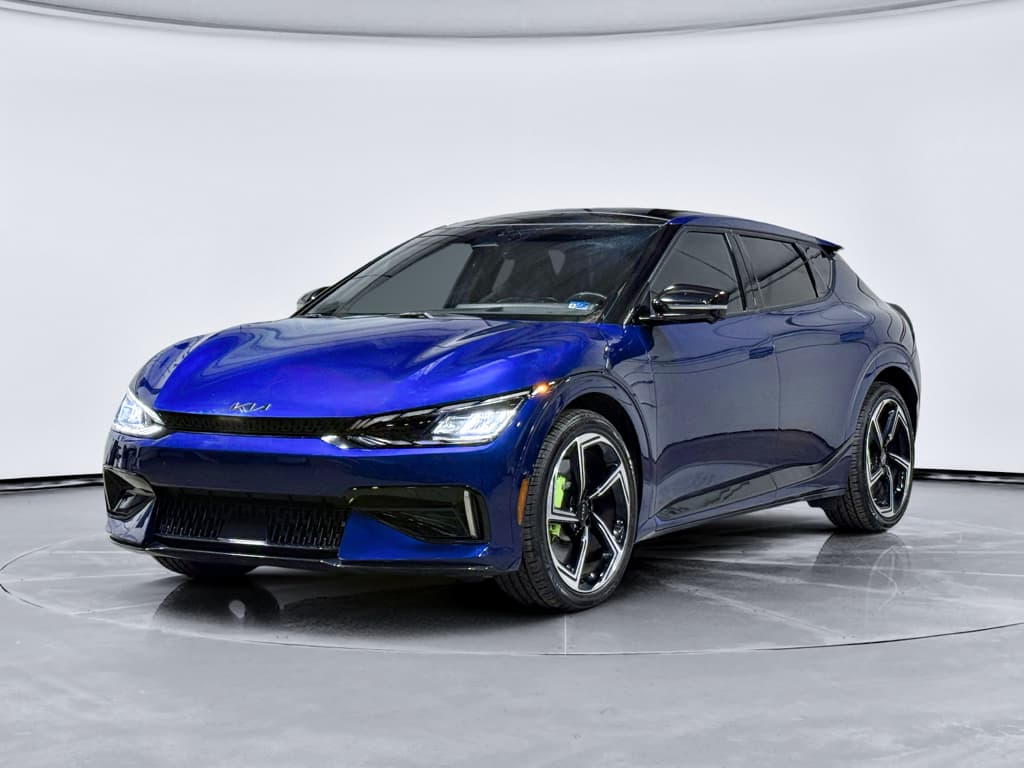
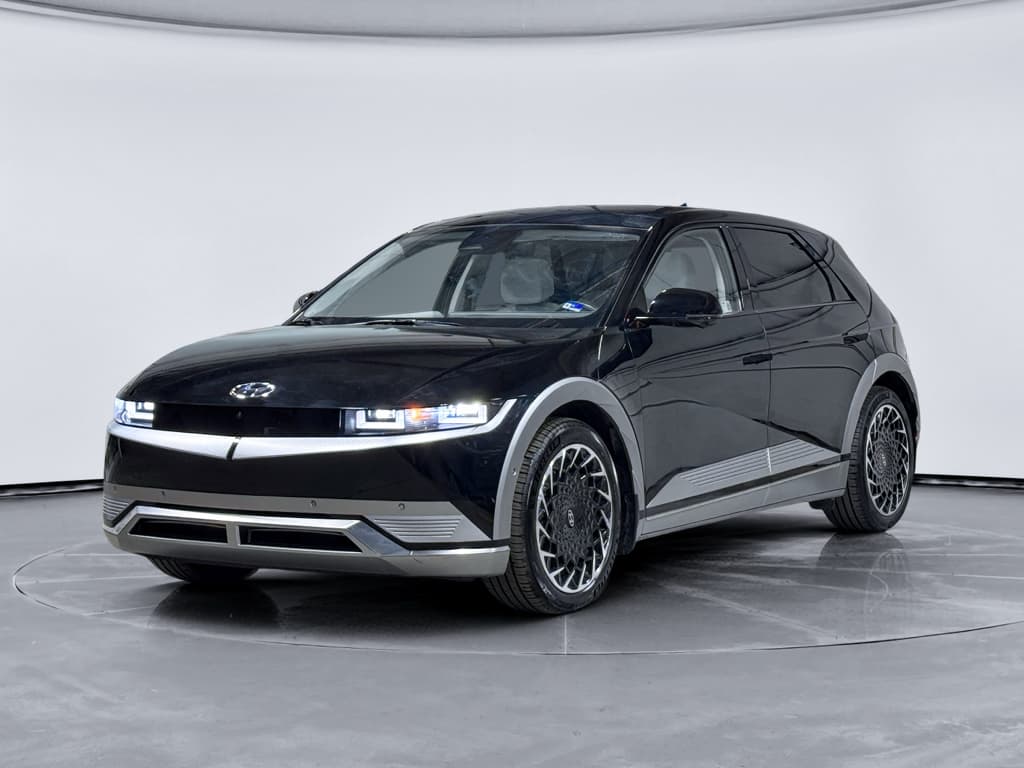
Hyundai Ioniq 5 & Kia EV6: light, low-profile tents only
The Ioniq 5 and Kia EV6 sit in that sweet spot of being relatively light, efficient EVs with traditional hatchback/crossover shapes. They do have official roof‑rack systems, but you have to be realistic about how much tent you’re asking them to carry.
Dealer and owner documentation for similar Kia crossovers calls out numbers like 220 lbs (100 kg) maximum on the roof rack while driving, with up to ~880 lbs static when parked, provided the load is evenly distributed. Hyundai’s guidance for the Ioniq 5 is generally similar: roughly 75–80 kg (165–176 lbs) dynamic for the rack.
- Those dynamic limits leave room for a compact, aerodynamic hard‑shell or mid‑size soft‑shell tent plus factory crossbars, but not an enormous four‑adult clamshell and a kayak.
- Owners who use these cars for roof tents typically run the lightest tents they can find and keep speeds moderate to control range loss.
- Clip‑on generic racks are a bad idea for rooftop tents on these cars; you want factory rails or dealer‑approved systems that tie into the body structure.
EVs that need extra caution, or alternatives
Between the Rivians and the crossovers, you have a third bucket of EVs that are technically compatible with roof racks, but either the roof structure, glass coverage, or aero profile make them poor rooftop‑tent candidates for most people.
- Low‑slung sedans like the Tesla Model 3 or Hyundai Ioniq 6, which can carry a light rack but aren’t ideal platforms for the weight and drag of a tent.
- Compact EVs with no official roof‑rack rating; if the owner’s manual doesn’t list a dynamic roof load, assume “no rooftop tent” unless the manufacturer says otherwise.
- Older compliance‑car EVs (Leaf, e‑Golf, etc.) with modest highway range even before you add a draggy box on top.
When in doubt, look in the manual first
Range hit: how much a rooftop tent really costs you
Let’s talk pain. How much usable road‑trip range are you actually giving up bolting a tent to your EV?
Typical EV range impact with rooftop tents
Real‑world reports vary by speed, weather, and tent design, but these ranges are a useful starting point.
| Setup | Placement | Typical highway range hit | Notes |
|---|---|---|---|
| Rivian R1T + hard-shell RTT | Over bed rack, below roofline | ~0–5% | Owners often can’t see a clear difference vs stock at 65–70 mph. |
| Rivian R1S + full-size RTT | On roof, above windshield | ~15–25% | Boxy SUV, tall tent; some drivers report ~300 → ~230 miles usable at highway speeds. |
| Model Y + compact RTT | On roof rails | ~10–20% | Smaller tent and lower frontal area help, but it’s still a big aero penalty. |
| Ioniq 5 / EV6 + light RTT | On roof rails | ~10–20% | Relatively efficient but range hit grows quickly above 70 mph. |
Use these numbers for planning, then verify with your own test loop.
Do a shakedown loop first
Aerodynamics dominates here. A 30–40 lb difference in tent weight is trivial compared with a tall, bluff shape that sticks a foot above the roofline. If you want to preserve as much range as possible, pick the lowest, most streamlined tent you can, mount it as far back as is safe, and slow down 5–10 mph.
Rooftop tent on EV vs bed or hitch tent
Rooftop tent (traditional)
- Pros: unbeatable views, flat sleeping surface, less dust than ground camping, no need to clear rocks and roots.
- Cons: biggest aero hit, higher center of gravity, trickier ladder access for kids or dogs, more sensitivity to crosswinds.
- Best on: Rivian R1S, Model Y, Ioniq 5 / EV6 with low‑profile lightweight tents.
Bed or hitch-mounted tent
- Pros: much smaller aero penalty, lower center of gravity, easier access; often better range on long highway runs.
- Cons: eats bed space or rear cargo access; model‑specific mounting hardware.
- Best on: Rivian R1T and other electric pickups; a smart alternative if your SUV’s roof rating is borderline.
Why Rivian R1T shines here
Roof racks, glass roofs, and safety checklist
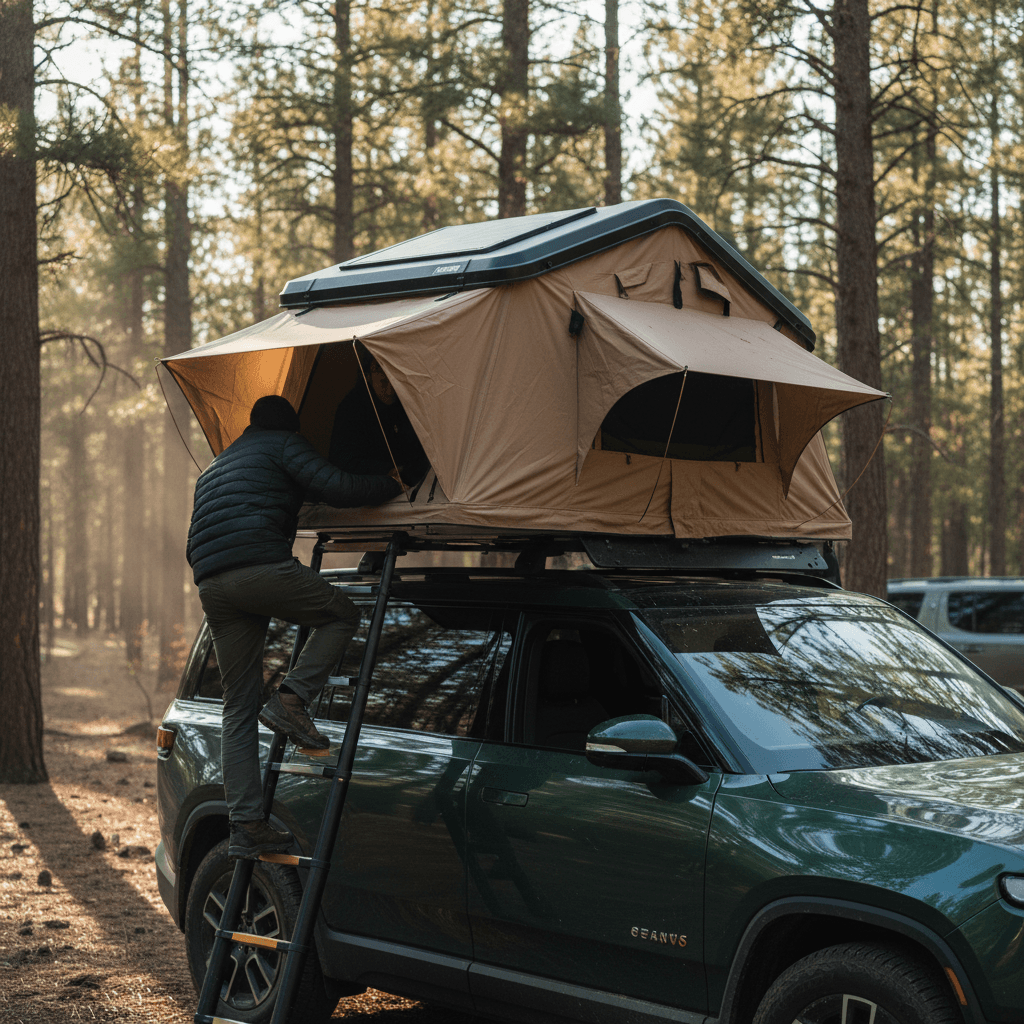
Most modern EVs have a lot of glass up top. That’s great for stargazing from your sleeping bag, less great for clamping down a 150 lb tent with four bargain‑bin U‑bolts. Get your mounting hardware wrong and you’re into cracked glass and insurance adjusters.
Safety checklist before you put a tent on an EV roof
1. Confirm dynamic and static ratings
From the owner’s manual or OEM documentation, find the maximum dynamic roof load and confirm it’s stated <strong>for your trim and roof type</strong> (panoramic glass vs steel).
2. Add up every pound up top
Tent + crossbars/rack + awnings + shovel/boards. That total must stay under the dynamic limit with a margin; don’t forget water or gear you might strap to the tent itself.
3. Use factory or vehicle-specific racks
On glass‑roof EVs, rely on factory rails/crossbars or racks that mount to designated hardpoints. Skip universal clip‑on solutions that pinch bare sheet metal or glass.
4. Check antenna and sensor clearances
Dry‑fit the tent and verify you’re not covering shark‑fin antennas, lidar/radar pods, or camera domes that driver‑assist and navigation rely on.
5. Measure total height
A Rivian R1S with a tent can flirt with 8 feet overall. Know your height for parking garages, carports, and trail overhangs; tape a label on the dash if you’re forgetful.
6. Re‑torque and re‑inspect
After the first 50–100 miles, re‑torque all mounting hardware. Add a quick pre‑trip inspection to your ritual: check for loose bolts, cracked mounts, and frayed straps.
Insurance & liability
Picking a used EV for camping and overlanding
If you’re shopping the used market and you know a rooftop tent, or at least a serious camping setup, is in your future, you can save yourself a lot of compromise by picking the right platform from day one.
Used EVs that pair well with camping life
Think beyond range; look at roof, suspension, and charging too
Rivian R1T (used)
Best overall EV for RTTs if your budget allows. Bed‑mounted tents, strong roof/bed mounting points, generous static load, and off‑road credentials.
On Recharged, the Recharged Score gives you transparent battery health so you’re not guessing about road‑trip viability.
Rivian R1S (used)
Family hauler meets electric overlander. Great for rooftop tents as long as you respect the aero and antenna constraints.
Look for clean rack mounting points and no prior roof damage from previous accessories.
Model Y & modern crossovers
Used Tesla Model Y, Hyundai Ioniq 5, and Kia EV6 can work for light RTT duty.
Prioritize low‑profile tents, healthy battery scores, and strong DC‑fast‑charging performance so the range hit is easier to live with.
Because camping usually means long days of highway miles and off‑grid overnights, battery health matters more here than in a pure commuter. A used EV with a tired pack plus a 15% tent penalty can turn a 250‑mile rating into a 160‑mile reality.
How Recharged can help
Frequently asked questions: EVs and rooftop tents
EV rooftop tent compatibility FAQ
Bottom line: should you put a rooftop tent on your EV?
A rooftop tent on an EV can be magic: quiet nights, no engine ticking itself to sleep, and the smug satisfaction of charging on solar while you make coffee. But it’s only magic if the platform is right. Today, Rivian’s R1T and R1S are the most forgiving foundations, with the Model Y and modern crossovers like the Ioniq 5 and EV6 playing supporting roles for lighter, lower tents.
If your heart is set on electric overlanding, start by choosing an EV that welcomes a rooftop tent, not one that merely tolerates it. Then respect the roof‑load math, pick a tent that’s more bullet than barn, and test your range honestly before wandering too far off the map.
And if you’re shopping used, looping in Recharged early means you’re not guessing about battery health, charging behavior, or prior roof damage from someone else’s adventure gear. That’s how you end up with the rare thing in camping life: an EV that’s genuinely ready for the trip you’re imagining, not just for the Instagram shot in the driveway.