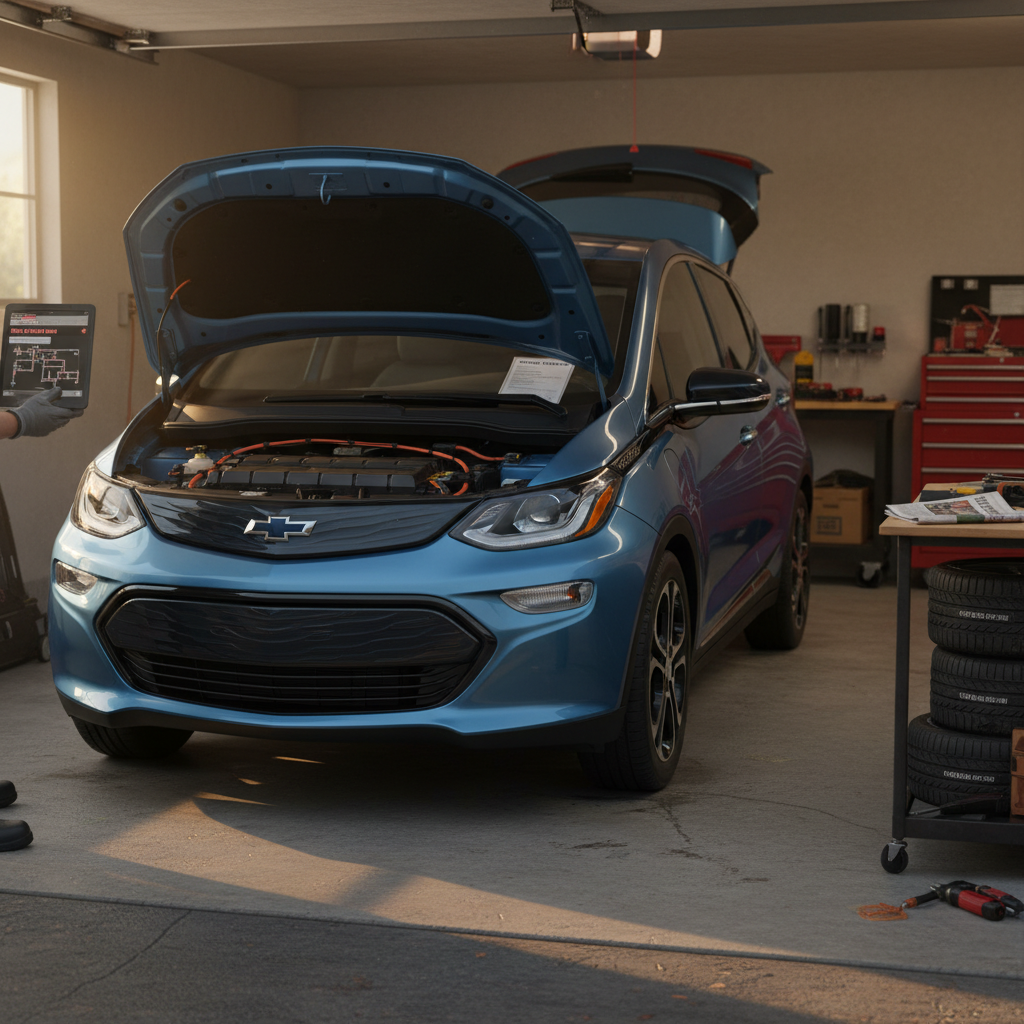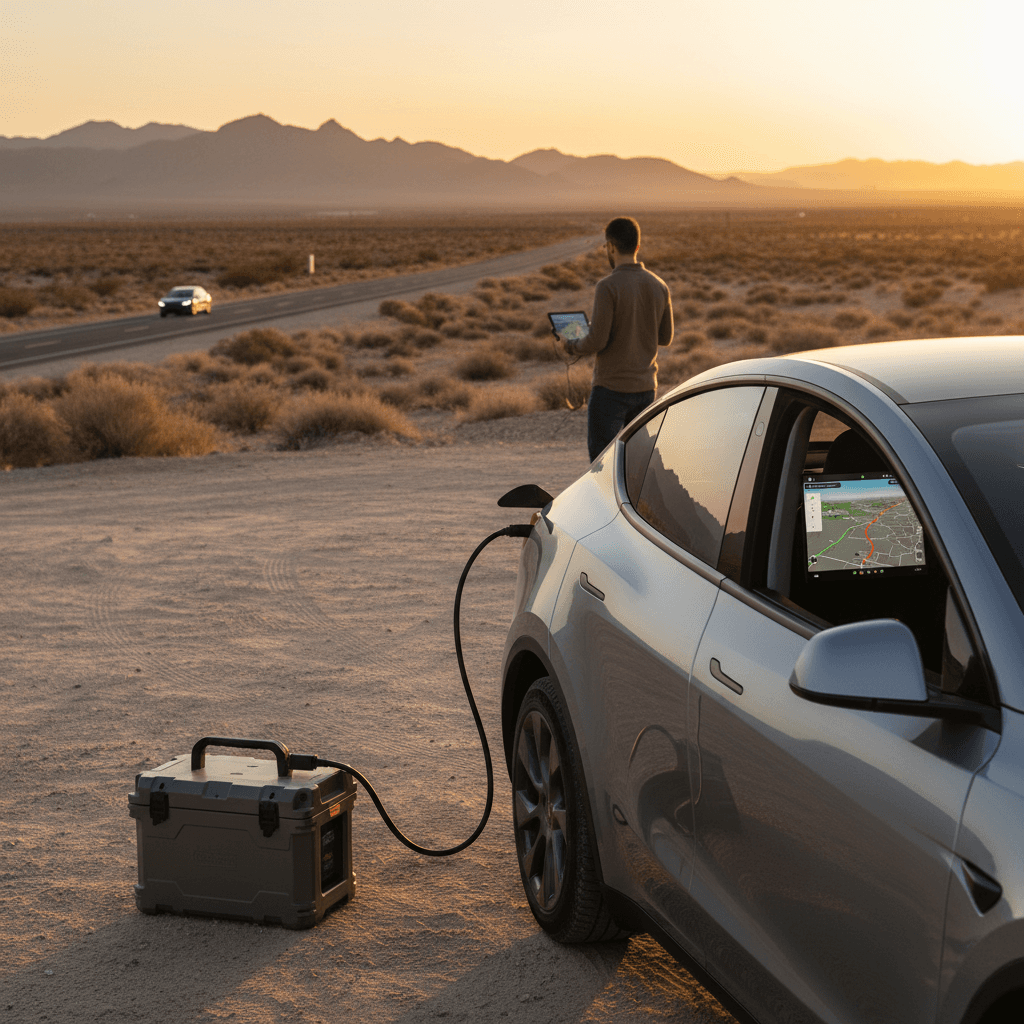
An EV road trip with kids is a different sport from solo highway bombing. You’re juggling battery state of charge, nap schedules, snack logistics, and the ancient sibling art of starting a fight exactly when you’re merging. The good news: with a bit of planning, an electric family road trip can be calmer, cheaper, and frankly more memorable than the gas version.
The short version
Why EV road trips with kids feel different (and totally doable)
In a gas car, you can sprint five or six hours between stops if you’re determined. In an EV, especially with kids, that’s a terrible idea. Modern route planners from tools like PlugShare, ChargeHub, ABRP (A Better Routeplanner), Roadtrippers, and most in‑car systems now make planning longer EV trips straightforward; they show where to charge, how long, and often what amenities are nearby. The real art for parents is aligning those charging windows with your children’s very non‑linear needs.
Why EV road trips can be easier with kids
Mindset shift
Choosing the right EV for family road trips
Four features that matter most for family EV road trips
Range is important, but comfort and charging speed matter just as much.
Practical real‑world range
Look for an EV that can comfortably do at least 180–220 real‑world miles on the highway with luggage and climate control running. That usually translates to a rated range around 250+ miles, depending on model and weather.
Fast DC charging speed
Kids don’t care about peak kilowatts; they care how long they’re stuck. Aim for cars that can hold 100 kW or more over a broad state‑of‑charge window, so 20–70% stops are 20–35 minutes instead of 50.
Space, seats, and storage
Three car seats across? Third row? Stroller and pack ’n play? Make sure the rear seat and cargo area fit your real luggage, not the brochure version. Frunks are gold for messy kid gear.
Outlet & USB abundance
Multiple USB‑C ports, 12V outlets, and (ideally) a household outlet mean you can power tablets, a small cooler, or a bottle warmer without ugly splitter tangles.
Don’t chase range you’ll never use
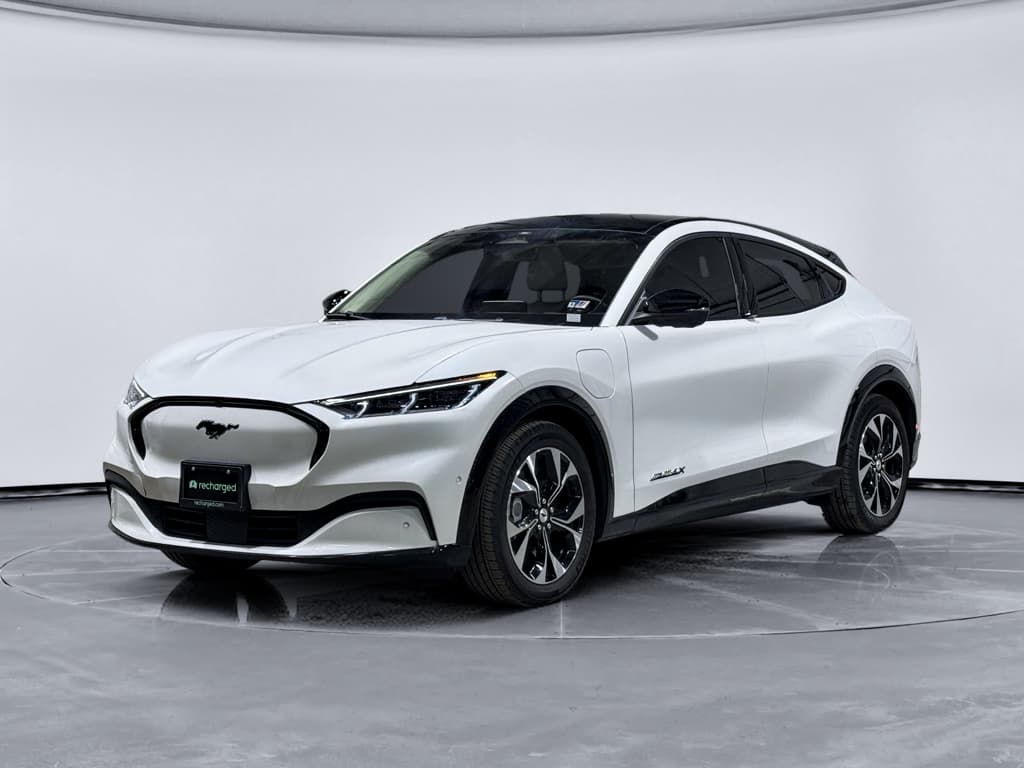
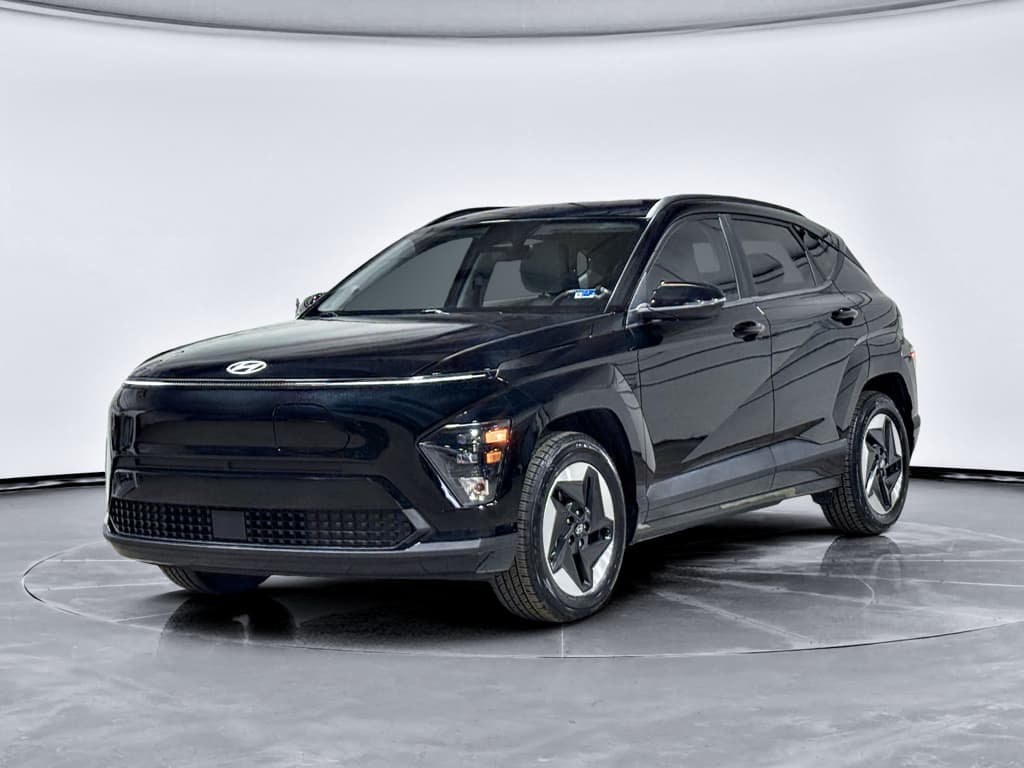
If you’re in the market for a used EV for family road trips, a platform like Recharged can save you a lot of guesswork. Every vehicle comes with a Recharged Score report so you can see verified battery health, realistic range, and pricing that reflects how road‑trip‑ready that particular car really is.
Plan your route around kids, not just kilowatts
Most EV route planners will happily spit out a mathematically perfect plan. Kids will happily destroy it within the hour. Your job is to bend the algorithm to match real family life: naps, mealtimes, and the 90‑minute boredom threshold.
Kid‑first EV route‑planning checklist
1. Start with an EV‑specific planner
Use tools like A Better Routeplanner, ChargeHub, PlugShare, or your car’s native trip planner. Enter your exact car, starting charge, and realistic highway speed so it suggests sensible charging stops.
2. Cap driving legs at 2–2.5 hours
Even if your battery can go farther, your kids probably can’t, especially in car seats. Build in a stretch, bathroom, and snack break at least every two to three hours.
3. Prioritize chargers near kid‑friendly amenities
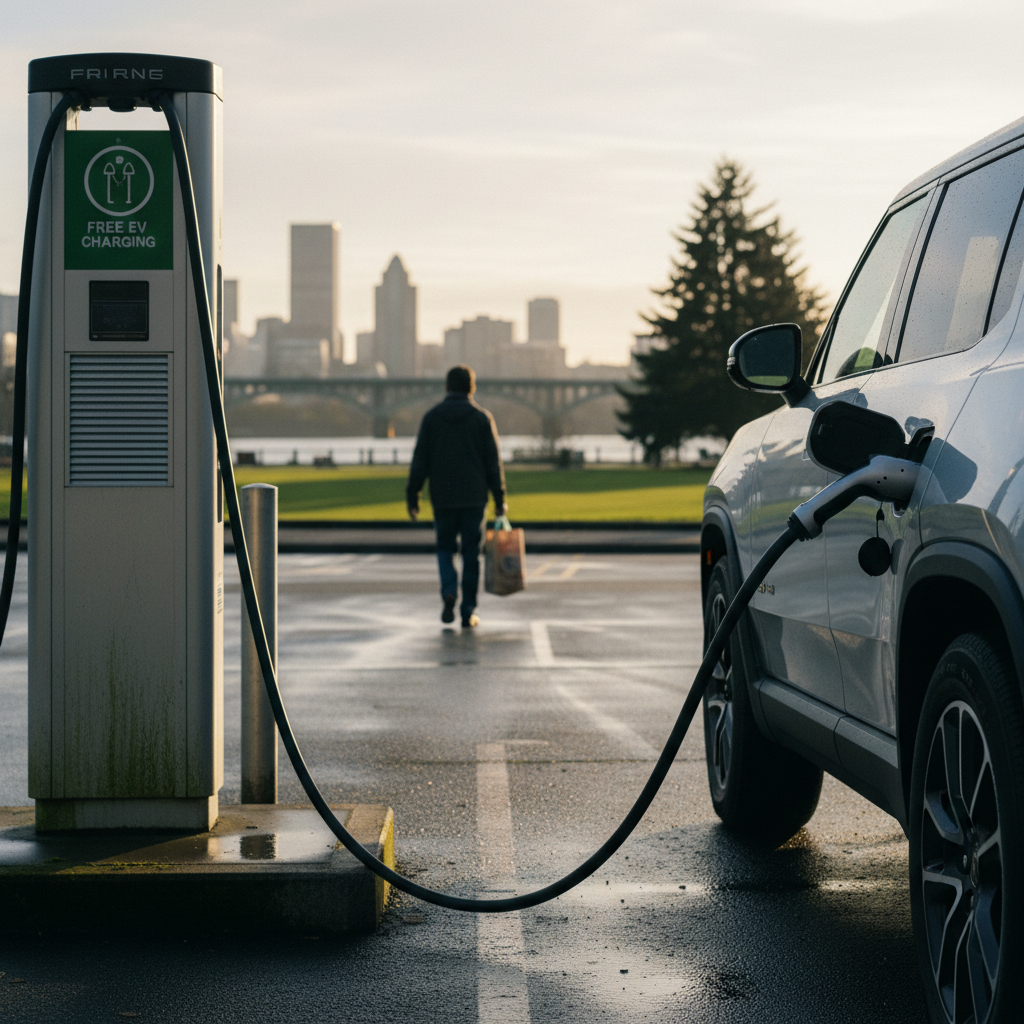
On the map, look for fast chargers at locations with restrooms, food that isn’t all sugar, green space, or a playground. A strip‑mall charger with a single gas‑station bathroom is Plan B, not your main stop.
4. Pad your schedule by 20–30%
Apps tend to assume ideal conditions. Add extra time for loading kids, bathroom delays, and the inevitable shoe that goes missing exactly when you’re ready to leave.
5. Always have a backup charger
For each critical stop, star a second station within 10–15 minutes in case your first choice is down or full. This is where apps with live status and recent check‑ins shine.
6. Avoid arriving nearly empty
With kids onboard, white‑knuckling it at 3% state of charge is no one’s idea of fun. Target arrivals between 10–20% so you have a cushion for detours or closed exits.
Make kids part of the plan
Time your charging stops like a parent, not an engineer
From a battery‑science perspective, you’ll hear advice like “charge 20–80%” because fast chargers slow dramatically above ~80% state of charge. From a parent‑science perspective, you care about how often you unload the stroller, how long kids can be corralled, and when everyone melts down.
Battery‑optimized rhythm
- Arrive around 10–25%.
- Charge to about 70–80%.
- Frequent 20–30 minute DC fast‑charge stops.
- Best for: Adults, teens, tightly timed itineraries.
Family‑optimized rhythm
- Time stops around meals and naps.
- Sometimes charge a bit higher if it lets kids sleep.
- Mix a few longer 40–60 minute stops with shorter ones.
- Best for: Young kids, flexible itineraries, sanity.
Pro move: align lunch with a “big” charge
Turn charging stops into playtime, not purgatory
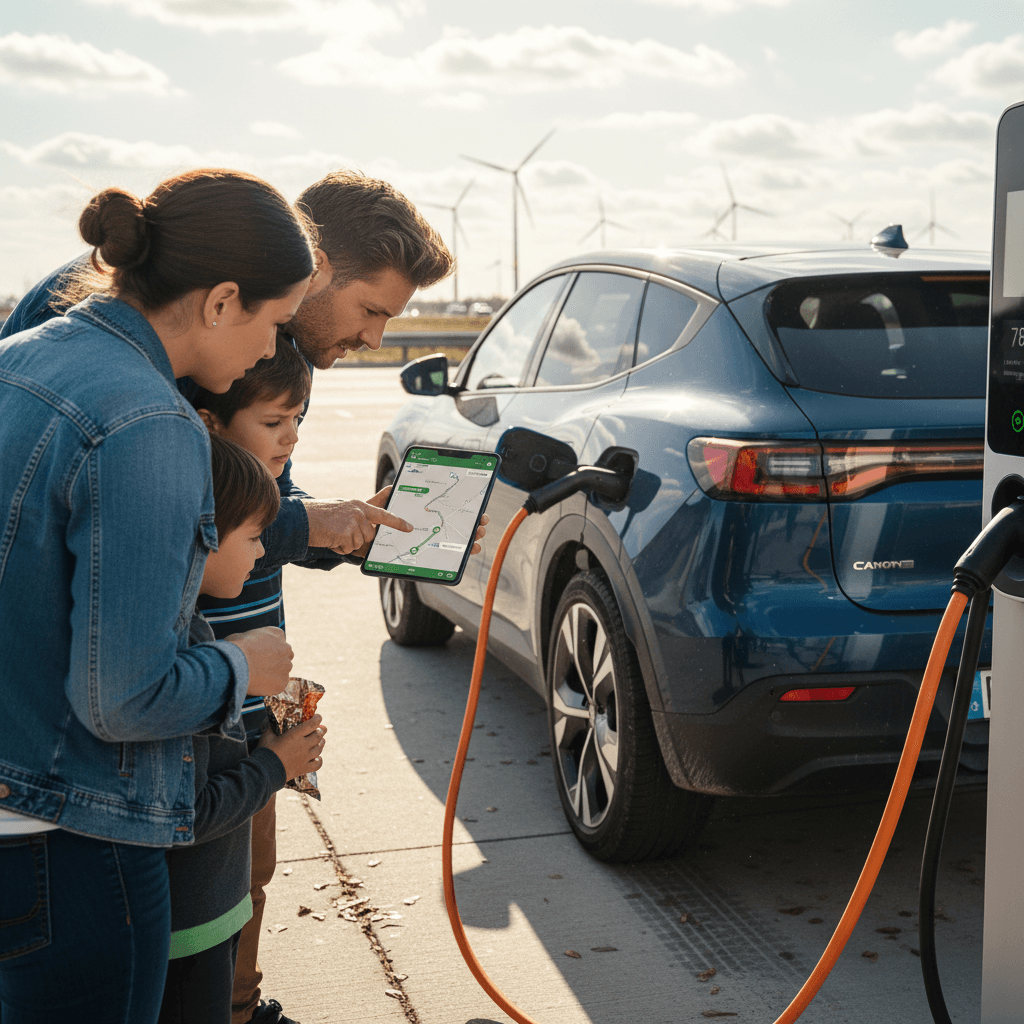
A charging stop feels long when everyone is just staring at the SOC percentage creeping up. It goes by shockingly fast when the stop itself is an activity.
What to look for at family‑friendly charging stops
You don’t need a theme park at every plug, just a few kid‑friendly basics.
Clean bathrooms & water
Non‑negotiable with kids. Malls, grocery stores, and newer travel plazas often beat tiny gas‑station restrooms. Bonus points for changing tables and water fountains.
Green space or playground
A patch of grass, walking path, or small playground lets kids run out the wiggles while you keep the car in sight. Look at satellite view before you commit.
Real food options
Mix in protein and fruit alongside the inevitable chips and candy. Many newer charger installations are co‑located with grocery stores, which are better for quick, healthier snacks.
Micro‑adventures at chargers
Smart packing checklist for EV road trips with kids
Packing for an EV family road trip isn’t wildly different from a gas car, but you do want to be more intentional about weight, organization, and what lives where. Every minute you don’t spend digging through bags at a charger is a minute you get back.
Packing categories that actually matter
Kid survival kit within arm’s reach
Small tote or seat‑back organizer with wipes, tissues, hand sanitizer, snacks, a water bottle, a change of clothes for each kid, and a couple of favorite small toys or fidgets.
Charging‑stop bag
A separate backpack with park‑friendly clothes, sunscreen, hats, ball/frisbee, and a small first‑aid kit. This bag comes out every time you plug in.
Entertainment bin
Coloring books, sticker books, magnetic games, a few carefully chosen toys, and headphones. If you use tablets, preload shows and games and pack a multi‑port charger and extra cables.
Food strategy
A small soft‑sided cooler with water, cut fruit, sandwiches, string cheese, and yogurt pouches. Car‑friendly snacks like pretzels and crackers live in sealable containers, not loose bags.
Comfort gear
Neck pillows, small blankets, window shades, and an extra hoodie for each kid. Comfortable kids complain less and nap more.
EV essentials
Keep your <strong>mobile charging cable, adapters, RFID cards, and gloves</strong> in a dedicated bin or frunk compartment so you’re not hunting around in the dark at a rural charger.
Skip the giant toy haul
Managing screens, sleep, and meltdowns in an EV
Electric cars are great sleeping machines: quiet, smooth, and free of engine vibration. They’re also rolling movie theaters if you let them be. The trick is to use both of those traits on your terms, not the kids’.
Screen time with a purpose
- Save tablets for the hardest legs, late afternoon or long, empty stretches.
- Set clear rules: screens only after snack time, screens off 10–15 minutes before a stop.
- Use downloaded content so you’re not dependent on spotty data.
Protecting nap windows
- Plan at least one driving leg to line up with normal nap time.
- Pre‑load audiobooks or calm music; dim the cabin if possible.
- If a child falls asleep near a planned stop and you have range, consider pushing the stop slightly rather than waking them at 28% just because the app said so.
Meltdowns happen, bake them into the plan
Weather, range, and realistic expectations with kids onboard
Temperature, speed, and terrain all nibble at your range. Add kids, and therefore more weight, more climate control, and frequent door‑opening, and your real‑world numbers may be 10–30% lower than the sticker suggests. That’s fine as long as you plan for it.
- In cold weather, expect higher consumption from cabin and battery heating. Use seat and steering‑wheel heaters, which are more efficient than cranking the air.
- .In very hot weather, pre‑cool the car while it’s still plugged in and park in shade where possible.
- Don’t obsess over hitting EPA range; focus on comfortable, predictable legs with healthy buffers.
- On big elevation changes, remember that long descents will give some energy back via regenerative braking, but don’t budget that as “free miles” with kids in the car.
Range buffers buy you options
Apps and in‑car tech that actually help parents
There are more EV apps than you’ll ever need. For a family road trip, you want a short bench of tools that make your life easier, not a folder of experiments.
A simple tech stack for family EV trips
Three classes of tools cover 95% of what you’ll need.
Route & charging planners
Apps like ABRP, ChargeHub, PlugShare, and Roadtrippers help you find reliable chargers, filter by plug type, and see reports from other drivers. Many built‑in EV nav systems now do this too.
Kid‑friendly entertainment & learning
Download audiobooks, kid podcasts, and offline playlists. Some newer EVs support built‑in streaming; treat it like any other screen, use it intentionally.
Logistics & sanity tools
Shared notes or calendar entries for each day’s legs, hotel confirmations, and backup chargers keep both parents on the same page. A simple checklist app can track what leaves and re‑enters the car at each stop.
Low‑tech still wins
How Recharged helps you pick a family‑friendly road‑trip EV
If you’re still in the planning stage and haven’t bought your EV yet, you can save yourself a lot of trial and error by starting with a car that matches your family’s reality. That’s exactly what Recharged was built for: making used EV ownership simple and transparent.
Why families shopping for a used EV start with Recharged
More than just a listing site, Recharged is a road‑trip partner.
See real battery health and range
Every Recharged vehicle comes with a Recharged Score that includes verified battery diagnostics. You’re not guessing whether that used crossover still has the range you need for annual beach trips.
Financing, trade‑in, and delivery
From financing to trade‑in or consignment, to nationwide delivery, Recharged handles the boring logistics. You can shop and complete the process online, or visit the Recharged Experience Center in Richmond, VA if you want to sit in the cars yourself.
Ready to find your next EV?
Browse VehiclesBecause Recharged focuses exclusively on EVs, you can talk to EV specialists who actually understand questions like “Can this fit three car seats?” or “Is this a good choice for yearly 500‑mile road trips?” instead of getting shrugged at by a generalist used‑car lot.
EV road trip with kids: FAQ
Frequently asked questions about family EV road trips
Final thoughts: Aim for memories, not miles
A well‑planned EV road trip with kids doesn’t feel like an endurance test. It feels like a string of small adventures, playgrounds, picnic lunches, odd roadside attractions, stitched together by quiet, smooth miles. When you stop chasing the maximum distance between charges and start designing the day around your family’s rhythm, the EV becomes an ally, not a constraint.
If you’re still choosing the right EV for that first big family run, consider starting with a used model that already fits your life. With tools like the Recharged Score report, EV‑savvy support, and flexible services like financing, trade‑in, and nationwide delivery, Recharged can help you find a car that makes road‑trip season something you look forward to, not dread.