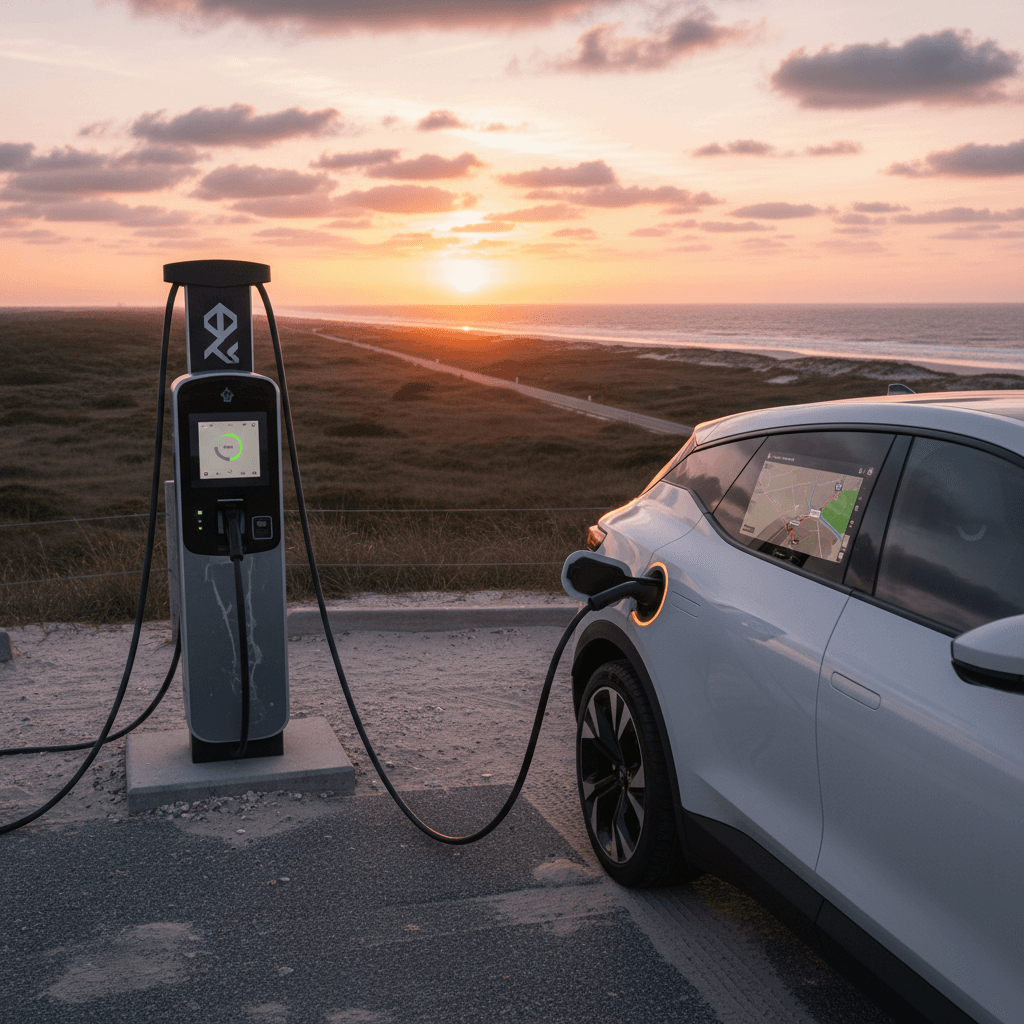
An EV road trip to North Carolina’s beaches can be as relaxed as a Sunday tide, if you treat charging like part of the plan, not an afterthought. The good news: from the Outer Banks to Wilmington and the Brunswick Islands, the charging map along I‑40, US‑64, and US‑17 has filled in enough that a modern EV (or a well‑vetted used one) can handle the coast without drama.
Before we hit the road
Why North Carolina beaches work for an EV road trip
NC coastal EV travel at a glance
North Carolina has leaned into the federal NEVI program to seed DC fast chargers along interstates like I‑40 and coastal routes like US‑17, which you’ll use on the way to Wilmington, the Brunswick Islands, and the Outer Banks. Cities such as Wilmington operate their own stations in downtown parking decks, and private networks, Tesla Superchargers, Electrify America, ChargePoint and others, fill in the gaps at grocery stores, malls, and highway travel centers.
Big picture
Choosing which NC beach fits your EV, and your vacation style
EV personality test: pick your NC beach
All of these can work with an EV, you’re really choosing scenery and pace.
Outer Banks (OBX)
Best for: Long, skinny barrier islands, lighthouses, and quiet villages.
- Route: US‑64 east from Raleigh, then NC‑12.
- Charging: DC fast in the Triangle and inland towns; growing mix of Level 2 and Tesla Destination chargers from Nags Head down to Hatteras and Ocracoke.
- Vibe: More driving once you arrive, but plenty of time to sip electrons while you explore.
Wilmington & Carolina Beach
Best for: Walkable riverfront city + classic family beach towns.
- Route: I‑40 straight to the coast.
- Charging: Superchargers near the I‑40 terminus, city‑run stations in downtown decks, Level 2 in public lots and some hotels.
- Vibe: Easy, direct EV corridor, great first coastal road trip.
Brunswick Islands & Myrtle Beach
Best for: Smaller NC beach towns with access to big‑box amenities and Myrtle Beach attractions.
- Route: US‑17 corridor through Brunswick County, or down from Wilmington.
- Charging: A mix of DC fast at highway travel stops and Level 2 in towns like Shallotte, Ocean Isle Beach, and Myrtle Beach.
- Vibe: Flexible routing, lots of grocery and shopping stops to charge around.
Match the beach to your battery
Charging basics for a coastal EV road trip
Fast vs. slow: which to use when
- DC fast charging (50 kW and up) is your friend on the way to and from the beach. Plan 1–2 stops of 30–45 minutes rather than trying to ‘fill to 100%’ every time.
- Level 2 charging (typically 6–11 kW) is perfect once you’ve arrived, at your hotel, a public parking deck, or a restaurant lot. Think of it like topping up overnight or while you eat.
- Level 1 (a 120V outlet) works in a pinch at a beach house if you’re staying several days and barely driving once you’re there.
Apps and tools worth installing
- PlugShare or ChargeHub to see all networks and recent check‑ins on the NC coast.
- Your primary network app, Tesla, Electrify America, ChargePoint, EVgo, or your utility’s roaming partner, to activate and pay.
- Your car’s own route planner, if it offers EV‑aware routing. Many newer models now auto‑plan stops around range, chargers, and elevation.
- If your EV uses CCS but you’re NACS‑adapter curious, watch how quickly Tesla opens more Superchargers to non‑Tesla EVs along I‑40 and US‑17 by season.
Don’t chase 100% on DC fast
Sample EV route: Raleigh to the Outer Banks
Let’s say you’re in a 250‑mile‑range crossover leaving Raleigh for Nags Head, about 200–210 highway miles depending on your starting point. That’s technically one‑shot doable in good weather, but it’s wiser (and more relaxing) to build in a margin and a lunch stop along US‑64.
Example: Raleigh → Nags Head in an EV
One of many ways to structure the trip, use your charging apps to match this to real stations and your specific car.
| Segment | Approx. distance | Suggested charge | Notes |
|---|---|---|---|
| Home → Wilson/Rocky Mount area | 60–80 mi | Start ~80–90%; optional coffee stop to ~70–80% | Handy if you left with less than a full battery or weather is rough. |
| Wilson/Rocky Mount → Williamston/Jamesville area | 60–70 mi | Arrive ~30–40%; DC fast back to ~75–80% | Use a highway‑adjacent DC site for lunch and a restroom break. |
| Williamston/Jamesville → Nags Head | 80–90 mi | Arrive ~25–40% | Plenty of cushion for headwinds or coastal detours. Top off on Level 2 at your lodging. |
Distances are approximate; always verify live charger availability before you set out.
Coastal detours are your friend
- Avoid arriving at the Outer Banks on single‑digit battery if you can; inland DC fast chargers are still more plentiful than those directly on NC‑12.
- Look for accommodations in Nags Head, Kill Devil Hills, or Manteo that list EV charging or Tesla Destination in their amenities.
- If you’re continuing south toward Hatteras or Ocracoke, plan a top‑off before the ferry, there’s less redundancy in chargers the farther you go down the islands.
Sample EV route: Charlotte to Wilmington & Carolina Beach
Charlotte to Wilmington is a very straightforward EV run: roughly 200–210 miles on I‑74/I‑140 or US‑74/I‑40 depending on your route choice. That means one well‑timed DC fast stop turns this into a near‑gas‑like experience, especially if you’re driving a 250–300‑mile EV.
Example: Charlotte → Wilmington/Carolina Beach
A simple, one‑stop DC fast‑charge plan on the main interstates.
| Segment | Approx. distance | Suggested charge | Notes |
|---|---|---|---|
| Home → halfway DC fast stop | 100–120 mi | Arrive ~40–50%; charge to ~80% while you eat | Pick a travel plaza with food, restrooms, and several stalls for redundancy. |
| Halfway stop → Wilmington (I‑40 terminus) | 80–100 mi | Arrive ~25–40%; optionally top up at urban DC/Level 2 | Wilmington has DC fast at shopping areas and Level 2 in city parking decks. |
| Wilmington → Carolina/Kure Beach | 15–20 mi | Use Level 2 at beach lots or your lodging | Overnight Level 2 will easily cover daily beach‑town driving. |
Exact chargers will depend on your network of choice; use your apps to lock them in.
City decks are quiet EV havens
Sample EV route: Triangle to Brunswick Islands & Myrtle Beach
From Raleigh, Durham, or Chapel Hill, the Brunswick Islands, Holden Beach, Ocean Isle Beach, Sunset Beach, and onward to Myrtle Beach sit along the US‑17 corridor in Brunswick County. This is classic EV terrain: a string of highway towns, travel stops, and shopping centers with a mix of DC and Level 2 options.
How to think about the US‑17 coastal corridor
Lots of small towns, lots of chances to plug in.
Segmenting the drive
- Triangle → Fayetteville/Lumberton region: good place for a first DC stop if you left home under 100%.
- Lumberton/Whiteville area → Shallotte: second DC stop, often at a travel center with food and restrooms.
- Shallotte → your island (or Myrtle Beach): short final leg you can comfortably cover on that charge.
‘Charge where you’d stop anyway’
- Many DC fast chargers on US‑17 sit at big‑box stores, grocery plazas, or chain restaurants.
- Plan meals and bathroom breaks around these so you’re not waiting in the car staring at a progress bar.
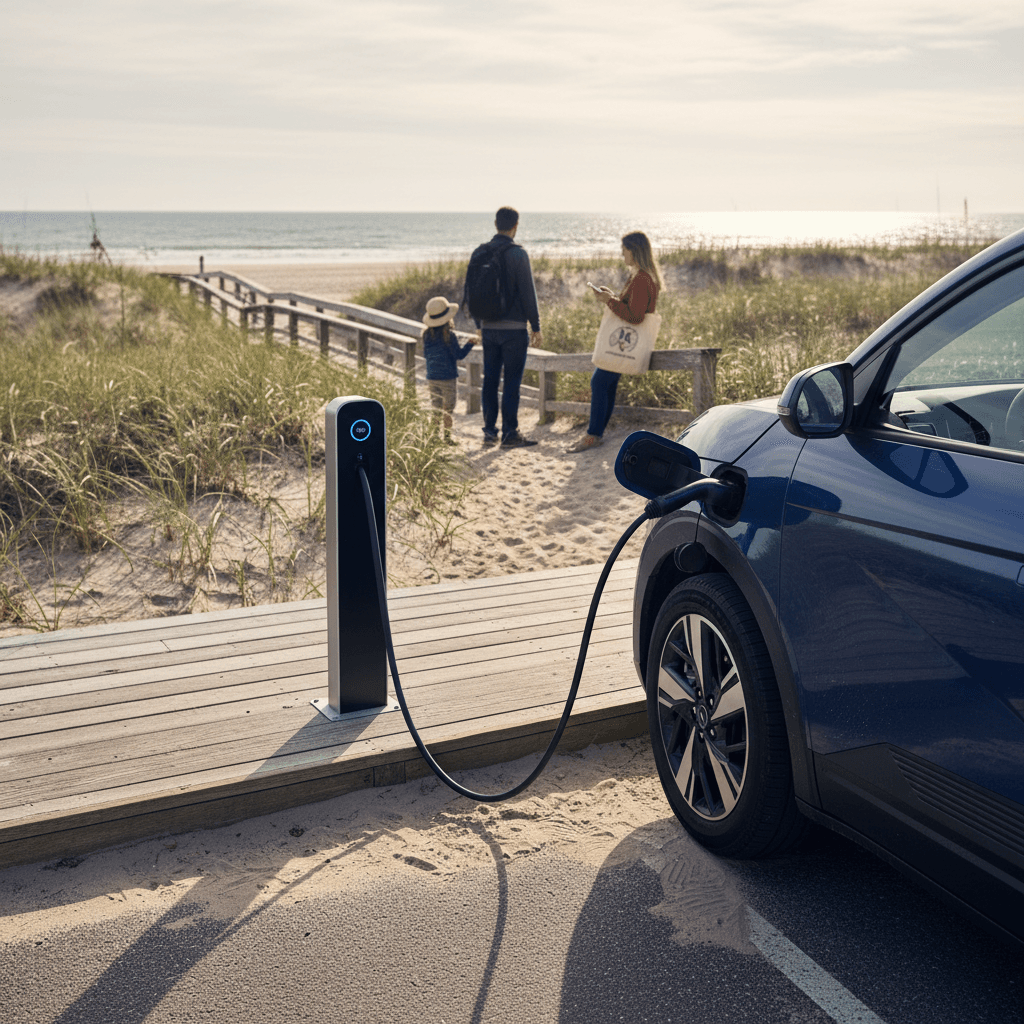
- At the beach, look for Level 2 at town halls, piers, or public parking near the water.
Check coastal storm impacts
Where you’ll actually charge once you’re at the beach
Common coastal charging patterns
1. Hotel or rental with Level 2
More Outer Banks and Wilmington‑area hotels, motels, and inns now list free or guest‑only Level 2 charging. On OBX, some budget‑friendly motels in Nags Head and Manteo advertise complimentary EV charging; in Wilmington and Myrtle Beach, look for bigger chains or newer properties that highlight EV amenities.
2. Public parking decks and lots
Cities like Wilmington operate Level 2 and DC fast chargers in municipal decks. On the Outer Banks and Brunswick Islands, town‑owned beach parking near piers or town halls is increasingly the default place for public Level 2 chargers.
3. Destination chargers at restaurants and attractions
Tesla Destination chargers and J1772 Level 2 units often live at waterfront restaurants, breweries, and boutique inns. Even if you’re not staying overnight, a long dinner can add 40–80 miles of range.
4. Grocery and outlet stops
On barrier islands with thin infrastructure, you may find your best charging one bridge inland, at a grocery‑anchored shopping center or outlet mall. It’s an easy swing while you stock the rental fridge.
5. Backup: the humble 120V outlet
If you’re in a standalone beach rental without a listed charger, ask the owner whether there is a safe, grounded outdoor outlet on a dedicated circuit. Level 1 charging is slow, but if you’re barely driving during the week, 30–40 miles of overnight trickle charge can be enough.
What not to do
Planning ahead so range anxiety never joins the trip
Build a conservative route first
- Plan your route in an app with a 10–20% minimum arrival buffer at every stop.
- Identify at least one backup charger within 10–15 miles of each planned DC stop in case a station is crowded or offline.
- Pay attention to wind and weather. Strong headwinds on US‑64 or US‑17 can knock 10–15% off your expected range; err on the side of shorter legs if a front is moving through.
Make charging part of the vacation, not a chore
- Time DC stops with meals or scenic breaks, coffee in New Bern on the way to Morehead City, lunch in Fayetteville on the way to Wilmington, etc.
- Once you’re at the beach, let the car charge while you’re doing something better: walking the pier, exploring the riverfront, or sitting in the shade with a book.
- Keep a simple log of where you charged and how long it took; it’ll make your next coastal road trip almost automatic.
Arrive low, leave soon
Is your EV road-trip ready, especially if it’s used
A coastal EV road trip is only as relaxing as your confidence in the car. With new EVs, that’s mostly a question of planning and networks. With used EVs, it also comes down to honest battery health and charging behavior. A car that once had 250 miles of range might only deliver 200 on the highway after years of use, and on a 90‑degree summer day with the A/C blasting, that margin matters.
Quick health check before you book the beach house
A few simple checks can turn an anxious trip into a laid‑back one.
Know your real highway range
Don’t rely on the brochure. Base your planning on a recent highway‑speed trip: what percentage of battery did 50 or 100 miles actually use? Use that to build conservative legs with 10–20% buffer.
Understand battery health
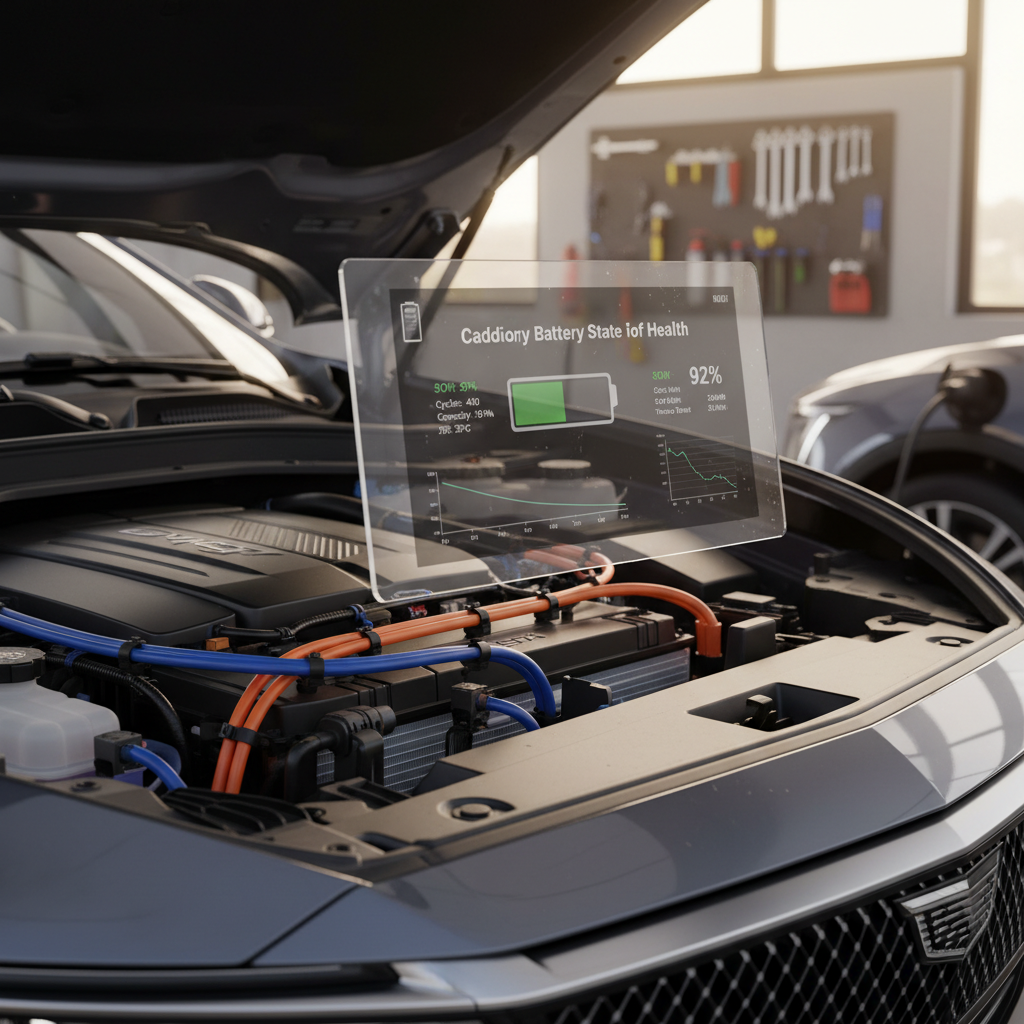
If you’re shopping used, look for vehicles with a documented battery health report rather than vague assurances. Tools like the Recharged Score combine pack diagnostics with fair‑market pricing so you know how much range you’re really buying.
Test charging before departure
In the week before you leave, do at least one DC fast‑charge session and one full overnight Level 2 charge. Make sure the car charges at expected speeds, the ports are in good shape, and your cables and apps all behave.
How Recharged can help
FAQ: EV road trips to North Carolina beaches
Frequently asked questions
North Carolina’s beaches are no longer strictly the domain of crossovers with exhaust pipes. With a bit of planning, and an honest read on your EV’s real range, you can cruise from the Triangle or Charlotte to the Outer Banks, Wilmington, or the Brunswick Islands with nothing more dramatic than a coffee stop and a few Level 2 top‑offs. Choose a route that matches your car, build generous buffers into your charging plan, and consider a used EV with verified battery health if you’re upgrading before summer. Do that, and the only thing you’ll worry about on your EV road trip to North Carolina’s beaches is whether you packed enough sunscreen.