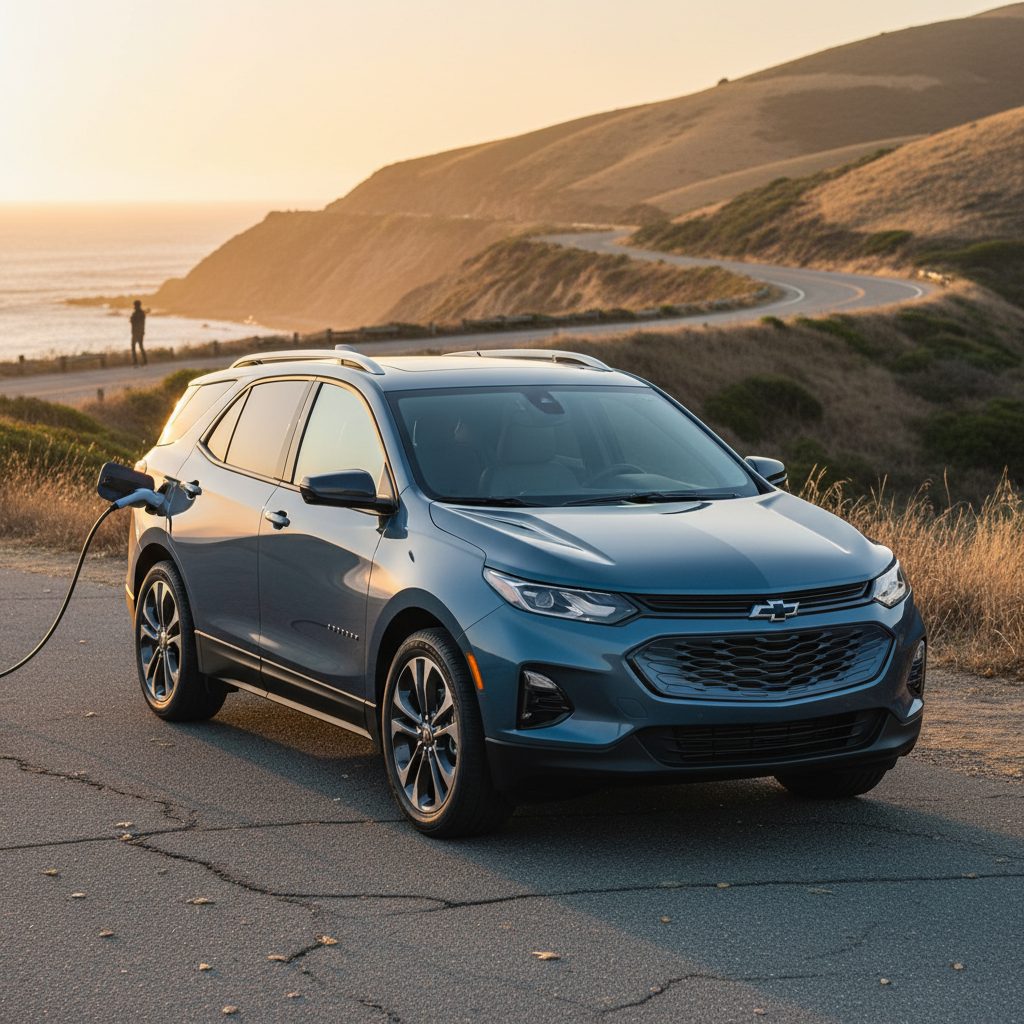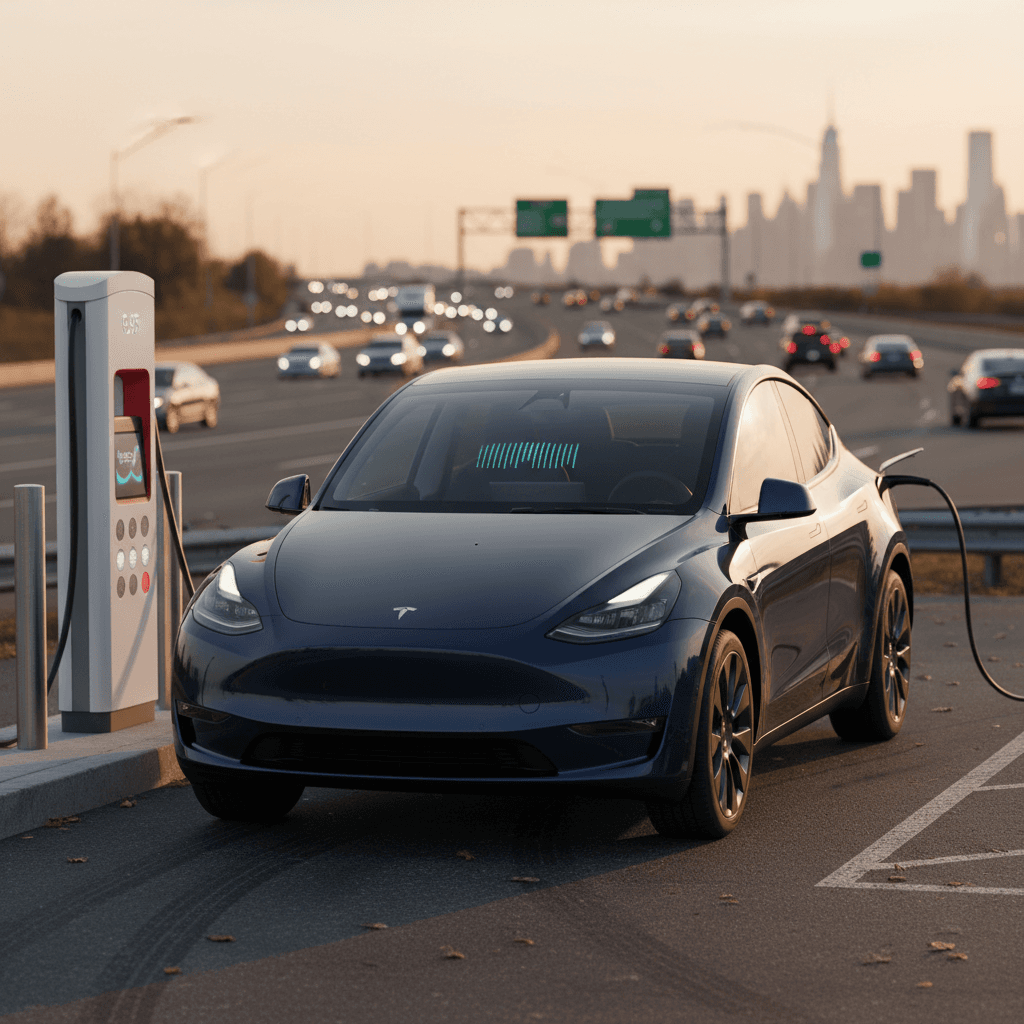
Driving an EV road trip from Washington, DC to New York City is one of the easiest electric routes in the US. The roughly 225–240‑mile drive up I‑95 is short enough for many EVs to do on a single charge, and the corridor is packed with DC fast chargers and Tesla Superchargers. With a bit of planning, you can make the trip almost as simple as driving a gas car, just with quieter miles and lower energy costs.
Quick trip snapshot
Route, Distance, and Driving Time from DC to NYC
Most drivers take I‑95 for a DC to New York EV road trip. Depending on your exact start and end points, you’ll cover roughly 225–240 miles and pass Baltimore, Wilmington, and the greater Philadelphia area along the way. Driving time is usually 3.5–4.5 hours of wheels‑turning time, but heavy traffic around each metro can easily stretch the day to 5–6 hours including stops.
- Typical distance: 225–240 miles door to door
- Core route: I‑95 with short jogs via I‑895/I‑295 depending on tolls and traffic
- Metro bottlenecks: DC, Baltimore, Wilmington, Philadelphia, Newark, NYC
Plan around peak hours
Where Can You Charge on the I‑95 Corridor?
The I‑95 corridor between DC and New York is one of the best‑served EV routes in the country. You’ll find multiple DC fast‑charging networks at service plazas, shopping centers, and big‑box parking lots roughly every 30–50 miles. Tesla’s Supercharger network is dense along this stretch, and non‑Tesla drivers will see plenty of Electrify America, EVgo, and independent sites as well.
Major EV charging options between DC and NYC
You’ll rarely be more than 30–40 miles from a fast charger on I‑95.
Tesla Supercharger & NACS
Tesla’s Superchargers line the entire DC–NYC route at malls, travel plazas, and urban garages. Many stalls now support non‑Tesla EVs via NACS or built‑in adapters, depending on your vehicle and the specific location.
Electrify America & EVgo
CCS and CHAdeMO fast chargers are available at Walmart, Target, service plazas, and outlets along the way. Many sites offer 150 kW chargers that can add 100+ miles in about 30 minutes in a modern EV.
Other regional networks
BP Pulse sites at TA travel centers, local utility networks, and dealer‑based chargers fill in gaps. Apps like PlugShare and A Better Routeplanner surface these alongside the bigger brands.
Use multiple apps
How Much Range Do You Really Need for DC to NYC?
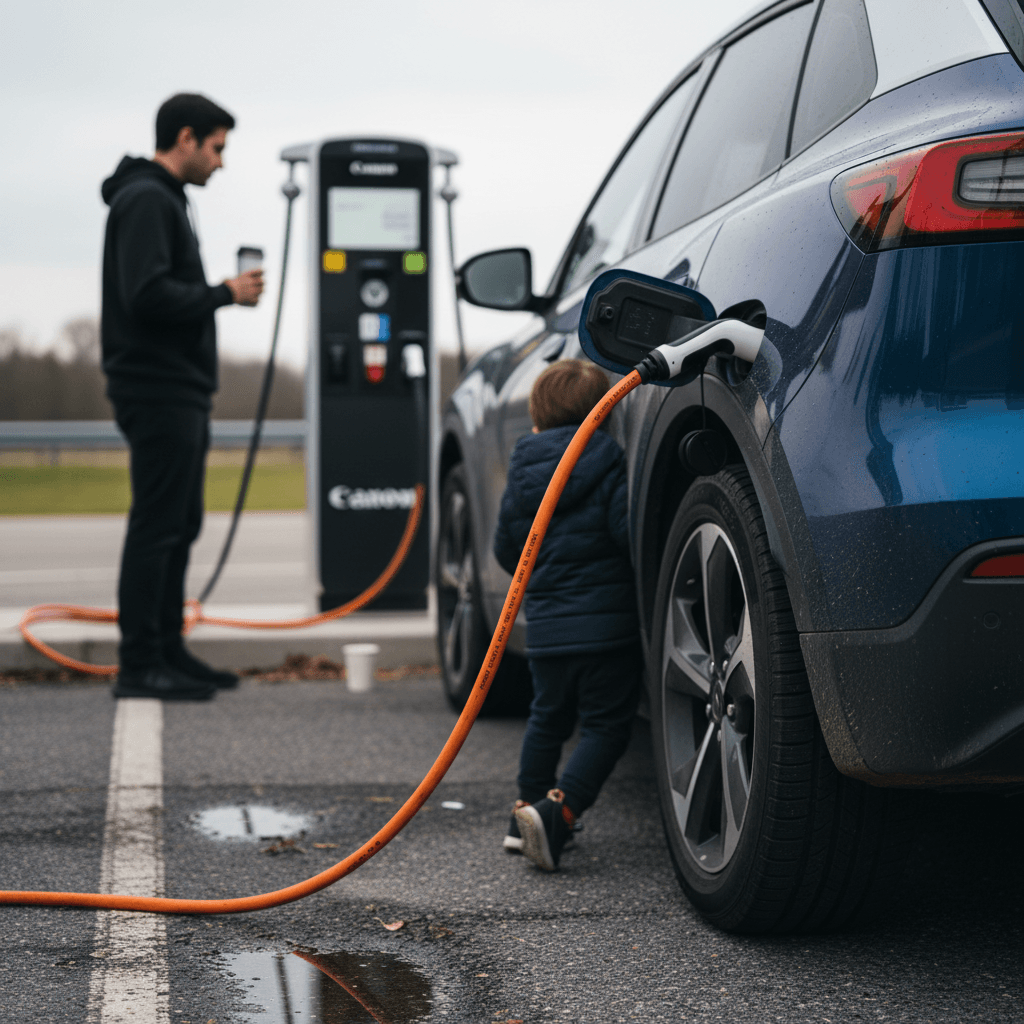
On paper, a 240‑mile trip sounds intimidating if your EV is rated at 230 miles of EPA range. In practice, real‑world efficiency, weather, and speed all matter more than the sticker number. The key is to think in segments between chargers, not just total distance.
Real‑world range benchmarks for the DC–NYC drive
Think in 80% chunks
Sample EV Road Trip Plans: DC to NYC by Range
To make this concrete, let’s look at how a DC to New York EV road trip plays out in three common scenarios: a long‑range EV (250+ miles highway), a mid‑range EV (180–230 miles), and an older or shorter‑range EV (120–170 miles). Distances here are approximate and you should adapt them to your exact start/end points and your car’s efficiency.
Example DC–NYC itineraries by EV range
Rough charging patterns for different EV capabilities. Use these as starting points, then refine with your preferred route planner.
| EV Range Scenario | Typical Strategy | Charging Pattern | Total DC Fast‑Charge Time* |
|---|---|---|---|
| Long range (250+ mi usable) | Drive straight through | Optional 10–15 min top‑up near Delaware or NJ if needed | 0–20 min |
| Mid‑range (≈190–230 mi usable) | One efficient fast‑charge stop | Charge once around the halfway mark (Baltimore–Wilmington area) | 20–35 min |
| Shorter range (≈130–180 mi usable) | Two shorter stops | Top up near Baltimore, then again around Wilmington or South Jersey | 40–70 min |
All examples assume moderate weather, starting near 90–100% state of charge.
Don’t cut it too close
Example for a mid‑range EV (e.g., 200–230 mi usable)
- Leave DC metro at ~90%.
- Drive ~120–140 miles to a fast charger near Wilmington, DE.
- Arrive around 25–35%, plug in for 20–30 minutes.
- Leave with 75–85%, giving plenty of cushion for the remaining 90–110 miles into NYC.
Example for a shorter‑range EV (e.g., 150–180 mi usable)
- Start near 100% in DC.
- First stop after 80–100 miles just north of Baltimore.
- Charge from ~30% to 70–80% (20–25 minutes).
- Second stop around Wilmington or South Jersey to add another 60–90 miles.
- Roll into NYC with a comfortable 15–25% remaining.
Charging Strategy, Timing, and Typical Costs
For a short corridor drive like DC to New York, your charging strategy is more about convenience and timing than squeezing out every last cent. Still, understanding how long you’ll sit at a charger, and roughly what it costs, helps you plan the day.
How long will you spend charging?
Rough expectations for modern EVs on common DC fast chargers.
50 kW DC fast charger
Older or smaller sites may top out around 50 kW. Expect roughly 60–100 miles in 30 minutes in an average EV, enough to comfortably bridge gaps between cities.
100–150 kW DC fast charger
Increasingly common on I‑95. Many EVs can add 100–200 miles in about 30 minutes in this band, especially between 10–60% state of charge.
200 kW+ ultra‑fast
Some Tesla V3 Superchargers and newer CCS sites can hit 200–350 kW, but your car may not. These are overkill for DC–NYC, but great for quick splash‑and‑go stops.
DC fast‑charging prices along this corridor vary widely by network, time of day, and membership, but you’ll typically see around $0.30–$0.50 per kWh for pay‑as‑you‑go fast charging. For a DC to New York trip, many EVs will use 50–80 kWh of energy in total, depending on efficiency and weather. That puts one‑way fast‑charging energy cost in the ballpark of $15–$35, often less if you leave DC on a full (and cheaper) home charge.
Save by starting full at home
- Aim to stop when you’re between 10–30% and leave around 60–80% for best charging speed.
- Combine charging with meals or rest‑room breaks so stops don’t feel like delays.
- If chargers are busy, consider taking a slightly slower 50 kW unit if it lets you avoid waiting in line.
Seasonal, Traffic, and City‑Driving Considerations
EVs are honest about the physics of road trips. Higher speeds, cold weather, and dense city traffic all change your energy use, and how you should plan your DC to NYC EV drive. The good news is that the corridor has enough chargers that you can simply add an extra stop or a little more buffer when conditions are tough.
How real‑world conditions affect your DC–NYC EV trip
Factor them in when you choose where to stop and how much to charge.
Winter & bad weather
Cold batteries charge more slowly and you’ll use more energy for cabin heat and wipers. Plan for 15–25% less range, avoid arriving at chargers nearly empty, and consider one extra short stop.
City driving at both ends
Stop‑and‑go traffic in DC and NYC can actually help range at low speeds, but constant HVAC use and long idling in congestion add up. Don’t forget to budget energy for parking garages and tight urban detours.
Speed & driving style
Running at 75–80 mph versus 65–70 mph can significantly increase consumption. If you’re in a shorter‑range EV, a modest cruising speed is the difference between one stop and two.
Destination charging
NYC has a mix of garages with Level 2 and, in some cases, urban fast chargers. If you can park where you can plug in, you may be able to arrive low and leave the next day with a full battery.
Watch out for restricted chargers
Pre‑Trip Checklist for a Smooth EV Drive
A bit of prep before you leave DC makes the DC–NYC EV run almost boringly predictable. Use this checklist the day before and morning of your trip.
DC to NYC EV road trip checklist
1. Verify your real‑world highway range
Look at your usual consumption at 65–75 mph in moderate weather and estimate a conservative <strong>usable range</strong> between 10–80% state of charge.
2. Update navigation and charging apps
Make sure your car’s nav, Tesla/EA/EVgo apps, and any route planners are logged in, updated, and have your payment methods set up.
3. Map at least two backup chargers
For each planned stop, star <strong>one or two alternatives</strong> within 10–15 miles in case a site is busy, offline, or unexpectedly restricted.
4. Precondition the battery if possible
If your car supports it, start a navigation route to your fast‑charger stop before you arrive so the pack is warmed or cooled for faster charging.
5. Start with a full or near‑full charge
Aim to leave DC around 90–100% if you can charge at home. If you rely on public charging, consider topping up at a DC fast charger on the city’s edge before hitting I‑95.
6. Bring RFID cards and cables
Some stations still prefer network‑specific cards or fobs. Also bring your <strong>portable Level 1/2 cable</strong> in case you find an available outlet or destination Level 2 charger.
How Recharged Helps You Road‑Trip in a Used EV
If you’re planning regular DC to New York EV road trips, the right car, and confidence in its battery, matters more than any single app or charger. That’s where Recharged comes in. Every used EV we sell includes a Recharged Score Report with verified battery health, so you’re not guessing whether that “240‑mile” rating still holds up on I‑95.
Transparent battery health for real‑world range
Our diagnostics go beyond the dash display to give you a clear view of battery capacity and degradation. That helps you understand whether a given car is a good fit for 230‑mile corridor runs like DC–NYC, or if you should shop for a bit more range.
Each vehicle’s Recharged Score is designed to translate technical data into something you can use when planning trips and comparing options.
End‑to‑end support, including road‑trip questions
Recharged’s EV specialists can help you compare models, estimate trip times, and discuss charging strategies based on your actual travel patterns. Whether you’re buying online or visiting our Richmond, VA Experience Center, you get expert‑guided support from first question to final delivery.
We also offer financing, trade‑ins, instant offers, consignment, and nationwide delivery, so getting into a road‑trip‑ready used EV is as smooth as the drive itself.
FAQ: EV Road Trip from DC to New York
Frequently asked questions about the DC–NYC EV drive
A well‑planned EV road trip from DC to New York feels less like a science experiment and more like a normal East Coast drive with quieter miles and fewer fuel stops. Know your real‑world range, pick one or two solid charging sites along I‑95, and give yourself a modest buffer for weather and traffic. If you’re still choosing the right EV for this route, Recharged’s verified battery‑health reports, fair pricing, and EV‑specialist support make it easier to find a used electric car that fits your road‑trip ambitions today, and for many DC–NYC runs to come.