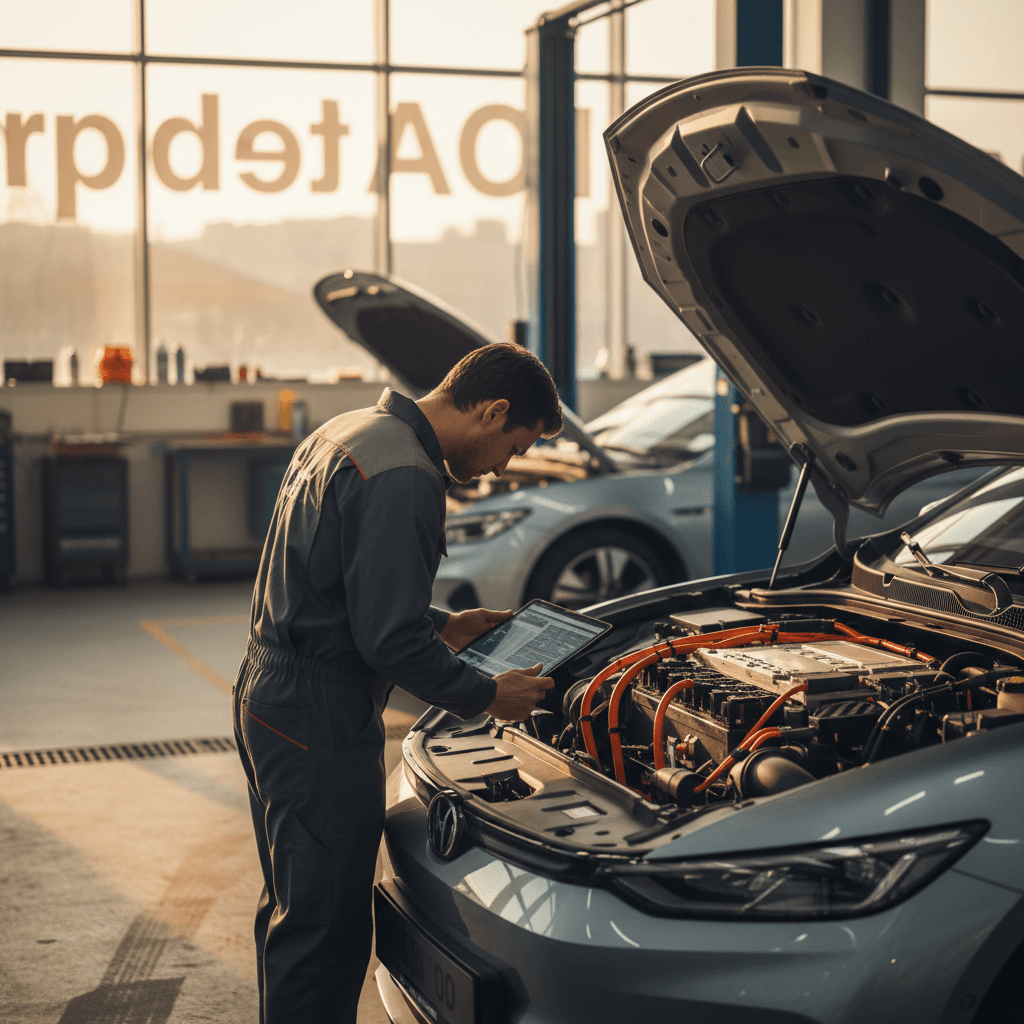
You type “EV repair shop near me” into your phone and the map fills with smiling cartoon wrenches that mostly speak gasoline. A few claim “hybrid friendly.” One has a photo of a leaf. None explicitly say they know what to do with 400–800 volts running under your floor. So who can you actually trust with an electric car in 2025?
EV repair is still catching up
Why EV Repair Shops Still Feel Hard to Find
EVs need less regular maintenance than combustion cars, no oil changes, no timing belts, which is great for you and bad for the corner lube shop. At the same time, the parts that do matter on an EV, battery pack, high‑voltage cabling, inverters, software, are expensive, specialized, and wrapped in proprietary software. That’s why the landscape today is a patchwork of dealers, certified body shops, mobile technicians, and a growing minority of independents who’ve decided to learn high voltage properly.
The EV Repair Landscape in 2024–2025
Think in terms of systems, not “EV mechanic”
What Kind of EV Repair Shop Do You Actually Need?
1. Routine wear items
These are the easy ones. Any competent shop can handle:
- Tires and wheel alignment (critical on heavy EVs)
- Brake fluid changes and occasional pad/rotor service
- Cabin air filters, wiper blades, 12V battery
- Suspension components and steering
If a shop can’t confidently do this on an EV, that’s a red flag about everything else.
2. EV‑specific systems
Here you want an EV‑literate shop or brand‑certified center:
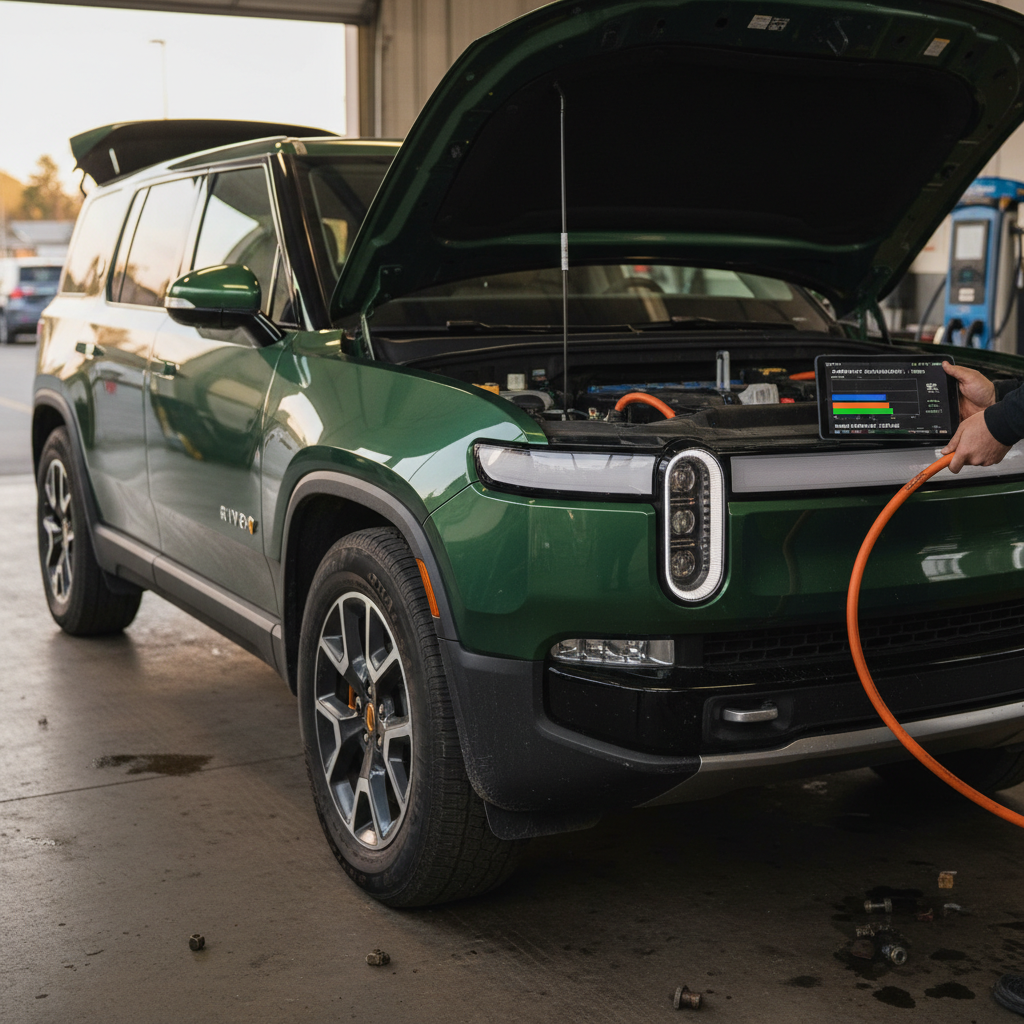
- High‑voltage battery diagnostics or replacement
- Drive unit, inverter, on‑board charger issues
- Thermal management problems (coolant leaks, battery heating/cooling faults)
- Charging‑port or DC fast charging faults
- Software glitches that cause warnings or reduced power
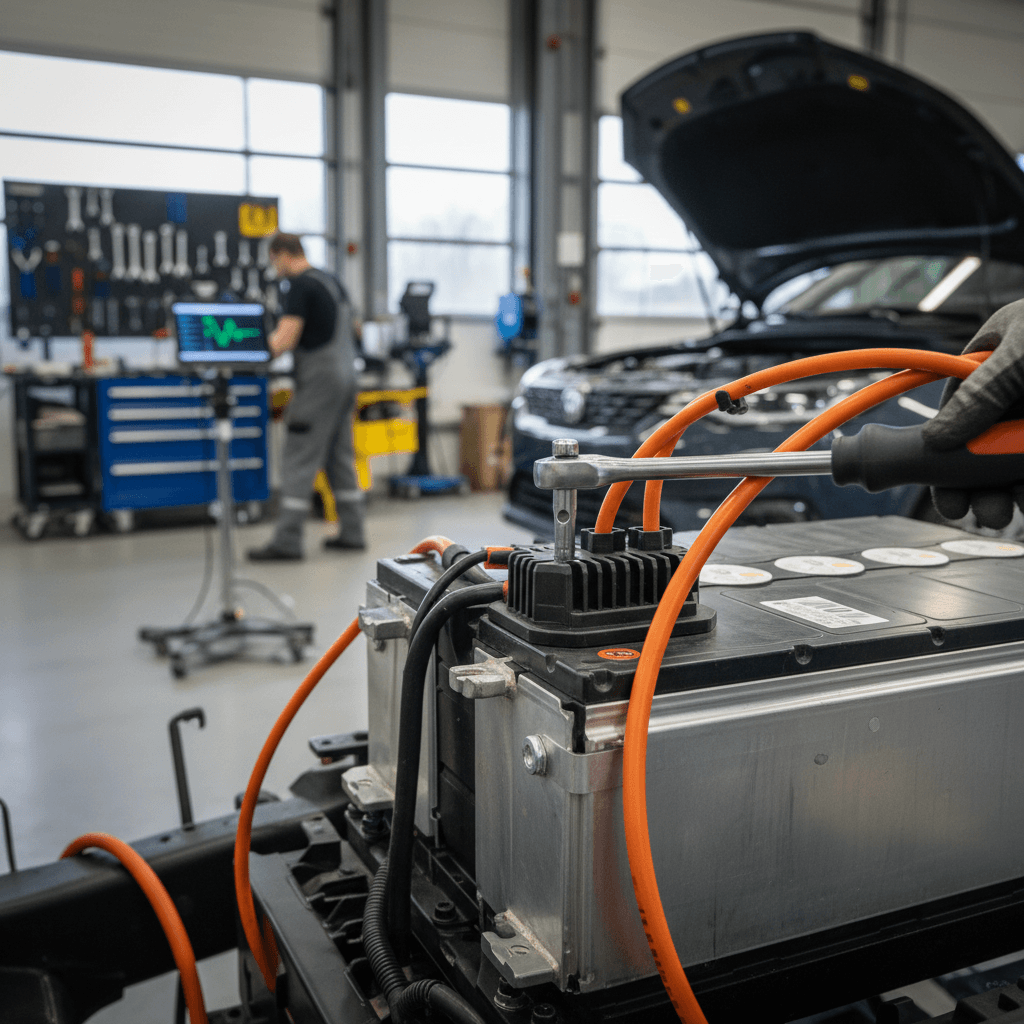
This is where training, insulated tools, lift‑rated battery jacks and factory software really matter.
If you’re chasing a vibration at highway speeds, a normal suspension shop is fine. If your car refuses to take a DC fast charge and shows a high‑voltage error, you want a shop that lives and breathes EVs, or the brand’s own service center.
Where to Search for an EV Repair Shop Near You
Four Reliable Ways to Find an EV Repair Shop Near You
Mix at least two of these instead of trusting the first map result.
1. Brand service centers
For big, expensive issues, especially while under warranty, start with the official channel:
- Tesla, Rivian, Lucid and others route most repairs through their own service centers or mobile units.
- Legacy brands (Ford, GM, Hyundai, VW, etc.) use dealer service departments with EV‑certified techs.
This is usually safest for battery, drive unit, or software‑locked systems.
2. Independent EV‑friendly shops
Search specifically for phrases like “EV mechanic”, “electric vehicle repair”, or your model plus “battery specialist”. Then:
- Scan their site for the words "EV," your brand, or high‑voltage training.
- Look for photos of actual EVs in their bays, not just stock art.
- Check Google reviews for comments about electric cars, not just oil changes.
3. EV‑specific directories
New tools are making the search less painful. EV‑focused directories and networks now list dozens of verified shops by brand and service type, Tesla repair, battery replacement, collision, and more.
Think of these as curated lists rather than random map pins; they often require shops to prove training and insurance before listing.
4. Your local EV community
Ask the people already paying the tuition:
- Local EV Facebook groups, Reddit communities, and owner forums
- Regional chapters of EV clubs
- Friends or coworkers with similar cars
When owners rave about a shop that “actually understood my battery issue,” pay attention.
Don’t trust the leaf logo alone
Certifications and Training to Look For
You don’t need to memorize the alphabet soup, but you should be able to recognize whether a shop has invested in real EV training, not just a motivational poster about the future of mobility.
Common EV‑Relevant Credentials
Use this as a quick reference when you’re vetting shops online or on the phone.
| Credential | What It Means for You | When It Matters Most |
|---|---|---|
| ASE L3 (Advanced EV/Hybrid) | Technician has passed a dedicated exam covering high‑voltage safety and EV/hybrid systems. | Great baseline for any non‑dealer shop handling more than tires and brakes. |
| OEM factory training | Techs trained by your vehicle’s manufacturer on EV systems and repair procedures. | Essential for in‑warranty cars and complex software or battery work. |
| EV‑specific programs (ACDC, etc.) | Aftermarket training focused on safe EV diagnosis and repair. | Helpful signal that a shop is serious about the transition, not dabbling. |
| Body shop brand certification | Collision shop vetted by a brand (Tesla, Rivian, etc.) for structural and high‑voltage work. | Critical for collision repairs that involve the battery tray or high‑voltage cabling. |
| High‑voltage safety certification | Formal training on de‑energizing, PPE, and safe handling of 400–800V systems. | Any time someone touches more than 12V wiring or simple peripheral parts. |
You rarely need all of these at once, but the more boxes a shop checks, the better.
High voltage is not a YouTube project
Questions to Ask Any EV Repair Shop Near You
Once you’ve got a shortlist, pick up the phone. A five‑minute conversation will tell you more than ten pages of marketing copy. Here’s what to ask and what you should hear back.
7 Questions That Separate Real EV Shops from Pretenders
1. “How many EVs do you see in a typical week?”
You’re listening for something concrete: “We see a couple Teslas and a few hybrids every week,” not “We can work on anything.” The more volume they see, the less your car becomes their classroom.
2. “Have you worked on my brand and model?”
A shop that has already solved a charging fault on a Hyundai Ioniq 5 or a brake vacuum issue on a Mustang Mach‑E is worth more than one that just skimmed a webinar about EVs.
3. “Who does your high‑voltage training?”
Good answers include ASE L3 exams, ACDC courses, OEM factory courses, or partnerships with EV‑focused networks. Vague answers like “we watch training videos” are not encouraging.
4. “What jobs will you NOT do on an EV?”
Surprisingly useful. A serious shop knows its limits, maybe they won’t open battery packs or touch OEM‑locked software. That honesty is safer than overconfidence.
5. “What diagnostic tools do you use for EVs?”
Look for mentions of factory scan tools, up‑to‑date software subscriptions, and EV‑specific equipment. If they’re guessing at fault codes with a $40 generic scanner, pass.
6. “Do you warranty your EV work?”
You want clarity on parts and labor terms, especially for expensive components. Warranties that mirror their gas‑car work are a healthy sign.
7. “Can you share a recent EV job you’re proud of?”
A shop that lights up describing how they tracked down a intermittent DC fast‑charge fault is a shop that’s invested in the craft, not just the invoice.
Cost: How Much EV Repairs Usually Run
Here’s the paradox: day‑to‑day, EVs are cheap to maintain. But when something big goes wrong, the numbers can feel…cosmic. Part of shopping for an EV repair shop near you is understanding which prices are normal and which should make you hit the brakes.
Typical EV Repair & Service Costs (Ballpark, 2025)
Actual pricing varies by region and brand, but these ranges will keep you in the right neighborhood.
| Service Type | Where to Go First | Typical Cost Range (USD) | Notes |
|---|---|---|---|
| Tire replacement & alignment | Any reputable tire/alignment shop | $200–$1,200 | Performance EV tires are pricey; heavy weight makes alignment important. |
| Brake service (pads/rotors) | Independent or dealer | $250–$900 | EVs use regen braking, so pads last long, but when they go, rust can complicate things. |
| Annual inspection / software check | Brand service center or EV‑savvy independent | $150–$400 | Some brands bundle this with warranty or connected‑services plans. |
| AC or heat pump issues | Brand service or EV specialist | $400–$2,000 | Thermal systems are tied into battery cooling; don’t cheap out here. |
| Charging‑port / onboard charger fault | Brand service or high‑voltage specialist | $600–$3,000 | Diagnosis is key, sometimes it’s a $40 relay, sometimes a major module. |
| High‑voltage battery diagnostics | Brand service or specialized EV shop | $200–$600 | Worth doing before any talk of replacement or buyback. |
| Battery pack repair or replacement | Brand service or niche battery rebuilder | $4,000–$20,000+ | Costs vary wildly by brand; modules can sometimes be repaired instead of replacing the whole pack. |
Always ask for a written estimate, especially if a job touches the battery, drive unit, or high‑voltage cabling.
Where used EVs quietly win
Special Considerations for Used EV Owners
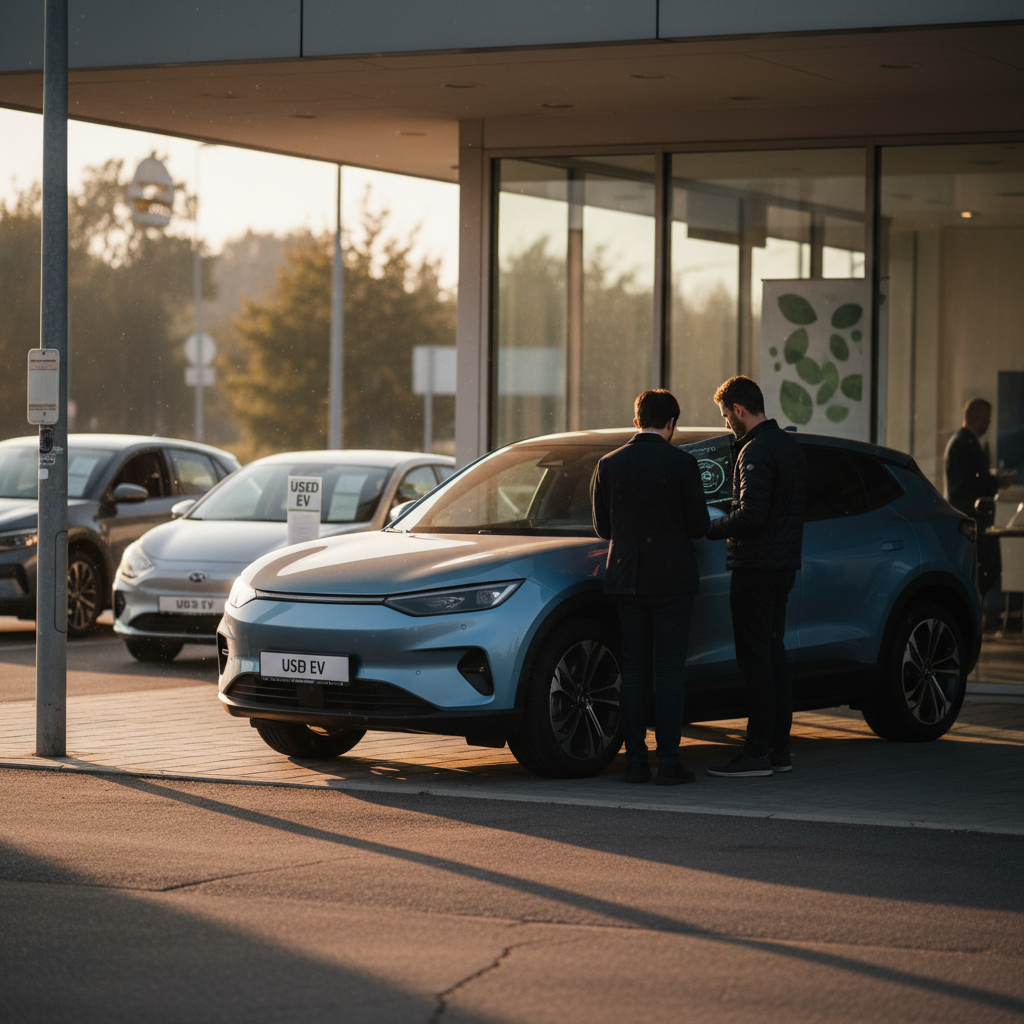
If you bought, or are about to buy, a used EV, choosing the right shop is less about fixing today’s problem and more about knowing what’s coming. Batteries age, fast‑chargers get more powerful, software updates roll out in the background. You want a shop that can be your translator for the car’s entire second act.
Three Things Every Used EV Owner Should Do
Handle these early and you’ll avoid the nastiest surprises later.
1. Get a baseline battery health check
Before you stress about range or resale, get data:
- State of health (SoH) estimate in %
- Any logged high‑voltage faults
- Fast‑charge history if available
This is standard procedure for vehicles sold through Recharged: every car gets a Recharged Score with verified battery diagnostics, so you’re not guessing.
2. Align expectations with your daily use
Talk to an EV‑savvy shop about your actual driving:
- Highway vs. city mix
- Home charging speed and schedule
- Typical climate (cold, hot, mild)
A good tech can tell you whether the range you’re seeing is normal or a sign of deeper issues.
3. Build a long‑term service plan
Have the shop map out what the next 3–5 years might look like:
- Brake fluid and coolant intervals
- Likely tire and brake schedules
- Any brand‑specific watch‑items
This turns EV ownership from mystery into a budget line item, and helps you decide whether a particular used EV is a keeper.
How Recharged fits into this
Red Flags When Choosing an EV Repair Shop
- The shop can’t name a single EV‑specific credential or training program they’ve completed.
- They say, “An electric motor is just an engine without fuel, how different can it be?”
- You don’t see any EVs in the lot, on lifts, or in their photo gallery.
- They dismiss battery or software concerns as “just a sensor” before running diagnostics.
- They won’t give you a written estimate or explain line items in plain language.
- They insist on replacing a battery pack without showing test results or discussing options like module‑level repair or warranty coverage.
Be wary of miracle battery fixes
EV Repair Shop Checklist
Print‑Friendly Checklist Before You Book the Appointment
Confirm they actually see EVs regularly
Their website, photos, or reviews mention EVs specifically, not just hybrids or “green vehicles” in the abstract.
Verify at least one EV‑relevant credential
ASE L3, OEM factory training, or a reputable EV‑specific program, something that shows real investment.
Match the shop to the job
Tires and brakes? Any strong generalist is fine. Battery codes, charging faults, or thermal issues? You want a high‑voltage specialist or brand service center.
Ask for a diagnosis plan, not just a price
Good shops explain how they’ll approach the problem, what tests they’ll run, and what the decision points are, especially for expensive repairs.
Clarify warranty and parts sourcing
For major components, ask whether they use OEM, remanufactured, or salvage parts and how long they’re covered.
Know your Plan B
If an estimate comes back ugly, have a backup: a second opinion, a conversation with the manufacturer, or, if the car’s older, exploring trade‑in options with a used‑EV specialist like Recharged.
EV Repair Shop FAQ
Common Questions About EV Repair Shops
The Bottom Line on Finding an EV Repair Shop Near You
When you search for an “EV repair shop near me”, you’re not just hunting for a place to swap tires, you’re looking for a safety partner who understands high‑voltage systems, software, and the realities of life with an electric car. Don’t let the scarcity of obvious options push you into the arms of the first shop with a lightning‑bolt logo. Verify training, match the shop to the job, and insist on clear explanations and documentation.
If you’re already in a used EV, or thinking about your first, pairing a solid EV shop with data on battery health is the combination that makes ownership feel relaxed instead of experimental. That’s exactly why Recharged bakes diagnostics and transparency into every vehicle we sell, along with financing, trade‑in options, and nationwide delivery. The future of car repair may be electric, but the basics haven’t changed: the right information, the right people, and the right questions will always get you further for less.