If you want a three‑row electric SUV that can tackle camping trips, snow, and school runs, a used Rivian R1S jumps to the top of the list in 2026. Early depreciation is finally catching up to these luxury EVs, which means you can now buy a nearly new R1S for far less than original MSRP, as long as you know how to shop smart.
At a glance
Why the used Rivian R1S makes sense in 2026
Rivian positioned the R1S as a luxury adventure SUV that can replace both your family hauler and your overlanding rig. New, many builds stickered well into six figures. By early 2026, however, depreciation has done what it always does, especially to high‑priced EVs, and second owners are now seeing meaningful value.
Rivian R1S by the numbers (typical ranges)
For many shoppers, that last number is the story. You’re looking at an SUV that rivals or beats gas luxury SUVs in performance, off‑road capability, and tech, but as a second owner you may be paying midsize‑luxury money instead of six‑figure money.
Who’s a great fit for a used R1S?
Rivian R1S trims, batteries, and range: quick cheat sheet
Understanding Rivian’s trims is the fastest way to sanity‑check a used listing. The R1S lineup has evolved, but on the used market in 2026 you’ll most often see these combinations:
Common used R1S configurations (U.S. market)
Approximate EPA or manufacturer‑quoted ranges; actual range depends heavily on wheels, tires, speed, temperature, and terrain.
| Drivetrain & pack | Model years you’ll see used | Approx. rated range* | Notes buyers care about |
|---|---|---|---|
| Dual‑Motor, Standard battery | 2024–2025 | Low‑ to mid‑300s mi | Least common; fine for shorter commutes and lighter towing. |
| Dual‑Motor, Large battery | 2022–2025 | ~330–350 mi | Sweet spot for many buyers; strong mix of price, performance, and range. |
| Dual‑Motor, Max battery | 2024–2025+ | Up to ~400 mi | Highest range; commands a premium on the used market. |
| Quad‑Motor, Large battery | 2022–2024 | Low‑ to mid‑300s mi | Four motors, incredible traction and off‑road grip; slightly less efficient. |
| Tri‑Motor (later years, limited) | 2025+ | Similar to Dual/Quad packs | Performance‑oriented; still rare in the used pool by early 2026. |
Use this as a starting point, then verify specific build details for the VIN you’re considering.
Wheel size matters
Pricing and depreciation: what a used R1S costs in 2026
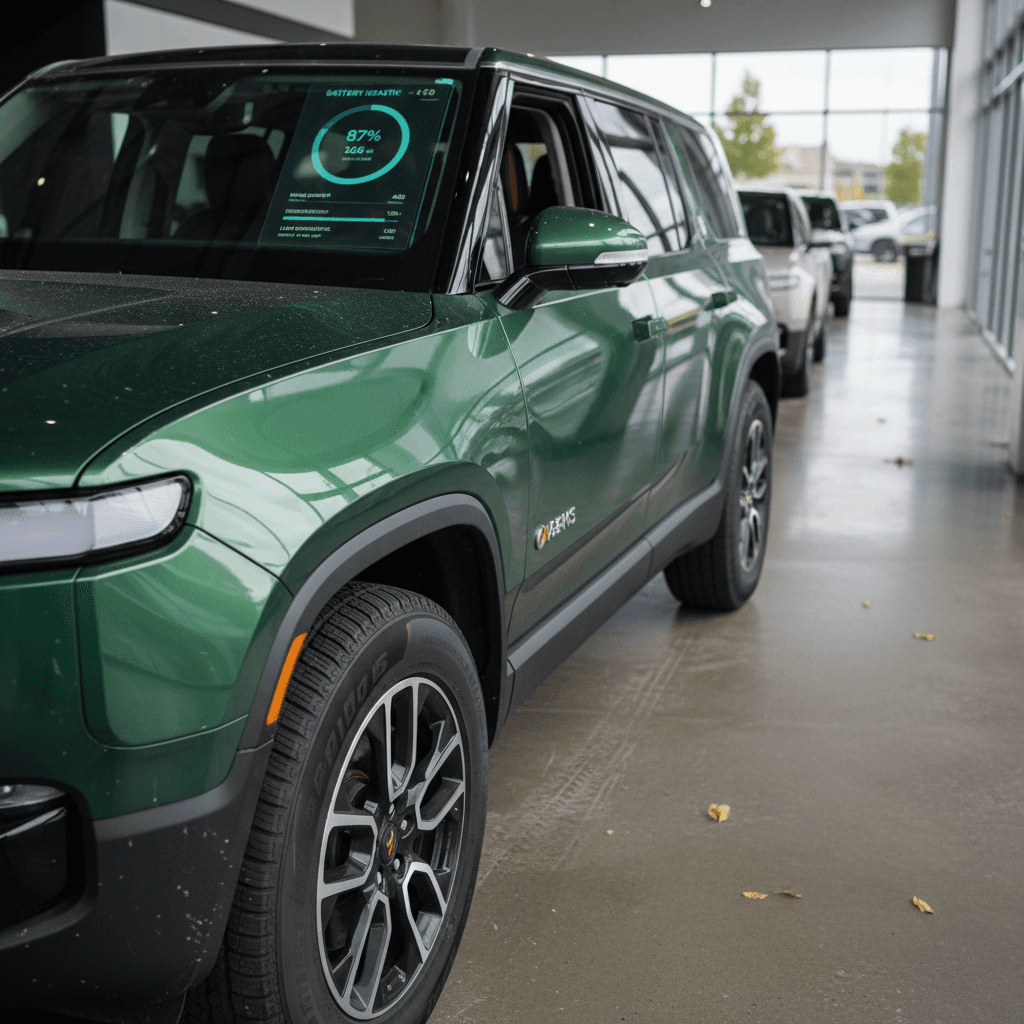
Used Rivian pricing is moving quickly as the market absorbs more inventory, but by early 2026 you can sketch some broad lines. Late‑model 2024–2025 R1S examples often list in the mid‑$60,000s to $90,000+ range depending on mileage, options, and whether you’re looking at Dual‑Motor or higher‑spec trims. Older 2022–2023 builds with higher miles can drop below that, especially from non‑Rivian dealers looking to move an unfamiliar EV.
How depreciation shapes used R1S value
Why 2–4‑year‑old Rivians can be the sweet spot
Luxury EV math
High original MSRPs mean there’s more room for dollars to fall. A $95,000 SUV that loses 45–50% of its value over five years becomes a compelling buy in the $50,000s if the battery and history check out.
Model‑year gaps
New‑car discounts, changing federal incentives, and tech updates (like new driver‑assist features or range tweaks) can push older R1S values down faster than equivalent gas SUVs.
Battery warranty cushion
Because Rivian’s battery and drive unit warranty extends for years beyond the basic coverage, many 2022–2024 R1S examples sold in 2026 still have strong long‑term coverage on the most expensive components.
How to judge a “fair” used R1S price
Battery health: how much range a used R1S really has
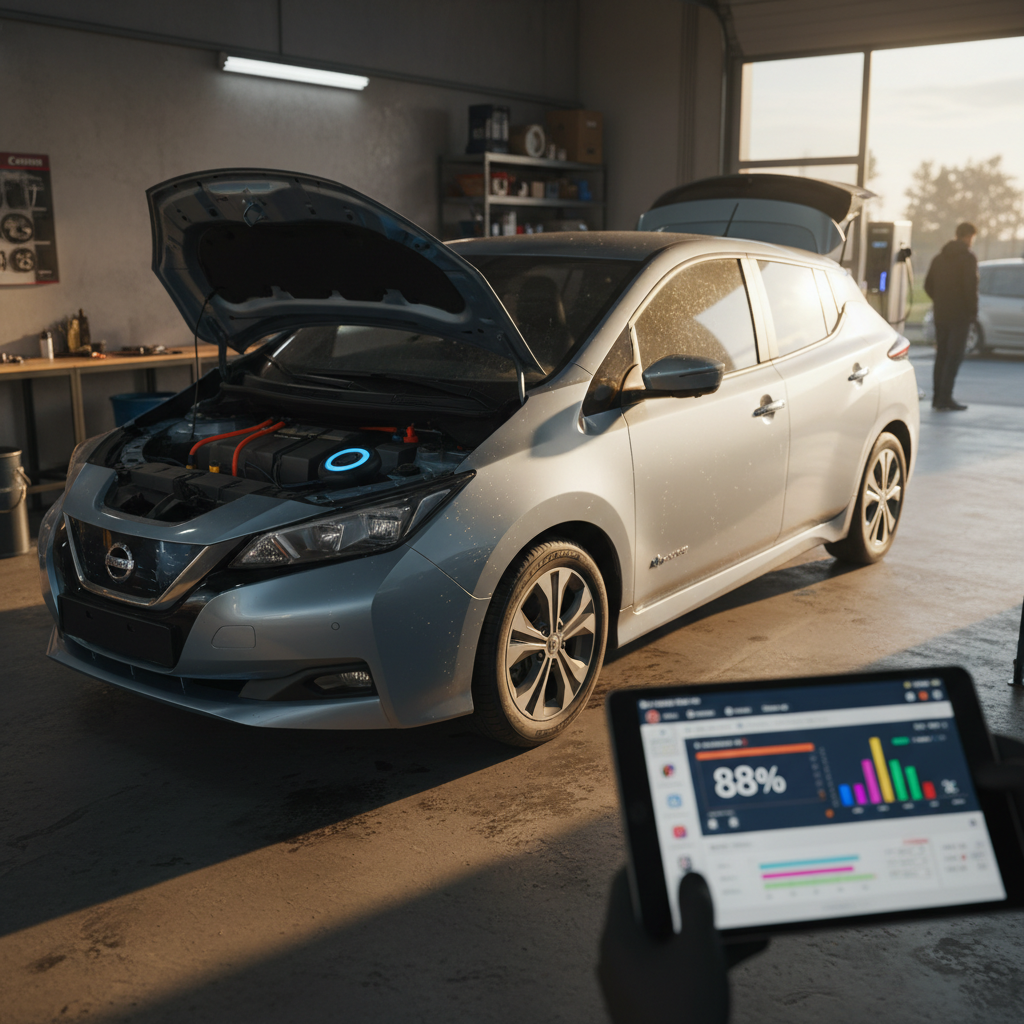
Battery health is the single most important variable in any used EV purchase, and the Rivian R1S is no exception. The good news: early real‑world data from owners suggests modest degradation for most packs through the first 40,000–60,000 miles, assuming normal use and charging habits. The risk: you can still run into individually abused or defective packs, and software‑estimated range can be misleading if you don’t know how to interpret it.
What healthy looks like
- Single‑digit percent loss of usable capacity in the first ~50,000 miles is generally considered normal for modern EV packs.
- Range estimates that track reasonably with EPA numbers in mild weather at highway speeds.
- Charging curves that still hit strong power levels (well over 100 kW) on a warm battery at low‑to‑mid state of charge.
Red flags to investigate
- On‑screen battery health or range estimates suggesting 15–20%+ loss in the first few years.
- Seller can’t explain charging habits, or the vehicle lived mostly on DC fast chargers at high state of charge.
- History of high‑voltage battery service, unexplained range drops, or repeated software resets related to the pack.
Don’t rely on gut feel for battery health
Charging and road-trip usage: what to expect
All Rivian R1S variants use a CCS fast‑charging port and an 11.5 kW onboard AC charger (Level 2). On Level 2 at home, that’s roughly 25–30 miles of range per hour of charging if your electrical panel can support the full power. On a strong DC fast charger, Rivian quotes the ability to add roughly 100–140 miles in about 20 minutes when the battery is warm and at a low state of charge.
- Plan on installing or accessing a Level 2 charger at home or work; living long‑term on 120‑volt charging will feel slow in a big‑battery SUV.
- Expect worse efficiency in winter, especially on short trips, since the R1S doesn’t use a heat pump in most earlier builds and has to warm a large pack.
- When towing, it’s normal to see roughly half your rated range, depending on speed, trailer shape, and weather.
- Rivian’s trip planner and preconditioning tools make long‑distance road trips easier, but they work best when you learn how the SUV behaves at your typical cruising speeds.
Road‑tripping a used R1S
Reliability patterns and recalls on used R1S
Any first‑generation EV from a newer automaker will come with some reliability question marks, and the R1S is no different. Owner reports from 2022–2025 point to a mix of minor annoyances and more serious outliers. The pattern that emerges looks something like this:
Common R1S reliability themes from early owners
What shows up most often in real‑world reports
Fit/finish & small hardware
Misaligned trim, squeaks, and the occasional sticky door handle show up regularly in early‑build owner reports, usually addressed under warranty.
Software quirks
Infotainment bugs, phantom warnings, and occasional resets are part of the ownership experience. Rivian pushes frequent over‑the‑air updates, which fix some issues and introduce others.
Isolated big‑ticket issues
A minority of owners report major component failures, suspension parts, high‑voltage components, or repeat service visits. These tend to be handled under warranty but can mean downtime while parts and service slots open up.
Always check recall and service history
Warranty coverage on a used Rivian R1S
Rivian’s warranty structure is one reason a used R1S can feel less risky than it looks on paper, especially if you’re shopping 2022–2025 model years in 2026. While exact terms can vary by purchase date, U.S. R1S coverage typically includes:
Typical Rivian R1S U.S. warranty coverage (reference only)
Always confirm exact in‑service date and coverage with Rivian for the specific VIN you’re considering.
| Coverage type | Typical duration / mileage | What it generally covers | |
|---|---|---|---|
| New Vehicle Limited Warranty | ~4 years / 50,000 miles | Most non‑wear items: electronics, interior components, many mechanical parts. | |
| Battery Pack Limited Warranty | ~8 years / 175,000 miles (R1S/R1T) | High‑voltage battery pack and enclosure; often includes capacity retention guarantees. | |
| Drive Unit Limited Warranty | ~8 years / 175,000 miles | Electric motors, gearboxes, and related drive components. | |
| Corrosion / perforation | Varies by build year | Rust‑through on body panels and structural components. |
Battery and drive unit coverage usually extends well beyond the basic bumper‑to‑bumper warranty.
If you’re buying an early‑build 2022 R1S in 2026, you’re still likely to have several years of battery and drive unit coverage left, even if the basic warranty clock is ticking down. Later 2023–2025 builds will have even more coverage remaining.
Used‑car warranty fine print
10-step inspection checklist for a used R1S
Used Rivian R1S pre‑purchase checklist
1. Verify build spec and options
Use the VIN and Rivian’s build sheet (or a reputable decoder) to confirm battery pack, drivetrain (Dual vs. Quad), wheel size, interior package, and driver‑assist features match the listing.
2. Pull a full vehicle history report
Look for accidents, title issues, mileage inconsistencies, and repeated service visits. A clean history doesn’t guarantee perfection, but a messy one is an obvious warning sign.
3. Get objective battery health data
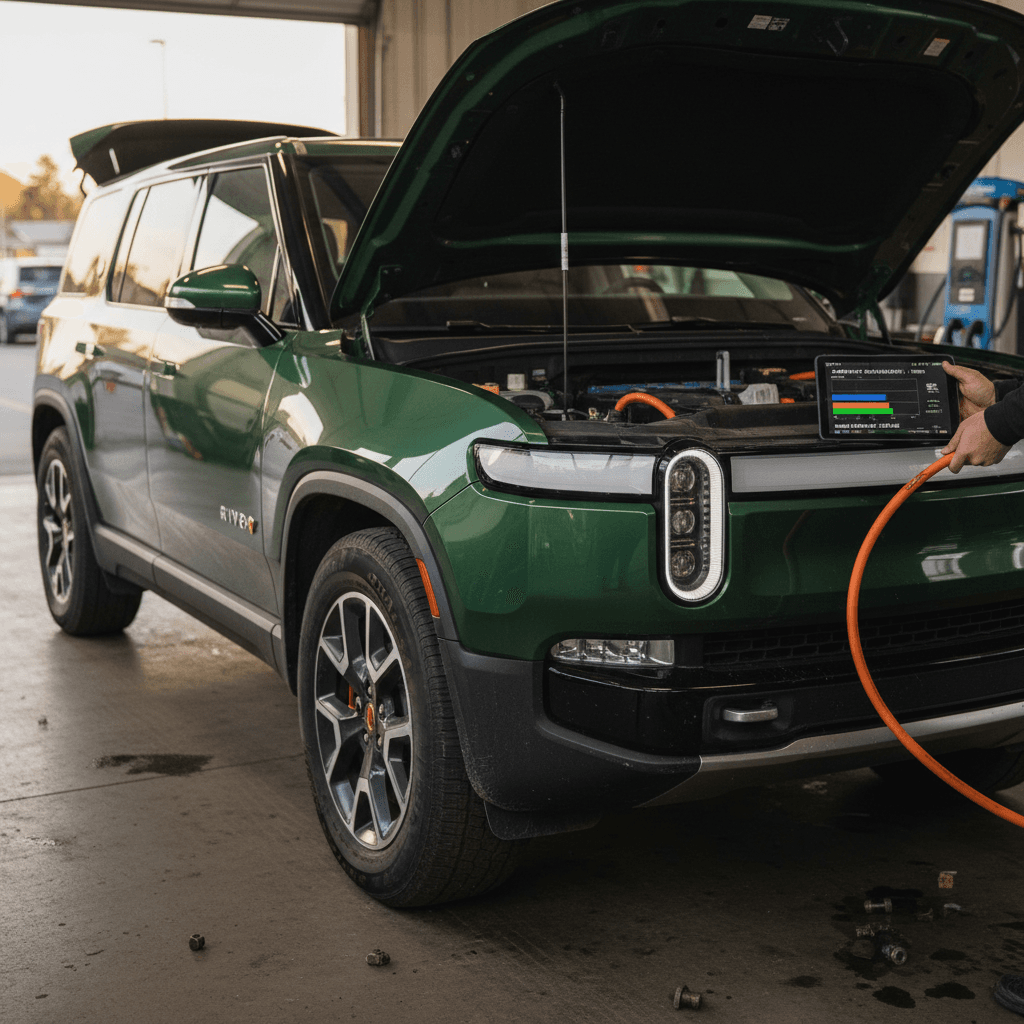
Request a recent battery health report or state‑of‑health reading. If you’re shopping through Recharged, your R1S will come with a <strong>Recharged Score battery analysis</strong> that translates pack condition into clear, shopper‑friendly language.
4. Inspect tires, wheels, and suspension
Check for uneven tire wear (which can signal alignment or suspension issues), curb rash on the expensive 21–22" wheels, and any clunks or vibrations over bumps during the test drive.
5. Test all doors, hatch, and glass
Cycle every door and the rear hatch, checking for misalignment, resistance, or odd noises. Make sure the powered hatch opens and closes smoothly and that frameless windows seal cleanly at speed.
6. Run a full software and feature check
Connect to the Rivian account, confirm that over‑the‑air updates are current, and test major features: drive modes, driver‑assist, cameras, audio, navigation, and climate settings for all three rows.
7. Evaluate real‑world efficiency
Reset a trip meter, drive a mixed loop at your normal speeds, and compare energy use and projected range against expectations for that trim and wheel package. Large deviations can hint at tire, alignment, or pack issues.
8. Inspect charging behavior
If possible, plug into both a Level 2 station and a DC fast charger. Confirm that the vehicle starts charging reliably, hits expected power levels, and doesn’t throw charging error messages.
9. Look underneath for off‑road scars
The R1S invites adventure. Check skid plates, underbody panels, and suspension arms for signs of hard off‑road use or impact damage, especially on Quad‑Motor and Off‑Road package trucks.
10. Confirm warranty and recall status
Use the VIN to verify remaining factory warranty, open recalls, and any completed campaigns. Ask for proof of service visits addressing known issues or recalls.
How buying a used Rivian R1S works at Recharged
Rivian buyers tend to be detail‑oriented, and they hate surprises. Recharged was built with that shopper in mind. When you browse used Rivian R1S inventory on our platform, every SUV comes with transparency baked in.
What Recharged adds to a used R1S purchase
Beyond typical used‑car listings
Recharged Score battery diagnostics
We run a proprietary battery health assessment on every EV we list. The Recharged Score Report explains state of health, expected range impact, and how this R1S compares to similar vehicles, so you know what you’re buying.
Fair market pricing
Our pricing tools consider original MSRP, options, mileage, market trends, and battery health. You see how a given R1S stacks up against comparable vehicles and why it’s priced where it is.
Digital, EV‑savvy buying experience
From online trade‑in offers and financing to nationwide delivery and in‑house EV specialists, Recharged makes the process feel more like ordering tech than haggling over a used SUV on a lot.
Ready to find your next EV?
Browse VehiclesIf you’re selling or trading a Rivian, we can also generate an instant offer or help you consign it, with the same battery‑health transparency passed on to the next owner. That transparency is what keeps residual values more rational in a fast‑moving EV market.
Used Rivian R1S FAQ (2026)
Frequently asked questions about buying a used R1S
Is a used Rivian R1S right for you?
A used Rivian R1S in 2026 is no ordinary family SUV. It’s an all‑electric, three‑row, off‑road‑capable rig that finally makes more financial sense as a second‑owner purchase. If you’re comfortable with newer‑brand quirks, can charge at home or work, and choose your trim, battery pack, and wheel setup carefully, it can replace both the family hauler and the weekend adventure vehicle in one shot.
The homework you do now, on battery health, warranty, and real‑world range, will pay off for years. If you’d like that legwork done for you, Recharged was built to make used EV ownership simple and transparent, from verified battery diagnostics to pricing and delivery. Whether you end up in a Max‑pack Dual‑Motor or a trail‑ready Quad‑Motor R1S, going in with clear expectations is what turns a bold used‑EV purchase into a long‑term win.