If you live in or around Roanoke and you’re thinking about going electric, EV rebates in Roanoke can easily be the difference between “maybe someday” and “let’s do this now.” Between a statewide rebate program, Appalachian Power incentives, and used EV savings, you have more tools to cut costs than you might think.
Important timing note
Why EV rebates matter in Roanoke right now
Roanoke drivers feel two things acutely: mountain weather and electric bills. Winters can spike your heating costs, and until recently, gasoline prices have been as up‑and‑down as the Blue Ridge Parkway. Electric vehicles help on both fronts by cutting fuel and maintenance costs, but the upfront price can still sting, especially if you’re shopping new.
That’s where incentives come in. Virginia has created a statewide EV rebate program aimed at making both new and used electric vehicles more affordable. Appalachian Power, which serves Roanoke and much of southwest Virginia, layers on its own incentives for home charging and off‑peak electricity rates, which can slash your running costs further.
How EV incentives can add up for a Roanoke driver
Quick overview of EV incentives in Roanoke, VA
Main EV incentives Roanoke drivers should know
Think in three layers: state, federal, and local utility.
1. Virginia EV rebate
Virginia runs a statewide Electric Vehicle Rebate Program that applies anywhere in the Commonwealth, including Roanoke. Qualifying buyers of eligible new or used EVs can receive a rebate of up to $2,500, with an additional $2,000 available for income‑qualified households.
2. Federal EV tax credits
New and used EVs may qualify for a federal clean vehicle tax credit, depending on battery sourcing, assembly location, price caps, and your income. These rules change frequently, so always have the dealer show current eligibility or verify on the IRS site before you commit.
3. Appalachian Power incentives
Roanoke’s main electric utility, Appalachian Power, offers a $100 rebate on qualified ENERGY STAR® Level 2 home chargers and a voluntary Off‑Peak EV rate that can lower the cost of home charging if you shift most of your charging to nights and weekends.
Stack your savings
Virginia’s statewide EV rebate: what Roanoke drivers can get
Virginia’s Electric Vehicle Rebate Program is funded at the state level and applies equally in Roanoke, Richmond, or Reston. For Roanoke‑area drivers, it’s the single biggest local incentive you’re likely to see at the point of sale.
Virginia Electric Vehicle Rebate basics (Roanoke included)
Key features of the state program as designed for 2025–2026. Always verify details before purchase, funding and rules can change.
| Vehicle type | Base rebate | Income-based bonus | Maximum total rebate | Key price cap (MSRP) |
|---|---|---|---|---|
| New EV | $2,500 | + $2,000 | $4,500 | Up to $55,000 |
| Used EV | $2,500 | + $2,000 | $4,500 | Typically $25,000 or less |
| Plug‑in hybrid | $2,500 | + $2,000 | $4,500 | Must meet EV program rules |
| Location requirement | , | , | , | Vehicle must be bought at a participating VA dealer and titled in Virginia. |
Virginia’s EV rebate is structured to support both new and used buyers, with extra help for moderate‑ and lower‑income households.
Income rules, price caps, and who qualifies
- Residency: You must be a Virginia resident, and the vehicle must be titled and registered in Virginia, good news if you’re in Roanoke, Salem, or Vinton.
- Where you buy: The car has to come from a participating Virginia dealership. Private‑party sales typically don’t qualify for the state rebate, even if the vehicle itself would.
- Price limits: New EVs generally must have an MSRP of $55,000 or less. Used EVs are capped at a lower price (often around $25,000 for the vehicle itself).
- Income‑based bonus: Households under roughly 300% of the federal poverty level can qualify for an additional $2,000 on top of the base $2,500, for a total of up to $4,500.
- Lifetime usage: Most designs of the program limit buyers to one rebate per person, so use it on a car that fits your long‑term needs.
Watch the funding status
Federal credits and other Virginia tax benefits
On top of Virginia’s EV rebate, many Roanoke buyers also qualify for the federal clean vehicle tax credit. For new EVs, that credit can be up to $7,500; for used EVs purchased from dealers, up to $4,000 or 30% of the vehicle price, whichever is less. The catch is that the rules around which cars qualify keep changing as battery sourcing and manufacturing rules phase in.
Virginia has also experimented with non‑cash perks, like HOV lane access for EVs with clean fuel plates, and state tax rebates funded by budget surpluses. Some of those incentives have sunsetted or changed, but they’re a reminder that the overall tax picture for Virginia drivers can move year to year. Checking both federal and state sites during tax season is part of owning an EV now, just like keeping up with software updates.
Federal clean vehicle tax credit
- Claimed on your federal tax return (unless applied at the dealer as a point‑of‑sale credit).
- Has income limits for buyers and MSRP caps for vehicles.
- New EVs must meet strict battery sourcing and assembly rules.
- Used EV credit requires buying from a licensed dealer and meeting age and price rules.
Virginia EV rebate
- Structured as a rebate, not a credit, often applied at purchase or soon after.
- Has its own price caps and income rules, independent of federal rules.
- Applies to qualifying new and used EVs purchased in Virginia.
- Funding is limited; when the pot runs dry, new applications usually pause until it’s refilled.
Don’t double‑count your savings
Appalachian Power programs for Roanoke EV owners
If Appalachian Power is your utility, which it is for most Roanoke households, you’ve got two main EV‑related opportunities: a rebate on a qualified home charger and a special off‑peak rate for EV charging. Both run through AEP’s TakeCharge Virginia program.
Key Appalachian Power incentives in Roanoke
These programs focus on making home charging cheaper and smarter.
$100 rebate on Level 2 chargers
Through TakeCharge Virginia, Appalachian Power offers a $100 rebate when you purchase a qualifying ENERGY STAR® Level 2 home charger for your EV.
- You must be an AEP residential customer in Virginia.
- The charger must be ENERGY STAR® certified and purchased between January 1, 2022 and December 31, 2026.
- Rebate applications are usually due within 45 days of purchase or by mid‑January of the following year.
- Only one charger rebate per customer per calendar year.
Off‑Peak EV charging rate
Appalachian Power’s Off‑Peak EV rate lets you pay less when you charge outside of weekday peak hours.
- Lower rates typically apply from about 8 p.m. to 6 a.m. Monday–Friday, plus all day on weekends and major holidays.
- Daytime weekday charging can cost more than the standard rate.
- You’ll usually need a dedicated EV meter and may need an electrician to set up the wiring.
For a Roanoke commuter who plugs in overnight, this can cut your fuel bill even further.
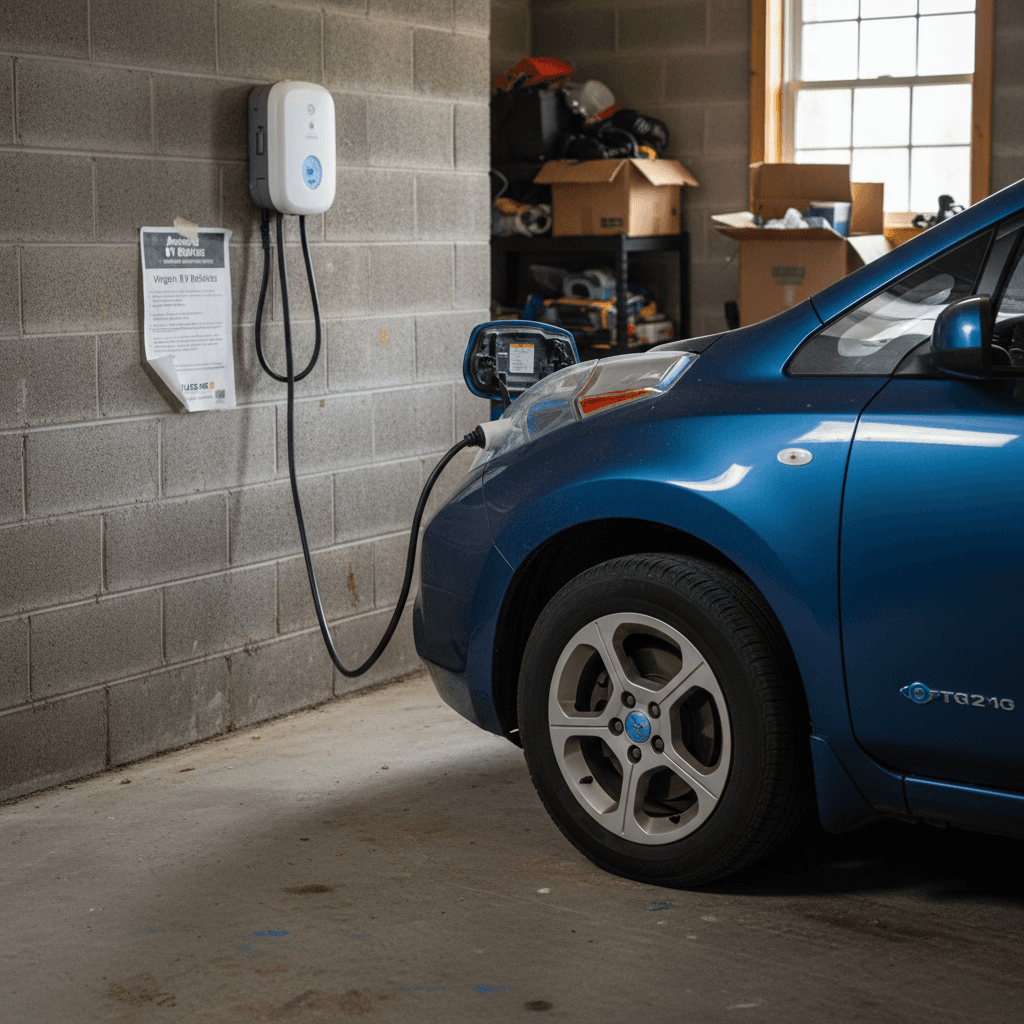
Budget for installation, not just hardware
Stacking savings on used EVs in Roanoke
New EVs grab headlines, but in a city like Roanoke, used EVs are where the smart money often goes. You avoid the steepest early depreciation and can still access serious incentives if you choose the right car and partner.
Recharged focuses on used electric vehicles, and every car comes with a Recharged Score Report that verifies battery health and fair market pricing. When you layer that transparency on top of Virginia’s used EV rebate, potential federal used‑EV credits, and Appalachian Power’s charger rebate, you’re no longer guessing whether the deal pencils out, you can see it line by line.
How to maximize incentives on a used EV in Roanoke
1. Start with eligible models
Look for used EVs that fall under Virginia’s price cap for used‑vehicle rebates and, if you’re eyeing the federal used EV credit, meet those program’s age and price rules too.
2. Verify battery health up front
Battery condition drives both value and your long‑term satisfaction. A <strong>Recharged Score battery health report</strong> gives you objective data so you’re not buying blind.
3. Confirm state rebate funding
Before you get attached to a particular car, have the seller or dealer confirm that Virginia’s rebate fund has money available and that your application can be submitted promptly after purchase.
4. Check your income eligibility
If your household income is under about 300% of the federal poverty line, you may be able to claim the higher, income‑qualified Virginia rebate amount. That can be a $2,000 swing.
5. Plan your home charging setup
Make a plan for where you’ll charge. If you own your home in Roanoke, look into an ENERGY STAR® Level 2 unit that qualifies for AEP’s $100 rebate and pair it with the Off‑Peak EV rate.
6. Run the total cost of ownership
Compare a used EV’s monthly payment plus electricity and insurance to your current gasoline vehicle. For many Roanoke households, the all‑in monthly number is already lower, even before you factor in oil changes you’ll never buy again.
Where Recharged fits in
Ready to find your next EV?
Browse VehiclesRoanoke examples: how the math can work
Let’s pull this out of the policy weeds and into a Roanoke driveway. These are simplified examples, not quotes, but they show how stacking incentives can change the equation.
Scenario 1: Used commuter EV
Driver: Lives in Roanoke, commutes 25 miles round‑trip to work five days a week.
- Buys a used EV from Recharged for $23,000 (meets VA used rebate cap).
- Qualifies for the $2,500 Virginia used EV rebate.
- Household income also qualifies for the extra $2,000 income‑based bonus.
- Applies for $100 AEP charger rebate after installing an ENERGY STAR® Level 2 unit.
Effective cost reduction: $2,500 + $2,000 + $100 = $4,600 off the transaction and charging hardware, not counting any federal used‑EV credit they might also claim.
Scenario 2: Family upgrading from an SUV
Driver: Family in Salem replacing a thirsty midsize SUV.
- Buys a nearly new electric crossover for $40,000 from a Virginia dealer.
- Qualifies for $2,500 Virginia new EV rebate but not the income bonus.
- EV also meets requirements for a partial or full federal new EV tax credit (amount depends on the specific model and rules in effect).
- Enrolls in AEP’s Off‑Peak EV rate and shifts 90% of charging to nights and weekends, trimming the fuel bill by hundreds of dollars per year.
Net effect: The monthly payment goes up compared to the old SUV, but total monthly transportation costs drop once fuel and maintenance are factored in.
Compare against keeping your gas car
How to claim EV rebates step by step
Step‑by‑step: claiming EV incentives as a Roanoke driver
1. Decide new vs. used
Start by deciding whether a new or used EV better fits your budget and driving needs. Used EVs often line up better with Virginia’s price caps and your monthly payment, especially with today’s higher interest rates.
2. Confirm model eligibility
Check that the vehicles you’re considering meet <strong>Virginia’s EV rebate</strong> price caps. If you’re also counting on a federal tax credit, verify eligibility model‑by‑model, both programs have their own rules.
3. Verify program funding
Ask the dealer or seller to confirm that Virginia’s EV rebate fund is open and that your purchase can be reserved in the system <strong>before</strong> you sign. Get documentation of any pre‑approval or reservation number.
4. Collect your documents
You’ll typically need proof of residency, purchase or lease agreement, the VIN, and sometimes proof of income if you’re applying for an income‑qualified bonus. Keep digital copies so you’re not scrambling later.
5. Complete applications on time
Many programs, especially Appalachian Power’s charger rebate, have firm deadlines, such as applying within <strong>45 days of purchase</strong> or by a specific date early the following year. Put reminders in your calendar.
6. Enroll in AEP programs
Once your EV is home, contact Appalachian Power or visit the TakeCharge Virginia site to <strong>apply for the charger rebate</strong> and explore the <strong>Off‑Peak EV rate</strong>. Coordinate with a licensed electrician if you need a new circuit or EV meter.
7. Revisit your budget after 3–6 months
Compare real‑world fuel and maintenance costs to what you projected. Many new EV owners in Roanoke find they’ve been too conservative about their savings, especially if they charge almost entirely at home.
Common rebate mistakes Roanoke drivers make
Avoid these expensive missteps
- Missing purchase windows: Buying an EV or charger outside the eligible date range or submitting the rebate application too late.
- Assuming every EV qualifies: Falling in love with a vehicle that’s just over Virginia’s price cap or doesn’t meet federal battery sourcing rules, and only learning that at tax time.
- Forgetting the charger rebate: Installing a home charger that isn’t ENERGY STAR® certified or failing to submit the rebate to Appalachian Power at all.
- Ignoring income thresholds: Planning your budget around the higher, income‑qualified rebate amount without confirming you actually meet the income criteria.
- Not coordinating with your electrician: Scheduling electrical work without mentioning the off‑peak meter or utility requirements, then having to redo or re‑inspect work.
“The EV itself is just one piece of the puzzle. The smartest buyers in places like Roanoke look at the whole ownership stack, tax credits, state rebates, utility rates, and long‑term energy costs, before they ever sign on the dotted line.”
FAQ: EV rebates and incentives in Roanoke
Frequently asked questions about EV rebates in Roanoke, VA
Bottom line for Roanoke EV shoppers
EV rebates in Roanoke aren’t just a line or two on a brochure; they’re a real opportunity to shrink both the sticker price and the long‑term cost of owning an electric car. Virginia’s EV rebate program, federal tax credits, Appalachian Power’s charger rebate and off‑peak rate, and the natural savings that come with driving electric can easily add up to thousands of dollars in your favor.
If you’re ready to run the numbers on a used EV that fits your budget, and Virginia’s incentive rules, Recharged can help you every step of the way. From Recharged Score battery health diagnostics to financing, trade‑in, and nationwide delivery, we’re built to make EV ownership in and around Roanoke as simple and transparent as possible.