If you drive an electric vehicle in Colorado, you’ve probably wondered whether EVs still get a free pass in the HOV lane. Colorado’s rules have changed over the years, and federal law has changed too, so it’s easy to find outdated advice. This guide breaks down today’s Colorado EV HOV lane rules in plain English, what’s allowed, what isn’t, and how to avoid an expensive Express Lane ticket.
Key takeaway up front
Overview: How Colorado EV HOV lane rules work today
Colorado doesn’t have the eye‑catching green or white EV carpool decals you see in some coastal states. Instead, the state relies on Express Lanes that can operate as HOV lanes, toll lanes, or both depending on time of day and corridor. Electric vehicles are welcome in those lanes, but you’re treated like any other car unless you meet the posted occupancy requirement (usually HOV3+) or pay the toll.
Colorado EVs and HOV / Express Lanes at a glance
Quick facts: Colorado EV HOV lane rules in 2026
- There is no current statewide program that lets solo EVs use HOV or Express Lanes for free.
- Colorado’s old hybrid / ILEV HOV exemption program ended in 2020 when federal authority expired and was not renewed.
- On most Express Lanes, you ride free only if you have HOV3+ (three or more people) and a switchable HOV transponder set to HOV.
- In all other cases, EV or not, you pay the posted toll or stay in the general‑purpose lanes.
- Motorcycles and some buses can still use HOV lanes free, but that’s not tied to being electric.
- Rules are corridor‑specific, so always read the overhead signs and check the Colorado Department of Transportation (CDOT) pages for current details.
Don’t rely on old EV HOV blogs
HOV lanes vs Express Lanes in Colorado
Traditional HOV lanes
Historically, HOV lanes were simply carpool only: if you met the minimum occupancy, you could use the lane; if you didn’t, you stayed out. Many of these have been converted into Express Lanes that blend HOV rules with tolling to manage congestion.
- Free if you meet occupancy requirement
- Enforced primarily by law enforcement
- No automatic billing or transponders by default
Express Lanes (HOT lanes)
Colorado’s modern approach is High‑Occupancy Toll (HOT) lanes, branded as Express Lanes. They use dynamic pricing to keep traffic flowing and treat carpools differently from solo drivers.
- Signs show real‑time toll prices
- Solo drivers pay to use the lane
- HOV3+ often rides free, but still needs the right transponder
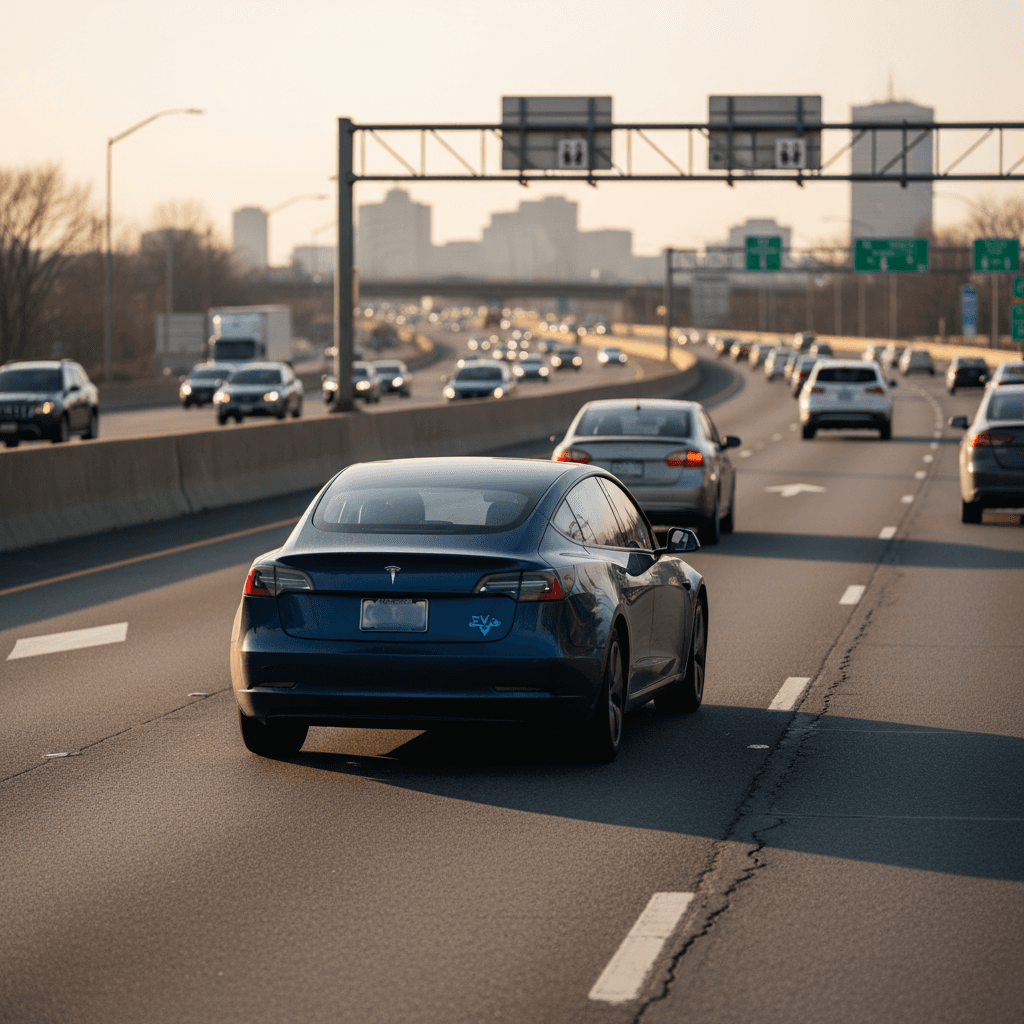
For EV owners, what matters is that Colorado law focuses on occupancy, not fuel type. If your electric vehicle is carrying enough people and your transponder is configured correctly, you can use many Express Lanes for free. If not, you pay the toll just like everyone else, or stay in the general lanes.
Do EVs get special HOV lane access in Colorado?
Colorado used to have a small program that let certain hybrid and inherently low‑emission vehicles (ILEVs) use HOV and HOT lanes regardless of occupancy, with a special permit and transponder. That program closed years ago after federal authorization under 23 U.S.C. 166 expired, and Colorado did not create a new solo EV exemption to replace it.
What EVs do, and don’t, get in Colorado HOV lanes
Think of your EV as HOV‑eligible, not HOV‑exempt
What you DO get
- Full access to general lanes, of course
- Access to Express Lanes if you pay the toll
- Free HOV3+ use on eligible corridors if you meet occupancy and use an HOV transponder
What you DON’T get
- No blanket right to use HOV or Express Lanes solo for free
- No special decal or plate that waives occupancy rules
- No reduced toll rate just because the car is electric
What can still be confusing
- Outdated online posts about hybrid or EV permits
- Friends from other states with EV HOV decals
- Assuming “green car” automatically equals HOV perks
Rule of thumb for Colorado EV drivers
How to use Colorado Express Lanes in an EV
Using Express Lanes in an EV is straightforward once you understand two things: you’ll usually need an ExpressToll account and pass, and you must choose whether you’re driving as a toll‑payer or as an HOV3+ carpool.
Step‑by‑step: Using Express Lanes in your EV
1. Decide if you’re HOV3+ or paying tolls
Count the people in your EV. If you have <strong>three or more</strong> (including the driver) and the corridor offers HOV3+ free travel, you can use the HOV mode. Otherwise, you’ll be paying a toll.
2. Get an ExpressToll account
Go to Colorado’s ExpressToll program site to create an account. You’ll link your license plate and payment method so tolls can be charged automatically rather than billed at the higher license‑plate rate.
3. Order the right pass
If you want the option to use HOV mode, order a <strong>Switchable HOV3+ transponder</strong>, not just a basic sticker pass. The switchable unit is the only device that lets you toggle between Toll and HOV on Express Lanes.
4. Mount the transponder correctly
Install the transponder on your windshield under the rear‑view mirror according to the instructions. Mis‑mounted devices can fail to read, leading to license‑plate billing or even mistaken HOV violations.
5. Set the switch before you enter
Before you cross into the Express Lane, set the HOV switch:<ul><li><strong>HOV</strong> if you’re HOV3+ on a corridor that offers free carpooling</li><li><strong>Toll</strong> if you’re solo, only two people, or on a corridor/time with no HOV free‑ride period</li></ul>
6. Read the overhead signs
Watch the dynamic message signs as you approach. They show <strong>current toll rates, HOV requirements, and lane rules</strong> for that segment. Rules can vary by time of day and direction.
Why a switchable HOV transponder is worth it

Major Colorado Express Lane corridors and EV use
Rules can differ slightly by corridor and by time of day, but the underlying logic is consistent: HOV3+ with the right transponder often rides free, while others pay or stay out. Here’s a simplified overview to orient you before you dig into CDOT’s detailed corridor pages.
High‑level look at Colorado Express Lane corridors
This is a simplified snapshot; always confirm current rules and tolls with CDOT before you drive.
| Corridor | Typical HOV Requirement | Free HOV Use?* | Solo EV Rules |
|---|---|---|---|
| US 36 (Denver–Boulder) | HOV3+ during set hours | Yes, with HOV3+ and switchable transponder | Pays toll like any other solo vehicle |
| I‑25 North (US 36–Fort Collins) | HOV3+ during set hours | Yes, where posted and with HOV mode set | Pays toll or stays in general lanes |
| I‑25 Central (Downtown Denver) | HOV3+ where HOV lanes exist | Varies by segment and hour | No HOV perks just for being electric |
| I‑70 Mountain (Golden–Empire Jct.) | HOV3+ only during certain peak periods | Limited HOV3+ windows, check signage | Solo EVs always pay the posted toll |
| I‑70 East (toward airport) | Often toll only | HOV options limited or none | EVs must pay toll when using Express Lane |
Remember: there is <strong>no special EV‑only discount</strong> on these corridors as of early 2026.
Always double‑check your corridor
Common mistakes (and fines) EV drivers should avoid
Because EV drivers are used to special treatment in other areas, like tax credits and low running costs, it’s easy to assume the HOV lane will be kinder too. That assumption can get expensive fast.
Top mistakes Colorado EV drivers make in HOV / Express Lanes
All of them are avoidable if you know the rules
Assuming “EV = free carpool lane”
Wrong transponder mode
No pass, just license plate billing
HOV violations are not cheap
What could change next for Colorado EV HOV rules?
Federally, the authority that once allowed states to give solo alternative‑fuel vehicles special HOV access has either expired or been sharply limited in many cases. Some states are now phasing out EV carpool decals altogether. Colorado has already moved on from its earlier hybrid / ILEV HOV program and shifted focus toward purchase incentives, clean‑car sales standards, and expanding charging rather than lane perks.
- Colorado’s clean‑car and clean‑truck rules are aimed at putting more EVs on the road, not giving a shrinking minority special lane access.
- As EVs become a large share of traffic, permanent solo EV carpool exemptions would undermine the whole point of HOV lanes, keeping them moving.
- Future changes are more likely to tweak tolling, occupancy thresholds, and corridor design than to resurrect a broad EV‑only HOV perk.
- Local or pilot programs could appear in specific regions, but you should treat those as temporary bonuses, not something to bank on when choosing an EV.
Plan around hard savings, not hypothetical perks
How HOV and toll rules should shape your EV shopping
If you’re shopping for a used EV in Colorado, HOV rules should be context rather than a deciding factor. You won’t find a magic model that suddenly unlocks free solo Express Lane access, but you can choose a car that fits your commute pattern and minimizes your time in stop‑and‑go traffic overall.
When HOV rules barely matter
- Your commute avoids Express Lane corridors most days.
- You work off‑peak hours and rarely sit in true rush‑hour gridlock.
- You can charge at home and start each day with a full battery, making slightly slower mixed‑flow traffic less stressful.
In these cases, prioritize range, comfort, and charging speed over any speculative lane‑access advantage.
When lanes and tolls deserve attention
- You’re a regular on US 36, I‑25, or I‑70 during peak times.
- You might build a regular HOV3+ carpool, coworkers, family, or neighbors.
- You’re cost‑sensitive and want to model toll costs over years, not months.
Here, it’s worth thinking about how often you can realistically run HOV3+ and whether budgeted tolls still make an EV attractive.
This is where buying through a platform that understands Colorado EV life helps. Every vehicle on Recharged comes with a Recharged Score Report that verifies battery health and gives you realistic range expectations, so you can decide if slogging in general lanes every day is tolerable, or if a slightly longer‑range EV would let you skip tolls without stressing about your state‑of‑charge.
How Recharged can help Colorado drivers
FAQ: Colorado EV HOV lane rules
Frequently asked questions about Colorado EV HOV and Express Lanes
Colorado’s EV HOV lane rules can be boiled down to a simple principle: your passengers matter more than your powertrain. Electric vehicles no longer get blanket solo access to HOV or Express Lanes, but they still deliver compelling economic and environmental benefits that hold up even in regular traffic. Understand the rules, budget realistically for tolls, and pick an EV whose battery, range, and comfort fit your real commute. From there, Express Lanes become a tactical tool, not a reason to buy (or avoid) an EV.