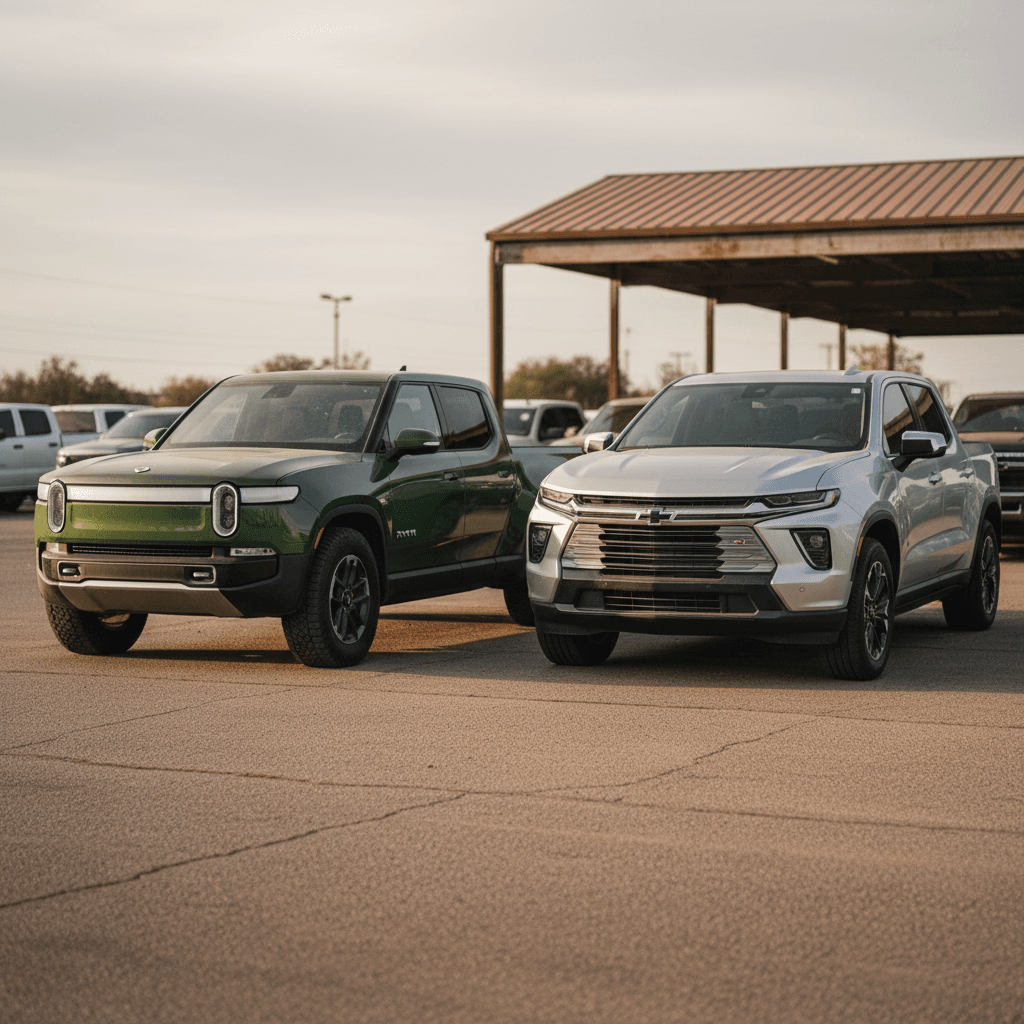
If you’re shopping for a **used electric pickup**, chances are your shortlist includes the Rivian R1T and the Chevy Silverado EV. Both are groundbreaking trucks, but they were designed with very different missions in mind, and those differences really matter when you’re buying used, where battery health, depreciation, and real‑world capability can make or break the deal.
Context: a fast‑moving EV truck market
Why compare a used Rivian R1T vs Chevy Silverado EV?
On paper, both the used Rivian R1T and Chevy Silverado EV promise what truck buyers want: big range, big power, and serious towing. Under the skin, though, they take opposite approaches. Rivian leans into adventure and off‑road versatility. Chevrolet leans into range, payload, and work‑truck familiarity. When you move from new to used, questions about long‑term reliability, battery degradation, and charging access come to the front of the line.
This guide focuses on the **used‑market reality** in the U.S., what these trucks are actually like to own after their first miles, and how to decide which is the smarter pre‑owned buy for you.
Quick take: which used EV truck fits you?
Used Rivian R1T vs Silverado EV: at-a-glance recommendations
Skip to the verdict that matches how you actually use a truck.
Choose a used Rivian R1T if…
- You want a go‑anywhere adventure truck with air suspension and excellent off‑road modes.
- Most of your driving is under 250–300 miles a day, even with some towing.
- You value maneuverability and size over maximum bed length.
- You care more about ride quality, design, and tech than raw range numbers.
- You want an EV that already has a healthy used inventory and established aftermarket community.
Choose a used Chevy Silverado EV if…
- You need the most range possible; certain trims reach EPA estimates above 450 miles.
- You regularly tow long distances and want 12,000+ lb towing capacity on some trims.
- You prefer a full‑size truck footprint and Chevy’s more traditional cabin layout.
- You’re coming from a gas Silverado and want a familiar badge and dealer network.
- You’re okay with a younger, thinner used market and potentially higher prices per mile.
Shopping tip
Core specs: range, performance, and towing
Headline numbers: used R1T vs Silverado EV (typical 2024–2025 builds)
Spec comparison: used Rivian R1T vs Chevy Silverado EV
Approximate specs for common 2024–2025 configurations you’re likely to see on the used market.
| Spec | Typical used Rivian R1T | Typical used Chevy Silverado EV |
|---|---|---|
| Range (EPA est.) | 258–420 mi depending on pack (Standard / Large / Max) and motor | ~282–492 mi depending on battery (Standard / Extended / Max Range) and trim |
| Battery architecture | 400‑volt, up to ~220 kW DC fast charge on larger packs | 800‑volt, up to ~350 kW DC fast charge on supported chargers |
| 0–60 mph | As quick as low‑3s in performance builds; dual‑motor closer to mid‑4s/5s | WT around high‑5s; RST and higher‑output trims mid‑4s or better |
| Max towing | Up to 11,000 lbs | Up to ~12,500 lbs (trim‑dependent) |
| Payload | Roughly 1,700–1,800 lbs | Up to ~1,800+ lbs on some trims |
| Drive layout | Dual‑motor or quad‑motor AWD | Dual‑motor AWD |
| Off‑road bits | Air suspension, multiple off‑road modes, generous clearance | Four‑wheel steering, and off‑road‑oriented Trail Boss on newer trucks; less specialized in early WTs |
Always verify exact specs against the VIN and manufacturer documentation; trims, options, and over‑the‑air updates can change details.
Towing reality with any EV truck
Work vs. adventure: how these trucks are tuned
Rivian R1T: adventure and daily‑driver manners
- Size & packaging: Shorter overall than a full‑size, easier to park, with clever storage like the gear tunnel.
- Ride & handling: Air suspension and adaptive dampers give the R1T a "planted SUV" feel more than a traditional pickup.
- Off‑road: Multiple terrain modes, serious approach/departure angles, and generous ground clearance make it feel at home on trails.
- Cab & tech: Minimalist but premium, oriented around Rivian’s own software stack and over‑the‑air updates.
Chevy Silverado EV: range and work credibility
- Size & footprint: Very much a full‑size truck; big inside, big outside, and familiar to Silverado owners.
- Bed & payload: Long bed options, impressive payload ratings, and a focus on hauling and job‑site utility.
- Driving character: Dual‑motor power with a calmer, more traditional truck feel; four‑wheel steering adds maneuverability.
- Cab & tech: More conventional truck dash design, but with big screens and GM software plus options like Super Cruise on some trims.
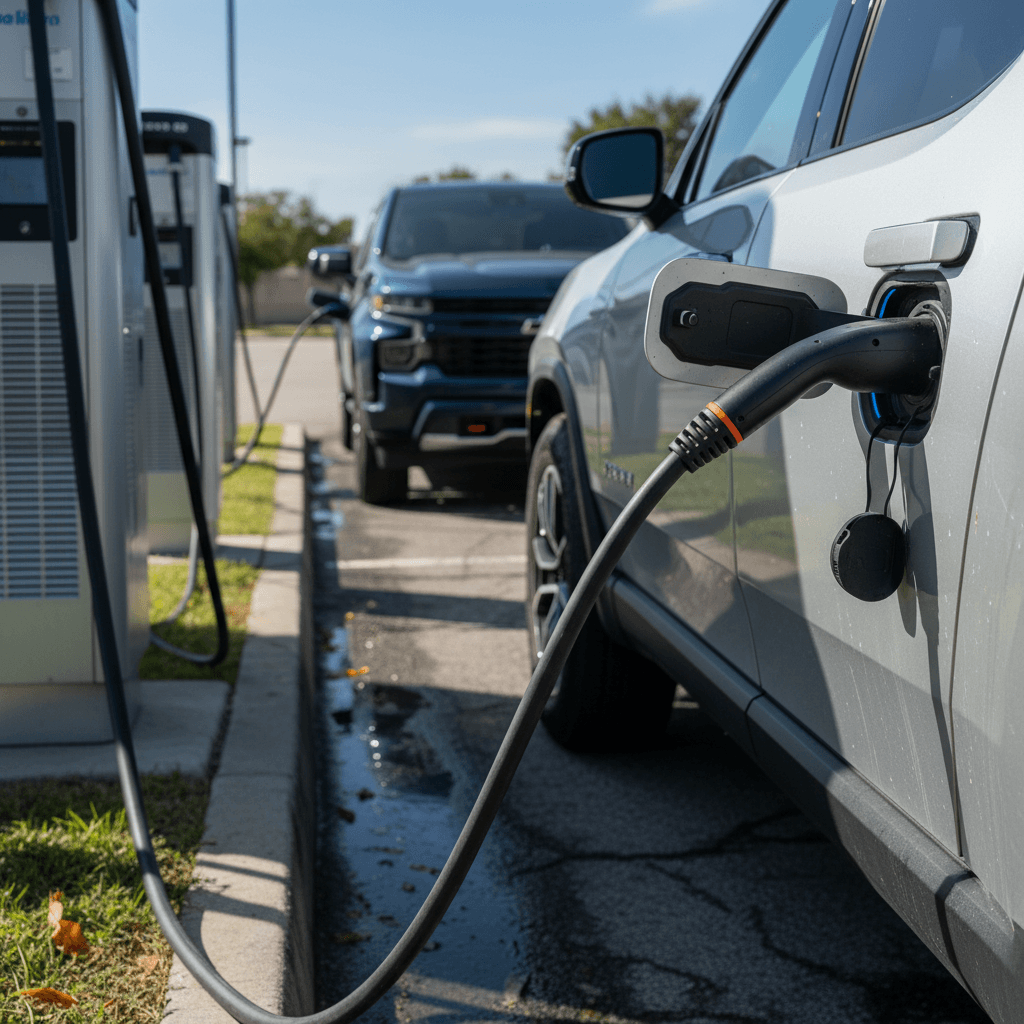
Charging experience and road‑trip viability
On the spec sheet, the Silverado EV’s 800‑volt architecture and higher peak **DC fast‑charge rate** look unbeatable. In practice, what matters for you as a used buyer is: How fast can I realistically add miles on the stations I actually have access to, and how easy is it to plan trips?
Charging: used R1T vs used Silverado EV
How each truck fits into today’s charging landscape.
Rivian R1T charging experience
- DC fast charging: Up to ~220 kW peak on larger packs, with decent 10–80% times if you find high‑power chargers.
- Networks: Uses CCS, so it plays with most non‑Tesla fast‑charging networks and many retrofitted Tesla sites.
- Trip planning: Rivian’s built‑in trip planner routes you through compatible chargers and adapts to conditions.
- Home charging: Standard J1772 / CCS AC charging; a 48‑amp Level 2 home setup is a sweet spot for overnight fills.
Chevy Silverado EV charging experience
- DC fast charging: Up to ~350 kW peak on compatible 800‑V DC fast chargers, adding serious miles in 10–20 minutes.
- Networks: Also CCS for now, giving similar network access to the R1T, plus growing support for NACS via adapters.
- Trip planning: GM’s route‑planning and myChevy app do a solid job on main corridors but can lag on newer sites.
- Home charging: 11.5‑kW onboard charger standard on many trims; 19.2‑kW on higher trims if your home electrical can support it.
Road‑trip strategy with a used EV truck
Real‑world ownership costs and depreciation
When you buy used, you’re inheriting someone else’s depreciation curve. Electric trucks in particular can fall faster than gas trucks, especially early builds that launched at high MSRPs. The good news for shoppers is that this can make **lightly used EV trucks fantastic value**, as long as the battery and high‑voltage systems check out.
Rivian R1T depreciation & costs
- Early R1Ts launched expensive, then faced price changes and growing competition, which pushed used values down.
- Compared with some other EVs, the R1T has shown better value retention, helped by strong demand from enthusiasts.
- Out‑of‑warranty repairs can be pricey if you’re far from a Rivian service center, but OTA updates have addressed many early quirks.
- Insurance can be higher than average due to repair costs, so get quotes before you buy.
Chevy Silverado EV depreciation & costs
- Because the Silverado EV is newer and volumes are still ramping, used prices are less predictable.
- Expect early Work Trucks and high‑spec RSTs to take the steepest initial hit, then stabilize as more trims hit the road.
- Chevy’s dealer network may help with service access and parts availability, which matters once the truck is out of warranty.
- Fleet‑return WTs could become the value sweet spot if they were lightly used and well maintained.
Where Recharged fits in
Used market reality: availability and pricing
From a purely practical standpoint, **you’re going to find far more used Rivian R1Ts** than Silverado EVs for at least the next couple of years. Rivian has been shipping customer trucks since 2021, while GM staged the Silverado EV rollout through commercial WTs before broader retail trims.
What you’re likely to see on real used lots
1. Rivian R1T: plenty of builds and colors
You’ll commonly see dual‑motor R1Ts with Large packs, plus some early quad‑motor trucks and, increasingly, Standard pack models at lower prices. There’s real choice on color, wheels, and option content.
2. Silverado EV: mostly Work Trucks early on
In the near term, expect the used Silverado EV pool to be dominated by ex‑fleet or work‑use WTs, with retail LT and RST models trickling in more slowly and commanding higher prices.
3. Regional variation is huge
R1Ts are concentrated around EV‑friendly metros and outdoor regions (West Coast, Colorado, Northeast). Silverados will tend to follow traditional truck markets and large fleet hubs first.
4. Pricing bands will overlap
A highly optioned used R1T can cost as much as, or more than, a work‑oriented used Silverado EV WT. Focus on <strong>your use case</strong> and condition, not badge prestige.
5. Title history matters more than usual
Because both trucks are heavy and powerful, look carefully at prior use: lots of towing, off‑roading, or commercial work leaves different fingerprints on each model.
What to check before buying a used R1T or Silverado EV
Gas trucks can hide a lot of sins behind an oil change and detail. With used EV trucks, the biggest risks are invisible to the naked eye: battery health, high‑voltage components, and software history. Here’s how to de‑risk either purchase.
Pre‑purchase checklist for used electric pickups
1. Get objective battery‑health data
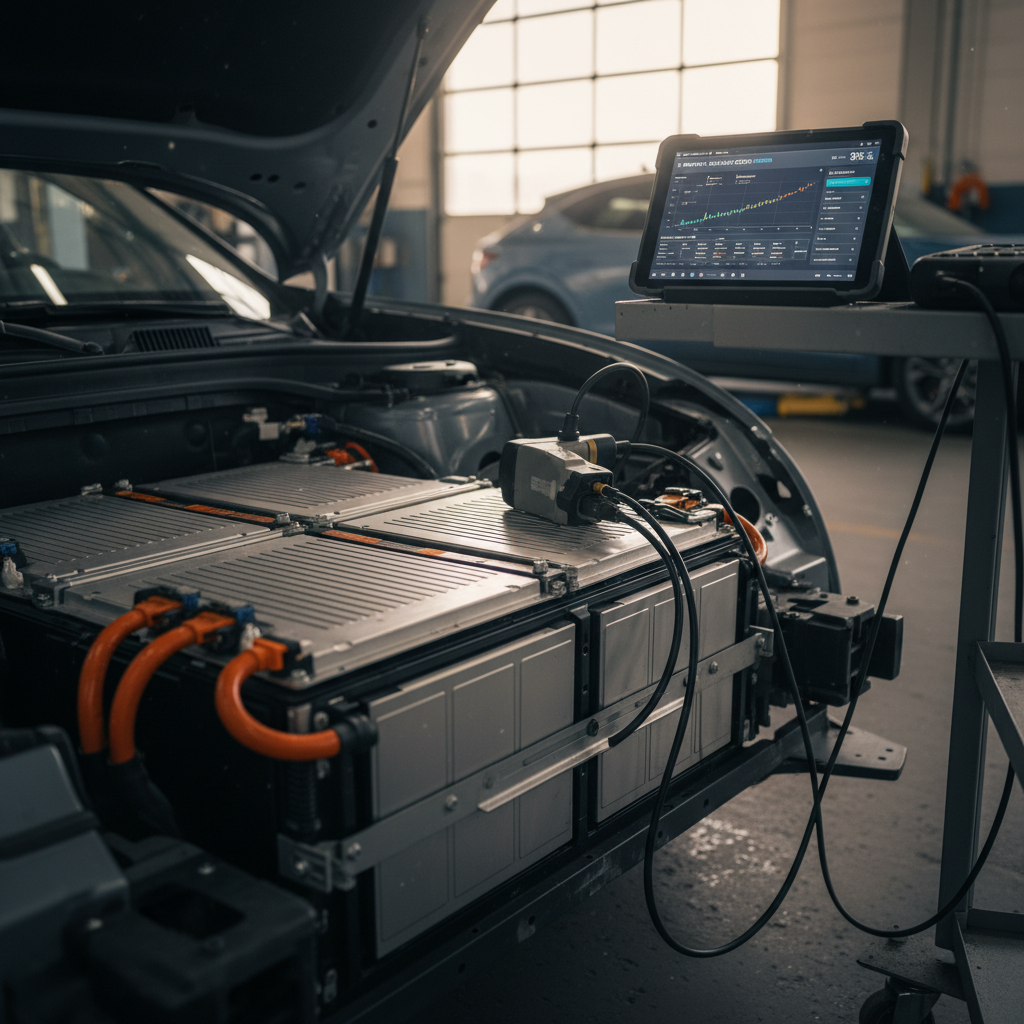
Ask for a <strong>formal battery diagnostic</strong>, not just an app screenshot. At Recharged, our Recharged Score uses direct data to estimate usable capacity and expected range, which is far more reliable than guessing from a single full charge.
2. Review DC fast‑charging and towing history
Excessive fast charging and heavy towing don’t automatically ruin a pack, but they’re strong signals. Look for seller records, fleet reports, or telematics where available, and factor that into what you’re willing to pay.
3. Inspect underbody, suspension, and tires
R1Ts that have lived on trails and Silverados that have lived at job sites can both take a beating underneath. Check for scrapes on battery enclosures, bent suspension components, and uneven tire wear.
4. Confirm software and recall status
Both Rivian and GM push frequent software updates and field fixes. Verify the truck is on <strong>current software</strong> and that any safety or battery‑related recalls have been completed before you sign anything.
5. Test charging on Level 2 and DC fast
If possible, plug the truck into both a home‑style Level 2 charger and a DC fast charger. Watch for abnormal charging speeds, fault codes, or thermal‑management noise that persists beyond normal operation.
6. Check warranty coverage and transferability
High‑voltage components and batteries usually have longer warranties than the bumper‑to‑bumper coverage. Confirm what’s left, how it transfers to you, and whether any prior modifications might jeopardize it.
Don’t skip a professional EV inspection
Who should buy which truck?
By this point the pattern is clear: the used Rivian R1T and used Chevy Silverado EV are both excellent electric trucks, but they’re not trying to be the same thing. Think less in terms of which one is "better" and more in terms of which one matches your life.
Buyer profiles: match yourself to a truck
Use these archetypes as a sanity check before you commit.
The weeknight commuter, weekend adventurer
Best fit: Used Rivian R1T with Large or Max pack, ideally with off‑road‑friendly wheels and tires.
The fleet manager or job‑site regular
Best fit: Used Silverado EV WT or LT, especially ex‑fleet trucks with strong maintenance records.
The long‑distance tow rig owner
Best fit: Silverado EV with Extended or Max Range, as long as you understand towing will still slash your effective range.
If your heart is set on an adventure‑oriented, right‑sized electric truck with serious off‑road chops, a well‑vetted used Rivian R1T is a compelling choice, especially once early‑adopter depreciation has done its work. If you live in the world of long highway days, heavy loads, and want to lean hard on GM’s dealer and fleet ecosystem, a used Chevy Silverado EV makes more sense, particularly in work‑oriented trims.
Either way, the key to a good used EV truck purchase is transparent data. With Recharged, you get a Recharged Score Report showing verified battery health, pricing that reflects true market conditions, and EV‑specialist support from first browse to final delivery. That lets you focus less on guessing and more on picking the truck that actually fits how you live and work.