If you live in the Triangle and you’re shopping for an electric car, you’ve probably heard that EV rebates in Raleigh aren’t what they were a few years ago. The big federal tax credits changed in late 2025, North Carolina still doesn’t have a statewide EV rebate, and the rules feel like they’re written just to confuse normal people. Let’s untangle what’s actually available in 2025–2026, and how Raleigh drivers can still save real money, especially when buying a used EV.
Why incentives look different in 2026
Raleigh EV rebates in 2025–2026: what’s really left?
Quick snapshot: EV savings around Raleigh
Here’s the honest lay of the land for EV rebates in Raleigh right now:
- The old federal tax credits for new and used EVs ended for vehicles purchased after September 30, 2025. If you bought before that, you may still claim the credit on your 2025 return.
- North Carolina does not offer a statewide EV purchase rebate or tax credit as of early 2026, though the state is rolling out broader home energy rebates that may help with electrical upgrades.
- Duke Energy and other utilities offer one-time bill credits to help cover the cost of installing home or workplace chargers.
- The City of Raleigh is investing millions in public charging infrastructure, which doesn’t put cash in your pocket, but it does cut your fueling costs by making it easier to drive electric without installing a charger immediately.
- Used EV pricing has softened, so even with fewer rebates, smart shoppers in Raleigh can often get into a used EV for less than a comparable gas SUV, especially once you factor in fuel and maintenance savings.
Tip for Raleigh shoppers
Federal EV tax credits for Raleigh buyers: what changed in 2025
The federal “clean vehicle” credits that used to knock up to $7,500 off a new EV and up to $4,000 off a used EV were reshaped by federal tax law changes in 2025. The crucial date is September 30, 2025:
Federal EV tax credits: what Raleigh buyers need to know
How the federal EV credits for new and used vehicles changed for purchases in 2025.
| Purchase timing | Vehicle type | Maximum credit | Available to Raleigh buyers? |
|---|---|---|---|
| On or before Sept. 30, 2025 | New EV (clean vehicle) | Up to $7,500 | Yes, if your income, vehicle price, and other rules are met. |
| On or before Sept. 30, 2025 | Used EV (previously-owned clean vehicle) | Up to $4,000 | Yes, from a licensed dealer and subject to income and price caps. |
| After Sept. 30, 2025 | Any passenger EV | $0 | No federal consumer EV credit currently available. |
If you bought after September 30, 2025, you can’t claim the old federal EV credits, but you may still be able to claim them if you purchased earlier and meet the requirements.
Watch the wording on “purchase date”
Used EV tax credit: can Raleigh drivers still claim up to $4,000?
If you bought a used EV from a dealer in or around Raleigh earlier in 2025, the Used Clean Vehicle Credit may still be on the table for your 2025 tax return. The program ended for vehicles acquired after September 30, 2025, but it still applies to qualifying purchases before that date.
Key rules for the used EV tax credit
Applies only to qualifying purchases on or before Sept. 30, 2025
How much was it?
The credit is worth 30% of the sale price up to $4,000. So a $13,000 used EV could qualify for a $3,900 credit if all other rules are met.
Who could claim it?
You must have bought the car for your own use (not for resale), not be someone else’s dependent, and not have claimed a used EV credit in the previous three years. Income limits apply.
Income & price caps
- Sale price: $25,000 or less
- Model year at least 2 years older than purchase year
- Modified AGI under roughly $150k (joint), lower for single filers
If you bought a qualifying used EV from a licensed dealer, say, a 2021 Nissan Leaf or 2020 Chevy Bolt, for under $25,000 before the deadline and your income fits, you can still get that credit even though we’re now well into 2026. The credit is claimed on your federal tax return; your dealer should have provided paperwork showing the vehicle qualified.
How Recharged helps with the paperwork
Does North Carolina offer a state EV rebate?
Here’s the straight answer: North Carolina still does not offer a statewide EV purchase rebate or state EV income-tax credit as of early 2026. That applies whether you live in Raleigh, Durham, Cary, or anywhere else in the state.
What the state is doing instead
Rather than cutting you a check for buying an EV, North Carolina has focused on charging infrastructure and grid programs. The state has:
- Used federal funds to build out fast-charging corridors.
- Supported utility programs that lower the cost of installing home and workplace chargers.
- Launched broader home energy rebate plans that can sometimes help with EV-ready electrical work.
What that means for you in Raleigh
You probably won’t find a big, easy “North Carolina EV rebate” line on your tax forms. Instead, your savings are most likely to come from:
- Utility bill credits or rebates for charger installation.
- Lower fuel and maintenance costs over time.
- Competitive used EV pricing compared with similar gas vehicles.
That’s why it pays to shop carefully and run the numbers, not just look for a single headline rebate.
Home energy rebates and EVs
Duke Energy charger credits for Raleigh homes and businesses
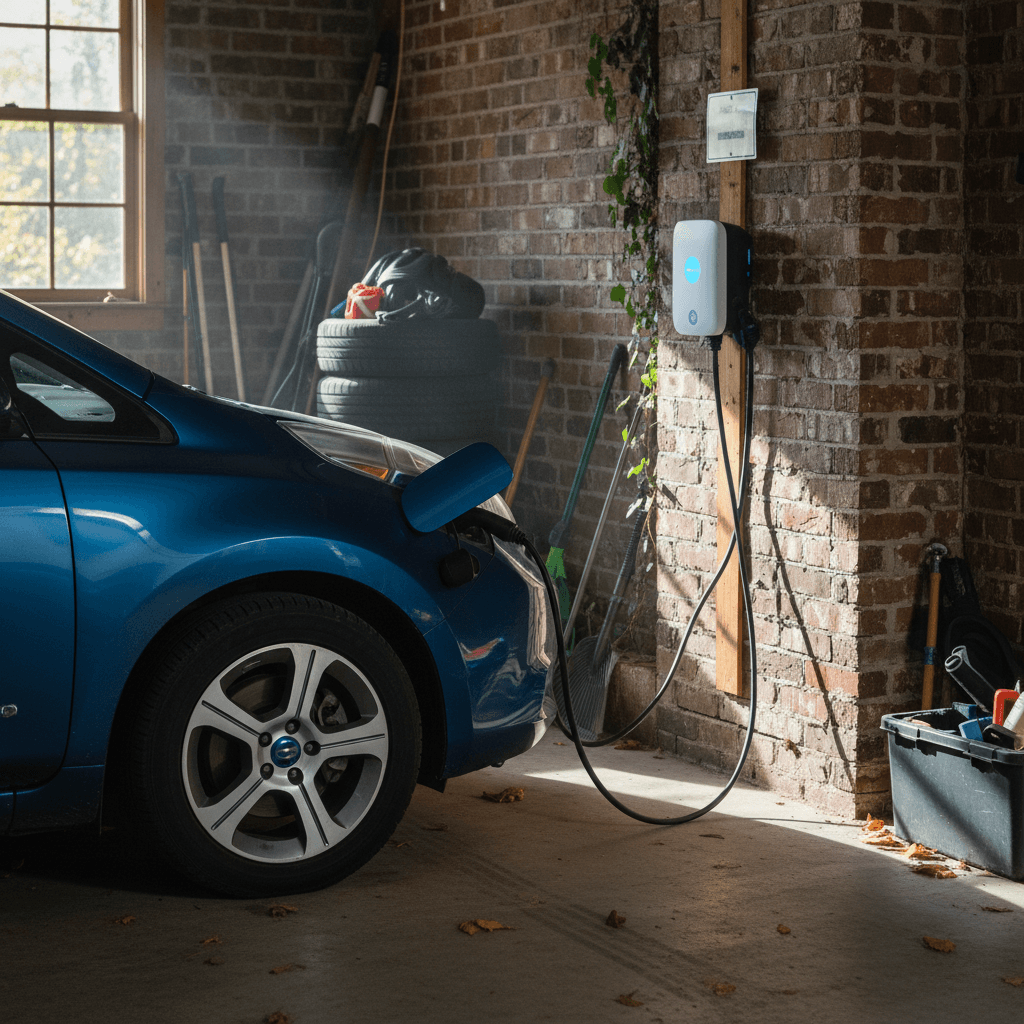
If you get your power in Raleigh from Duke Energy, their incentives are likely your most meaningful direct savings when you add an EV. Instead of discounting the car itself, Duke has focused on the cost to get your home or business ready for a charger.
Duke Energy charger-related incentives in North Carolina
Programs and patterns to look for as a Raleigh EV owner
Charger Prep Credit
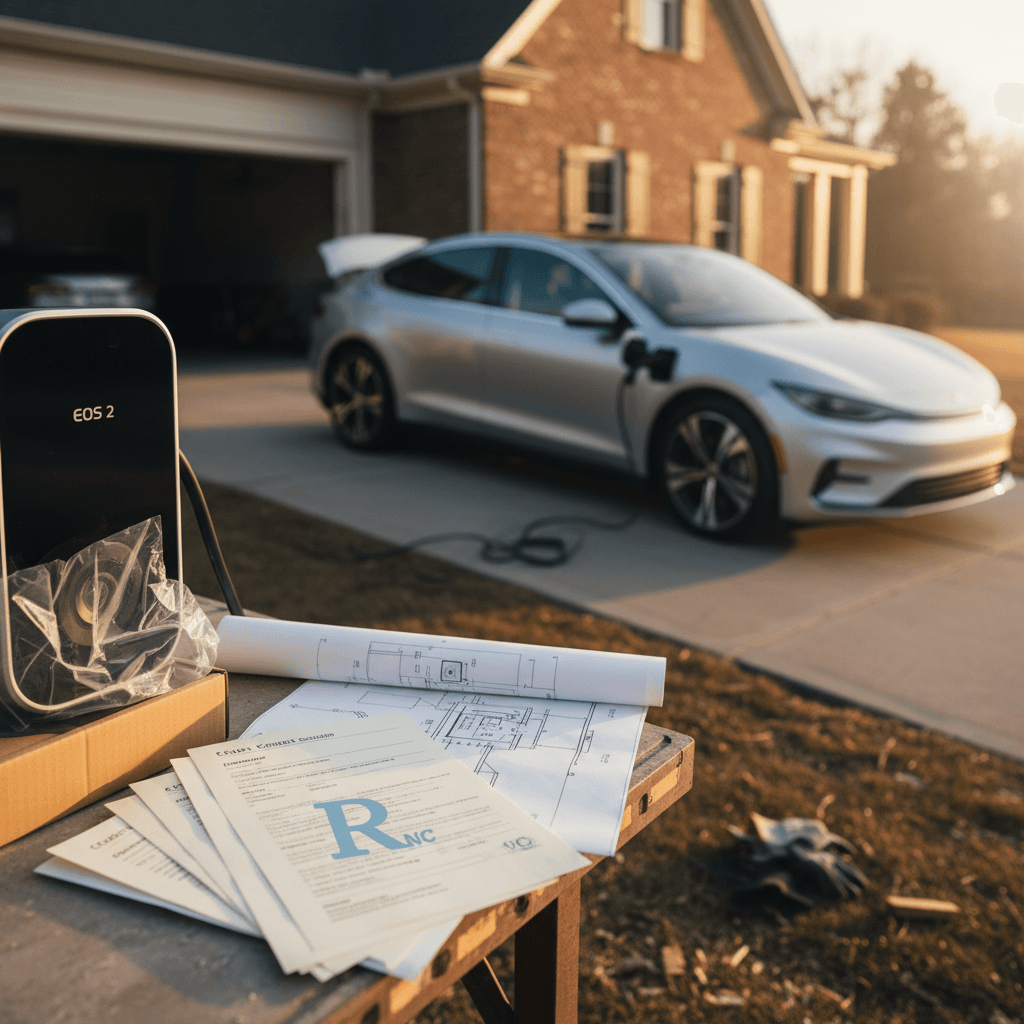
Duke’s North Carolina Charger Prep Credit offers a one-time bill credit, often around $1,000+ for homes, to help cover wiring, panel work, and outlets needed for a Level 2 charger. It doesn’t pay for the charger itself.
Off-peak charging plans
Time-of-use or off-peak rates reward you for charging overnight. In practice, that can cut your “fuel” cost per mile well below what you’d pay for gas in the Triangle.
Workplace & multifamily
Duke has also supported commercial and multifamily charger installs. If you live in an apartment or condo around Raleigh, ask your property manager whether they’ve looked into utility incentives.
Program details change
City of Raleigh EV and charging programs
While the City of Raleigh doesn’t currently mail residents rebate checks for buying EVs, it is quietly making ownership easier, and cheaper, by pouring money into public charging and its own fleet.
- In 2025, Raleigh was awarded about $2.4 million in federal funding to add DC fast chargers and Level 2 chargers at parks, operations centers, and other city sites.
- New chargers are planned for locations including Method Community Park, Green Road Park, Pullen Park, and several city operations facilities, with installations expected through late 2025 and 2026.
- The city already operates dozens of chargers at offices and parks, and several hundred more are privately owned but publicly accessible around Raleigh.
- Two-thirds of the new funding is targeted to communities with higher pollution and lower incomes, making it easier to own an EV in more parts of the city, not just downtown.
Why public chargers matter to your budget
Ready to find your next EV?
Browse VehiclesHow to stack EV savings in Raleigh when you buy used
The age of giant, simple rebates is on pause. But that doesn’t mean an EV can’t be the smarter financial move. In fact, for many Raleigh drivers, a well‑priced used EV plus local charging incentives is more cost‑effective than a new gas SUV with no incentives at all.
A realistic “stack” for a Raleigh buyer
- Used EV price: Start with a fair-market, no‑surprises price. Platforms like Recharged include a battery health report so you’re not guessing about range.
- Charger prep credit: Apply for any available Duke Energy home charger prep credits to blunt the cost of wiring, outlets, or panel upgrades.
- Off‑peak charging: Enroll in a time‑of‑use rate and schedule your charging overnight for the cheapest kWh.
- Public charging: Take advantage of low‑cost or free city and workplace chargers when you can.
Why used EVs punch above their weight
Because the big federal rebate is gone for new cars, the price gap between new and used EVs has effectively widened. A quality used EV often:
- Costs far less up front than a new model.
- Has already taken the biggest depreciation hit.
- Still delivers very low energy and maintenance costs.
That’s why Recharged focuses on used EVs, complete with battery diagnostics and transparent pricing, so you understand exactly what you’re getting for your money.
Run the 5‑year cost, not just the payment
Checklist: claiming EV rebates and incentives around Raleigh
Before and after you buy: Raleigh EV incentive checklist
1. Confirm whether you qualify for the old federal credit
If you bought a new or used EV on or before Sept. 30, 2025, check whether your purchase qualifies for the now‑ended federal credits. Review your bill of sale, delivery date, and income limits.
2. Ask your utility about charger incentives
Contact Duke Energy (or your local provider) and search for “EV,” “Charger Prep Credit,” or “EV charger rebate.” Make sure you understand what work qualifies and whether you must use specific contractors.
3. Get a charger quote before you buy the EV
Before you fall in love with a car, have an electrician estimate the cost of adding a 240‑volt outlet or hard‑wired Level 2 charger. In older Raleigh homes, panel upgrades can be the biggest surprise expense.
4. Enroll in a time‑of‑use or off‑peak plan
If your utility offers off‑peak EV charging rates, sign up and schedule your car to charge overnight. Many EVs and home chargers make this as simple as setting a start and stop time.
5. Map out your public charging options
Use apps like PlugShare, ChargePoint, and your automaker’s navigation to find fast chargers, including the new city‑backed sites at Raleigh parks and operations centers, before you count on them for a road trip.
6. Keep every receipt and program email
Create a digital folder for your EV purchase paperwork, electrician invoices, utility enrollment confirmations, and any rebate applications. When tax time comes, or if a new incentive arrives, you’ll be glad you did.
FAQ: EV rebates and incentives in Raleigh, NC
Frequently asked questions about EV rebates in Raleigh
The bottom line for Raleigh EV rebates
The world of EV rebates in Raleigh has changed. The big, simple federal tax credits that fueled the first wave of adoption have wound down, and North Carolina has never had a flashy statewide rebate of its own. But that doesn’t mean an EV can’t be the smarter financial play for Triangle drivers today.
If you bought early enough in 2025, you may still have a federal credit to claim. Looking forward, your savings will come from sharper shopping on used EVs, utility incentives for home charging, smart use of off‑peak electricity, and ever‑growing public charging around Raleigh. Focus on the full five‑year picture, not just the missing rebate line, because for many households, the quiet, low‑maintenance EV in the driveway ends up being the cheapest car they’ve ever owned.
When you’re ready to explore a used EV, Recharged can help you compare options, understand real‑world battery health with a Recharged Score Report, arrange financing, and even deliver the car to your door. Incentives will keep evolving; a solid used EV and a clear plan for charging are what make the difference right now.