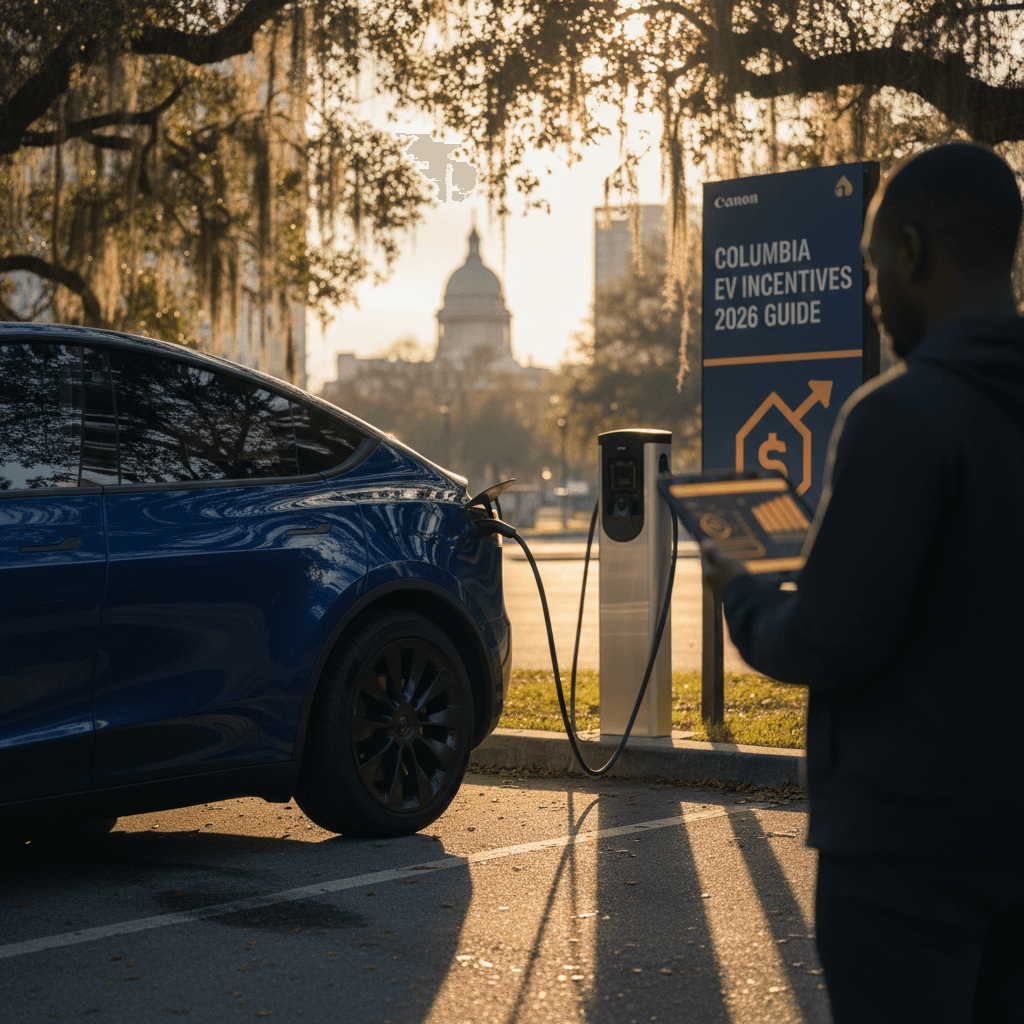
If you’re shopping for an electric vehicle in the Midlands, you’re probably wondering what EV rebates in Columbia, SC actually look like in 2026. The short version: South Carolina is light on traditional state EV tax credits, but there’s still meaningful money on the table from federal tax credits, utility incentives, and upcoming home energy rebate programs, especially if you’re strategic about buying a used EV and setting up home charging.
Quick snapshot for Columbia drivers
EV rebates in Columbia, SC: what to expect in 2026
Compared with many other states, South Carolina doesn’t shower drivers with EV cash. There’s no broad, statewide point-of-sale rebate for buying an EV in Columbia, and the state’s existing alternative fuel infrastructure tax credit is aimed at charging equipment and fueling infrastructure, not individual car buyers. That said, when you layer in federal incentives and utility rebates, a typical Columbia household can still reduce the real cost of going electric by thousands of dollars over the first few years of ownership.
Where Columbia EV savings usually come from
Watch the dates and fine print
Federal EV tax credits you can use in South Carolina
No matter where you live in South Carolina, federal incentives are the backbone of EV rebates. As of the 2026 model year, the Inflation Reduction Act (IRA) has reshaped these credits into two main buckets: one for new EVs and one for used EVs purchased from a dealer.
Key federal credits for Columbia shoppers
Both apply statewide, including the Columbia metro area
New Clean Vehicle Credit
Maximum: Up to $7,500 as a nonrefundable federal income tax credit.
- Available for qualifying new EVs meeting price caps and battery/assembly rules.
- Subject to income limits, higher earners may not qualify.
- Can often be applied at the dealership as an immediate discount, depending on IRS rules and dealer participation.
Used Clean Vehicle Credit
Maximum: Up to $4,000 (or 30% of the sale price, whichever is lower).
- For qualifying used EVs bought from a dealer at $25,000 or less.
- Lower income caps than the new-vehicle credit, aimed squarely at middle-income buyers.
- Can be a powerful tool in making a used EV in Columbia very affordable.
Used EV + federal credit = big value
One important nuance: these federal credits are typically nonrefundable. They can reduce your federal tax bill down to zero but won’t generate a refund beyond what you paid in. That makes it critical to estimate your upcoming tax liability before assuming you’ll capture the full $7,500 or $4,000 on paper.
Does South Carolina offer state-level EV rebates?
South Carolina does not currently offer a broad, California‑style EV purchase rebate for individual drivers. The state’s most relevant policy for EVs is the Alternative Fuel Property Income Tax Credit, which focuses on fueling and charging infrastructure rather than vehicle purchases.
South Carolina Alternative Fuel Property Income Tax Credit (through 2025)
High-level view of the state tax credit that can apply to EV charging infrastructure, including electricity as an “alternative fuel.”
| What it covers | Who it’s for | Credit amount | Timing details |
|---|---|---|---|
| Alternative fuel property, now including electrical equipment for EV charging | Taxpayers who purchase, construct, install, or lease qualifying fueling/charging equipment | 25% of eligible property cost (claimed over three years) | Applies to property placed in service before January 1, 2026; any unused portion can typically be carried forward up to ten years |
| Examples include public DC fast chargers or other fueling infrastructure | Often used by businesses, municipalities, and fleets rather than individual homeowners | Structured as an income tax credit, not a rebate check | Rules and eligibility are detailed in South Carolina tax code section 12-6-3695 |
This credit is aimed at <strong>equipment owners</strong>, not necessarily everyday drivers, though it can influence where charging gets built.
Why this still matters to Columbia drivers
Utility EV programs in and around Columbia, SC
In Columbia, your electric utility matters just as much as the state when it comes to incentives. Most residents are served by Dominion Energy South Carolina, while some areas and nearby communities fall under Santee Cooper or local cooperatives. Each utility decides how aggressively it wants to promote EVs.
Dominion Energy South Carolina (Columbia metro)
Dominion is the main player for Columbia households. Its EV support today focuses on:
- Educational resources explaining EV benefits, costs, and charging.
- A You Shift/You Save time-of-use rate that can pair well with overnight charging.
- Programs like EV Charger Rewards, which have historically offered an equipment rebate (for qualifying Level 2 chargers) plus annual bill credits for allowing managed charging.
Specific rebate amounts and eligible chargers can change, so you’ll want to check Dominion’s EV or “EV Charger Rewards” page before purchasing equipment.
Santee Cooper & other utilities (statewide context)
While Santee Cooper doesn’t serve most Columbia neighborhoods, its programs shape South Carolina’s broader EV landscape:
- Residential Level 2 charger rebates for customers who install prequalified hardware and apply with receipts and registration.
- Experimental EV rates for off‑peak charging at home.
- Commercial EV grants and rebates for DC fast charging under its EmpowerAuto EVolve grant program.
If you own property or operate a business outside the Dominion footprint, it’s worth checking what your specific utility offers, even if your home in Columbia is on Dominion’s system.
Programs vary by service territory
Home charger rebates and time-of-use rates
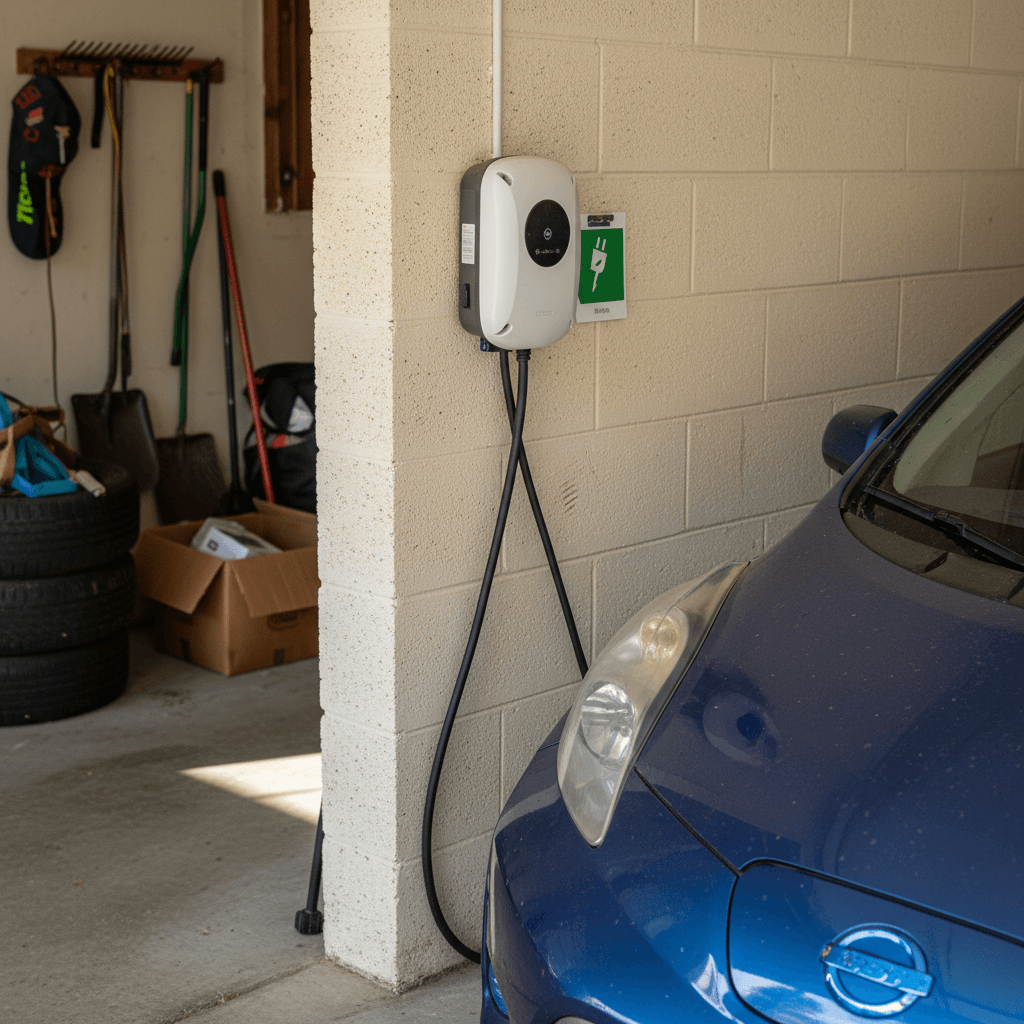
For most Columbia drivers, the most tangible local incentives are tied to home charging: either a rebate that helps offset the cost of a Level 2 charger, or a special rate that makes overnight electricity cheaper.
Why it pays to pair rebates with smart home charging
Especially on Dominion’s time-of-use options
Equipment rebates
Programs like Dominion’s EV Charger Rewards have historically offered an equipment rebate (for example, around $125) when you install a qualifying connected Level 2 charger and enroll in managed charging.
Off-peak rates
The You Shift/You Save plan charges more during peak hours but can make overnight charging much cheaper. If you plug in after 9 p.m. and schedule your EV to charge off‑peak, you can significantly cut your fueling cost per mile.
Daily convenience
A Level 2 charger at 240V typically adds 25–40 miles of range per hour. For most Columbia commuters, that means a full recharge in a few hours while you sleep.
Run the rate comparison before you switch
Incentives for businesses and multi-family properties
If you own or manage a business, apartment complex, or condo in the Columbia area, your incentive landscape looks a bit different. State and utility programs are designed to nudge commercial and public charging along, often with larger dollar amounts but more paperwork.
Key levers for commercial and multi-family EV projects
1. Alternative fuel property tax credit
Consider whether your project, especially DC fast charging near highways or major corridors, qualifies for South Carolina’s 25% Alternative Fuel Property Income Tax Credit before January 1, 2026. It can be meaningful for larger installations.
2. Utility make-ready and grants
In Santee Cooper territory, the EmpowerAuto EVolve Grant can cover up to tens of thousands of dollars for charging infrastructure projects. Other utilities may offer make‑ready contributions (covering wiring, panels, or trenching).
3. Workplace and fleet charging programs
Some utilities run separate programs for workplace or fleet charging, including demand charge relief or pilot incentives for managed charging. These can dramatically change your long‑term operating costs.
4. Tenant and employee demand
Before installing multiple ports, survey residents or employees. Sometimes a handful of well‑placed Level 2 chargers, potentially with reservation or billing software, is better than overbuilding hardware that goes underused.
EV amenities that pencil out
Upcoming IRA home energy rebates in South Carolina
Beyond EV‑specific programs, South Carolina is preparing to roll out federally funded home energy rebate programs under the Inflation Reduction Act: the HOMES program (for whole‑home efficiency) and the HEAR program (Home Electrification and Appliance Rebates). As of early 2026, these are not yet live, but the state’s energy office indicates they’re expected to launch during 2026.
What South Carolina’s IRA home rebates could mean for EV households
These programs aren’t EV rebates per se, but they can complement EV ownership by lowering overall home energy costs and supporting electrical upgrades.
| Program | Focus | Relevance to EV owners in Columbia | Status in early 2026 |
|---|---|---|---|
| HOMES (Home Efficiency Rebates) | Whole‑home energy savings based on measured or modeled reductions | Upgrading insulation, windows, and HVAC can free up electric panel capacity and shrink utility bills, making EV charging even cheaper. | Program design underway; rebates not yet available. Launch expected sometime in 2026. |
| HEAR (Home Electrification and Appliance Rebates) | Upfront rebates for qualifying electric appliances and wiring upgrades | Potentially valuable if you need panel or wiring upgrades to support a Level 2 charger, or if you’re electrifying HVAC and water heating alongside buying an EV. | Limited to households under 150% of area median income; also expected to launch in 2026, but not yet active. |
Check the state’s energy office website throughout 2026 for official launch dates and final program rules.
Why this matters even if you already own an EV
How rebates and incentives affect used EV prices in Columbia
In a market like Columbia, where state rebates are limited, the used EV market and federal credit structure do a lot of the heavy lifting on affordability. Over the past few years, used EV prices have steadily adjusted to reflect the reality that many buyers can’t capture the full $7,500 new‑car credit but may qualify for the $4,000 used‑car credit.
New EVs: credit baked into the deal
For qualifying new EVs, dealers increasingly structure offers with the federal credit in mind, sometimes even advancing it at the point of sale. That can help, but higher MSRPs and interest rates still keep many new EVs out of reach for payment‑sensitive buyers in the Midlands.
In other words, you may see the value of incentives baked into the monthly payment, rather than as a separate rebate check.
Used EVs: price + credit + battery health
In the used market, the combination of:
- A lower starting price
- The potential Used Clean Vehicle Credit
- Verified battery health information
can make a used EV cost‑competitive with many gasoline sedans and crossovers in Columbia.
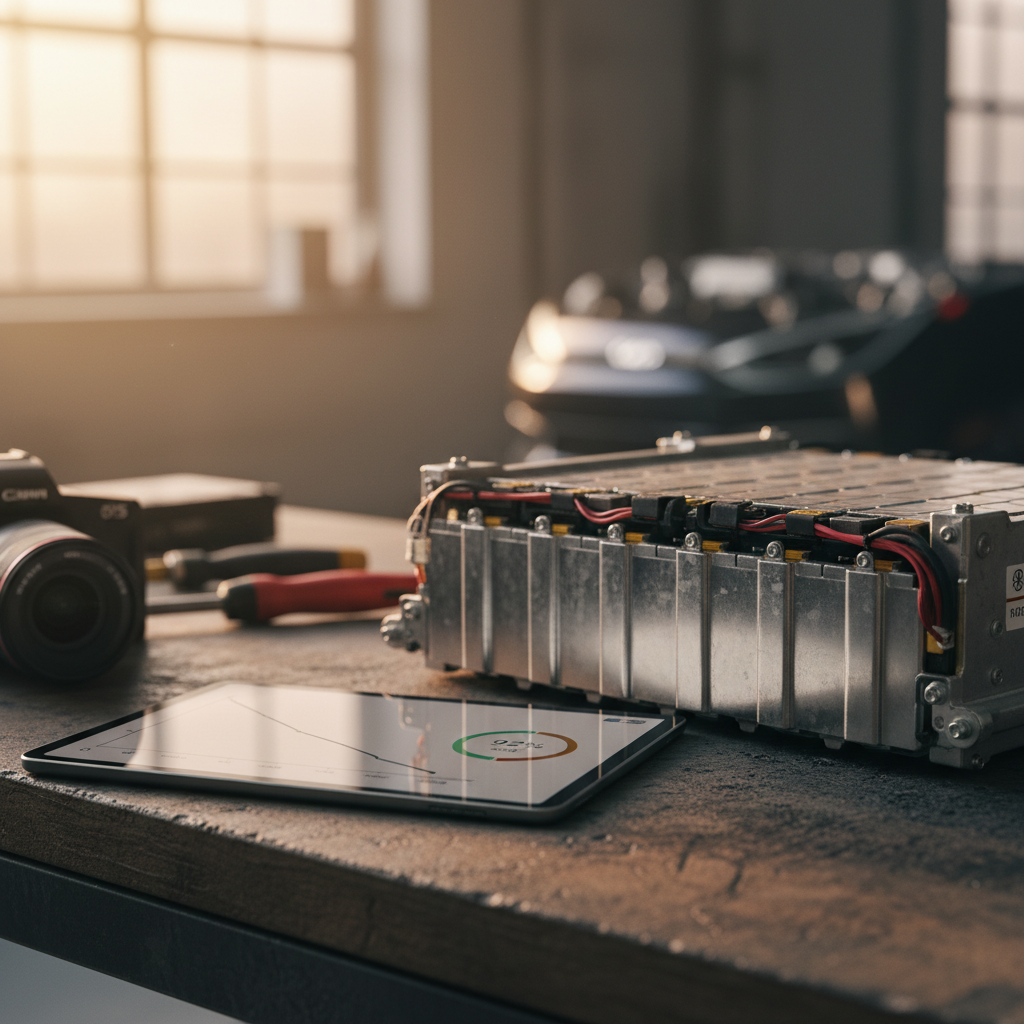
At Recharged, every vehicle comes with a Recharged Score battery health report, transparent pricing, and expert guidance so you’re not guessing how much useful life is left in the pack, or overpaying for a car that won’t meet your daily range needs.
Think in total cost of ownership, not just the sticker
Step-by-step: how to capture your EV savings
To actually turn all these credits and programs into real dollars, you need a simple plan. Here’s a straightforward sequence Columbia drivers can follow.
Checklist: maximizing EV rebates and incentives in Columbia
1. Confirm your federal tax credit eligibility
Estimate your federal tax liability for the year you plan to buy. Make sure you fall under the income caps for the New or Used Clean Vehicle Credit and understand whether the vehicle you’re eyeing qualifies.
2. Decide between new and used
Run side‑by‑side numbers: sticker price, potential credit amount, and monthly payment. For many households in Columbia, a well‑priced <strong>used EV plus the used credit</strong> offers the best value.
3. Check your utility’s EV programs
Log in to your Dominion Energy SC account (or other utility) and navigate to the EV or “Save Energy” section. Look for <strong>EV Charger Rewards</strong>, equipment rebates, and TOU rate options like <strong>You Shift/You Save</strong>.
4. Plan your home charging setup
Decide whether you’ll start with Level 1 (standard outlet) or invest in a Level 2 charger. Get quotes from licensed electricians for 240V outlet or hardwired installations, and verify if panel upgrades are needed.
5. Time electrical work with rebates
If you expect HEAR or similar home electrification rebates to launch before you do major panel or wiring work, talk to your electrician and consider timing the project so you can apply. Keep all invoices and documentation organized.
6. Document everything for tax time
Save purchase contracts, charger receipts, utility rebate confirmations, and any state or federal forms. When it’s time to file, work with a tax professional if you’re unsure how to claim vehicle or infrastructure credits correctly.
Avoid double-counting the same dollar
FAQ: EV rebates in Columbia, SC
Frequently asked questions about EV incentives in Columbia
EV incentives in Columbia, SC may not grab headlines like those in California or Colorado, but that doesn’t mean you’re on your own. Federal tax credits, utility programs, and soon‑to‑launch home energy rebates can all chip away at the cost of going electric, especially if you choose a well‑vetted used EV and a smart home‑charging setup. If you want help turning this patchwork of programs into a clear dollar figure and a confident purchase, Recharged can meet you where you are: with transparent used EV listings, verified battery health, and guidance that ties incentives directly to your monthly budget.