If you live in Chesapeake, VA and you’re thinking about an electric vehicle, you’ve probably heard that **EV rebates and tax credits changed in late 2025**. Some federal programs ended, others are winding down, and it’s harder than ever to tell what still applies in Hampton Roads. This guide breaks down today’s landscape for EV rebates in Chesapeake, VA, what’s gone, what’s still available, and how to stack remaining incentives with used EV savings.
Key takeaway for 2026
Overview: EV rebates in Chesapeake, VA today
What’s no longer available
- Most federal new EV tax credits for vehicles acquired after September 30, 2025.
- Used EV tax credit for vehicles acquired after September 30, 2025.
- Dominion Energy’s earlier one-time charger infrastructure rebates (SCIP) that ended in 2022.
What you can still use in 2026
- Lower purchase prices on used EVs that no longer qualify new buyers for credits.
- Dominion Energy’s EV Charger Rewards program, including a $125 enrollment rebate and ongoing bill credits for eligible home Level 2 chargers.
- Occasional state tax rebates or general taxpayer rebates that indirectly reduce your cost of ownership.
In short, Chesapeake drivers can’t rely on a big federal check to make an EV pencil out the way they could in early 2025. Instead, the value has shifted to **used EV pricing, home charging incentives, and careful vehicle selection**. That’s especially true if you’re shopping the used market through a platform like Recharged, where battery health and pricing transparency do a lot of the heavy lifting that rebates used to do.
EV incentives: key federal dates that affect Chesapeake drivers
Federal EV tax credits: what changed in late 2025
For a few years, the **federal Clean Vehicle Credit** offered up to $7,500 off a qualifying new EV, and a separate credit of up to $4,000 helped buyers of eligible used EVs. That changed when Congress passed major tax legislation in July 2025. As part of that deal, **federal purchase credits for both new and used EVs were phased out for vehicles acquired after September 30, 2025**.
- You can still claim a credit if you acquired (signed a binding contract and made payment on) and placed a qualifying EV in service on or before September 30, 2025.
- Most Chesapeake residents who haven’t already bought an EV by that date will not be able to claim a federal purchase credit going forward.
- The rules are complex; the IRS requires using Form 8936 and checking whether your specific vehicle and income met the criteria for the year you bought.
Mind the acquisition date
Can you still get a used EV tax credit in 2026?
The **Previously-Owned (Used) Clean Vehicle Credit** provided up to $4,000 (30% of the purchase price, capped at $4,000) for qualifying used EVs sold by dealers for $25,000 or less. That program now has a hard cutoff for acquisition after September 30, 2025, so Chesapeake buyers shopping in early 2026 are usually looking at one of two scenarios:
Used EV credit scenarios for Chesapeake shoppers in 2026
What’s possible, and what’s not, under today’s rules
Scenario 1: You bought before Sept. 30, 2025
If you bought a qualifying used EV from a dealer on or before September 30, 2025, you may still claim the credit on your 2025 federal tax return. You’ll need:
- A sale price of $25,000 or less
- A model year at least two years older than the purchase year
- A time-of-sale report from the dealer
- Income below IRS thresholds for the used credit
Scenario 2: You’re buying in 2026
If you’re shopping for a used EV in Chesapeake in 2026, assume the former used EV tax credit won’t apply. Your savings will come from:
- Lower used prices as the market adjusts to lost credits
- Better battery health transparency (for example, a Recharged Score Report)
- Local utility rebates for home charging rather than the vehicle itself
The upside is that used EV prices in Hampton Roads and across Virginia have generally moved lower as shoppers rushed to buy before the federal credit deadline and then demand cooled. If you shop carefully, and verify battery health, you can often save **far more than $4,000** versus what the same car cost when the credit was still available.
Home charger rebates and Dominion Energy programs
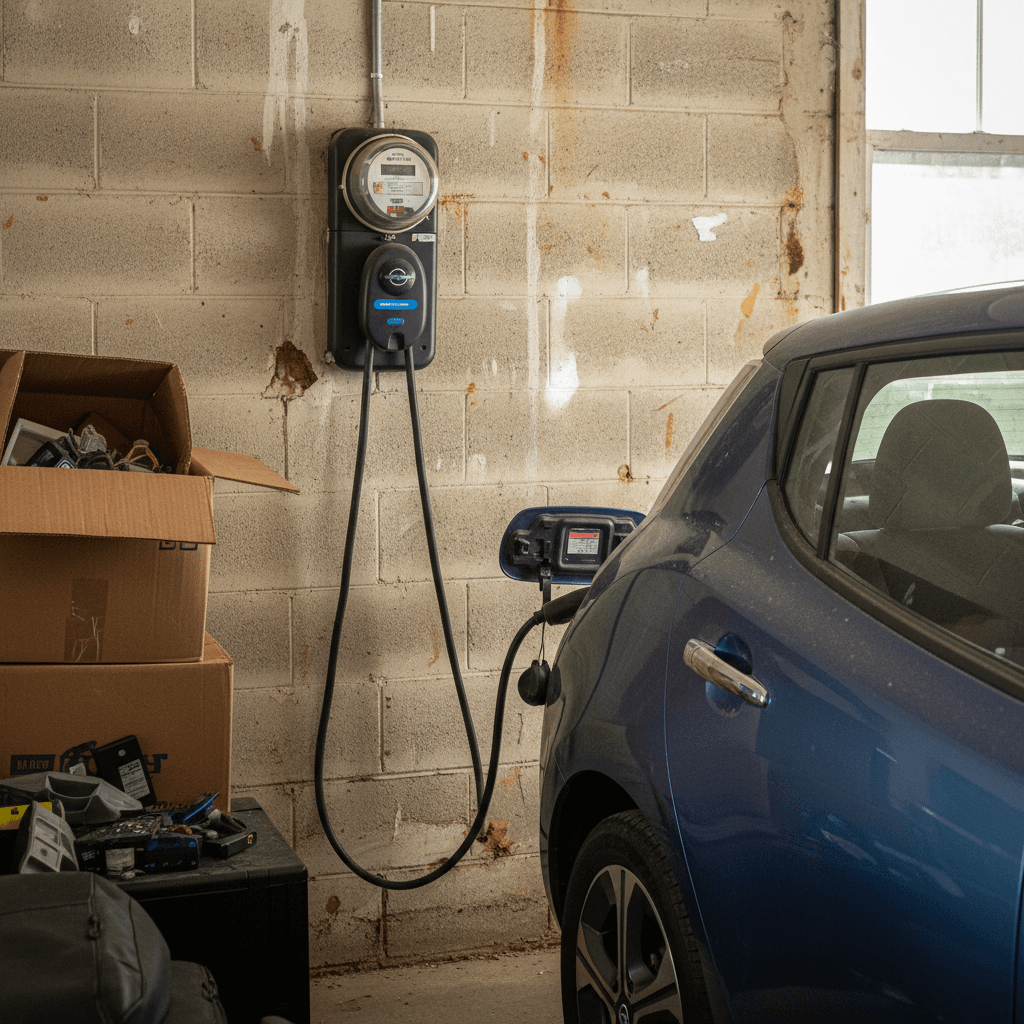
While vehicle purchase credits have shrunk, **home charging incentives are still very much alive**. As a Chesapeake resident, you’re most likely a Dominion Energy Virginia customer, and that opens the door to **EV Charger Rewards** and other utility programs that can offset the cost of Level 2 home charging.
Dominion Energy programs Chesapeake EV owners should know
Current programs that can help reduce your charging costs or offset charger purchases.
| Program | Who it’s for | Benefit type | Key details for Chesapeake drivers |
|---|---|---|---|
| EV Charger Rewards | Residential Dominion customers with a qualifying Level 2 charger | $125 enrollment rebate + ongoing bill credits | Buy and install an approved smart Level 2 charger (e.g., from ChargePoint, Emporia, EvoCharge, Wallbox), enroll within 120 days, and you can receive a one‑time $125 rebate plus $40 per year for staying in the program. |
| Off-peak or managed charging rates | Select residential customers | Lower kWh rate during certain hours | You may be able to enroll in a time‑of‑use or off‑peak rate that rewards overnight charging. This usually pairs best with a Level 2 charger at home. |
| Environmental Justice Community (EJC) EV Charging Program | Commercial, multifamily, fleet sites in designated Environmental Justice communities | No‑cost infrastructure and Level 2/DCFC chargers | If you manage a multifamily property or fleet in an eligible area of Chesapeake, Dominion can provide make‑ready infrastructure and chargers at no cost, improving access for residents and employees. |
Program availability and terms can change. Always confirm details on Dominion Energy’s website before you apply.
Stack a charger rebate with a federal credit
Local and state Virginia EV incentives
Unlike some states, **Virginia does not currently offer an ongoing, statewide EV purchase rebate** similar to what you’ll find in places like Colorado or New Jersey. A previous attempt at a Virginia Clean Vehicle Rebate Program was funded for a short period but has not been renewed as of 2026. Instead, Virginia has leaned on **periodic tax rebates to all eligible taxpayers**, and on utility programs, to provide relief.
- State budget–driven tax rebates (for example, up to $400 for joint filers in late 2025) can indirectly help you cover EV costs, but they aren’t EV-specific.
- Municipalities in the Hampton Roads region occasionally offer **reduced parking fees, HOV/HOT lane access**, or preferential parking for EVs, but these perks are modest compared with purchase credits.
- For fleets or multifamily properties in Chesapeake’s qualifying areas, Dominion’s Environmental Justice Community EV Charging Program can effectively operate as a major in‑kind rebate for infrastructure and equipment.
Don’t overlook non-cash incentives
How much can Chesapeake drivers realistically save?
With blockbuster federal purchase credits mostly in the rear‑view mirror, you might wonder whether an EV still makes financial sense in Chesapeake. The answer is usually yes, **if you run the full math**. Here’s a realistic look at how savings stack up for a typical Hampton Roads commuter buying a used EV in 2026.
1. Up‑front and near‑term savings
- Used EV discount vs. 2024 pricing: As federal credits expired, many used EVs saw price pressure. It’s common to find thousands off peak‑pricing levels.
- $125 Dominion charger enrollment rebate: If you install an eligible Level 2 charger at home and enroll in EV Charger Rewards.
- Federal home charger credit (through June 30, 2026): Potentially up to 30% of purchase and installation costs, subject to limits and eligibility.
2. Long‑term ownership savings
- Fuel savings: Even at current Virginia power rates, home charging typically costs less per mile than gas, especially on off‑peak rates.
- Maintenance: No oil changes, fewer moving parts, and regenerative braking usually mean lower maintenance bills.
- Battery transparency: Buying a used EV with a verified battery report (like the Recharged Score) helps you avoid cars with costly range issues.
Rule of thumb for Chesapeake
How to use incentives when you buy a used EV
Even without a federal rebate check, you can structure your Chesapeake EV purchase so you’re getting every dollar of available value. Think of it as a three‑step strategy: **buy smart, charge smart, and finance smart.**
Three ways to squeeze the most value from a used EV purchase
Practical tactics for Chesapeake shoppers
1. Buy smart
- Prioritize vehicles with a verified battery health report, so you’re not guessing about range.
- Compare total cost, not just sticker price, include taxes, fees, and any dealer add‑ons.
- Look for models that used to be popular with federal credits; they often see the biggest used‑price compression.
2. Charge smart
- Plan to install a Level 2 charger at home if you can; that’s where most EV savings come from.
- Choose a Dominion‑approved smart charger so you qualify for EV Charger Rewards.
- Set your charging schedule to off‑peak hours once you’re enrolled.
3. Finance smart
- Use pre‑qualification tools to understand your budget before you shop.
- Consider total monthly cost: payment + insurance + charging vs. your current gas/maintenance.
- If you’re trading in a gas car, factor its value into the effective up‑front cost of going electric.
How Recharged helps Chesapeake buyers maximize savings
In a world with fewer straightforward rebates, **information and transparency** become the biggest incentives. That’s where Recharged is built to help Chesapeake shoppers.
- Every vehicle on Recharged comes with a Recharged Score Report, including verified battery health, so you can see expected range and degradation before you buy.
- Pricing is benchmarked against fair‑market values, making it easier to identify genuine deals created by the post‑credit market reset.
- If you’re in the Chesapeake area and prefer a test‑drive, you can visit the Recharged Experience Center in Richmond, VA, or have vehicles delivered to you through Recharged’s digital retail experience.
- Recharged offers **financing, trade‑in, and consignment options**, so you can roll your old gas vehicle’s value directly into your EV purchase and minimize your cash outlay.
Using Recharged with local incentives
Checklist: steps to capture every available rebate
Chesapeake EV rebate and savings checklist
1. Confirm your utility and eligibility
Verify that your Chesapeake home is served by Dominion Energy Virginia and that you’re the account holder. This determines whether you can enroll in EV Charger Rewards and off‑peak programs.
2. Pick a charger that qualifies for Dominion
Choose a smart Level 2 charger from Dominion’s eligible list (ChargePoint, Emporia, EvoCharge, Wallbox models and others they approve). Save your receipts and registration confirmation emails.
3. Plan your installation with a licensed electrician
Get quotes for installing a 240V circuit and mounting your charger. Ask your electrician to keep the invoice itemized to support both Dominion’s rebate application and any federal home‑charger tax credit claim.
4. Enroll in EV Charger Rewards promptly
After your charger is installed and registered, enroll in Dominion’s EV Charger Rewards within the required timeframe (generally within 120 days of purchase) so you don’t miss the $125 enrollment rebate.
5. Track potential federal benefits
If you’re installing a charger before June 30, 2026, talk with a tax professional about the Alternative Fuel Vehicle Refueling Property Credit and what documentation you’ll need at tax time.
6. Optimize your used EV purchase
Use a marketplace like Recharged to compare battery health, range, and pricing. Factor in your trade‑in value, likely annual fuel savings, and your new electric bill when deciding how much car you can comfortably afford.
FAQ: EV rebates in Chesapeake, VA
Frequently asked questions about EV rebates in Chesapeake, VA
Bottom line for Chesapeake EV shoppers
The rules around **EV rebates in Chesapeake, VA** have changed, but the case for going electric hasn’t disappeared, it’s just shifted. Big, headline‑grabbing federal purchase credits are largely gone for cars acquired after September 30, 2025, yet used EV prices have eased, utility incentives for home charging remain, and long‑term fuel and maintenance savings continue to add up quietly every month.
If you’re ready to run the numbers, start by browsing used EVs with verified battery health on Recharged, then line up a Dominion‑eligible Level 2 charger and talk with a tax professional about any remaining federal charger credits. Put together, those pieces can deliver the kind of real‑world savings that matter in Chesapeake, without waiting for the next big rebate program to come along.