If you’ve just bought your first electric vehicle, you’re probably excited, and a little overwhelmed. The EV learning curve for new owners is real: charging works differently, the dash shows new metrics, and everyone suddenly has an opinion on range. The good news? Most drivers go from “What did I just buy?” to “Why didn’t I do this sooner?” in a matter of weeks.
Good news for new EV drivers
Why the EV learning curve feels steep (and normal)
You didn’t just switch cars, you switched fuel
When you moved from one gas car to another, nothing fundamental changed. With an EV, you’ve changed how you “fuel,” how the car plans routes, and even how you think about maintenance. That’s why the EV learning curve for new owners can feel steeper than moving from, say, a Honda to a Toyota.
New information on the dash
Instead of a fuel gauge, you’re watching battery percentage, range estimates, and efficiency (mi/kWh). Until you see how those numbers behave on your daily routes, it’s hard to trust them, so a little anxiety is normal at first.
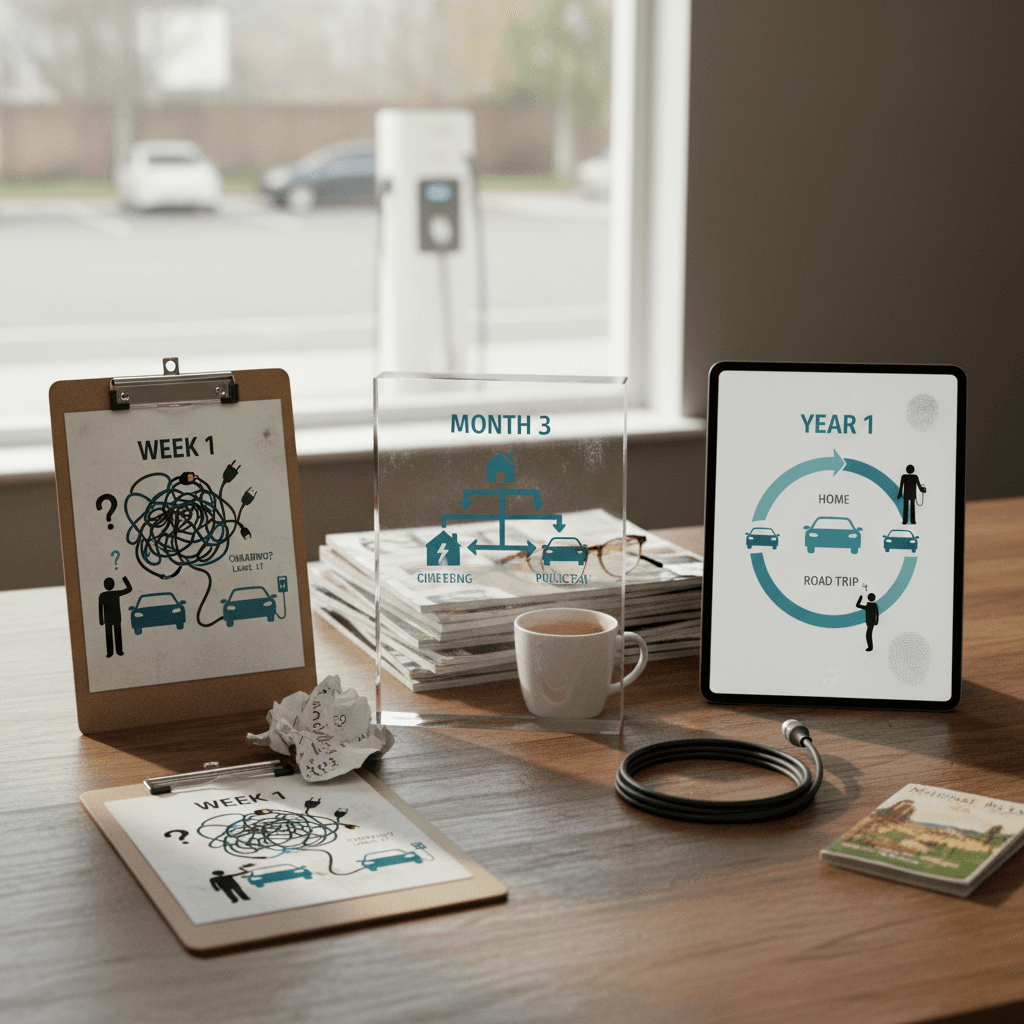
How long most new EV owners take to adjust
Those timelines are averages, not rules. You might feel comfortable faster, or take longer, depending on how much you drive, whether you can charge at home, and whether you bought new or used. What matters is that the learning curve does flatten, and there are clear ways to speed that up.
Phase 1: Your first 30 days with an EV
- Week 1: Get your home charging routine dialed in.
- Week 2: Learn how your EV behaves on your normal commute and errands.
- Week 3: Try at least one public fast charger, even if you don’t “need” it.
- Week 4: Start optimizing range, tire pressure, driving style, climate settings.
A simple 30‑day challenge
Core EV concepts every new owner should learn early
Four concepts that shrink the EV learning curve
Understand these early, and almost everything else makes more sense.
1. State of charge (SoC) vs. range
State of charge (SoC) is your battery percentage. Range is the estimated miles you can travel. Think of SoC as your fuel tank, and range as the car’s best guess based on recent driving, temperature, and terrain.
Over time you’ll trust % more than miles, especially in cold or hot weather.
2. kWh, kW and mi/kWh
kWh (kilowatt‑hours) = battery size, like gallons in a tank. kW (kilowatts) = charging power/speed, like the flow rate of fuel. mi/kWh (or kWh/100 mi) = efficiency, like MPG.
Higher mi/kWh means you’re using energy more efficiently and getting more range out of every charge.
3. Charging levels and connectors
Most EVs use:
- Level 1 – Standard 120V outlet, slow but useful for very light driving.
- Level 2 – 240V at home or public stations, ideal for overnight charging.
- DC fast charging – Highway stations for quick top‑ups on road trips.
Your car’s connector (J1772, CCS, NACS/Tesla) determines what plugs in where, and which adapters you need.
4. Real‑world vs. advertised range
Automakers quote range from standardized tests. Real life adds speed, weather, elevation, and cargo to the mix. It’s normal to see lower range at 75 mph in winter than at 45 mph in mild weather.
Over a few weeks, you’ll learn your car’s “true range” on your routes, not just the number on the sticker.
Mastering EV charging at home and on the road
Charging is where the EV learning curve feels sharpest, but it’s also where you can gain confidence the fastest. Once you’ve built a home routine and tested a couple of public charging networks, range anxiety usually fades into the background.
Home charging: your new gas station
If you have a driveway or garage, home charging will likely handle 80–90% of your needs. A 240V Level 2 charger typically adds 20–40 miles of range per hour, depending on your car and charger.
- Set a daily charge limit (often 70–80%) to preserve long‑term battery health.
- Use scheduled charging to take advantage of off‑peak electricity rates if your utility offers them.
- Check that the circuit and installation are sized correctly, use a licensed electrician for permanent setups.
Public charging: grocery‑store refills, not weekly chores
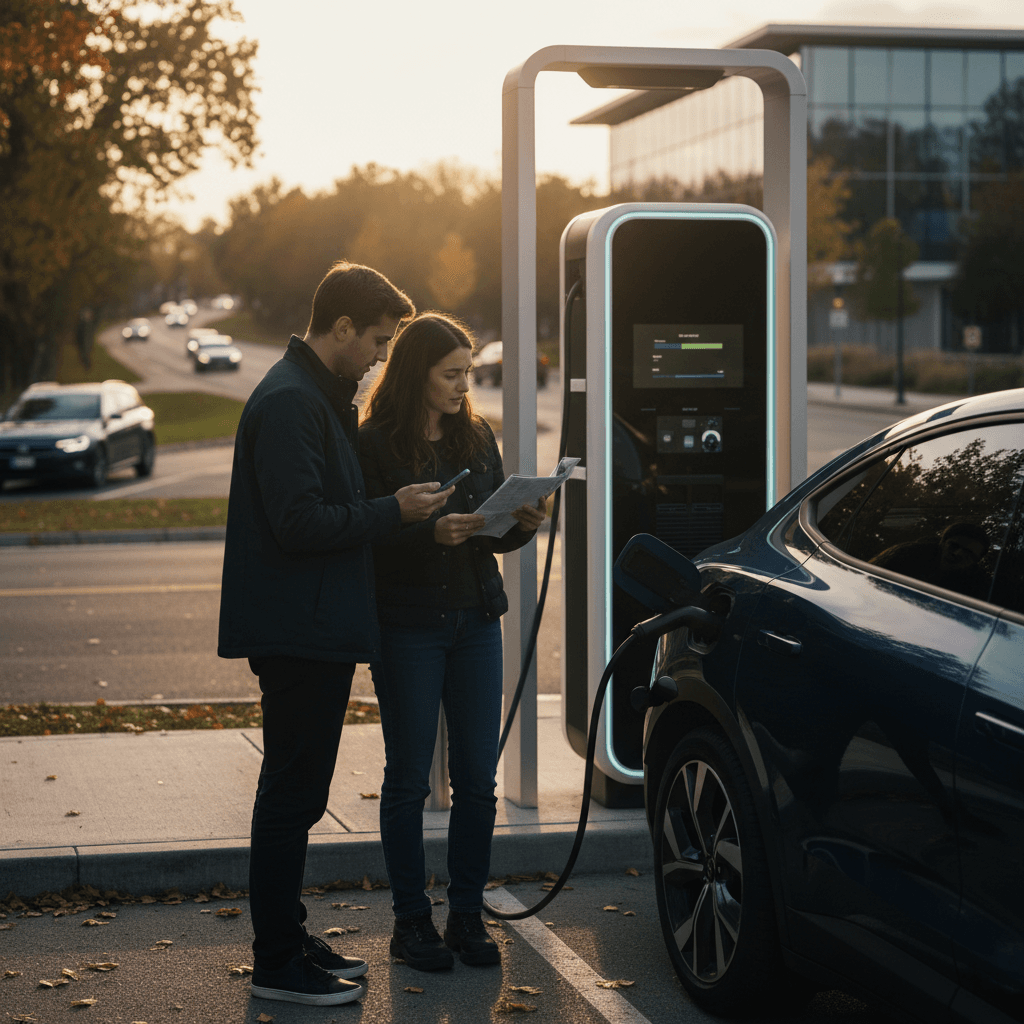
Think of public Level 2 chargers as opportunity charging while you shop, dine, or work, plug in when it’s convenient, not just when you’re empty.
- Download 2–3 major charging apps (for example, your vehicle brand’s app plus one or two big networks).
- Filter for the connector type your car uses so you don’t arrive to the wrong plug.
- Practice starting and ending a session when you’re not under time pressure.
Don’t live on DC fast charging
Typical charging behavior by use case
Approximate patterns that help flatten the EV learning curve. Your exact numbers will vary by vehicle and charger.
| Scenario | Best charging option | How often | What you’ll learn |
|---|---|---|---|
| Daily commuter (20–40 miles/day) | Level 2 home charging | Every night or every other night | How much range you usually consume and how high to set your daily charge limit. |
| Apartment dweller with shared chargers | Workplace or public Level 2 | 2–3 times per week | Which locations are reliable, how long you can stay plugged in, and how your schedule fits around charging. |
| Frequent highway trips | DC fast charging + home Level 2 | Home most nights, fast charge on trips | Which stations are trustworthy, how fast your car actually charges from 10–60%, and how to plan stops. |
| Occasional local driver (<100 miles/week) | Level 1 or shared Level 2 | Every few days or weekly | That you don’t need to plug in every night, and that even slow charging can be enough. |
Use this table as a planning guide, not a promise. Always check your specific car and charger specs.
Battery health and range: What matters vs. what doesn’t
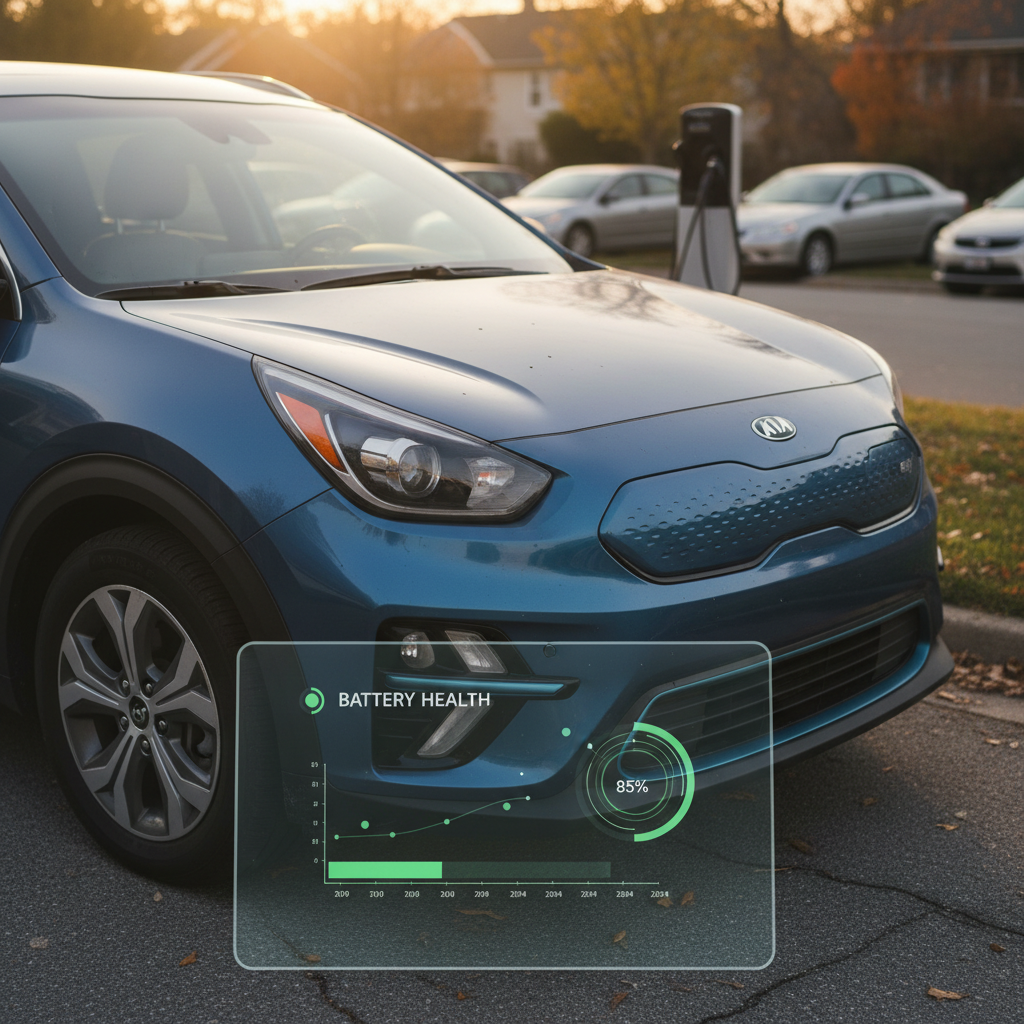
Battery health is another place where the EV learning curve for new owners can create anxiety, especially if you bought a used EV. The key is to focus on the habits and data that actually impact long‑term health, not every scary headline you encounter online.
Battery myths vs. practical reality
Focus on the controllable, ignore the noise.
Myth: Fast charging will ruin my battery
Reality: Occasional DC fast charging is fine. What hurts long‑term health is constant fast charging combined with very high states of charge and heat. Use fast charging for trips, not daily commuting, and your battery should age normally.
Myth: Cold weather means my battery is failing
Reality: EVs lose range in the cold because energy goes to heating the cabin and battery. That’s seasonal, not permanent. Range usually returns as temperatures warm.
What matters: Staying out of extremes
Try to avoid letting your battery sit for long periods:
- At 100% or very close to it
- Near 0% for days at a time
Living mostly between about 20–80% for daily use is a solid rule of thumb.
What matters: Real data, not guesses
A data‑backed health report is far more valuable than guesswork. Tools like the Recharged Score use battery diagnostics on used EVs so you can see how the pack is actually performing before (and after) you buy.
How Recharged helps on battery health
Owning a used EV: How the learning curve is different
If your first EV is a used one, your learning curve includes everything a new‑car owner faces, plus questions about past use. How often was it fast‑charged? Has the battery already lost meaningful capacity? Is the price reflecting that? Those questions can either slow your confidence or push you to demand better information.
Extra questions for used EV owners
- Realistic range today: How far does this specific car go on a full charge in mixed driving?
- Previous charging patterns: Did the last owner rely heavily on DC fast charging?
- Software and recalls: Are all updates and safety campaigns complete?
Without good data, you end up learning by trial and error, and sometimes by getting stranded, which is the wrong way to learn.
Where Recharged shortens the curve
Recharged is built around used EVs, so the learning curve is baked into the experience:
- Every car receives a Recharged Score with objective battery diagnostics.
- Pricing reflects real battery health and market data, not just mileage.
- EV specialists walk you through what to expect in the first 30–90 days.
- Nationwide delivery and an Experience Center in Richmond, VA make the process fully guided, not do‑it‑yourself.
Why this matters for your learning curve
Costs and savings: Understanding the money side
Another part of the EV learning curve for new owners is financial: how charging costs compare to gas, what maintenance looks like, and how incentives or tax credits fit into the picture. The answers vary by where you live, but the structure is the same.
Where your EV budget really changes
Three cost areas most new owners rethink in the first year.
1. Fuel vs. electricity
Per mile, electricity is often cheaper than gas, especially if you charge at home overnight. Fast charging on the road can be closer to gas prices, but you’re likely using it far less often than you visited gas stations.
2. Maintenance profile
EVs have fewer moving parts: no oil changes, timing belts, or exhaust systems. You’re mainly watching tires, brakes, cabin filters, and coolant for the battery system. The learning curve here is understanding what you no longer have to do.
3. Financing and total cost of ownership
You may pay a similar or higher monthly payment than a comparable gas car, but fuel and maintenance savings can narrow the gap. With Recharged, you can finance a used EV and see fair pricing backed by market data and battery condition.
Track costs for your first three months
Checklist: Concrete ways to flatten your EV learning curve
New EV owner learning-curve checklist
1. Set up reliable home charging
If possible, install or confirm a safe Level 2 solution at home. Verify the circuit rating, charger settings, and daily charge limit in your car’s app.
2. Learn your true daily consumption
Drive your normal routes for a week and note how much % you use per day. That tells you how often you actually need to plug in.
3. Visit at least two public networks
In your first month, try at least two different public charging providers so you’re not learning on the fly during a trip.
4. Save your preferred charging locations
Favorite reliable chargers in your car’s navigation and in charging apps. This cuts down stress when you’re low and in a hurry.
5. Understand your battery health baseline
If you own a used EV from Recharged, review your <strong>Recharged Score Report</strong> so you know exactly how your pack is performing from day one.
6. Practice a “low‑battery” drill
Once you’re comfortable, intentionally run the car down to around 10–15% near home and then charge. You’ll learn how the car behaves at low state of charge without risking a tow.
7. Update software and learn key settings
Make sure your EV is on the latest software, then explore key menus: charging limits, scheduled charging, trip planner, and preconditioning.
What *not* to do in your first month
FAQ: EV learning curve for new owners
Frequently asked questions about the EV learning curve
Final thoughts: From confused to confident EV owner
The EV learning curve for new owners is real, but it’s also short and highly predictable. In your first weeks, everything from charging apps to range estimates can feel foreign. Give it 30 days of intentional practice, and it becomes routine. Give it a few months, and you’ll wonder how you ever tolerated gas stations and oil changes.
If you’re considering a used EV, or you’ve just bought one, the right partner can flatten that curve dramatically. Recharged was built to make EV ownership simple and transparent, with verified battery health through the Recharged Score, fair market pricing, EV‑savvy support, financing, trade‑in options, and even nationwide delivery. Combine that support with the habits in this guide, and you’ll move from curious newcomer to confident EV driver much faster than you think.