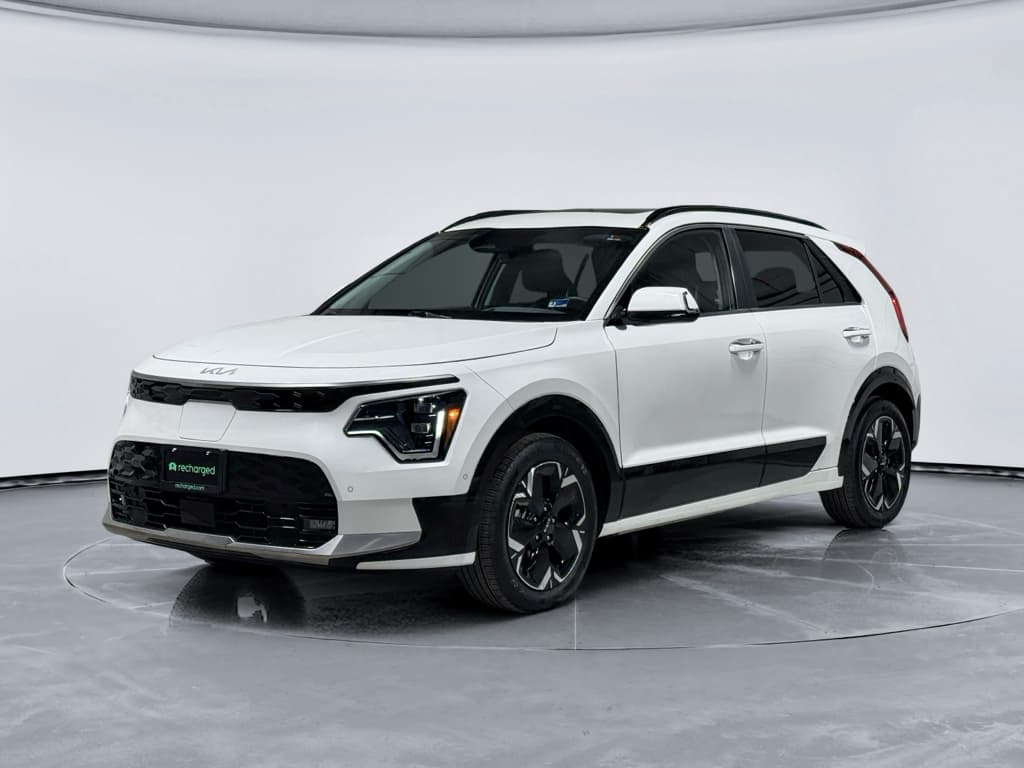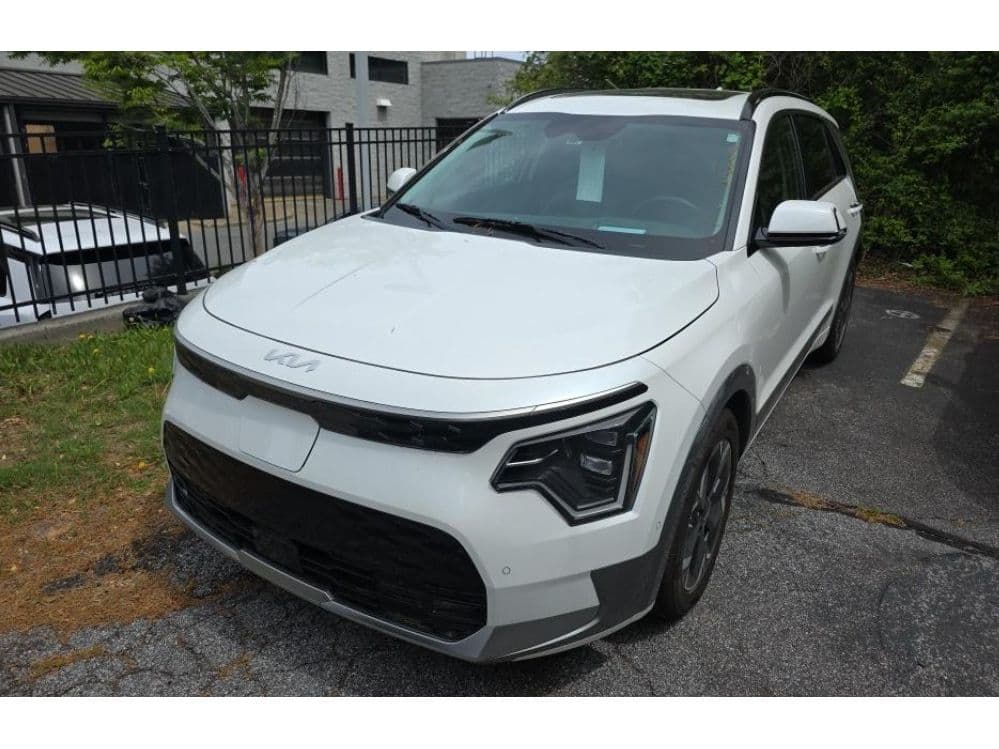
If you like the idea of a compact crossover EV that just quietly does its job, the Kia Niro EV is probably on your list. But with used models ranging from early 2019 cars to newer second‑generation 2024 examples, it’s fair to ask: what’s the best Kia Niro EV year to buy used if you want the best mix of price, range and reliability?
The short story
Kia Niro EV used market overview
The Niro EV has quietly become one of the more sensible used EV buys. It offers compact SUV practicality, real‑world range around 230–250 miles depending on year, and Kia’s long battery warranty. At the same time, EV depreciation has been steep, so three‑ to five‑year‑old Niro EVs often sell for a fraction of their original MSRP, which makes timing and model‑year choice especially important.
Kia Niro EV at a glance (used market)
Quick answer: best Kia Niro EV years to buy used
Best used Kia Niro EV years by buyer type
Pick the model year that best fits how you’ll actually use it.
Best overall value: 2021–2022
Why: Late first‑gen cars have the mature hardware and software, the full 239‑mile EPA rating, and many early bugs addressed under warranty. By 2026 they’ve taken the brunt of depreciation, so you’re often paying compact‑SUV money for a very usable EV.
Best tech & styling: 2023–2024
Why: Second‑generation Niro EVs bring a redesigned interior, more modern safety and infotainment tech, plus an EPA range up to about 253 miles. If you want a newer‑feeling cabin and can spend more, a discounted 2023 or early‑lease 2024 can be attractive.
Budget play: 2019–2020
Why: These are usually the cheapest Niro EVs on the lot. They offer the same basic 64 kWh pack and 239‑mile rating as later first‑gen cars. You’ll want to screen carefully for early reduction‑gear and 12‑volt battery issues, but a clean one can be a bargain commuter.
Model‑year rule of thumb
Kia Niro EV generations, range and key changes
Understanding how the Niro EV evolved will help you see why some years are stronger used buys than others. In the U.S., the Niro EV story breaks into two clean chapters.
Kia Niro EV generations at a glance
How first‑ and second‑generation Niro EVs compare on paper.
| Generation | Model years (U.S.) | EPA range | Battery | DC fast charge peak | Notable traits |
|---|---|---|---|---|---|
| 1st gen | 2019–2022 | 239 mi | 64 kWh | ≈77 kW | Conservative styling, simpler interior, strong value used |
| 2nd gen | 2023–2024+ | Up to 253 mi | 64.8 kWh | Similar on paper | Bold new design, more space, added driver‑assist tech |
Small spec differences hide bigger changes in styling, interior and tech.
The battery pack size stays effectively the same across both generations, so the main differences are styling, interior space, driver‑assist tech, charging software behavior, and of course price on the used market. Range is broadly similar; you’re not giving up 50–60 miles of rated range by going with a clean first‑gen car.
Model year breakdown: 2019–2024
2019 Kia Niro EV (launch year)
The 2019 Niro EV was Kia’s first long‑range compact crossover EV in the U.S. It launched with a 64 kWh pack, 201 hp front‑motor powertrain, and an EPA rating of 239 miles. On the used market, 2019s are often the cheapest way into a Niro EV, but they’re also the oldest and most likely to be out of basic bumper‑to‑bumper warranty.
- Pros: Lowest purchase price, full 239‑mile EPA rating, same basic mechanicals as later first‑gen cars.
- Cons: Age, potential early‑build quirks, more likely to have experienced 12‑volt battery or reduction‑gear issues that need to be verified as fixed.
- Who it suits: Budget‑focused commuters who can live with higher mileage and are willing to scrutinize service history.
2020 Kia Niro EV
By 2020, the Niro EV had a model‑year of real‑world data behind it. Kia continued with the same basic drivetrain and range numbers. In 2026, many 2020s sit in a price sweet spot between older, cheaper 2019s and newer, more expensive 2021–2022 cars.
- Pros: Prices have fallen sharply, but many cars still have some of Kia’s long powertrain and battery warranty left by 2026.
- Cons: At or just beyond the 5‑year/60,000‑mile basic warranty for many vehicles; check that software updates and early recalls were completed.
- Who it suits: Value shoppers who want a little more warranty coverage than a 2019 but still want to keep the purchase price down.
2021 Kia Niro EV
For many shoppers, 2021 is the first “sweet spot” year. Hardware is well‑proven, the cars are new enough that most have seen software fixes and recall campaigns, and there’s still meaningful warranty life in 2026, especially on the battery and powertrain.
- Pros: Mature first‑gen hardware, healthy remaining warranty on many examples, and strong availability in the used market.
- Cons: You’ll pay a bit more than for a 2019–2020, and cosmetic refreshes are minor compared with the 2023 redesign.
- Who it suits: Buyers who want the best balance of price, age and peace of mind.
2022 Kia Niro EV (late first‑gen, often best overall value)
The 2022 Kia Niro EV is the last year of the first generation and arguably the best overall value if you like the original body style. You get the full benefit of running changes Kia made over the earlier years, with the same 64 kWh pack and 239‑mile rating, plus lots of inventory coming off leases and first owners’ loans.
Why 2022 often tops the list
- Pros: Latest, most refined version of the first‑gen Niro EV; generous active‑safety and comfort features in EX Premium‑type trims; strong value per mile of range.
- Cons: Styling and interior not as modern as 2023+; used prices can be slightly higher than 2020–2021 for similar mileage.
- Who it suits: Shoppers who value dependability and value over having the newest design.
2023 Kia Niro EV (all‑new second generation)
The 2023 Niro EV kicks off the second generation with a dramatic styling change, a more modern interior, and incremental improvements in aero and efficiency. Range can reach about 253 miles in some trims, and cabin space and tech step up meaningfully versus the first‑gen car.
- Pros: Fresh design, more interior space, updated driver‑assist and infotainment tech, slightly improved efficiency.
- Cons: Newer platform means higher used prices, and as with any first model year, you’ll want to watch software‑related bugs and early‑run recalls.
- Who it suits: Buyers who care about design and cabin tech as much as value, and who plan to keep the car a bit longer.
2024 Kia Niro EV
By 2024, the second‑generation Niro EV is no longer the brand‑new kid. Kia continues to refine software, add small feature tweaks and adjust pricing. In 2026, lightly used 2024s coming off short leases or early trade‑ins can be smart alternatives to new, especially once you factor in EV incentives and dealer discounts that hit new‑car pricing in 2024–2025.
- Pros: Newest hardware and software; plenty of remaining warranty; potentially large discounts from original MSRP thanks to rapid EV depreciation.
- Cons: Still carries a price premium over earlier years; depreciation from 2024 to 2028–2030 could still be steep if you don’t hold it long term.
- Who it suits: Drivers who want a nearly new Niro EV but are willing to let the first owner absorb the biggest depreciation hit.
Reliability, recalls and known issues
Overall, the Kia Niro EV has a solid reliability reputation among owners, but like any modern EV, there are patterns worth watching for by model year. You’re not seeing the catastrophic battery failures that have hit a few early‑EV nameplates, but you do want to be methodical in how you inspect a used example.
Common Niro EV issue patterns to watch for
Most are manageable if you know what to ask and where to look in the service history.
Reduction‑gear / drivetrain noise
Some early first‑gen cars (especially 2019–2020) have had reports of reduction‑gear noise or failures. On a test drive, listen for whining or grinding that changes with speed, and review repair history for gearbox work.
12‑volt battery and low‑voltage quirks
Like many EVs, the Niro EV can experience 12‑volt battery issues that lead to warning lights or no‑start conditions. A replacement 12‑volt battery and software updates usually resolve it, but you want documentation.
Charging / software glitches
A small number of owners report intermittent "unable to charge" messages or the need for repeated software reflashes. For 2023–2024 cars, pay attention to any history of charger incompatibility or repeated DC fast‑charge problems.
Recalls and campaign history
Like most vehicles, Niro EVs have had recall campaigns over the years, from infotainment and camera issues to drivetrain‑related fixes. Make sure any open recalls have been completed before you buy.
Don’t skip the test drive
Depreciation: where the best deals usually are
Across the EV market, five‑year depreciation around 60% has become common, and the Niro EV largely follows that script. That’s bad news if you bought new, but great news if you’re buying used. The sharpest drop tends to happen in years 1–3, then values level off.
Typical value curve for a Kia Niro EV
Approximate pattern you’ll see in the market, assuming normal mileage and condition.
| Vehicle age | Typical position in curve | What it means for buyers |
|---|---|---|
| 1–2 years (e.g., 2024 in 2026) | Steep early drop | You let the first owner eat a big depreciation hit while still getting a nearly new car. |
| 3–4 years (e.g., 2022–2023) | Value sweet spot | Price has come down a lot, but the car is still relatively new with plenty of warranty left. |
| 5–6 years (e.g., 2020–2021) | Stable plateau | Pricing flattens out; differences are driven more by mileage and condition than year alone. |
| 7+ years (e.g., 2019 and older later on) | Budget territory | Lowest prices, but you must pay closer attention to component wear and repair history. |
Use this as a directional guide, local supply, mileage and trim level will move the numbers around.
Where Recharged’s data helps
Which Kia Niro EV trims are best to target used?
Kia’s trim names have shifted between generations (EX/EX Premium vs. Wind/Wave, etc.), but the same general advice applies: avoid bare‑bones cars unless the discount is huge. Mid‑ and upper‑trim Niro EVs often add features that matter in daily use and resale value.
Target trims vs. bare‑bones cars
Comfort and cold‑weather equipment matter more than you think.
Look for cold‑weather packages
On many Niro EVs, higher trims or packages add features like a heat pump and heated seats/steering wheel. Those make a real difference in winter range and comfort, especially in colder U.S. climates.
Prioritize safety & driver‑assist
Adaptive cruise control, lane‑keeping assist, blind‑spot monitoring and rear cross‑traffic alerts are more common on better‑equipped trims. These not only help on the road but also make the car easier to resell later.
Don’t overlook infotainment
Larger screens, better audio and updated connectivity can make a used 2021–2024 Niro EV feel newer day‑to‑day. On longer commutes, that matters as much as an extra few miles of rated range.
Checklist: how to inspect a used Kia Niro EV
Once you’ve narrowed your search to a couple of model years, the real work starts: evaluating specific cars. Use this checklist to separate the keepers from the question marks.
Essential checks before you buy a used Niro EV
1. Verify battery health and DC fast‑charge history
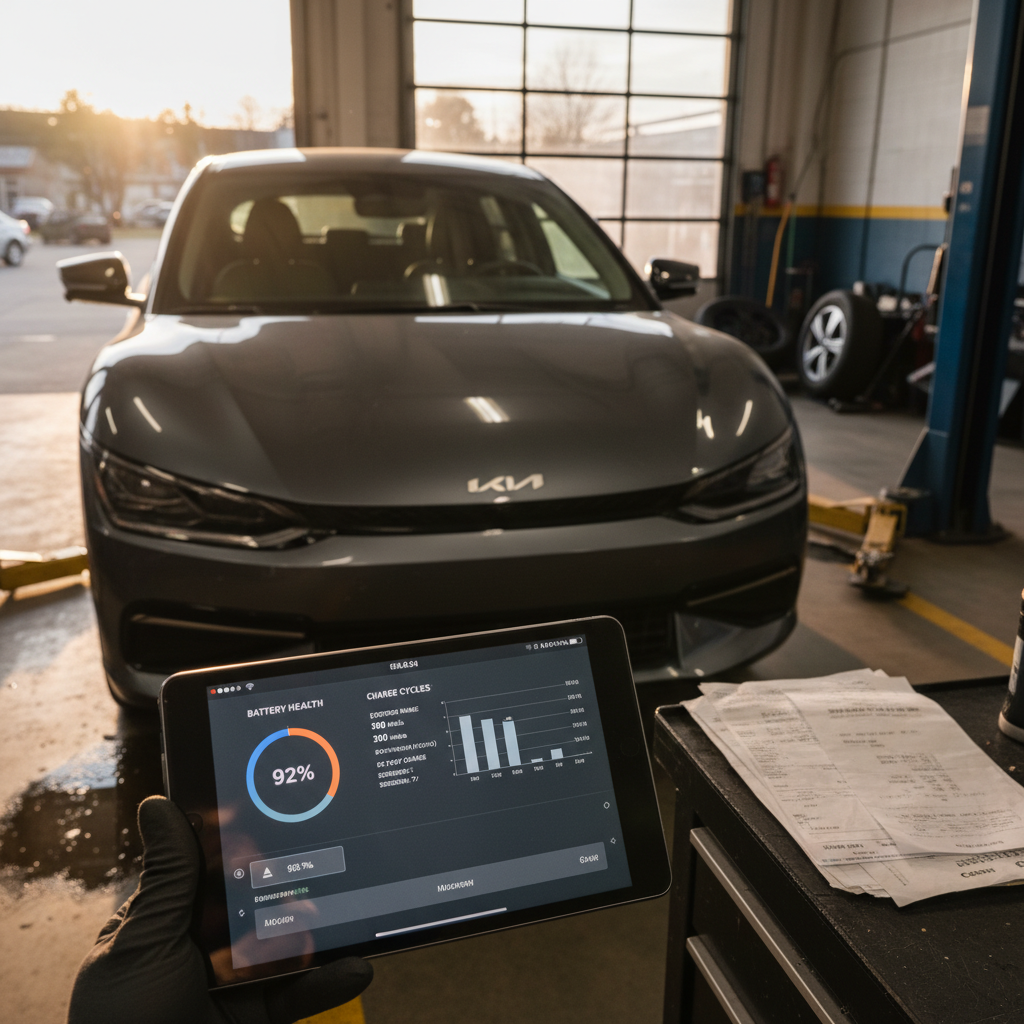
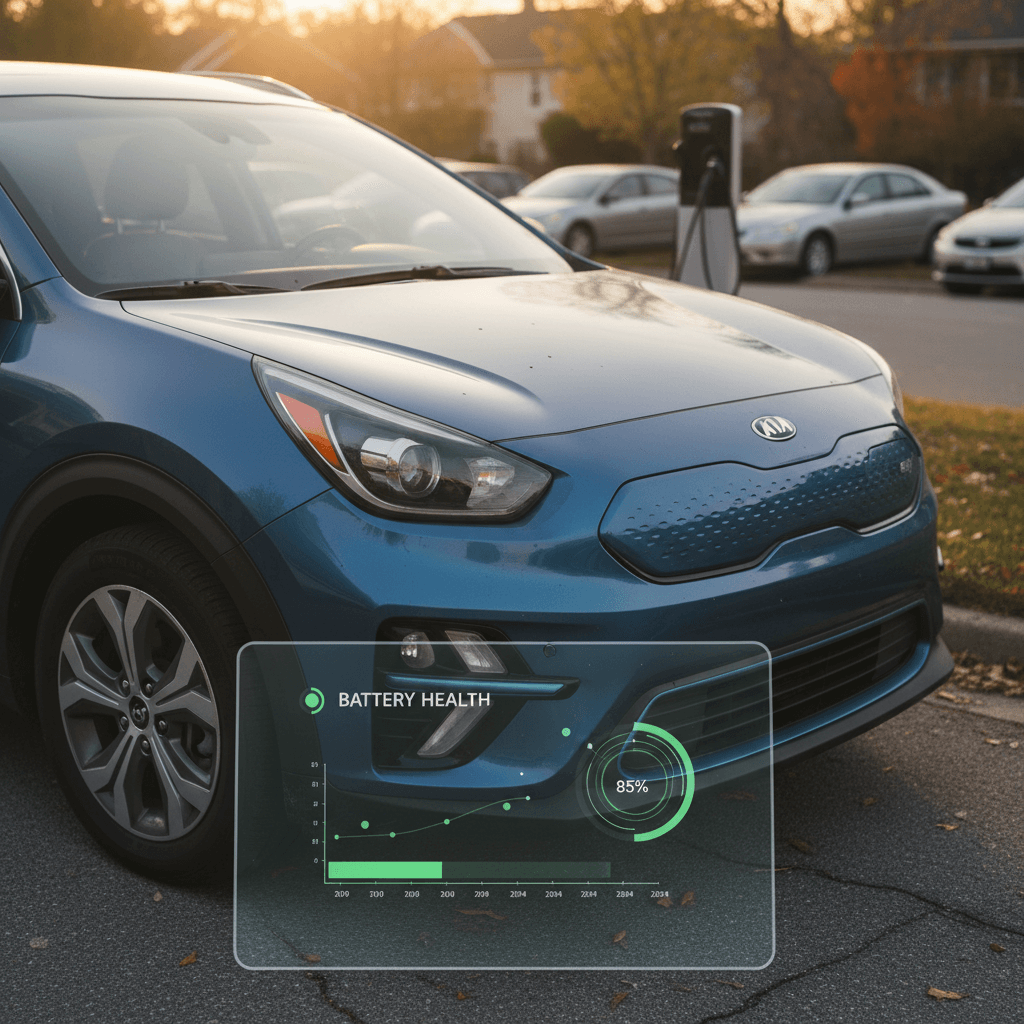
Ask for a recent battery‑health readout if available. On Recharged, the Recharged Score uses diagnostic tools to measure usable capacity and flag unusual rapid‑charging patterns that may affect long‑term health.
2. Confirm recall and software campaign completion
Run the VIN through Kia’s recall site or ask the seller for documentation showing completed recalls and software updates. Missing campaigns are a red flag but can often be resolved before purchase.
3. Listen for drivetrain and wheel‑bearing noise
On a test drive, accelerate up to highway speed and then lift off the throttle. Any unusual whining, grinding or roaring from the front or rear needs to be investigated before you sign anything.
4. Test AC, heat and all drive modes
Climate‑control performance matters more in an EV because it directly affects range. Make sure heat and AC respond quickly and that Eco/Normal/Sport modes all engage without odd behavior or warning lights.
5. Check charging on Level 2 and (if possible) DC fast
If you can, plug the car into a Level 2 charger and verify it starts charging promptly. With seller permission, a quick DC fast‑charge session can reveal connector or communication issues you won’t see on a slow charger.
6. Inspect tires, brakes and underbody
Heavy EVs can be harder on tires and suspension. Uneven tire wear or suspension clunks over bumps are common used‑car issues that you’ll want priced into the deal or fixed before delivery.
Walk away if the story doesn’t add up
How Recharged can help you buy the right Niro EV
Buying used EVs is different from buying used gas cars. You’re not just worried about paint and tires, you’re trying to understand battery health, software history and rapid‑charging behavior. That’s exactly the gap Recharged was built to close.
Battery health, made transparent
Every Kia Niro EV sold through Recharged comes with a Recharged Score Report that includes a verified battery‑health check, detailed charging history and our assessment of fair market value. You see how the pack is performing compared with similar Niro EVs, so you’re not guessing about the most expensive component in the car.
End‑to‑end EV‑specialist support
Recharged also offers financing tailored to used EVs, trade‑in or instant‑offer options for your current vehicle, and nationwide delivery from our digital storefront and Experience Center in Richmond, VA. If you’d like a second set of eyes on whether a 2020 EX or a 2023 Wind is the smarter choice for your situation, our EV specialists can walk you through the details before you commit.
FAQ: best year to buy a used Kia Niro EV
Frequently asked questions about used Kia Niro EV years
Choosing the best year of Kia Niro EV to buy used isn’t about chasing a magic model year, it’s about matching your budget and priorities to the right spot on the curve. For many buyers that means a late first‑gen 2021–2022 car, while others will gravitate toward a 2023–2024 for its design and tech. Either way, focusing on battery health, recall history and day‑to‑day drivability, and using tools like the Recharged Score Report, will matter more than the number on the trunk badge.