If you’re comparing an electric vehicle to a gasoline car, you’ve probably already looked at sticker price, fuel and maintenance. The last big line item is EV insurance vs gas car insurance, and the headlines can be confusing. Some reports say EVs cost nearly 50% more to insure; others show the gap shrinking fast. Let’s unpack what’s really happening in 2025 and how to keep your costs under control, especially if you’re considering a used EV.
Insurance costs are moving targets
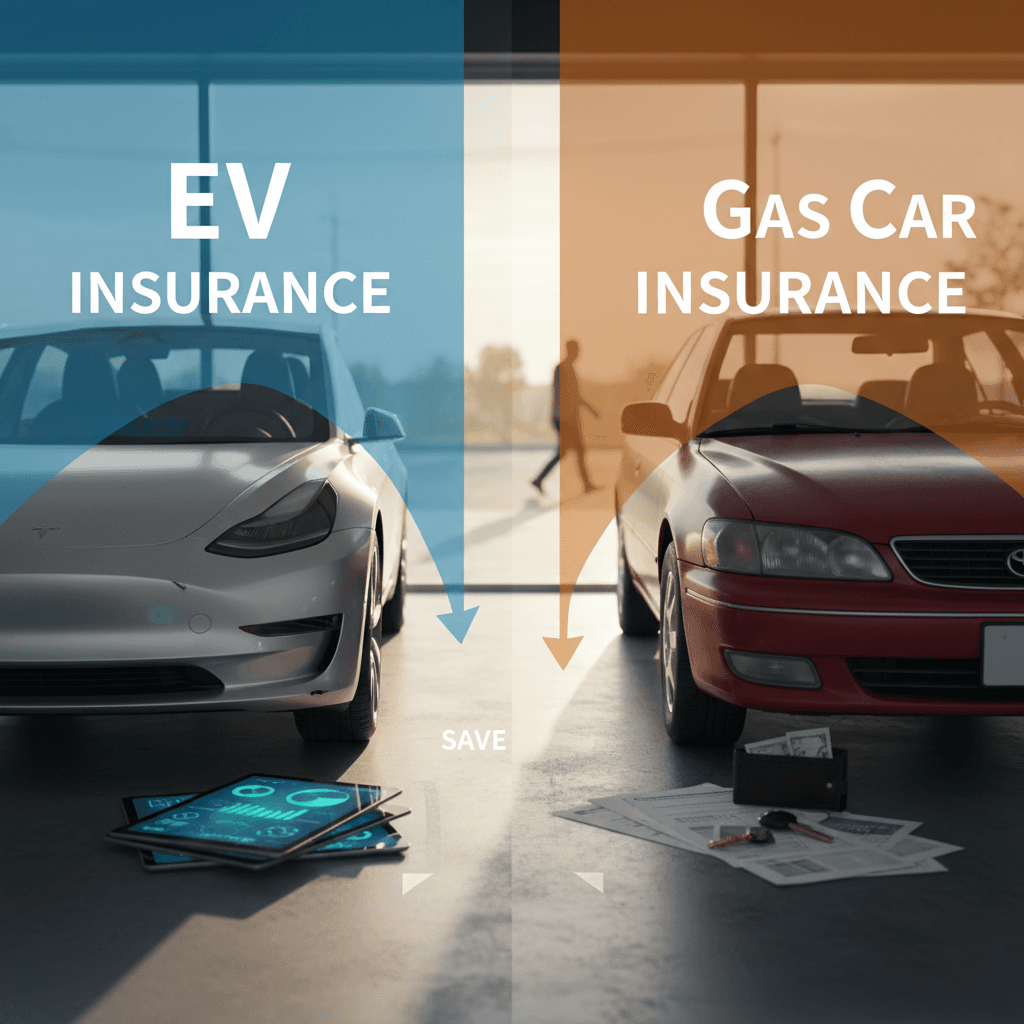
EV insurance vs gas: what drivers are seeing in 2025
The key takeaway: EVs still tend to be more expensive to insure than gas cars, but the gap isn’t as dramatic as it was a few years ago, and it’s narrowing for some models. In certain cases, an electric pickup or crossover can even undercut its gas twin on insurance, especially when the EV has stronger safety tech or lower claim frequency than early data suggested.
Why EV insurance has been higher than gas car insurance
Four big reasons EV insurance often costs more
Most of the gap comes down to repair economics, not that EV drivers are riskier.
1. Higher vehicle values
New EVs have historically carried higher sticker prices than their gas counterparts. Since insurance covers the cost to repair or replace the vehicle, a more expensive car means a bigger potential payout when there’s a claim.
2. Expensive, specialized repairs
Battery packs, power electronics, and ADAS sensors demand specialized labor and OEM parts. Many independent shops still can’t work on complex EV systems, so insurers lean on pricier dealer or certified repair centers.
3. Batteries and total losses
Structural damage near the battery pack can turn what looks like a moderate crash into a total loss. If the pack or its housing is compromised, replacement can run well into five figures, making it cheaper for the insurer to write the car off.
4. Shorter repair networks, longer downtimes
Fewer EV-capable shops mean longer repair timelines and higher rental-car costs. Insurers bake that into premiums until capacity and training catch up.
Why some EVs got labeled “hard to insure”
Where EVs can actually be cheaper to insure
Lower theft risk & strong safety tech
EVs are often less likely to be stolen than mass‑market gas cars, thanks to built-in connectivity, location tracking and immobilizers. Many EVs also ship with robust driver-assistance suites, automatic emergency braking, lane-keeping assist, advanced airbags, that help avoid or mitigate crashes.
In some models, that combination of lower theft rates and advanced safety features has started to offset higher repair costs, narrowing the premium gap versus comparable gas vehicles.
Usage‑based and low‑mileage discounts
EV owners are more likely to qualify for low‑mileage and telematics discounts. If you mainly charge at home and drive relatively short commutes, your annual miles may be lower than the average gas driver’s.
Insurers using plug‑in devices or smartphone apps can reward that behavior with discounts that bring EV premiums close to, or occasionally below, gas vehicles of similar value.
Good news for daily commuters
Coverage differences: EV insurance vs gas car insurance
From the insurer’s perspective, an EV is still just a car. You’re working with the same building blocks, liability, collision, comprehensive, uninsured/underinsured motorist, and various add-ons. The differences show up in the details and dollar amounts, not the basic structure of the policy.
EV vs gas insurance: what changes and what doesn’t
Most coverage types are the same, but limits and add-ons often need more attention with an EV.
| Coverage type | Same for EV & gas? | What’s different for EVs | What to ask your insurer |
|---|---|---|---|
| Liability (bodily injury & property damage) | Yes | Pays for injuries and damage you cause to others, regardless of powertrain. | Do my liability limits make sense for my assets and local medical costs? |
| Collision | Mostly | Works the same but pays to repair or replace a typically higher‑value EV, often at higher labor rates. | How are total loss thresholds applied on EVs with battery damage? |
| Comprehensive | Mostly | Still covers theft, vandalism, weather, animals; some EVs have lower theft risk but higher parts cost. | Are OEM parts used for key EV components like sensors and cameras? |
| Roadside assistance | Partly | EV‑specific issues like running out of charge may be treated differently than running out of gas. | Does roadside assistance cover flatbed towing to an EV‑certified shop and dead‑battery events? |
| Rental reimbursement | Yes | Equally available, but EV repair times can be longer today, stretching rental periods. | What’s the daily limit and total cap if my EV sits in the shop for weeks? |
| Gap/lease coverage | Yes | EVs can depreciate quickly, so gap coverage can be especially valuable early on. | How would gap coverage work if my new EV is totaled in the first 2–3 years? |
| OEM parts or “green” endorsements | No (optional) | Some carriers offer endorsements that guarantee OEM parts or prioritize repair over replacement, helpful for EVs. | Do you offer OEM‑only parts coverage or EV‑specific endorsements? |
| Battery coverage specifics | No (policy detail) | Battery is usually part of the vehicle for collision/comprehensive, but rules differ on what triggers total loss. | Exactly how do you handle partial battery damage or water intrusion? |
Use this comparison as a checklist when quoting both EV and gas vehicles side by side.
Bring your questions to the quote call
How battery health impacts insurance, especially on used EVs
Insurers don’t quote off your dash‑display range estimate, but battery health is quietly in the background of every EV underwriting decision. A healthy pack is less likely to fail under stress, complicate repairs or trigger a total loss after a minor collision. That’s where documentation matters, particularly for used EVs.

When you’re shopping used, a transparent battery‑health report can separate a great EV from one that’s likely to generate headaches. At Recharged, every vehicle includes a Recharged Score Report with verified battery diagnostics, real‑world range insights and valuation data. That level of detail makes it easier to justify the purchase, talk with insurers about the vehicle’s condition, and compare the total cost of ownership to a similar gas car.
Real-world cost comparisons: EV vs gas insurance
Comparing a random EV to a random gas car doesn’t tell you much. To understand EV insurance vs gas car insurance, you need to look at similar vehicles used in similar ways, for example, a compact EV hatchback vs a compact gas hatchback, or an electric crossover vs a gas crossover.
Scenario 1: Compact commuter car
- Gas: Mainstream compact sedan or hatchback with modest options.
- EV: Compact electric hatchback or small crossover with similar seating and safety equipment.
For a 35‑year‑old driver with a clean record, you might see:
- Gas car full‑coverage premium around the lower end of the national range.
- Comparable EV running perhaps $200–$400 more per year, driven by vehicle value and repair cost.
Scenario 2: Family crossover or light truck
- Gas: Popular two‑row crossover or light‑duty pickup.
- EV: Electric crossover or pickup with similar MSRP.
Here, the gap can narrow or even flip in certain trims. Strong safety tech, lower theft risk and improved parts availability mean some electric trucks and crossovers now match or beat their gas twins on insurance, even if that’s not yet the norm.
Compare apples to apples
How to lower your EV insurance premium
Avoid the “minimum coverage” trap
Used EVs: insurance advantages and watch-outs
Used EVs sit at the intersection of two powerful trends: falling vehicle prices and maturing battery technology. That combination can make them appealing from an insurance standpoint, but only if you know what you’re buying.
How used EVs compare to new EVs and gas cars on insurance
Lower values help, but condition and history matter more than age alone.
Potential advantages
- Lower vehicle value than new EVs, reducing maximum claim amounts.
- Price points closer to comparable gas cars, narrowing premium gaps.
- Plenty of real‑world repair and safety data for insurers to analyze.
Key watch‑outs
- Unknown battery history can spook some carriers.
- Poor past repairs or flood exposure may raise red flags.
- Out‑of‑warranty vehicles can be more expensive to fix.
How Recharged helps
- Every car includes a Recharged Score Report with verified battery health.
- Transparent pricing makes it easier to line up vehicle value with insurance quotes.
- EV‑specialist support can help you understand ownership and coverage trade‑offs before you buy.
“For insurers, uncertainty is expensive. The more clarity you can provide about an EV’s condition, battery health and repairability, the easier it is to price that car fairly.”
FAQ: EV insurance vs gas car insurance
Frequently asked questions about EV insurance vs gas car insurance
Bottom line: should EV insurance stop you from going electric?
EV insurance vs gas car insurance is one slice of a much larger pie. Yes, many EVs still cost more to insure today, largely because of repair economics and lingering uncertainty. But fuel, maintenance and tax incentives often tilt the total cost of ownership back in the EV’s favor, especially if you compare similar vehicles and shop your coverage aggressively.
If you’re leaning toward a used EV, you’re in a strong position. A high‑quality car with documented battery health, fair pricing and expert support can narrow both the purchase and insurance gaps versus a comparable gas vehicle. That’s exactly the experience Recharged is built around: verified battery diagnostics through the Recharged Score, transparent pricing, financing and trade‑in options, and nationwide delivery if you’re shopping from home.
Run quotes for both the EV and the gas car you’re considering, ask pointed questions about how claims are handled, and make your decision based on total five‑year costs, not just one line on the spreadsheet. For many drivers, especially in the used market, higher EV premiums are a factor to manage, not a deal‑breaker.