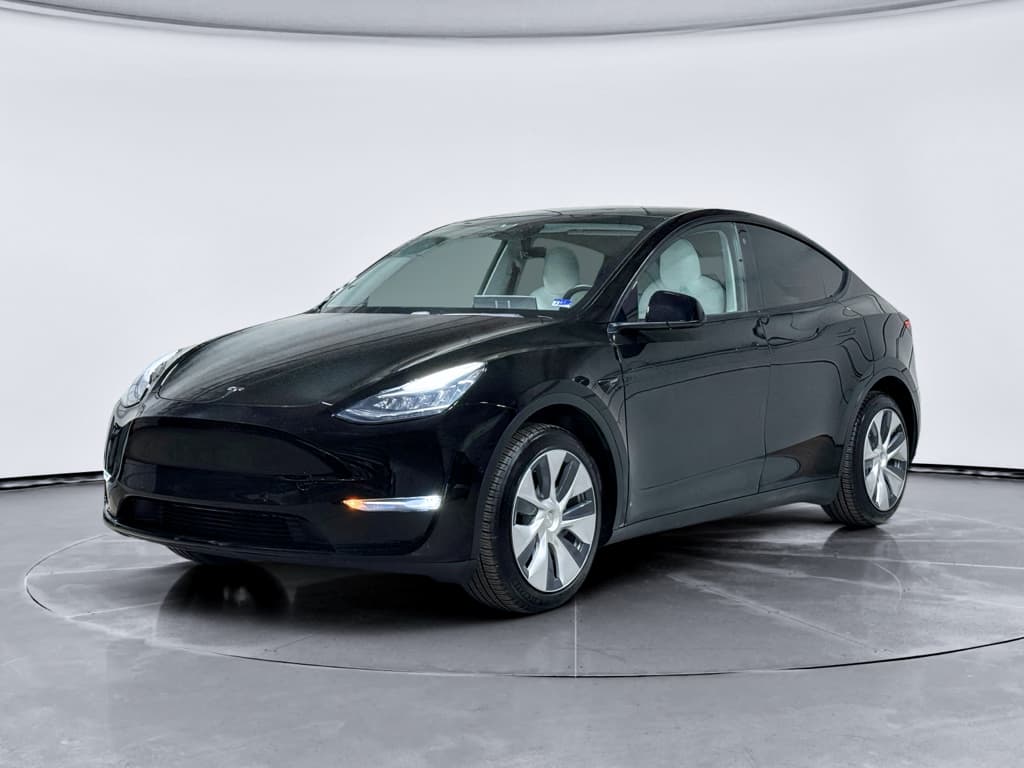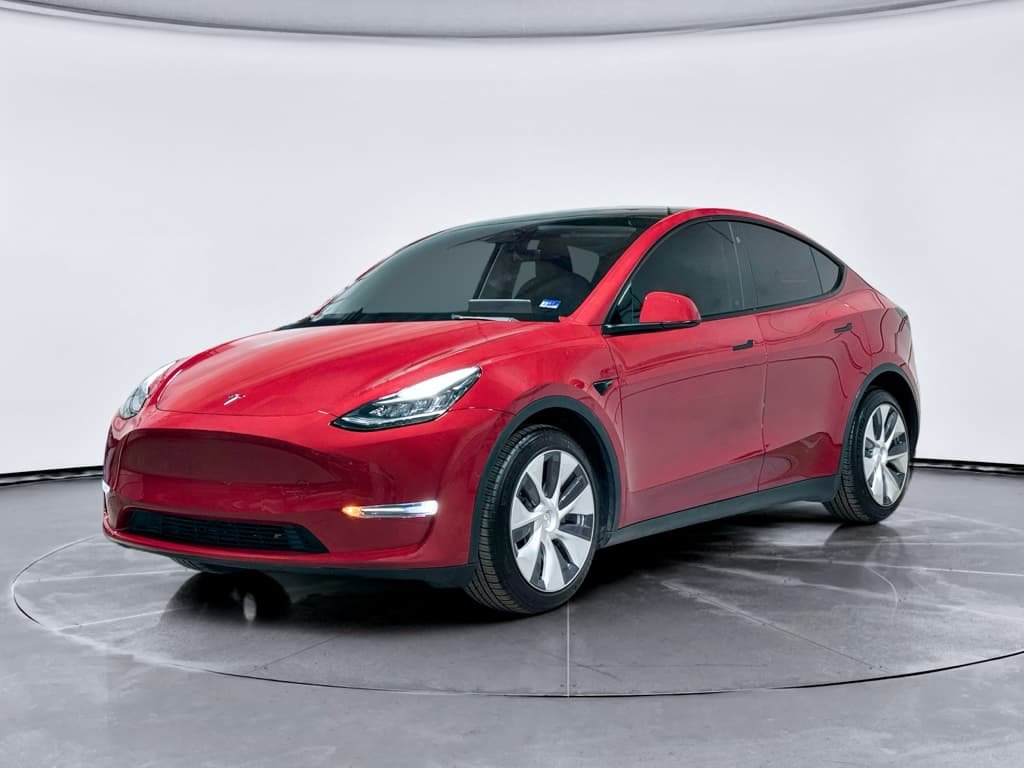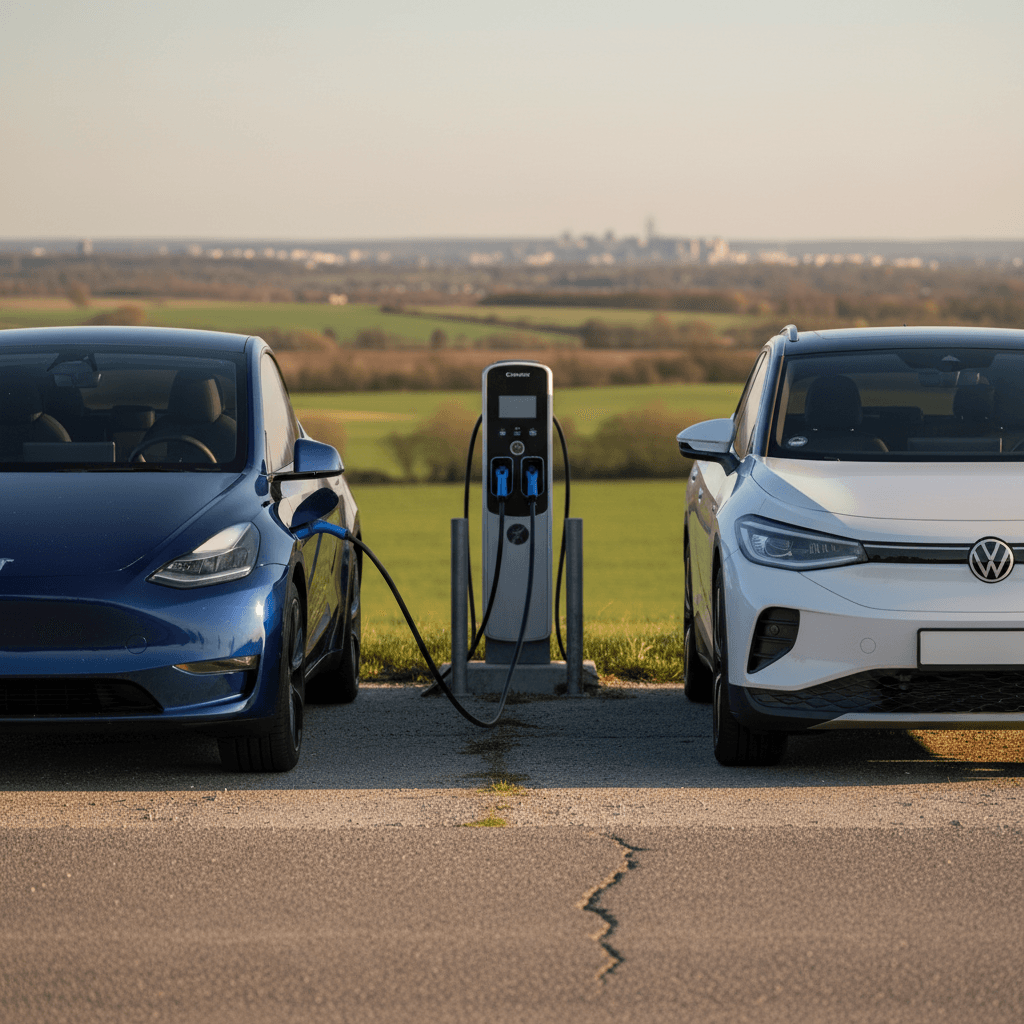
You’re not choosing between good and bad here, you’re choosing between two very good but very different electric SUVs. If you’re asking, “Tesla Model Y vs Volkswagen ID.4: which is better?” the honest answer is that it depends entirely on how you drive, who rides with you, and how much tech you actually want in your life.
Big picture
Model Y vs ID.4: Who Each SUV Is Really For
At a Glance: Which EV SUV Fits You?
Use this as your gut‑check before diving into the details.
Tesla Model Y is better if…
- You want maximum range and easy access to Tesla’s Supercharger network for road trips.
- You care about snappy acceleration and a modern, minimalist cabin.
- You like living in software, over‑the‑air updates, app‑first experience, and lots of smart features.
- You’re okay with a firmer ride and fewer physical buttons.
Volkswagen ID.4 is better if…
- You prioritize comfort, quiet, and an easygoing drive over speed.
- You want a more traditional interior layout with familiar controls.
- You value included fast‑charging perks (many new ID.4s came with years of free Electrify America charging).
- You’re price‑sensitive and looking for strong discounts or leases, or a value‑packed used EV.
Quick Specs: Tesla Model Y vs Volkswagen ID.4
Core Specs: 2024–2025 Tesla Model Y vs VW ID.4 (U.S.-market ballpark)
Exact numbers vary by trim, wheel size, and model year, but this gives you a realistic comparison starting point.
| Spec | Tesla Model Y (typical U.S. trims) | Volkswagen ID.4 (typical U.S. trims) |
|---|---|---|
| Battery (usable, approx.) | ~75–82 kWh, depending on trim | ~62 kWh (Standard) or ~77–82 kWh (Pro/Pro S) |
| EPA range (RWD/AWD, approx.) | Up to ~310 miles RWD, ~280–300 miles AWD | ~209–223 miles (Standard), ~250–291 miles (Pro RWD), ~255–263 miles (AWD) |
| DC fast‑charge peak | Up to ~250 kW on newer Superchargers | Up to ~175 kW on 82 kWh models |
| 0–60 mph (quickest trims) | Around 3.5–4.5 seconds | Around 5.4–7.5 seconds, depending on battery and drive |
| Seats | 5, optional small 3rd row (7‑seat) on some years | 5 only |
| Cargo space (rear seats up) | Very generous; deep trunk well + big frunk | Large cargo area; no frunk |
| Infotainment | 15" Tesla touchscreen, no gauge cluster | 12" touchscreen + digital cluster on most trims |
| Notable perk | Deep integration with Tesla Superchargers | Many new ID.4s include years of free Electrify America DC fast charging |
Always check the window sticker and EPA label for the specific vehicle you’re considering, especially if you’re shopping used.
Specs change fast
Range and Charging: Which EV Goes Farther and Charges Faster?
Tesla Model Y: Road‑trip range champ
The Model Y generally goes farther on a charge than a comparable ID.4. Long Range and many dual‑motor trims land around the high‑200s to low‑300s in EPA estimates, depending on wheels and year. Real‑world owners who drive at U.S. highway speeds with climate control running often report 225–270 miles per charge in normal conditions, more in ideal weather.
Because Tesla tightly integrates the car with its Supercharger network and route planner, long trips are unusually painless: you punch in a destination, and the car figures out where to stop and for how long. For most drivers, that’s 15–30 minutes every 2–3 hours of driving.
Volkswagen ID.4: Enough for daily life, good on trips
The ID.4’s range depends heavily on which battery you get. The larger‑pack Pro and Pro S models typically land in the 250–290‑mile EPA range for rear‑drive versions and the mid‑250s for all‑wheel drive. In real life, think 200–240 miles at highway speeds with normal use.
On the charging front, newer 82 kWh ID.4s can pull up to around 175 kW on a strong DC fast charger and go from roughly 5–10% to 80% in just under 30 minutes when conditions are right. That’s absolutely road‑trip capable, especially if you have good Electrify America coverage where you live.
Range & Charging Takeaways
Think in stops, not just range
Space, Practicality, and Comfort
Interior space: both are family‑size
Both SUVs feel genuinely roomy for a small family. The Tesla Model Y uses its long wheelbase and flat floor to deliver excellent rear legroom and a huge cargo area with a deep under‑floor well plus a front trunk (frunk) for messy or fragile items.
The Volkswagen ID.4 counters with a very squared‑off rear hatch and wide opening. There’s no frunk, but the main cargo area is easy to load with strollers, coolers, or big warehouse‑store runs.
Ride comfort: VW takes the edge
If your daily life includes busted city streets, expansion joints, and long commutes, the ID.4 usually rides more softly. Volkswagen tuned it to feel closer to a traditional compact SUV, calm, planted, and not trying to impress you at every green light.
The Model Y’s suspension is firmer and more athletic. Great when you’re hustling down a back road or sliding onto a freeway ramp; less lovable if your family is sensitive to a choppier ride.
Third row vs no third row
Driving Experience and Performance
How They Feel Behind the Wheel
Numbers are one thing. Living with them is another.
Tesla Model Y: Punchy and playful
- Even the "slower" Model Y trims feel seriously quick, instant torque and highway passing power.
- Low center of gravity makes it feel confident and planted in corners.
- One‑pedal driving and strong regen give it a slightly learning‑curve‑y feel if you’re new to EVs, but most owners end up loving it.
Volkswagen ID.4: Calm and composed
- Acceleration ranges from "perfectly adequate" to "quick enough", but never wild.
- Steering is light, and the whole experience says "relaxed" rather than "sporty".
- Great for new EV drivers who just want it to drive like a normal, smooth crossover.
Performance verdict
Tech, Infotainment, and Driver Assistance
Tesla Model Y: Software first, hardware second
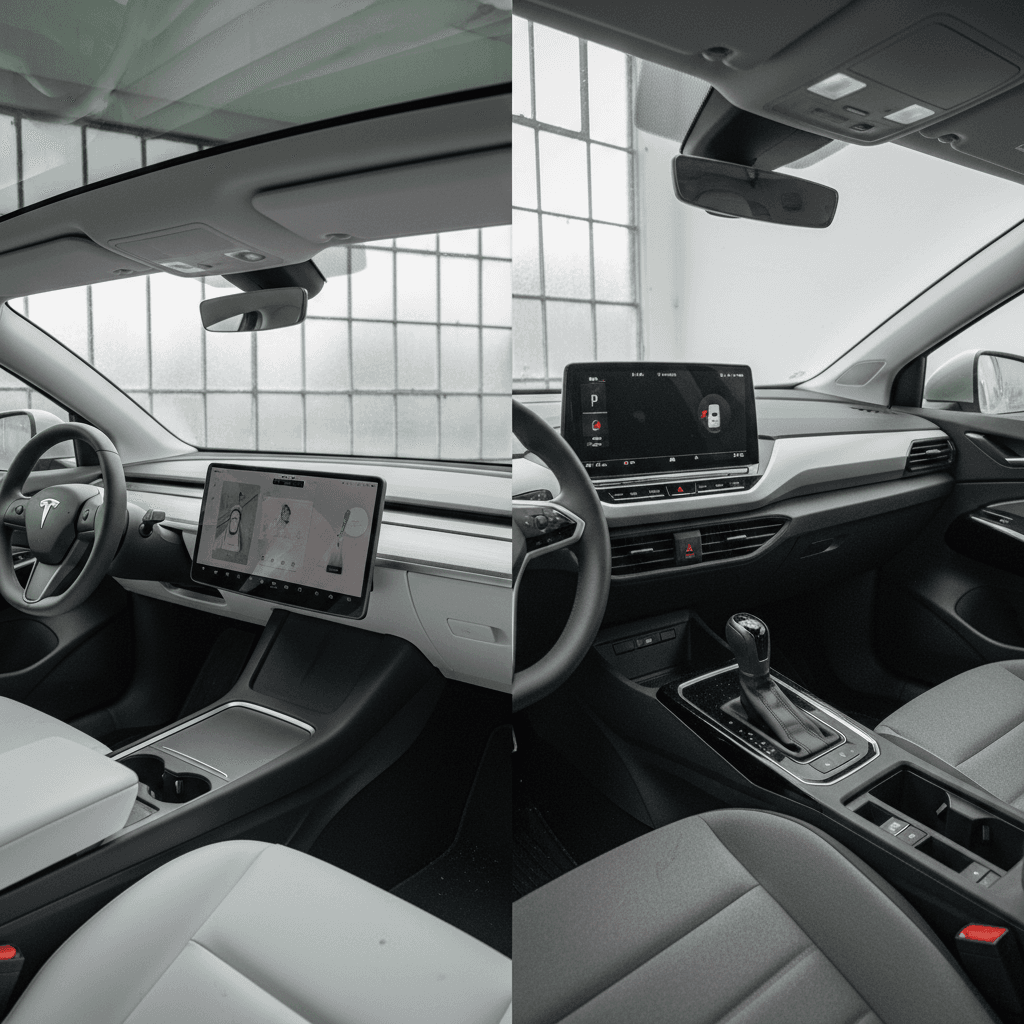
The Tesla dashboard is essentially one big 15‑inch touchscreen. Your speedometer, navigation, climate controls, driving settings, they all live there. It feels like driving an iPad on wheels, in the good and occasionally frustrating ways.
You get excellent integrated navigation, streaming apps, games, over‑the‑air updates, and one of the best EV route planners on the market. But if you love physical knobs and buttons, you may miss them here.
Tesla’s driver‑assist suite (Autopilot, with optional advanced packages) delivers strong lane‑keeping and adaptive cruise, though it demands you stay engaged, and some drivers find the behavior a bit abrupt compared with legacy brands.
Volkswagen ID.4: More conventional, still modern
The ID.4 gives you a digital gauge cluster plus a central touchscreen, so you don’t have to glance sideways for your speed. The infotainment system has improved with software updates, though it isn’t as fluid as Tesla’s.
Volkswagen includes a healthy suite of driver‑assistance features, adaptive cruise, lane keeping, parking aids, largely in line with the rest of the compact SUV segment. If you’re coming out of a gas‑powered Tiguan or CR‑V, the ID.4 will feel more familiar from day one.
Sit in both before you decide
Reliability, Ownership Experience, and Costs
What It’s Like to Live With Them
From service visits to charging perks, here’s what owners actually feel day to day.
Reliability & quality
Model Y has matured; recent years are generally rated as having "average" reliability. Most issues are fit‑and‑finish and software quirks rather than major drivetrain failures, but you do hear about rattles, trim, and occasional sensor gremlins.
ID.4 owners report a mix of solid drivetrains and occasional software frustrations, particularly in early years. Later 82 kWh models have improved charging behavior and infotainment stability.
Charging and energy costs
At home, energy costs are similar: both are efficient enough that most drivers see the equivalent of 80–120 mpg in fuel savings versus gas SUVs.
On the road, Tesla Superchargers are widespread and typically reliable. Many ID.4s, especially new ones, come with years of free 30‑minute DC fast‑charging sessions at Electrify America, which can dramatically cut road‑trip costs if you stick with that network.
Service & support
Tesla handles most things through its app and service centers, with mobile technicians for simpler jobs. You’ll want to be comfortable doing nearly everything digitally.
Volkswagen owners can use a traditional dealer network, which some drivers prefer for in‑person conversations and long‑familiar processes.
Watch out for software history
Buying Used: Tesla Model Y vs VW ID.4
The used market is where the question “Tesla Model Y vs Volkswagen ID.4, which is better?” gets especially interesting. Depreciation, battery health, and charging perks can swing the value equation hard in one direction or the other.
Key Things to Check on a Used Model Y or ID.4
1. Battery health, not just mileage
With any used EV, <strong>real battery health</strong> matters more than odometer mileage. A 60,000‑mile SUV with a healthy pack can be a better buy than a low‑miler that’s been abused by fast charging and poor storage. Every vehicle sold through Recharged includes a <strong>Recharged Score battery health diagnostic</strong> so you can see how much usable capacity remains.
2. Charging hardware & benefits
For a used Tesla Model Y, confirm which <strong>onboard charger</strong> it has and make sure Supercharging works correctly on a test drive. For a used ID.4, ask whether any <strong>free Electrify America charging</strong> remains and if it transfers to you, policies vary by year and program.
3. Software version and feature set
Features like one‑pedal driving feel, driver‑assist behavior, and charging curves can change with software. During a test drive, spend time in menus and on the highway to see if the current behavior matches what you want.
4. Warranty status
Both brands offer <strong>8‑year battery warranties</strong> (with different mileage and degradation terms). Check in‑service date and mileage to see how much coverage is left, and weigh that when comparing two similarly priced used EVs.
5. Real‑world charging where you live
Even the best EV is a headache if you don’t have convenient charging. Map Tesla Superchargers and CCS networks near your home, work, and favorite trips. Recharged’s EV specialists can help you sense‑check whether a Model Y or ID.4 better fits your local infrastructure.
How Recharged can help
Ready to find your next EV?
Browse VehiclesHow to Choose: Model Y or ID.4 for Your Life
Model Y vs ID.4: Choose by How You Drive
Daily commuter with occasional trips
If you drive mostly city/suburban miles under 50 miles per day, <strong>either EV works beautifully</strong>.
Pick the <strong>Model Y</strong> if you like tech, quick acceleration, and plan a few long trips a year where Tesla’s Supercharger network will make life easy.
Pick the <strong>ID.4</strong> if you want a softer ride, traditional interior, and possibly lower purchase price or better lease deals.
Road‑trip family
Frequent highway runs and long‑distance family visits tilt the scale toward the <strong>Tesla Model Y</strong> because of range and seamless Supercharger integration.
If your go‑to routes are well covered by Electrify America and other CCS networks, a long‑range <strong>ID.4 Pro</strong> can still be a solid, more budget‑friendly choice, especially if you snag one with remaining free charging.
First‑time EV owner
Nervous about EVs? The <strong>ID.4</strong> feels closest to a normal compact SUV, just quieter and smoother.
If you’re tech‑confident and love gadgets, the <strong>Model Y</strong> will feel like the future, and you may appreciate Tesla’s app‑centric ownership more than a traditional dealer model.
Either way, lean on an <strong>EV‑savvy retailer</strong> like Recharged to walk you through charging, home setup, and battery care.
Budget‑focused used buyer
Used ID.4s often undercut comparable Model Ys on price because of steeper early depreciation.
A <strong>used Model Y</strong> can hold its value better but still offer strong savings versus new, especially if you find one with verified battery health and clean service history.
Run total cost of ownership: energy, insurance, maintenance, and financing, not just the sticker price. Recharged can help you model this out before you commit.
Frequently Asked Questions: Tesla Model Y vs Volkswagen ID.4
Model Y vs ID.4: Your Top Questions Answered
Bottom Line: Which Is Better, Tesla Model Y or Volkswagen ID.4?
If you pushed for a one‑word answer to “Tesla Model Y vs Volkswagen ID.4: which is better?”, I’d say this: Model Y for range and road‑trips, ID.4 for comfort and value. The Tesla still sets the pace on long‑distance convenience and tech, while the Volkswagen quietly nails the job of being an easygoing, family‑friendly SUV that just happens to run on electrons.
Your decision should come down to how you actually live: how often you road‑trip, how you feel about big touchscreens versus physical controls, what charging looks like near your home, and how tight your budget is. That’s where a real‑world test drive, plus hard data on battery health, pricing, and charging behavior, matters far more than any single headline spec.
If you’re ready to compare specific cars, not just spec sheets, Recharged can help you line up used Tesla Model Y and Volkswagen ID.4 options, each with a Recharged Score battery report, transparent pricing, and EV‑specialist guidance from the first question to delivery. That’s how you stop wondering which EV is better in theory, and start driving the one that’s better for you.