If you’re hunting for EV incentives in South Carolina in 2026, you’ve probably noticed a frustrating reality: there’s a lot less free money on the table than there used to be. But that doesn’t mean you’re out of options. Between remaining federal benefits, utility charger rebates, and new home energy programs, you can still chip thousands of dollars off the total cost of going electric, especially if you’re looking at a used EV.
Dates matter in 2026
Overview: EV incentives in South Carolina in 2026
South Carolina’s EV market at a glance
Think of South Carolina as a **utility‑driven EV incentive state**. Instead of a big, headline‑grabbing state tax credit on the car itself, most of the savings in 2026 come from: - Utility rebates for home Level 2 chargers and wiring - Time‑of‑use (TOU) electric rates that reward off‑peak charging - New federal home energy rebates the state is preparing to roll out in 2026, which can make it cheaper to upgrade panels and wiring When you combine these with today’s softer used‑EV prices, and tools like Recharged’s battery health reporting, you can still make the economics work in your favor.
Does South Carolina have a state EV tax credit in 2026?
Let’s tackle the biggest question head‑on: **South Carolina does not offer a statewide EV purchase tax credit or rebate in 2026.** Recent summaries of state programs confirm that there’s no South Carolina income‑tax credit or check‑in‑the‑mail rebate tied directly to buying a new or used electric vehicle.
- No state rebate at the dealership for buying an EV
- No state income‑tax credit for new or used EVs
- No statewide sales‑tax exemption specific to EVs
Don’t confuse “alternative motor vehicle” with EV
Because the state isn’t writing you a check for buying an EV, the onus is on you to **squeeze value out of everything around the vehicle**, charger rebates, electricity rates, and smart shopping on the used market.
Federal EV incentives in 2026: what’s changed
If you followed EV news over the past few years, you probably remember generous federal tax credits under the Inflation Reduction Act, up to $7,500 on new EVs and up to $4,000 on used ones, plus a credit for installing home charging equipment. Those programs changed dramatically in 2025 and 2026.
- The big federal purchase credits for new and used EVs were phased out nationally in 2025 under new federal legislation.
- The federal tax credit for home EV chargers is being phased down and is set to sunset in 2026, with stricter rules and more limited availability.
- By calendar year 2026, most South Carolina buyers can’t count on a major federal income‑tax credit to make an EV pencil out the way it did in 2023–2024.
Assume old headlines are out of date
The upshot for South Carolina drivers: **you can’t rely on Washington or Columbia to fund your EV**. But you can still lower total cost of ownership by attacking charging costs and home upgrades, and by buying smart on the used market, where much of the early‑adopter depreciation has already happened.
Utility EV incentives in South Carolina
Where South Carolina shines is at the utility level. Several power providers offer rebates, discounted rates, or special programs tied to EV ownership and charging. Programs change frequently, so always verify current details before you apply, but here are the key players and patterns you’ll see in 2026.
Major utility EV programs to watch in South Carolina
Exact incentive amounts can change, use these as starting points and confirm with your utility.
Santee Cooper
Santee Cooper, the state‑owned utility, has offered:
- Residential Level 2 charger rebates (commonly a few hundred dollars) when you buy and install a qualified smart charger.
- Commercial EV charging infrastructure grants for businesses and fleets.
These programs are typically capped by budget and enrollment windows, so early applications matter.
Duke Energy Carolinas / Progress
Duke’s EV Charger Prep Credit has reimbursed homeowners for the cost of installing Level 2 charger infrastructure, wiring, conduit, breaker, and sometimes the charger itself.
Many South Carolina Duke customers have seen most or all of their installation cost covered when they used participating electricians and submitted proper documentation.
Time‑of‑Use & EV rates
Some utilities in South Carolina pair rebates with time‑of‑use (TOU) rates that make overnight charging significantly cheaper than daytime use.
Even without a formal EV‑only plan, shifting most charging to late‑night hours can materially lower your fuel cost per mile.
Ask the right utility questions
Typical South Carolina utility EV incentives (2026 snapshot)
Representative patterns based on current and recent utility offerings. Always check your provider’s website for exact, up‑to‑date terms.
| Utility / program type | What it usually covers | Typical value range | Key fine print |
|---|---|---|---|
| Residential charger rebate | Portion of the cost of a qualified Level 2 home charger and/or installation | ~$200–$1,200, depending on scope and utility | Often limited to one per household; must use licensed electrician and submit permit and paid invoice. |
| Charger prep credit (Duke‑style) | Panel upgrades, wiring, conduit, outlet and breaker for a Level 2 charger | Enough to cover most basic installations for many homes | You may need to use an approved contractor or enroll before work begins. |
| Commercial / workplace grants | Make‑ready infrastructure and hardware for public or fleet chargers | Can cover a significant share of project cost | Competitive application process; limited annual budget; reporting requirements. |
| EV or TOU rate plans | Discounted off‑peak kWh pricing for home charging | Savings of 20–40% vs. standard rates for off‑peak hours | Rates may change seasonally; watch peak windows so you don’t accidentally charge at the wrong time. |
Use this table as a checklist when you talk to your own utility.
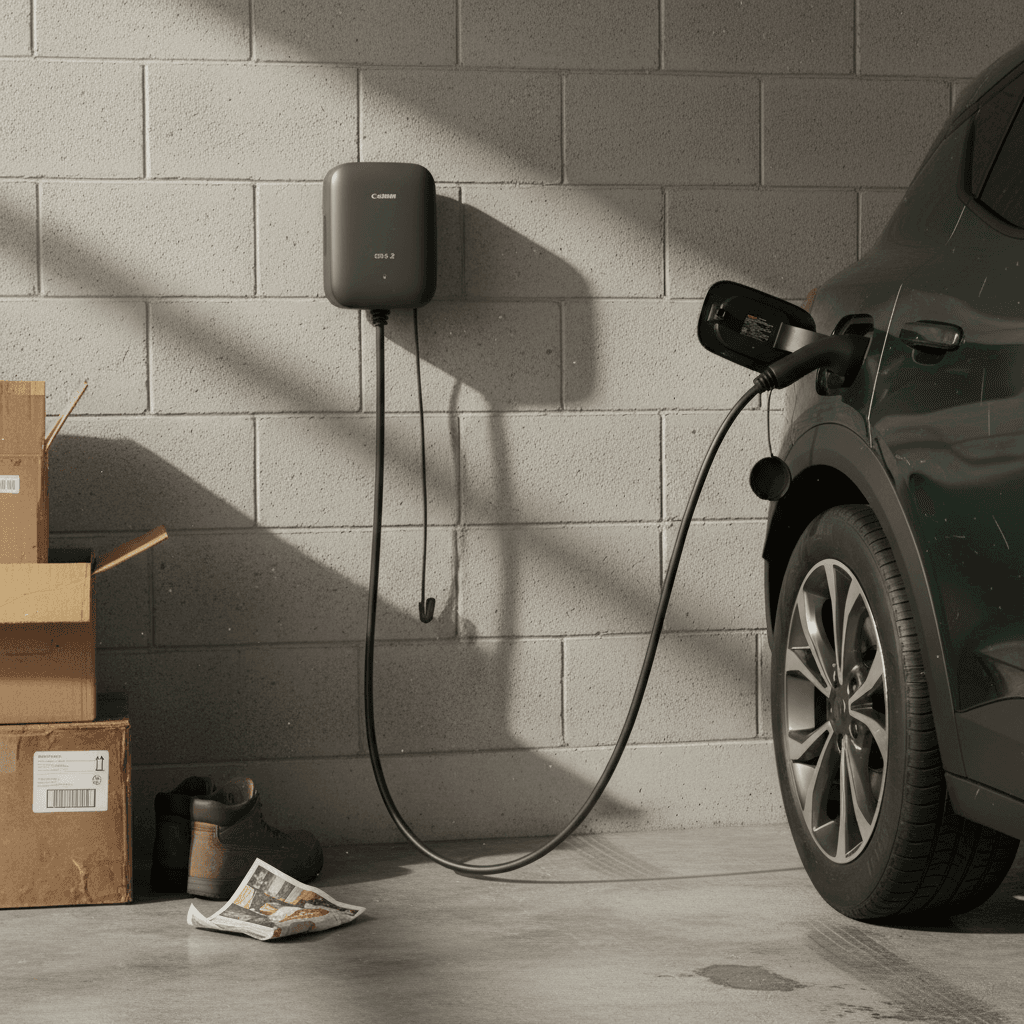
If you’re planning to install Level 2 home charging, these programs can be the difference between a painful four‑figure bill and something far more manageable. In some recent Duke Energy cases, for example, the charger prep credit completely covered common residential installs when homeowners followed the program rules.
2026 Home Energy Rebates that can help EV owners
South Carolina is in the process of implementing two big federal programs funded by the Inflation Reduction Act: **Home Efficiency Rebates (HOMES)** and **Home Electrification and Appliance Rebates (HEAR)**. The state expects these to launch statewide in 2026.
- HOMES focuses on whole‑home energy efficiency improvements, insulation, air sealing, HVAC upgrades, that reduce your overall energy use.
- HEAR provides point‑of‑sale rebates for electrification upgrades like heat pumps, heat pump water heaters, panel and wiring upgrades, and other qualifying electrical work.
- Both programs are income‑tested, with higher rebates for low‑ and moderate‑income households. Maximum combined rebates can run well into five figures for deep retrofits.
Why EV drivers should care about home energy rebates
If your older South Carolina home doesn’t have spare capacity for a 240‑volt EV circuit, a carefully planned project that bundles **panel upgrades, wiring, and other electrification work** might qualify for substantial rebates once the state’s programs go live. Coordinating that with a utility charger credit can dramatically cut your out‑of‑pocket cost to get your home EV‑ready.
How to stack what’s left: saving on a used EV in South Carolina
With big federal and state purchase credits off the table, **used EVs become especially attractive** in South Carolina. You’re letting the first owner eat the steepest depreciation while you focus on minimizing charging and home‑upgrade costs.
1. Start with a fairly priced used EV
Because there’s no state purchase incentive to tilt the scales, the most important “incentive” is paying a fair price for the car itself. That’s where a transparent marketplace like Recharged can help, with fair‑market pricing and a Recharged Score battery health report on every vehicle.
Knowing the true condition of the pack is crucial in a non‑incentive state, you don’t want to save on gas just to inherit a tired battery with limited range.
2. Stack charger and home‑energy benefits
Once you’ve found the right car, look at every way to reduce your cost to charge it:
- Utility rebates or charger prep credits
- TOU rates or EV‑specific rate plans
- HOMES/HEAR rebates for panel or wiring upgrades
Whether you buy from a dealer, a private party, or a digital retailer like Recharged, these programs are generally tied to your home and utility account, not the seller.
What a strong deal can look like
Step-by-step: how to claim EV incentives in South Carolina
Your South Carolina EV incentives playbook
1. Confirm your utility and rate plan
Before you shop for an EV, confirm which utility serves your address and what EV or time‑of‑use rate options are available. Ask specifically about charger rebates or prep credits.
2. Get written details on charger incentives
Download or print your utility’s current EV program rules. Note deadlines, approved equipment lists, contractor requirements, and whether you must apply before installation begins.
3. Plan your electrical scope smartly
Work with a licensed South Carolina electrician to design a project that meets your EV needs and potentially qualifies for both utility rebates and upcoming home energy rebates (panel, wiring, etc.).
4. Keep every document
Save permits, invoices, proof of payment, charger model numbers, and photos of the installation. Utilities and rebate programs are sticklers for documentation.
5. Submit rebate and credit applications quickly
Many programs are first‑come, first‑served. Submit your paperwork as soon as work is complete and your charger is operational, following each program’s checklist carefully.
6. Track your charging costs
Once everything’s live, monitor your electric bills and your EV’s efficiency. If you’re on a TOU plan, set charging schedules to avoid newly defined peak windows.
Leverage expert help
Common pitfalls South Carolina EV buyers should avoid
- Relying on expired federal or state credits. Many online calculators still assume full federal EV credits and older South Carolina policies. Make sure the information is valid for 2026.
- Installing a charger before reading the fine print. Some utility programs require pre‑approval, specific hardware, or permits. Doing the work first and asking questions later can mean leaving hundreds of dollars on the table.
- Ignoring home panel limitations. If your breaker panel is maxed out, forcing in a Level 2 circuit without a proper upgrade can create safety and code issues, and may disqualify you from future rebates.
- Charging during new peak windows. Several utilities in the Carolinas have shifted peak TOU hours. If you’ve automated your charging based on old schedules, you could be paying more than you think.
- Buying a used EV without a battery health report. In a low‑incentive environment, a weak battery can erase the financial upside of a discounted used EV. Insist on objective degradation data, like the Recharged Score provides.
Permits aren’t optional
FAQ: EV incentives in South Carolina (2026)
Frequently asked questions about South Carolina EV incentives
Bottom line: Is an EV still worth it in South Carolina in 2026?
In a perfect world, South Carolina would layer a generous state EV credit on top of robust federal benefits. That’s not the world we’re in for 2026. But that doesn’t mean EVs are a bad financial move. It just means you have to think like a savvy buyer instead of an early‑adopter enthusiast chasing subsidies.
If you pair a fairly priced used EV with utility charger incentives, smart rate selection, and, where appropriate, home energy rebates for electrical upgrades, the math can still favor electric over gas, especially on fuel and maintenance. The key is doing your homework up front and insisting on transparency around battery health and pricing.
At Recharged, every used EV comes with a Recharged Score battery health report, fair‑market pricing, and EV‑specialist support that can help you navigate incentives and charging options in your part of South Carolina. In a state without big headline credits, that kind of clarity is often the most valuable incentive of all.