If you’re shopping for an electric vehicle in 2026 and you live in Pennsylvania, you’re probably hearing two different stories at once: **“EV incentives are disappearing”** and **“There’s still free money on the table.”** The reality sits squarely in the middle. In 2026, EV incentives in Pennsylvania include a refreshed state rebate program, several utility‑run perks, and a brand‑new road‑use fee for EVs that you’ll want to factor into your math.
Pennsylvania in 2026: Carrot and stick
Overview: EV incentives in Pennsylvania for 2026
Let’s zoom out before we dive into the fine print. In the July 1, 2025–June 30, 2026 program year, Pennsylvania offers a **state EV rebate** for eligible buyers and lessees, plus a growing patchwork of **utility incentives** for home charging and smart‑charging. At the same time, the state now collects a yearly road user charge from EV owners, which replaces the fuel tax you’d otherwise pay at the pump.
Pennsylvania EV incentives & costs at a glance (2025–2026)
In other words, there’s still meaningful help on the table, especially if you’re choosing a reasonably priced new or used EV. But timing, vehicle choice, and your household income all matter more than ever.
Pennsylvania’s 2025–2026 Alternative Fuel Vehicle Rebate
Pennsylvania’s flagship incentive is the **Alternative Fuel Vehicle (AFV) Rebate Program**, run by the Department of Environmental Protection (DEP). For the current cycle, the program is funded for about **500 rebates** from **July 1, 2025 through June 30, 2026**, or until the money runs out. You apply **after** you buy or lease an eligible vehicle.
AFV Rebate amounts in Pennsylvania (July 1, 2025–June 30, 2026)
How much you can get back for different types of alternative fuel vehicles in 2026, before any low‑income bonus.
| Vehicle type | Example | Standard rebate (2025–2026) | Notes |
|---|---|---|---|
| Battery electric vehicle (BEV) | Hyundai IONIQ 5, Chevy Equinox EV | $3,000 | New, one‑time pre‑owned, or qualifying demo vehicles |
| Plug‑in hybrid (PHEV) | Toyota Prius Prime, Ford Escape PHEV | $1,500 | Same price cap and usage rules as BEVs |
| Other AFV (CNG, propane, etc.) | Bi‑fuel pickup, CNG sedan | $500 | Niche for most passenger‑car shoppers |
| Electric motorcycle | Zero SR/F, LiveWire | $500 | Scooters are typically not covered |
Rebates are for vehicles with a final purchase price of $45,000 or less, purchased or leased for personal use.
Don’t bust the price cap
One detail that often trips people up: the AFV program covers **new, pre‑owned, and certain demo vehicles**, but a used EV can only receive the AFV rebate **once** in its lifetime. If a previous owner already used the Pennsylvania rebate on that VIN, the DEP won’t pay again.
Income limits and eligibility rules you need to know
Pennsylvania redesigned this program to steer money toward households that actually need the help. That means **income limits** and an extra **low‑income bonus** on top of the standard rebate.
- You must be a Pennsylvania resident purchasing or leasing a qualifying vehicle for personal use, registered in PA.
- You must apply within the window DEP specifies after purchase (usually within 6 months).
- Your household income must fall within the current program’s limits to receive the standard rebate, lower incomes can receive an additional $1,000.
- You can’t use the AFV rebate on the same VIN more than once; prior rebate use follows the car, not the owner.
- The vehicle must be titled in your name (or household) and not be purchased strictly for resale.
Pro move: Check the VIN history
Income thresholds are tied to federal poverty guidelines and updated periodically. The safest strategy is to **check the DEP AFV Rebate page the same week you buy** so you know exactly which tier you’re in and which rebate amount you can claim.
How Pennsylvania incentives stack with federal EV credits
State rebates don’t exist in a vacuum. In 2026, drivers in Pennsylvania are layering the **state AFV rebate** on top of **federal clean vehicle tax credits** for both new and used EVs, where eligible. The catch: federal rules have tightened, and not every EV, or buyer, qualifies.
New EVs
- You may qualify for a federal Clean Vehicle Credit (up to a published maximum) if the vehicle meets battery‑sourcing and assembly rules and your income falls below the federal cap.
- Pennsylvania’s AFV rebate, if the car’s final price is at or under $45,000, can stack on top of that federal credit.
- Dealers can often register your purchase so the federal credit is applied at the point of sale as a down‑payment equivalent, while the state rebate still comes later via DEP.
Used EVs
- Certain used EVs may qualify for a smaller federal Used Clean Vehicle Credit, subject to income, price, and sale‑type limits.
- If the car hasn’t already received a Pennsylvania AFV rebate, you can still claim the state $3,000 BEV or $1,500 PHEV rebate (plus low‑income bonus, if eligible).
- Because the AFV program caps the final purchase price at $45,000, many used EVs sold through marketplaces like Recharged’s Philadelphia partners or Pittsburgh‑area dealers can qualify comfortably.
Rebates vs. tax credits: cash vs. taxes
Utility EV programs in Pennsylvania for 2026
On top of state and federal incentives, several Pennsylvania electric utilities run their own EV programs. These aren’t usually massive dollar amounts, but they can make **home charging cheaper** and reward you for charging smart during off‑peak hours.
Major Pennsylvania utility EV programs to watch in 2026
Exact details change over time, but these are the big names most PA EV drivers encounter.
PECO (southeastern PA)
PECO’s EV programs have included:
- Smart Driver Rebates for residential customers who install qualifying Level 2 home chargers and share charging data.
- Commercial charger make‑ready incentives that help workplaces and multifamily buildings offset installation costs.
These offerings change over time, so always confirm current amounts and eligible equipment on PECO’s EV promotions page.
Duquesne Light Company (Pittsburgh region)
In the Pittsburgh metro, Duquesne Light has focused on:
- Smart Charging Rewards that pay EV owners to enroll their vehicle or charger in a managed‑charging program, pausing or slowing charge sessions during summer peaks.
- Fleet and commercial charger rebates that help businesses and local governments install Level 2 or DC fast charging.
For a Pittsburgh‑specific breakdown, see our dedicated EV Rebates Pittsburgh guide.
Other PA utilities (PPL, FirstEnergy & co.)
Elsewhere in the state, some utilities offer:
- Time‑of‑use (TOU) rates designed to reward overnight charging.
- Pilot programs that pay a small monthly rebate (for example, around $10 per month) if your EV charging stays within off‑peak windows.
- Occasional one‑time rebates for installing a qualifying home charger.
These pilots come and go, so check your utility’s EV page or call before you assume you’re eligible.
Stack the small stuff
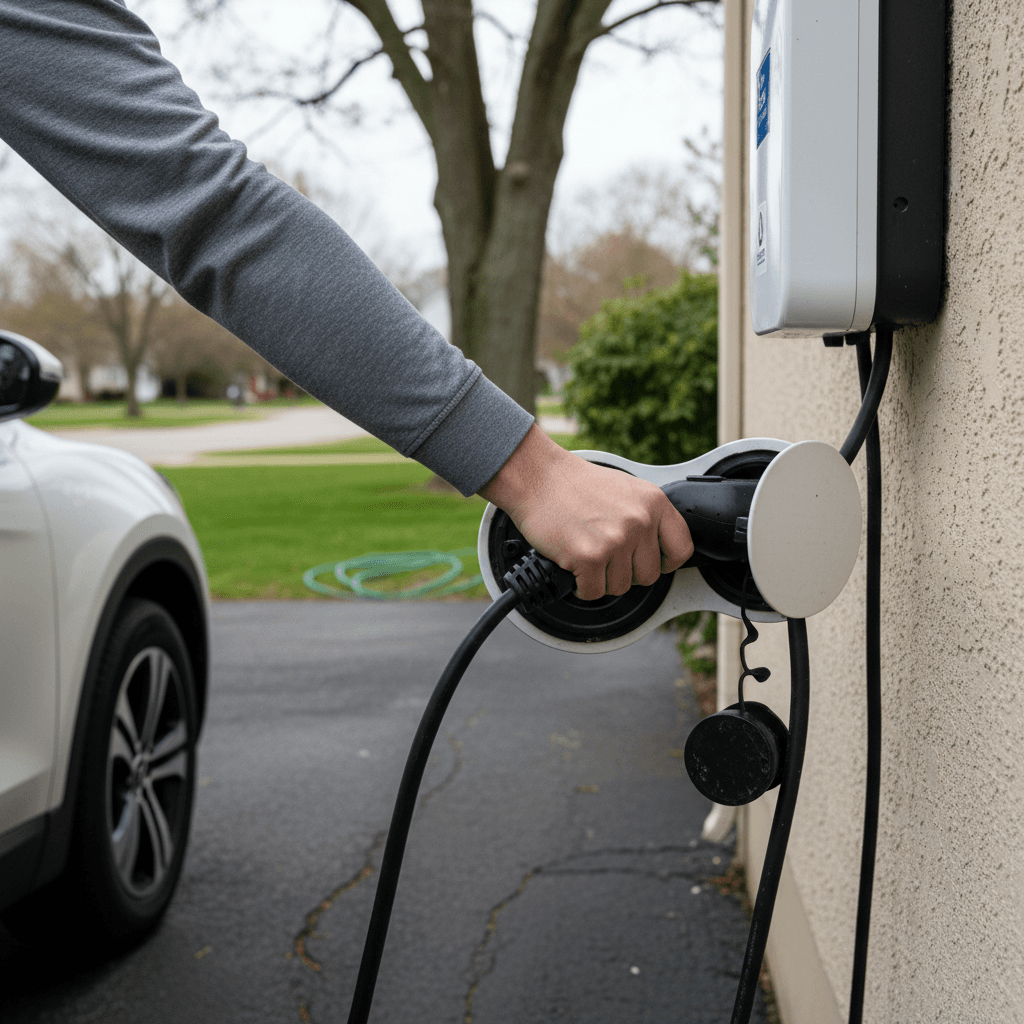
New in 2025–2026: Pennsylvania’s EV road user charge
There’s no way around it: starting in **2025**, Pennsylvania shifted part of its EV policy from pure carrot to a mix of carrot and stick. Beginning **April 1, 2025**, EV owners pay a yearly **Road User Charge (RUC)**. For **2026**, that charge is **$250 per year** for a battery‑electric vehicle, replacing the gas tax the state would otherwise collect when you fill up at the pump.
- The road user charge applies to registered battery‑electric vehicles; plug‑in hybrids may be handled differently because they still buy gasoline.
- The fee shows up as part of your annual registration/renewal bill from PennDOT.
- It increases in steps, $200 in the initial year, then $250 in 2026, and may be adjusted again in future years by the legislature.
- You pay the fee once per year, regardless of how much you actually drive. High‑mileage drivers tend to come out ahead compared with a similarly sized gas car; very low‑mileage drivers might pay a bit more than their fair share.
Don’t forget to budget the fee
The smart way to look at the RUC is not as a punishment, but as a swap: you stop paying state fuel tax on every gallon, and you start paying a predictable annual fee instead. For many Pennsylvania drivers putting 10,000–15,000 miles a year on the odometer, home‑charged electricity plus the RUC is still significantly cheaper than gasoline.
Buying a used EV in Pennsylvania: What still applies?
Used EV shoppers sometimes assume all the good incentives are gone. In Pennsylvania in 2026, that just isn’t true. A well‑chosen used EV can still qualify for the **state AFV rebate**, and in some cases, a **federal used EV tax credit**, while saving you thousands upfront compared with a new model.
Why used EVs pair well with Pennsylvania incentives
The right car, bought the right way, can unlock serious value.
Lower purchase prices
Because the AFV rebate caps the final purchase price at $45,000, many used EVs slide under that limit easily, especially older Teslas, Bolts, Leafs, and Hyundai/Kia models.
That means you’re stacking a lower monthly payment with the ability to claim the same $3,000 BEV or $1,500 PHEV rebate as a new‑car buyer.
Battery health transparency
Battery condition matters more than odometer mileage on a used EV. With Recharged’s Recharged Score battery health diagnostics, you see real‑world data about pack health before you buy.
That helps you decide whether a particular used EV is a smart candidate for long‑term ownership, especially once you add in rebates and the new RUC fee.
Where Recharged helps on used EV incentives
Ready to find your next EV?
Browse VehiclesOne thing to keep straight: the federal used EV credit and Pennsylvania’s **AFV rebate** have different price caps, income limits, and first‑sale rules. Don’t assume that if a car qualifies for one, it automatically qualifies for the other. A good dealer or marketplace will help you line all of that up in advance, and if they can’t answer those questions clearly, take that as a red flag.
Step‑by‑step: How to actually claim your benefits
Knowing about Pennsylvania’s 2026 EV incentives is one thing. Actually getting the money is another. Here’s a straightforward roadmap you can follow whether you’re buying new or used.
Checklist: Claiming EV incentives in Pennsylvania (2026 purchase)
1. Map out your incentives before you shop
List which benefits realistically apply to you: federal new or used clean vehicle credit, Pennsylvania AFV rebate, and any utility programs where you live. That gives you a target savings number and helps you set a smarter budget.
2. Confirm income and price caps
Check your most recent tax return to estimate household income, then compare it against the current thresholds on the DEP AFV Rebate page and IRS guidance. Make sure the vehicles you’re considering stay under Pennsylvania’s <strong>$45,000</strong> final price cap if you want the state rebate.
3. Choose the right car (and seller)
Pick a vehicle that fits your driving needs, qualifies for the incentives you’re targeting, and has clear battery health documentation. If you’re buying used through a marketplace like Recharged, your specialist can help you filter for cars that hit all those marks.
4. Capture every document at delivery
At delivery, collect your signed bill of sale or lease agreement, registration, proof of residency, and any paperwork your dealer provides about federal credits. Scan or photograph everything, you’ll need digital copies for your rebate applications.
5. Apply for the Pennsylvania AFV rebate online
Use DEP’s eGrants system to submit an application under the <strong>Alternative Fuel Vehicle Rebate</strong> program. Fill out the form carefully, upload your documents, and double‑check your banking info so the rebate can be deposited electronically.
6. Enroll in utility or smart‑charging programs
Once the car is home, sign up for any relevant **time‑of‑use rate**, **charger rebate**, or **smart‑charging rewards** offered by your electric utility. Many of these programs require you to enroll within a certain window after installation or purchase.
Watch the application deadlines
Where Recharged fits into your Pennsylvania EV plan
Finding the right EV is hard enough without also having to decode every line of Pennsylvania’s incentive rules. That’s where Recharged comes in. We’re a retailer and marketplace built specifically around used EVs, with tools designed for exactly the decisions you’re facing in 2026.
Clarity on the car
- Recharged Score Reports give you verified battery health, pricing analysis, and ownership cost estimates so you’re not guessing how an older pack will behave in Pennsylvania winters.
- Our listings focus on **fair‑market pricing**, making it easier to stay under the AFV program’s $45,000 cap without sacrificing range or features.
- Every step can be handled in a fully digital experience, or you can visit our physical Experience Center in Richmond, VA if you prefer to walk around the car in person.
Clarity on the money
- Our EV‑specialist team can help you map out how state rebates, federal credits, and utility programs affect the real payment you’ll make.
- Financing, trade‑in, and flexible sale options (instant offer or consignment) make it easier to roll your current car into a more efficient EV, even with Pennsylvania’s new road user charge in the picture.
- We can arrange nationwide delivery, so you’re not limited to the handful of EVs sitting on your local lot.
Ready to run the numbers?
FAQ: Pennsylvania EV incentives in 2026
Frequently asked questions about 2026 EV incentives in Pennsylvania
The short version: even with a new EV road user charge and tighter federal rules, **2026 is still a good year to go electric in Pennsylvania**, especially if you’re willing to shop smart and stay under the state’s $45,000 price cap. The key is to treat incentives as part of the whole ownership story, not just a bonus coupon. Look closely at your commute, your home‑charging options, your utility’s programs, and the specific car in front of you. Do that, and the numbers can pencil out surprisingly well. And if you’d like someone in your corner who lives in the weeds of battery health and incentives every day, Recharged is built precisely for drivers like you.