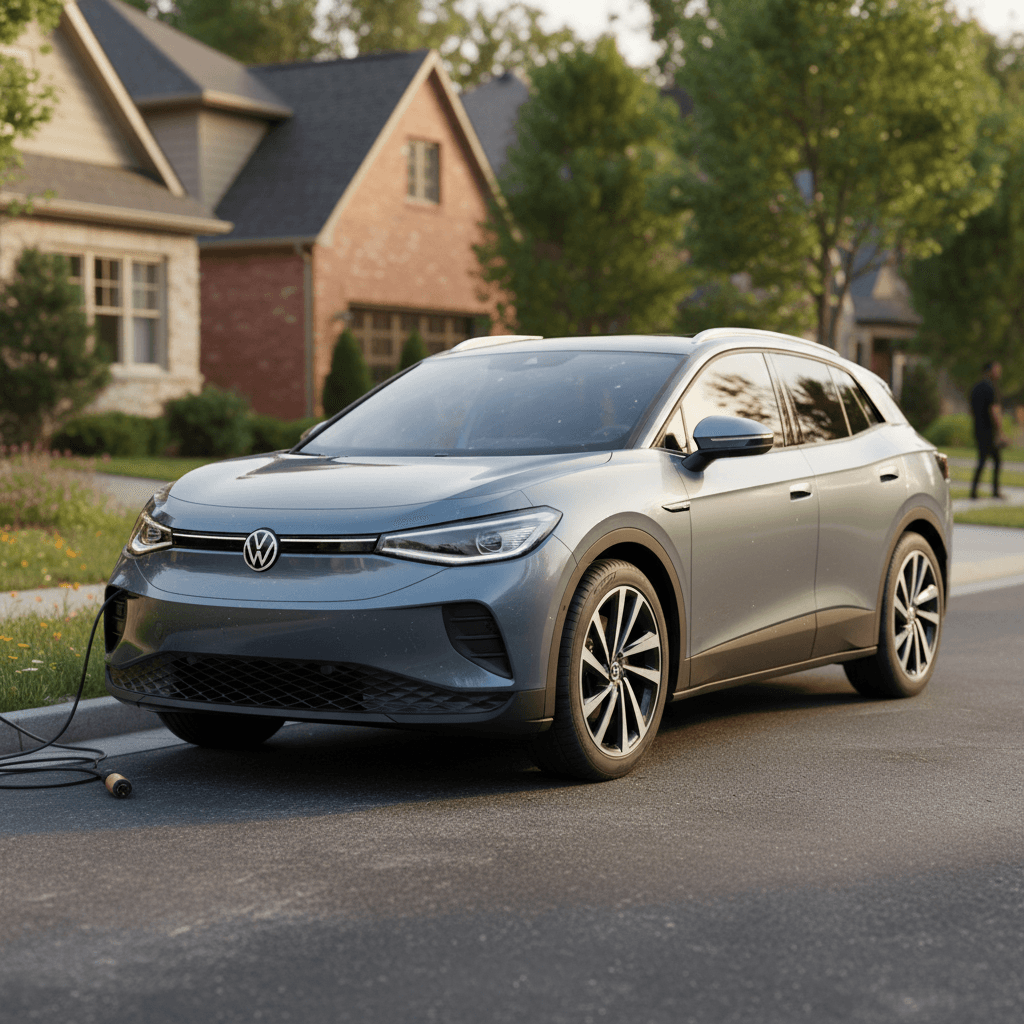
The 2023 VW ID.4 is the electric SUV for people who don’t want to live inside a science experiment. Where some EVs scream for attention, the ID.4 looks and drives like a well-mannered compact crossover that happens to run on electrons. In this 2023 VW ID.4 review, we’ll dig into range, charging, comfort, tech, and what you should know if you’re eyeing one on the used market today.
Built in the U.S., for the U.S.
2023 VW ID.4 at a glance
2023 ID.4 key numbers
On paper, the 2023 ID.4 lands squarely in the EV sweet spot: usable real-world range, competitive fast‑charging, a roomy cabin, and pricing that undercut many rivals when new. As a used purchase, it now sits in a very attractive price band, especially once you factor in federal and state incentives for pre-owned EVs and the fact that depreciation has already taken the first big bite.
What’s new for the 2023 ID.4?
- U.S. assembly in Chattanooga for most models, with more North American parts sourcing.
- New 62 kWh Standard battery option (RWD) with an EPA range around 200–209 miles, lowering the entry price when new.
- Updated interior with a revised center console and a larger 12-inch infotainment screen on most trims.
- More standard driver‑assist tech, including Travel Assist highway assist and Park Assist Plus on upper trims.
- Additional available features like Area View (360° cameras), three‑zone climate control, and heated rear seats.
Model-year decoding tip
Powertrain, range & trims explained
Volkswagen keeps the ID.4 lineup straightforward: one body style, two battery sizes, and either rear‑ or all‑wheel drive. The complexity comes later, when you’re trying to parse "Standard" vs "Pro S Plus" on a used listing at 11 p.m. on your phone.
2023 VW ID.4 trims & key specs (U.S.)
The headline differences among the main 2023 ID.4 variants.
| Trim | Drivetrain | Battery (usable) | EPA range | Power |
|---|---|---|---|---|
| Standard | RWD | ≈62 kWh | ~206–209 mi | 201 hp |
| S (62 kWh) | RWD | ≈62 kWh | ~201 mi | 201 hp |
| Pro | RWD | ≈82 kWh | ~275–294 mi | 201 hp |
| Pro S | RWD | ≈82 kWh | ~285–291 mi | 201 hp |
| AWD Pro | AWD | ≈82 kWh | ~255–280 mi | 295 hp |
| AWD Pro S / Pro S Plus | AWD | ≈82 kWh | ~263–275 mi | 295 hp |
EPA ranges are approximate and can vary by wheel size and options.
The **62 kWh Standard** is the price leader: perfectly adequate for suburban duty, less ideal if you regularly knock out 250‑mile highway days. The **82 kWh Pro and Pro S** are the sweet spot, pairing 270‑plus miles of EPA range with a still‑reasonable price on the used market. **AWD Pro** models add a second motor and a useful bump in power and traction, at the cost of some range and efficiency.
Real-world range reality check
Charging the 2023 ID.4: Home and on the road
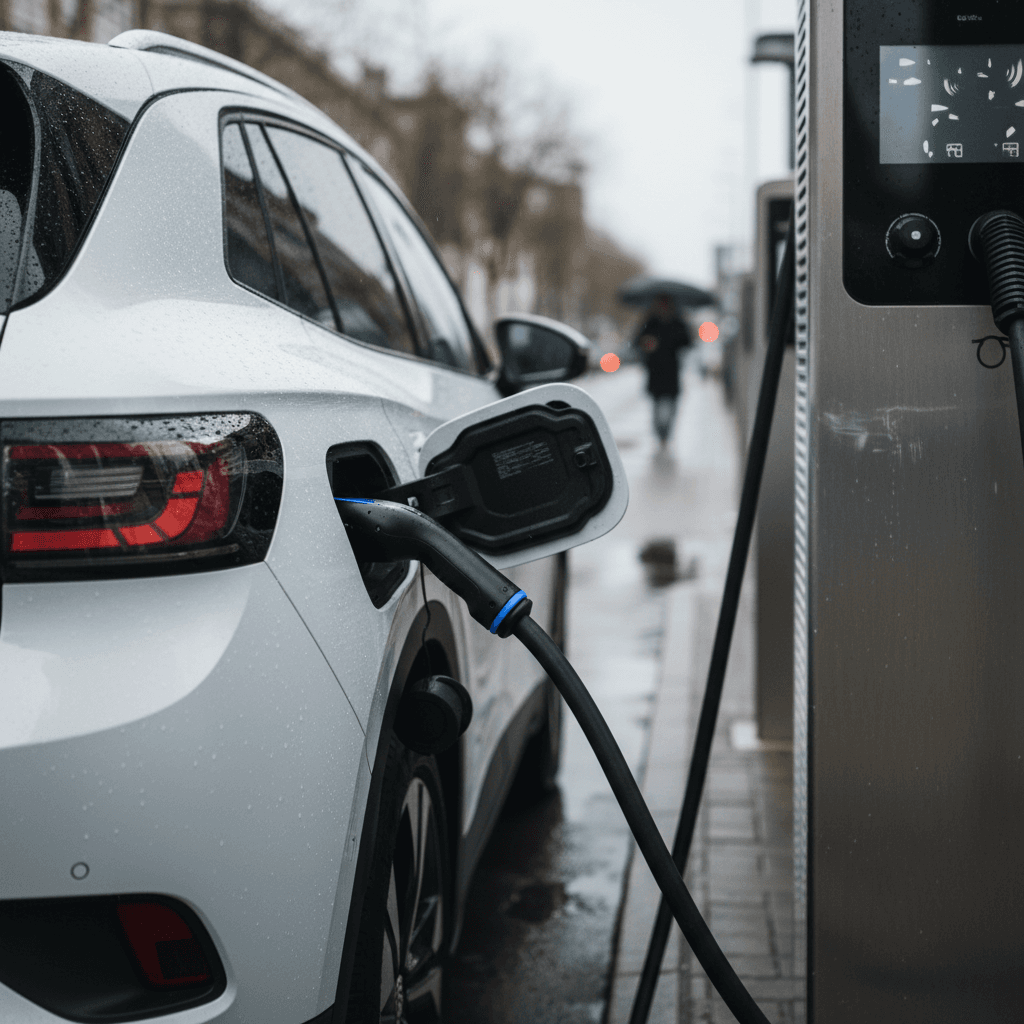
Every 2023 VW ID.4 uses the **CCS1 fast‑charging standard** and an 11 kW onboard AC charger. Translation: it works with essentially every non‑Tesla public DC fast charger in North America, and it plays nicely with most Level 2 home chargers you might install in your garage or carport.
How long does the 2023 ID.4 take to charge?
Approximate times from low state of charge to about 100% for typical U.S. setups.
Level 1 (120V wall outlet)
Included cord, no electrician needed, but painfully slow.
- 2–3 miles of range per hour of charging.
- Think of it as emergency or overnight top‑off only.
Level 2 (240V home or public)
Where most ID.4 miles are added.
- Up to 11 kW AC charging.
- Roughly 7–8 hours to refill the big 82 kWh pack from low.
- Easy overnight full charges if you plug in each evening.
DC fast charging (public)
For road trips and big days.
- Up to 135 kW on most 2023 packs; some later 82 kWh units can surge higher for short bursts.
- About 30–36 minutes from 10–80% on a capable charger.
- Charging slows past 80%, so it’s usually smarter to unplug and drive.
Electrify America perk
Recent fast‑charging safety guidance
On-road driving impressions
If the Tesla Model Y is the loud guy at the bar telling you about his crypto portfolio, the ID.4 is his quietly successful cousin who leaves early to get the kids to soccer practice. This is not a performance EV, nor is it trying to be. It is tuned for calm, almost to a fault.
- **Ride & refinement:** The ID.4’s long wheelbase and multi‑link rear suspension deliver a settled, almost plush ride by EV standards. On 19‑inch wheels it soaks up broken pavement with a composure missing from some rivals.
- **Acceleration:** Rear‑drive models feel brisk enough around town, with instant torque masking the modest 201 hp. The AWD versions add genuine shove, but never quite cross into "fast" territory in the way a Model Y Long Range does.
- **Handling:** The low battery and rear‑drive layout give the ID.4 an easy, balanced demeanor. It prefers smooth, progressive inputs to canyon‑carving theatrics. Steering is light and a bit numb, but accurate.
- **Noise:** One area where VW nailed the brief. Wind and road noise are pleasantly hushed, and the powertrain is nearly silent. At 70 mph, it feels like a well‑insulated gas SUV coasting in top gear.
Daily-driver sweet spot
Interior, space & tech: Calm cabin, fussy software
Volkswagen has been here before: the 2023 ID.4’s **cabin is wonderfully practical**, and the **software is infuriating in small, daily ways**. It’s the digital equivalent of a German kitchen with drawers that open the wrong direction.
Inside the 2023 ID.4
What you and your passengers will actually notice day to day.
Space & comfort
- Plenty of legroom in both rows; adults can sit behind adults without recrimination.
- Flat floor makes the middle rear seat more usable than in many compact SUVs.
- A generously sized cargo area with a wide opening and low load floor, perfect for strollers, dogs, and warehouse‑club hauls.
- Seats are on the firm side of comfortable, as per Volkswagen tradition.
Screens & controls
- Most trims get a 12-inch central touchscreen with navigation and wireless Apple CarPlay/Android Auto.
- Minimal physical buttons; many basic functions live behind soft keys and touch sliders.
- Frequently criticized haptic sliders for volume and climate lack backlighting and tactile feedback.
- The tiny driver display moves with the steering column and is simple but effective.
The minimalist era is ending
Infotainment & software
The core system looks sharp and is reasonably quick once booted, but there are still occasional freezes, lagging menus, and taps that don’t register. Over‑the‑air updates have improved things, but this remains a sore spot among owners.
Wireless phone integration works well when it works, and will occasionally refuse to connect just when you’re late for work. Hardly unique in 2020s infotainment, but worth factoring into your tolerance for tech drama.
Practical details
Here’s where the ID.4 feels deeply thought‑out. Deep door bins, clever center‑console dividers, a low cargo floor, and wide rear doors all conspire to make it an easy family tool. The lack of a large front trunk ("frunk") is a missed opportunity, but most owners won’t care once they see how usable the rear area is.
Materials are generally solid if unspectacular, more durable Ikea than designer furniture, with a few hard plastics in lower areas that remind you this started life as a mainstream compact SUV, not a luxury toy.
Safety, driver assistance & crash ratings
The 2023 VW ID.4 leans hard into safety tech. Every trim comes standard with a comprehensive suite of driver‑assistance features, and U.S. crash‑test agencies have generally been kind to the ID.4 platform.
- Automatic emergency braking with pedestrian detection.
- Blind‑spot monitoring and rear cross‑traffic alert.
- Adaptive cruise control with lane‑centering (Travel Assist).
- Lane‑keep assist and lane‑departure warning.
- Front and rear parking sensors, with available Park Assist Plus automated parking.
- Available surround‑view cameras (Area View) on upper trims.
Crash performance
Reliability, recalls & battery health
No modern EV is entirely free of drama, and the 2023 ID.4 has had its share. Early‑build software quirks, 12‑volt battery issues, and public‑charging compatibility gremlins have all generated owner complaints. More recently, a high‑voltage battery recall has brought unwelcome headlines.
What to check before you buy a used 2023 ID.4
Confirm open recalls
Run the VIN through a VW dealer or NHTSA’s website to see if your prospective ID.4 is affected by the high‑voltage battery recall or any other campaigns. Make sure software updates and any required hardware fixes are complete, or scheduled in writing.
Ask for battery health data
The ID.4’s battery is covered by an 8‑year / 100,000‑mile warranty against excessive capacity loss, but not all degradation is equal. A detailed battery‑health report, like the <strong>Recharged Score</strong>, gives you a percent‑capacity snapshot so you’re not buying a 70% battery in a 100% body.
Test fast‑charging behavior
If possible, plug into a DC fast charger and watch how quickly the car ramps up to speed and whether it holds a strong rate through 50–60%. Weird drops or fault messages can signal issues that need attention before you sign anything.
Verify software level
Ask the seller which software version the car is on and whether major over‑the‑air updates have been applied. Some updates improve charging performance, driver‑assist behavior, and general stability.
Inspect tires and brakes
Like many EVs, the ID.4 is heavy. That can mean faster tire wear and more expensive replacements. Check for uneven wear and budget accordingly; regen braking tends to be kind to pads and rotors.
Review previous charging habits
If you can, get a sense of how the previous owner charged, mostly at home to 80%, or constantly at 100% on DC fast chargers. The former is battery‑friendly; the latter is a red flag for long‑term health.
Battery recall: don’t ignore it
2023 ID.4 vs competitors
In 2023, the ID.4 lined up primarily against the Tesla Model Y, Hyundai IONIQ 5, Kia EV6, and Ford Mustang Mach‑E. On a spec‑sheet arms race, it can look outgunned. In the real world, the picture is subtler.
2023 VW ID.4 vs key rivals (big picture)
How the 2023 ID.4 stacks up against other popular electric crossovers.
| Model | Strengths | Weaknesses | Who it suits best |
|---|---|---|---|
| VW ID.4 | Calm ride, roomy cabin, approachable driving manners, competitive range on big battery. | Fussy infotainment, no frunk, not the quickest or flashiest. | Drivers who want a "normal" feeling EV crossover for family duty. |
| Tesla Model Y | Excellent efficiency, vast Supercharger network, strong performance, slick software. | Harsher ride, minimalist interior not for everyone, build‑quality roulette. | Road‑trippers and tech‑forward buyers who prioritize charging network and speed. |
| Hyundai IONIQ 5 | Ultra‑fast 800V charging, striking design, great ride quality and cabin. | Limited cargo compared with ID.4, rear visibility, some trims pricier. | Design‑conscious buyers who fast‑charge often and value interior design. |
| Kia EV6 | Sporty feel, fast charging, stylish cabin, strong performance trims. | Lower roofline compromises rear headroom, smaller cargo area. | Drivers who want a sportier EV with road‑trip‑friendly charging. |
| Ford Mustang Mach‑E | Fun to drive, familiar Ford dealer network, good performance options. | Tighter rear seat and cargo than ID.4, mixed fast‑charging experiences. | Brand loyalists and drivers who care about styling and performance. |
Comparisons are generalized and can vary by specific trim; always compare detailed specs when shopping.
How to cross‑shop smartly
Is a used 2023 VW ID.4 a good buy?
On the used market, depreciation has turned the 2023 ID.4 into a quietly compelling value. You’re getting a modern EV platform, respectable range, a practical cabin, and a long battery warranty, often for less than a comparably equipped gas SUV once you factor in fuel and maintenance savings.
2023 VW ID.4 pros and cons
The short list before you go schedule a test drive.
What the ID.4 does well
- Comfort-first tuning that makes commuting and family duty genuinely relaxing.
- Spacious, flat-floored interior with real room for adults in both rows.
- Competitive range, especially on 82 kWh Pro and AWD Pro models.
- CCS compatibility with most non‑Tesla fast‑charging networks.
- Solid safety credentials and comprehensive driver‑assist tech.
- Now affordably priced used relative to many rivals.
Where it falls short
- Infotainment frustrations and touch‑slider controls that many owners come to dislike.
- No frunk and less clever storage than some cutting‑edge rivals.
- Not a performance EV; acceleration is fine, not thrilling.
- Ongoing recalls and software updates require an informed, engaged owner.
- Resale may lag trendier brands in some markets.
Where Recharged fits into the picture
Ready to find your next EV?
Browse Vehicles2023 VW ID.4 FAQ
Frequently asked questions about the 2023 VW ID.4
Bottom line: Who should buy a 2023 ID.4?
The 2023 VW ID.4 is not the headline‑grabber of the EV world. It doesn’t set drag‑strip records, it doesn’t have falcon‑wing doors, and it won’t turn your driveway into a YouTube channel. What it does instead is more radical in its own way: it makes driving electric feel boringly, blessedly normal.
If you want an electric SUV that rides comfortably, hauls kids and cargo without complaint, and can handle most American commutes on a single charge, the 2023 ID.4, especially in 82 kWh Pro or AWD Pro trim, deserves a long look. Go in with clear eyes about the infotainment quirks and the recall landscape, get a solid battery‑health report, and you can end up with a quietly excellent EV for the price of a very ordinary gas crossover.
And if you’d rather not sort through battery reports, recall notices, and auction‑lot mysteries yourself, that’s where Recharged comes in. Every ID.4 on our marketplace includes a Recharged Score battery‑health report, transparent pricing, and end‑to‑end support, from trade‑in to financing to delivery, so owning an electric Volkswagen feels as straightforward as it drives.