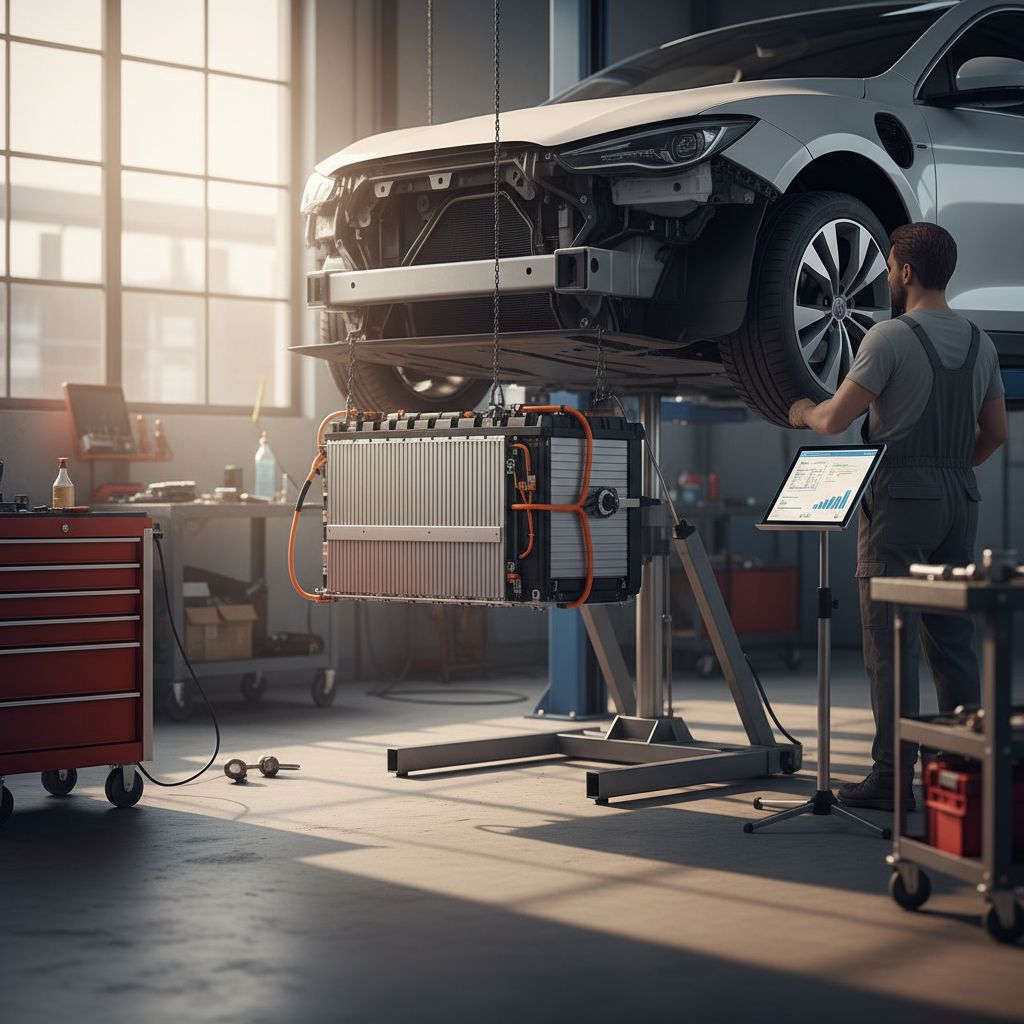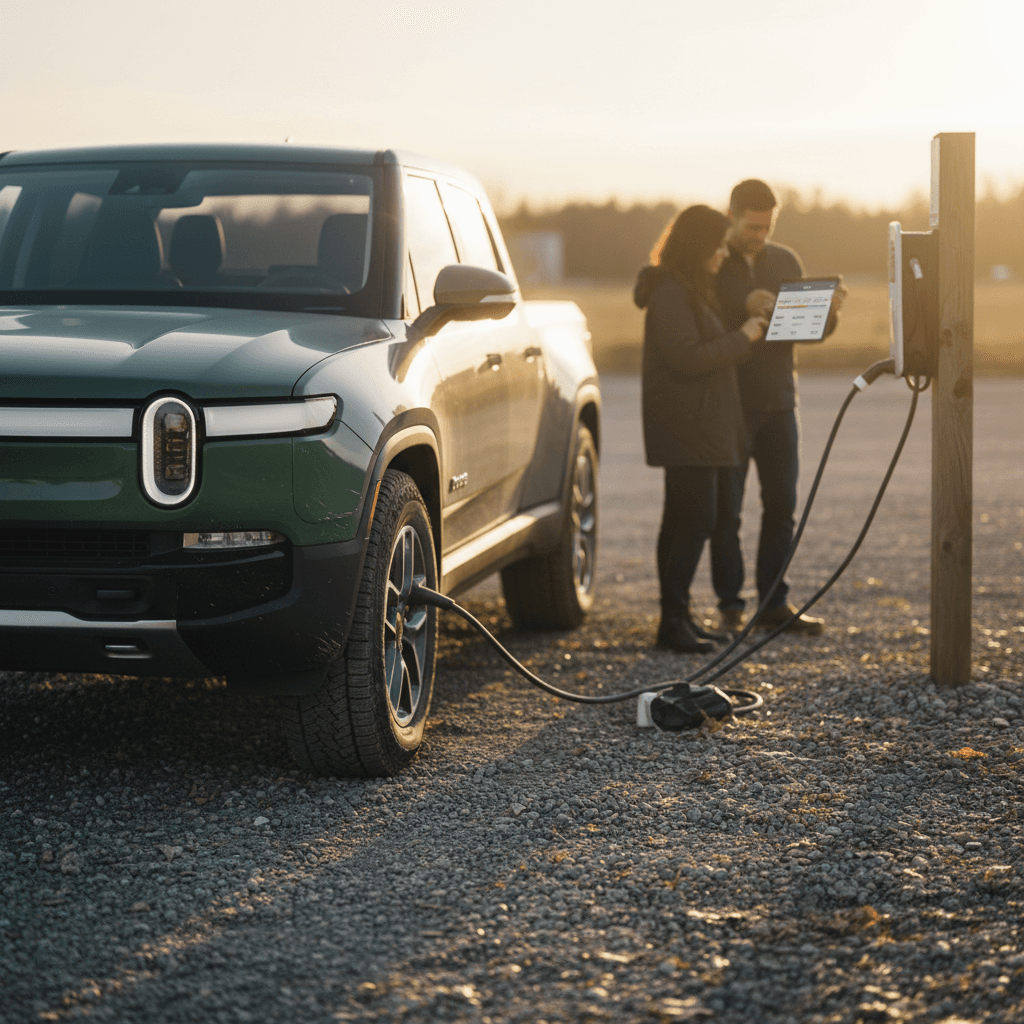
If you’re hunting for a **used Rivian R1T**, you’ve probably heard everything from “avoid the first year” to “wait for the 2025 refresh.” The truth lives in the middle. Every R1T generation has its own mix of price, range, reliability, and tech, and the *best year to buy used* depends on what kind of driver you are and how you’ll actually use this truck.
Big picture on used R1Ts
How to think about the “best year” for a used Rivian R1T
Before we crown any one model year as *the* best used Rivian R1T, it helps to define what “best” even means. For some buyers, it’s **lowest entry price**. For others, it’s **maximum range and capability**, or **fewest headaches** over the next 5–8 years.
Three ways to define the “best” used R1T
Price, peace of mind, or maximum performance?
Best for value
Focus on:
- Purchase price vs. remaining warranty
- Battery health and real-world range
- Expected depreciation
Best for reliability
Focus on:
- Later build quality and software maturity
- Recall campaign history
- Fewer reported trouble spots
Best for performance & tech
Focus on:
- Latest powertrains and battery chemistry
- Updated driver-assistance hardware
- OTA support and feature roadmap
Start with your use case
Rivian R1T model year overview: 2022–2025
Rivian R1T model-year snapshot (2022–2025)
High-level summary; individual trucks may differ by configuration and options.
| Model year | What’s notable | Battery options (headline) | Key pros | Key watch-outs |
|---|---|---|---|---|
| 2022 | Launch year, mostly Quad Motor with Large/Max packs | Large, Max | Strong performance, generous early-adopter spec lists, often well-optioned | First-year build quirks, more recalls, software glitches, higher initial price so slower depreciation |
| 2023 | Software and feature updates (Kneel mode, Camp mode), slight range bump | Large, Max | Range improvements (up to ~328 miles in some configs), suspension and usability tweaks | Still early-production reliability issues; some recall campaigns to confirm |
| 2024 | Dual Motor and Performance Dual dominate, Quad less common; more real-world data on reliability | Standard, Large, Max | More variety in price and spec, better understood issues, more owners and service learnings | Some recalls and Consumer Reports data showing below-average reliability |
| 2025 | Second-generation R1T: new motors, battery architecture, tri- and updated quad-motor, new LFP Standard pack | Standard (LFP), Large, Max | In-house motors, improved electrical architecture, updated driver-assist hardware, up to ~420 miles of range with Max pack | Too new for long-term reliability data; early-production refresh risk; pricing still closer to new than earlier used years |
Battery ranges are manufacturer estimates when new.
Model year vs. build date
Quick ranking: best used R1T years by buyer type
Best used Rivian R1T years at a glance
If you want a **simple answer**: for most shoppers in 2026, a **well-documented 2024 R1T**, or a **late-build 2023** with strong service records, is the sweet spot. You get newer hardware and software than 2022 trucks, without paying the premium that 2025 second-gen models still command on the used market.
Price and value: how far your dollar goes
Used Rivian R1T pricing is a moving target, driven by EV incentives, interest rates, and Rivian’s own new-vehicle price changes. But some patterns are clear when you compare **2022–2024 trucks** against early **2025 refresh models**.
2022–2023: Depreciation is your friend
- These are the oldest R1Ts on the market, so they’ve taken the steepest hit from new-vehicle depreciation.
- Many are higher-trim or Launch Edition trucks with generous equipment, air suspension, off-road packages, and Max pack batteries, priced far below their original window sticker.
- Great for shoppers willing to trade some early-production quirks for a lower payment.
2024–early 2025: You pay for youth
- Newer builds hold value better, especially Dual Motor Max pack trucks that balance range and price.
- Second-generation 2025 R1Ts with revised motors and electrical architecture are still close enough to new that discounts are slimmer, though deals can appear if new-Rivian incentives or market shifts hit.
- Ideal if you want the latest tech but still want to skip the first year of ownership depreciation.
Where Recharged fits in on price
Battery packs, range, and future-proofing
Battery choice is one of the biggest reasons shoppers ask about the **best year to buy a used Rivian R1T**. Range has improved over time, and the 2025 second-gen trucks introduced a new **lithium-iron-phosphate (LFP) Standard pack** alongside revised Large and Max packs with updated construction.
Rivian R1T battery pack highlights by era
Representative figures; actual range depends on configuration, wheels, driving style, and conditions.
| Era / model years | Battery pack | Chemistry | Approx. EPA / Rivian-estimated range when new (R1T) | Why you might want it |
|---|---|---|---|---|
| 2022–early 2024 | Large / Max | Nickel-rich lithium-ion | Roughly high-200s to mid-300s miles depending on motor and wheels | Strong range for towing and road trips; common on early Quad Motor builds. |
| Mid 2023–2024 | Updated range tuning | Same cells, software tweaks | Some configurations around ~328 miles | Software updates squeezed out a bit more range versus launch trucks. |
| 2025+ Standard | LFP (lithium-iron-phosphate) | LFP | Around 270 miles (Rivian estimate) | Chemistry favors longevity and simpler serviceability; good for shorter commutes and local use. |
| 2025+ Large | Reengineered Large pack | Li-ion with new enclosure | Around 330 miles (Rivian estimate) | Simplified, lighter pack with solid range; likely the mainstream sweet spot. |
| 2025+ Max | Revised Max pack | Li-ion high capacity | Up to ~420 miles (Dual Motor R1T estimate) | Road-trip hero and towing champ; best if you need every mile of range. |
Range estimates are for new vehicles; used range depends heavily on battery health.
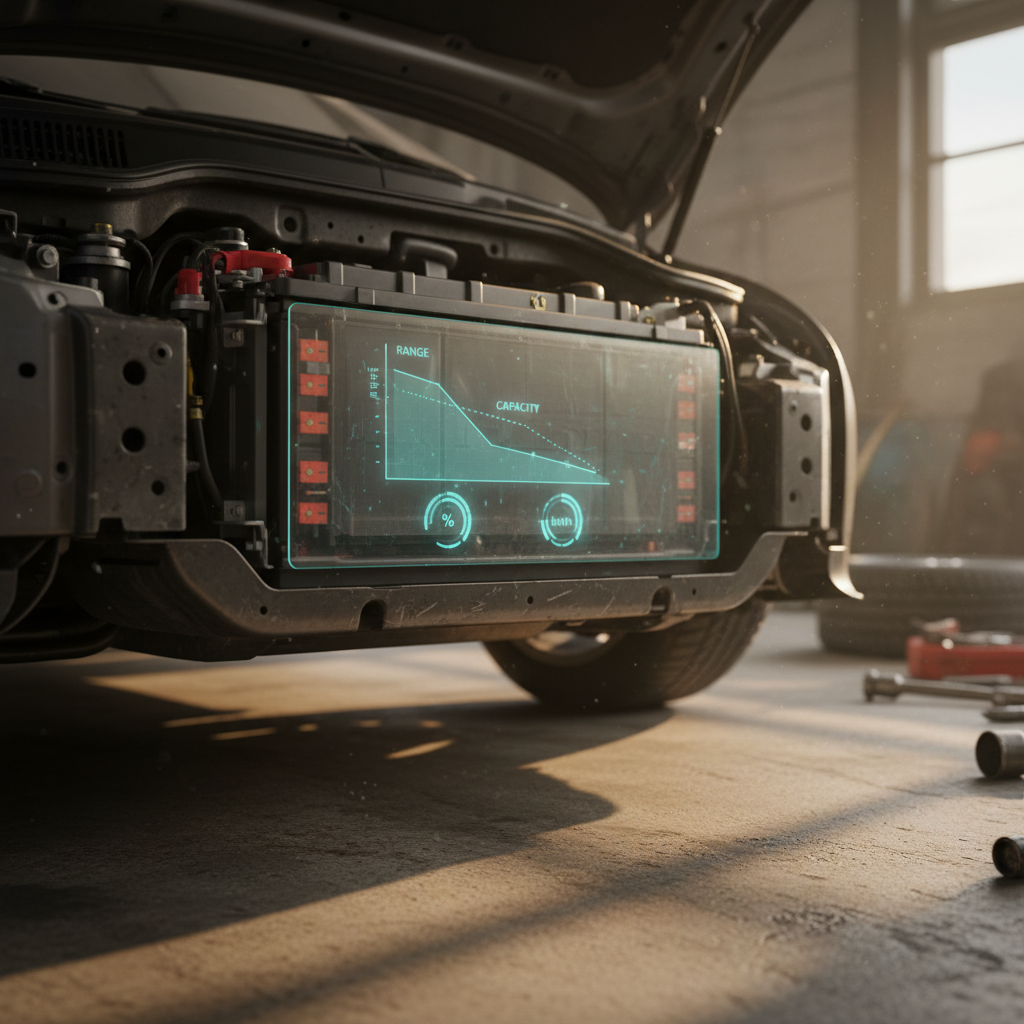
What about battery degradation?
Reliability and ownership experience
Early R1Ts were packed with cutting-edge tech and a very ambitious software stack. That’s thrilling when new, and a little nerve-wracking when you’re shopping used. Independent surveys and owner forums have painted a mixed picture, especially for first-wave trucks.
- Consumer reliability studies around 2023–2024 placed the R1T among the **less reliable models** in the market at the time, with issues clustered around in-car electronics, body hardware, and minor noises/trim rather than catastrophic failures.
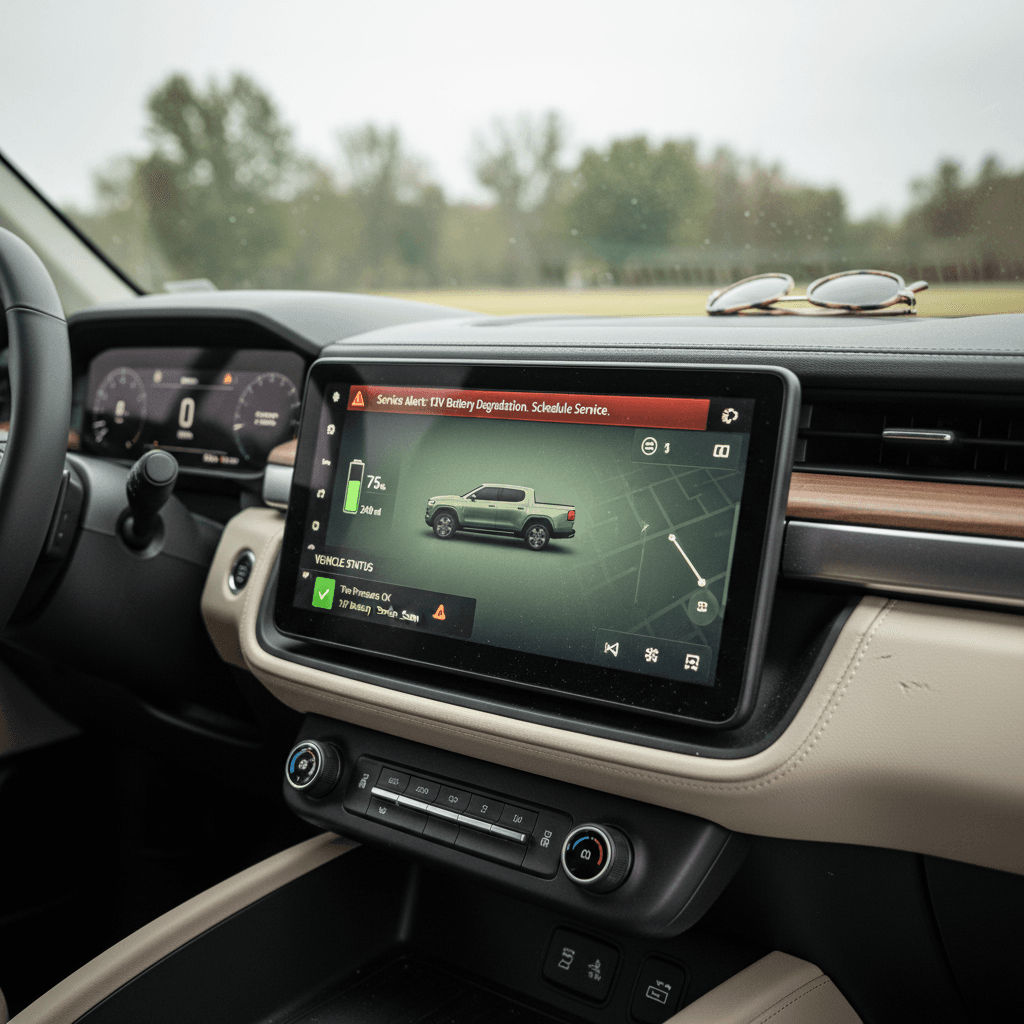
- Rivian has issued multiple **recall campaigns and over-the-air (OTA) software updates** addressing driver-assistance behavior, airbags, pillar trim clips, headlight aiming, and more.
- By the 2025 second-generation refresh, Rivian reworked the **electrical architecture**, cutting the number of control units and removing significant wiring length and weight to simplify service and reduce failure points.
Don’t ignore recall history
2022–early 2023: Early adopter territory
These trucks brought Rivian to market. The upside: you often get Quad Motor power and rich option packages for less money. The tradeoffs: more reports of software gremlins, occasional sensor or camera replacements, and trim or weatherseal noises. Many of those issues are addressed under warranty, but you’ll want documentation.
Late 2023–2025: Maturing hardware and software
Later builds benefit from Rivian’s learning curve. The second-gen 2025 trucks go a step further with redesigned electronics and driver-assistance hardware. Long-term reliability data is still thin, but if you’re risk-averse, a **late-build 2023 or newer** truck with clean service history is the safer bet.
Features, tech, and driving experience
Every R1T, regardless of year, feels like a premium adventure truck: air suspension, fast acceleration, four-corner air with impressive off-road modes, and a cabin that leans more Scandinavian loft than work-truck vinyl. But there are meaningful differences as you move through the years.
How R1T features evolved by year
Highlights you’ll actually notice day to day
2022–2023: Core personality
- Quad Motor performance widely available, with instant torque and true off-road chops.
- Early software added Camp mode and Kneel mode for easier loading and camping.
- Infotainment is already modern, but more prone to glitches in early builds.
2024: Refinement & variety
- Dual Motor and Performance Dual options broaden price and range combinations.
- More OTA polish, from charging behavior to driver-assist tuning.
- Better real-world owner feedback to guide your choices.
2025: Second-generation leap
- In-house motors and refined suspension tuning for smoother, more efficient performance.
- New driver-assistance hardware (more cameras and radars) and updated autonomy platform.
- Revised battery packs and improved serviceability under the skin.
Good news for used buyers
Which R1T year fits you best? Real-world scenarios
Instead of chasing an abstract “best year,” anchor your choice to how you’ll drive, where you live, and how much uncertainty you’re comfortable with.
Match your R1T model year to your life
Budget-conscious daily driver
Look for a **2022 or early 2023** R1T with a solid service history and documented recall work.
Prioritize **battery health** over absolute options, Range matters more than fancy trim if you commute or road-trip.
Dual Motor trucks may be slightly newer but can cost more; a discounted Quad Motor 2022 can be a screaming deal if you’re okay with some early-build quirks.
Adventure & overlanding household
Focus on **Max pack** trucks regardless of year; the extra range is gold when you’re off the grid.
A **2023–2024** R1T balances price and updated hardware, but don’t overlook a well-kept 2022 with underbody protection and off-road tires.
If budget allows, a **2025 Dual Motor Max** brings the best range of the bunch, but expect to pay closer-to-new pricing in 2026.
Risk-averse family buyer
Aim for a **late-build 2023 or 2024** truck, ideally with warranty remaining that stretches several years into your ownership.
Check for clean repair and OTA history, fewer visits for software gremlins makes family life easier.
If you stretch to a 2025, favor ones with clear documentation on software updates and any driver-assist recalls already handled.
Tech-forward early adopter (again)
You loved being first in line once and you’re ready to do it again.
A **2025 second-gen R1T** gives you the newest motors, electronics, and battery architecture.
Just go in eyes open: you’re trading long-term reliability data for bleeding-edge tech. Buy from a seller who can walk you through coverage and service support.
Inspection checklist for any used R1T
Whatever year you choose, a used Rivian R1T deserves a more careful once-over than a basic gas pickup. You’re buying a rolling software platform with a big, expensive battery at its core.
Essential checks before you buy a used Rivian R1T
1. Verify battery health and range
Ask for a **battery health report** or have one generated. Compare the displayed full-charge range (in the truck) to what Rivian estimated when new, accounting for climate and wheel size. At Recharged, this is part of the Recharged Score so you don’t have to guess.
2. Review recall and service history
Confirm all **open recalls** are addressed, including airbag trim, headlight aiming, and any driver-assist software campaigns. Look for repeated repairs in the same area (like cameras or door seals), which can hint at lingering issues.
3. Inspect body, seals, and glass
Check for uneven panel gaps, wind noise on a test drive, water staining in the cabin, and any signs of prior collision repair. Pay extra attention around the powered frunk, tailgate, and gear tunnel doors.
4. Test every electronic system
Cycle the air suspension through its modes, test all cameras and parking sensors, verify phone-as-key and key fob function, and explore the infotainment system for lag, random reboots, or broken apps.
5. Evaluate charging behavior
If possible, DC fast charge the truck and confirm it reaches reasonable power levels for its pack (accounting for battery temperature and state of charge). At home or on Level 2, confirm it charges reliably without errors.
6. Confirm tire and brake condition
R1Ts are heavy and powerful; they eat tires faster than a commuter sedan. Uneven tire wear can point to alignment or suspension issues. Check for rotor scoring or vibration under braking.
Avoid buying “range-blind”
How Recharged evaluates used Rivian R1T trucks
When you shop a used R1T through Recharged, you’re not just looking at pretty photos and an asking price. Every truck comes with a **Recharged Score Report** that makes all the invisible EV questions visible.
What the Recharged Score tells you on a used R1T
Clarity on the stuff that’s hard to see in a test drive
Verified battery health
Fair market pricing
Condition & history transparency
On top of that, Recharged offers **financing, trade-in options, and nationwide delivery**, plus EV specialists who can talk through whether a 2022 Max pack Quad or a 2024 Dual Motor Large is the smarter call for your lifestyle. You can handle the whole process digitally or visit the Recharged Experience Center in Richmond, VA if you prefer to see and feel a truck in person.
FAQ: best used Rivian R1T years
Frequently asked questions about used Rivian R1T model years
Bottom line: choosing your used Rivian R1T
There isn’t a single magic **best year to buy a used Rivian R1T**. Instead, there are smart choices for different kinds of drivers. Budget-focused buyers and performance hunters can do very well with **2022–2023 trucks**, especially Max pack or Quad Motor builds with strong documentation. Shoppers who want a calmer ownership experience should start their search with **late 2023 and 2024** R1Ts. And tech chasers who want the newest motors and battery architecture will gravitate toward **2025 second-generation trucks**, trading higher price and limited reliability data for cutting-edge hardware.
If you’d rather not untangle all of that alone, shopping through **Recharged** gives you a shortcut: **verified battery health, fair market pricing, and transparent condition scoring** on every R1T, plus EV specialists who live and breathe this stuff. Pick your priorities, price, reliability, range, or tech, and we’ll help you find the model year that makes the most sense for how you actually drive.