If you drive or are shopping for an electric vehicle, understanding EV charging stations in Raleigh, NC is just as important as knowing your battery size. The Triangle has become one of the Southeast’s quieter EV success stories: a growing web of Level 2 and DC fast chargers, campus and park pilots, and utility programs that make home charging more affordable. This guide walks through where to charge, what it costs, and how to combine public and home charging so life with an EV in Raleigh feels boring, in the best possible way.
Raleigh is quietly well-covered
Why EV charging in Raleigh matters in 2026
Raleigh’s growth, tech-heavy workforce, and relatively long commutes make charging infrastructure more than just a climate talking point. The city’s Community Climate Action Plan and a new clean transportation ordinance are pushing more EV-ready parking in new multifamily and mixed-use developments, while state and federal funds are expanding fast charging along major corridors. At the same time, Duke Energy’s EV programs and falling used-EV prices mean a lot more people are considering their first electric car rather than another gas sedan.
EV charging snapshot: Raleigh & the Triangle
Coverage is good, redundancy is not
The main EV charging networks in Raleigh
When you search for EV charging stations in Raleigh, NC, most of what you’ll see falls under a few familiar logos. Understanding how these networks work makes it much easier to choose apps, cards, and routes.
Key public charging networks around Raleigh
You’ll see these brands from downtown to the suburbs
ChargePoint
Widespread Level 2 coverage at offices, parking decks, hotels, and retail, plus some DC fast chargers on the edges of the metro.
- Common in city-owned decks and private garages
- Connects to many workplace chargers
- Good for daily top‑ups while you’re parked
Electrify America & EVgo
DC fast charging networks concentrated along I‑40 and near major shopping centers.
- 150–350 kW fast charging for road trips
- Often near Targets, Walmarts, and travel plazas
- Best for 20–45 minute 0–80% sessions
Tesla Supercharger
Tesla’s NACS-based network is still the gold standard for reliability and uptime.
- Essential for Tesla owners
- Increasingly usable by other brands via adapters
- Key sites along I‑40, US‑1, and in major retail hubs
Start with PlugShare or A Better Routeplanner
Best areas to find EV charging stations in Raleigh, NC
Raleigh’s chargers aren’t evenly sprinkled on every corner. Instead, they cluster around predictable “nodes”: structured parking downtown, campuses, shopping centers, and major highway exits. Here’s how to think about the city in charging terms.
Downtown Raleigh EV charging: decks, streets, and walkable spots
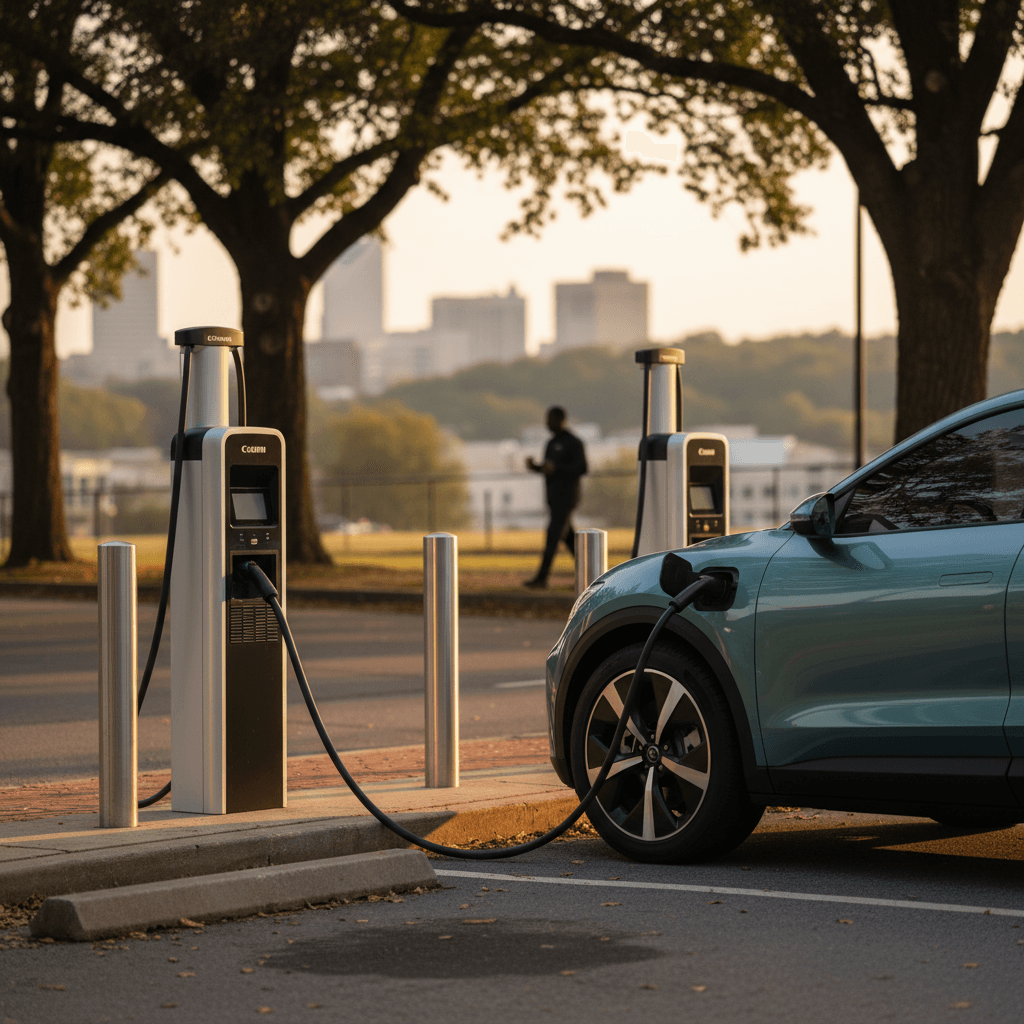
The City of Raleigh maintains an interactive parking map that layers EV charging icons over city-owned decks and lots. That’s your best starting point if you regularly visit downtown for work, events, or museums. Public chargers are commonly tucked into decks near Fayetteville Street, the convention center, and state government buildings, with a mix of paid parking plus either free or metered electricity.
- City-owned parking decks downtown with Level 2 ChargePoint stations, ideal for 3–4 hour visits to offices, restaurants, or museums.
- On-street or surface-lot chargers near cultural anchors like the NC Museum of Natural Sciences and the NC Museum of History.
- Privately owned garages attached to newer mixed‑use buildings, which often include a handful of resident‑only EV spots plus a few public ones.
Use the city’s interactive map
Campuses, RDU, and the RTP corridor
The Research Triangle’s universities and office parks have been quietly building a lot of the most useful Level 2 charging in the region. NC State, downtown Raleigh’s big institutional anchor, has expanded transportation-managed EV charging on campus with stations in major parking decks that are open to campus affiliates and visitors. Similar trends are playing out at Wake Tech and across RTP office campuses.
- NC State University: Multiple Level 2 stations in campus decks; good if you’re there for classes, sports, or events.
- RDU International Airport: DC fast and Level 2 options in and around airport parking, plus additional fast charging just off I‑40 for pre‑ or post‑flight top‑ups.
- RTP & I‑40 corridor: Clusters of fast chargers at big-box retail and travel stops between Raleigh and Durham, useful for commuters and road trippers.
Parks, malls, and suburban hubs
Beyond downtown, public EV infrastructure in Raleigh, NC is increasingly found where people already spend an hour or two: parks, shopping centers, and suburban town centers. The city is piloting solar-powered mobile chargers at parks such as Anderson Point, Brier Creek, and Carolina Pines, these Level 2 units can be moved to underserved neighborhoods as data comes in on usage. Meanwhile, suburban hubs in North Raleigh, Brier Creek, Cary, and Knightdale pair retail with fast charging.
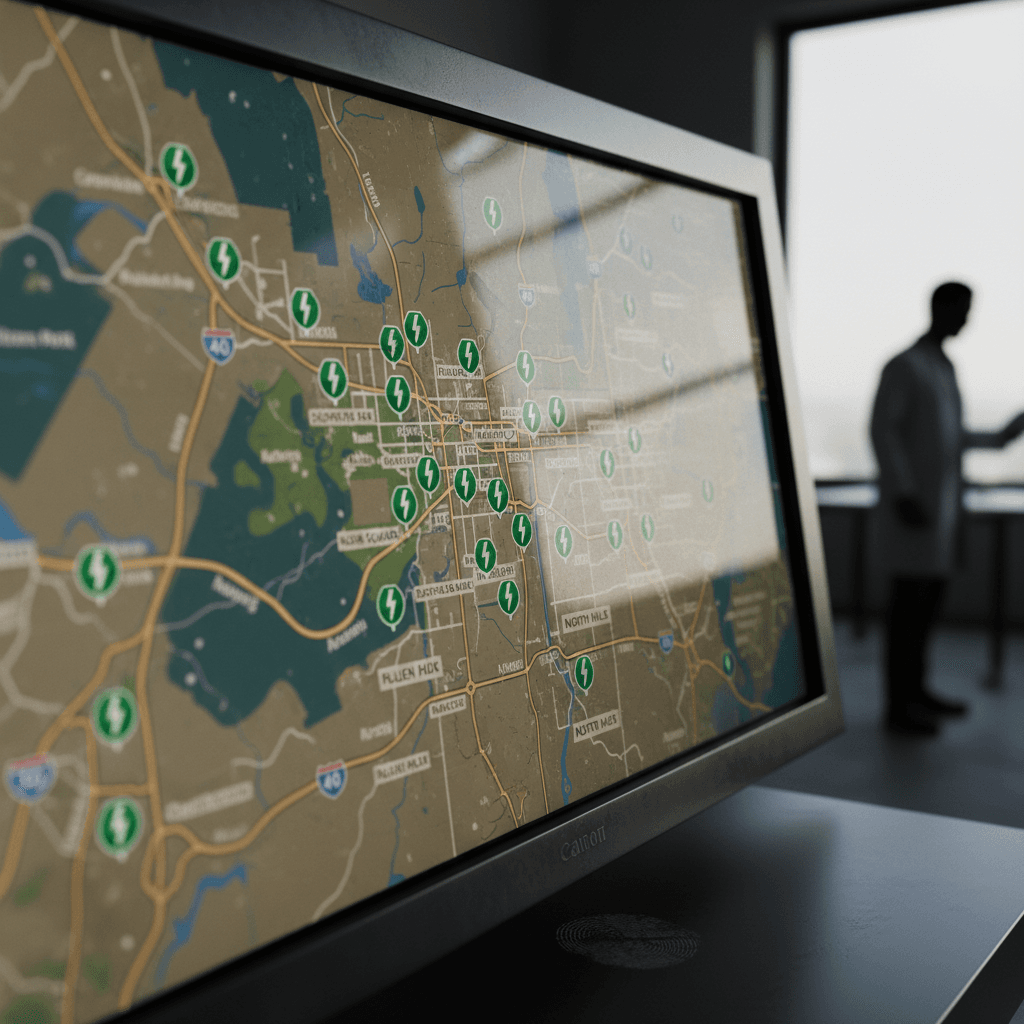
Where to look for EV charging around Raleigh
Use this as a mental map rather than an exhaustive list, always verify availability in an app before you drive.
| Area / Hub | Typical Charger Type | Best Use Case | Notes |
|---|---|---|---|
| Downtown Raleigh decks | Level 2 (7–11 kW) | Workdays, evening events, museums | Check city parking map; you’ll pay for parking even if charging is free. |
| NC State & other campuses | Level 2 | Classes, games, conferences | Some require permits or visitor passes, read signs carefully. |
| Airport & I‑40 corridor | DC fast (50–350 kW) + Level 2 | Road trips, post‑flight top‑ups | Often Electrify America, EVgo, or Tesla; pricing varies by network. |
| Parks like Anderson Point, Brier Creek | Level 2, often solar‑powered | Dog walks, kids’ sports, weekend outings | Output can be modest; think “sip” not “full charge.” |
| Shopping centers & big-box retail | Mix of Level 2 and DC fast | Errands and groceries | Target, Walmart, and newer mixed‑use centers are common hosts. |
| Suburban town centers (North Hills, etc.) | Level 2 | Dinner, movies, gym visits | Useful for apartment dwellers without home charging. |
Public charging in Raleigh clusters near destinations with natural dwell time: offices, parks, airports, and regional shopping hubs.
Home vs public charging in Raleigh: what locals actually use
Most Raleigh EV owners do at least 80–90% of their charging at home overnight on Level 1 or Level 2. Public EV charging stations in Raleigh, NC then become either “safety nets” or road‑trip enablers rather than daily rituals. That’s why understanding your housing situation is the single biggest factor in whether an EV will feel effortless, or like a science project.
When home charging is easy
- You own a single‑family home or townhome with driveway or garage parking.
- Your panel can support a 240V circuit for a Level 2 charger.
- You’re on Duke Energy’s standard or EV‑optimized rate plan.
In this case, your car “refuels” while you sleep. A 32–40 amp Level 2 charger typically adds 25–35 miles of range per hour, more than enough to refill even a 60‑mile round‑trip commute overnight.
When you’re relying on public charging
- You rent in a building without dedicated EV spots.
- Street parking makes running a cord impossible or unsafe.
- Your workplace doesn’t yet offer charging.
Here, you’ll lean more heavily on downtown decks, workplace pilots, and retail‑adjacent chargers. It’s doable in Raleigh, but you must be honest about your schedule and nearest hubs.
Apartment and condo reality check
Home charging checklist for Raleigh residents
Confirm your parking situation
If you don’t have a dedicated driveway, garage, or deeded spot, assume that adding a hard‑wired Level 2 charger will be difficult. Focus instead on workplace and community chargers.
Check your electrical panel capacity
Look at your main breaker size and open slots, or have an electrician quote Level 2 installation. Duke Energy’s rebate and rental programs can offset panel upgrades and charger costs.
Decide between Level 1 and Level 2
If you drive under ~30 miles per day, a regular 120V outlet may be enough. Above that, or with frequent highway trips, a 240V Level 2 charger gives far more flexibility.
Explore Duke Energy EV programs
Duke’s Charger Prep Credit and Charger Solution rental can cover wiring and allow you to lease a Level 2 unit for a modest monthly fee, rather than paying everything upfront.
Pick a smart charging schedule
Shift most home charging to off‑peak hours when electricity is cheaper. Many EVs and smart chargers let you set automatic schedules aligned with Duke’s rate windows.
How much do EV charging stations cost in Raleigh?
Charging prices at EV stations in Raleigh, NC vary by network, site host, and whether you’re paying for parking separately. Home charging is usually cheapest per mile, but public charging can still undercut gas, especially on efficient EVs.
Typical EV charging costs in Raleigh (2026 ballpark)
Exact prices change, so always check your app before plugging in. These ranges reflect common experiences for Triangle drivers.
| Charging type | Where you’ll see it | How you’re billed | What it usually costs you |
|---|---|---|---|
| Home Level 1 / Level 2 | Driveway, garage, townhome | Per kWh on your Duke Energy bill | Around 3–4¢ per mile for many EVs, depending on your rate and driving efficiency. |
| Workplace Level 2 | Office garages and lots | Free, flat fee, or per kWh | Often heavily subsidized or free as an employee perk, perfect for topping off during the day. |
| Public Level 2 | Downtown decks, parks, retail | Session fee, hourly, or per kWh | Can range from free (with paid parking) to a few dollars for a multi‑hour stay. |
| DC fast charging | Highways & big-box retail | Per kWh, per minute, or session | More expensive per mile than home but cheaper than gas in many cases, best reserved for trips and emergencies. |
| Tesla Supercharger | Along I‑40, regional hubs | Per kWh via Tesla account | Competitive with other DC fast networks; pricing fluctuates by location and time of day. |
For most Raleigh drivers, mixing cheap home charging with occasional fast charging still beats the per‑mile cost of gasoline.
Optimize with EV-specific rate plans
Planning a Raleigh commute or Triangle road trip
Once you have a feel for where EV charging stations sit in Raleigh, NC, the next step is to match your car’s range to your real daily and weekly patterns. A 250‑mile crossover used mostly around the Beltline is a very different scenario from an older 150‑mile EV used for regular Charlotte or coast runs.
Trip-planning checklist for Raleigh EV drivers
Map your regular weekly stops
List your home, office, kids’ schools, gyms, and favorite grocery stores. Then check apps for Level 2 near those anchors, these are your “free” top‑up opportunities.
Identify your nearest reliable DC fast site
For most people, that’s a site along I‑40, US‑1, or a regional shopping center. Aim to have at least two different fast-charging options within 15–20 minutes of home.
Test a full week without public charging
If you already have an EV or are test‑driving, see if home and workplace charging alone can comfortably cover your mileage. If you’re constantly hunting for plugs, you may want a larger battery or better home setup.
Practice a mock road trip stop
Before a real vacation, try a DC fast session on a weekend. Learn how your car ramps up and tapers charging, how apps handle payment, and which stations feel trustworthy.
Plan around weather and traffic
Cold snaps, summer heat, and stop‑and‑go traffic affect real‑world range. Add a buffer, aim to arrive at fast chargers with 15–25% battery, not a nail‑biting 2–5%.
Don’t treat every plug as a sure thing
The future of EV charging in Raleigh
Raleigh’s next decade of charging will be shaped less by splashy ribbon‑cuttings and more by careful infill and regulation. The city’s clean transportation ordinance is designed to make EV‑ready conduit and power a default in new parking facilities, particularly in multifamily, hotels, standalone parking decks, and fuel stations. That doesn’t grab headlines, but it’s what prevents expensive retrofits in the 2030s.
How Raleigh’s charging landscape is evolving
Near term (2026–2028)
More Level 2 in city decks, parks, and public lots as pilots prove out demand.
Additional DC fast chargers built along I‑40, US‑1, and key corridors with federal NEVI funding.
Growing adoption of NACS ports and adapters, making Tesla sites more useful across brands.
Refinements to Duke Energy EV programs, with more emphasis on off‑peak charging and grid management.
Longer term (2028–2032)
EV‑ready wiring baked into most new apartments and mixed‑use projects by default.
Higher reliability expectations for all public fast-charging networks as EVs become mainstream.
More workplace and fleet depot charging, particularly around major employers in downtown and RTP.
Tight integration of real‑time charger status into navigation and city parking tools, reducing “charger roulette.”
Good news for used EV shoppers
How Recharged helps Raleigh EV buyers
Infrastructure is only half the equation; the other half is choosing an EV whose range, charging speed, and battery health actually fit how and where you’ll charge around Raleigh. That’s where Recharged focuses. Instead of treating all used EVs like interchangeable appliances, we look at how a car’s charging reality lines up with your daily life.
Make Raleigh’s charging network work for you
How Recharged fits into your EV decision
Verified battery health
Every vehicle on Recharged comes with a Recharged Score Report that measures real battery health, not just odometer miles. For Raleigh buyers, that means you can confidently choose between, say, a 150‑mile commuter EV and a 250‑mile road‑trip machine.
Charging-fit guidance
Our EV specialists talk through your home setup, commute, and Triangle travel patterns. We’ll help you decide whether Level 1 at home plus downtown decks is enough, or whether you should prioritize DC fast charging performance for regular I‑40 drives.
Modern retail without the hassle
Shop used EVs online, value your trade‑in, and arrange financing and nationwide delivery, or visit our Experience Center in Richmond, VA. From there, it’s a straight shot back to Raleigh with chargers mapped along the way.
If you’re in the Raleigh area and thinking about an EV, you don’t need to memorize every charging station. You need a car whose capabilities match the city’s current and future charging map. Recharged’s combination of transparent battery data, fair pricing, and EV‑savvy support is designed to make that match, and to keep your ownership experience as uneventful as possible.
FAQ: EV charging stations in Raleigh, NC
Frequently asked questions about EV charging in Raleigh
Raleigh may not have the wall‑to‑wall EV infrastructure of a coastal mega‑city, but it has something more important: a maturing, thoughtfully planned charging ecosystem that already works well for most day‑to‑day driving and is improving every year. If you match the right EV to your home setup and the city’s evolving network of decks, parks, campuses, and highway fast chargers, driving electric here can be as simple as parking, plugging in, and getting on with your life.