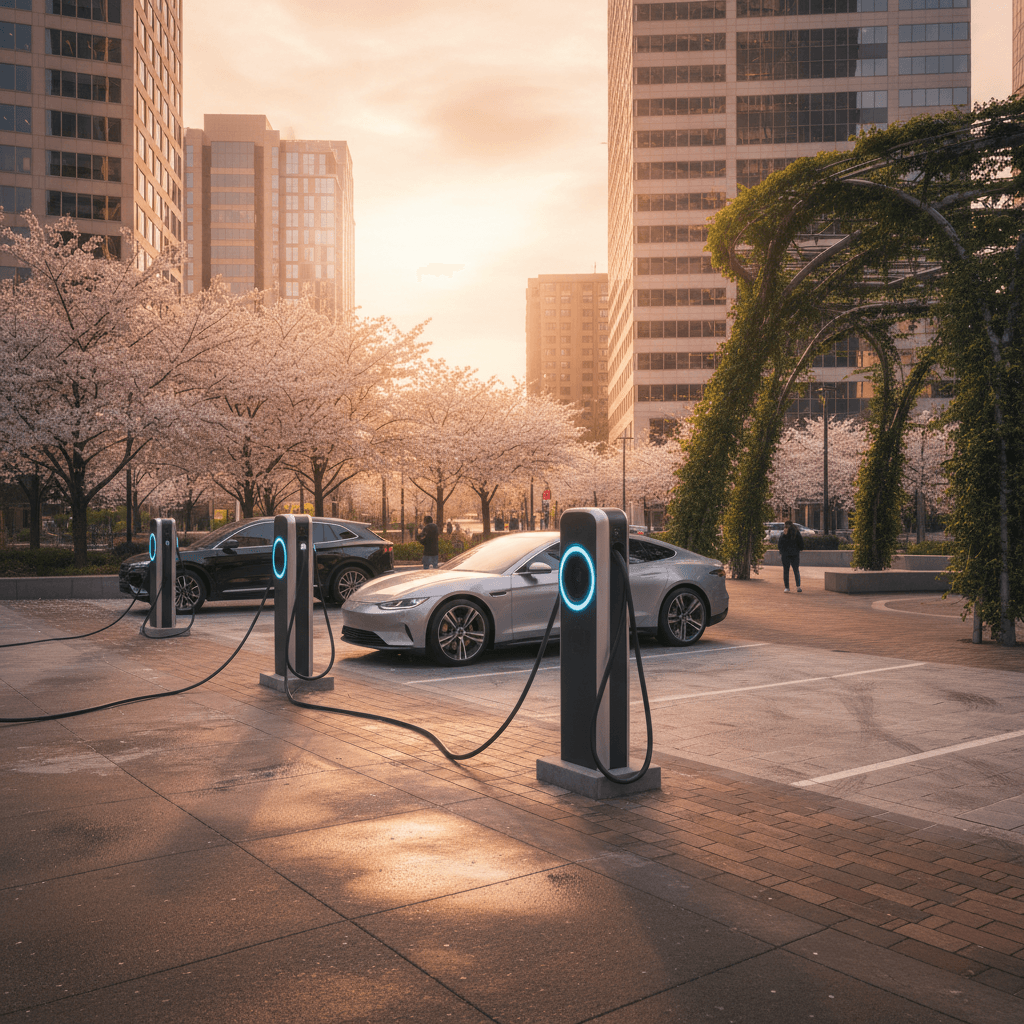
If you drive an electric vehicle anywhere near Howard County, the phrase “EV charging stations Columbia MD” probably lives in your search history. The good news: Columbia sits in the middle of a growing ring of Level 2 and DC fast chargers tied to everyday places, groceries, gyms, office parks, and the I‑95 corridor, so you can live a pretty normal life without turning range into religion.
Big picture for Maryland EV drivers
Why Columbia, MD is a surprisingly good place to own an EV
Columbia is a planned community dropped almost perfectly between Baltimore and Washington, D.C. That’s a sweet spot for EVs: you’re close to dense charging corridors on I‑95, Route 29, and Route 32, but your daily life usually happens inside a 10–25‑mile radius of The Mall in Columbia.
Maryland’s public charging network, in context
In practice, that means you’re rarely more than a short drive from a charger, and if you plan ahead, you can piggyback charging onto errands, plug in while you shop, lift, or grab dinner. The real question isn’t “Can I charge?” but “What’s the smartest mix of public charging vs. home charging for my life and budget?”
The types of EV charging you’ll actually use around Columbia
Level 2 (AC) – your everyday workhorse
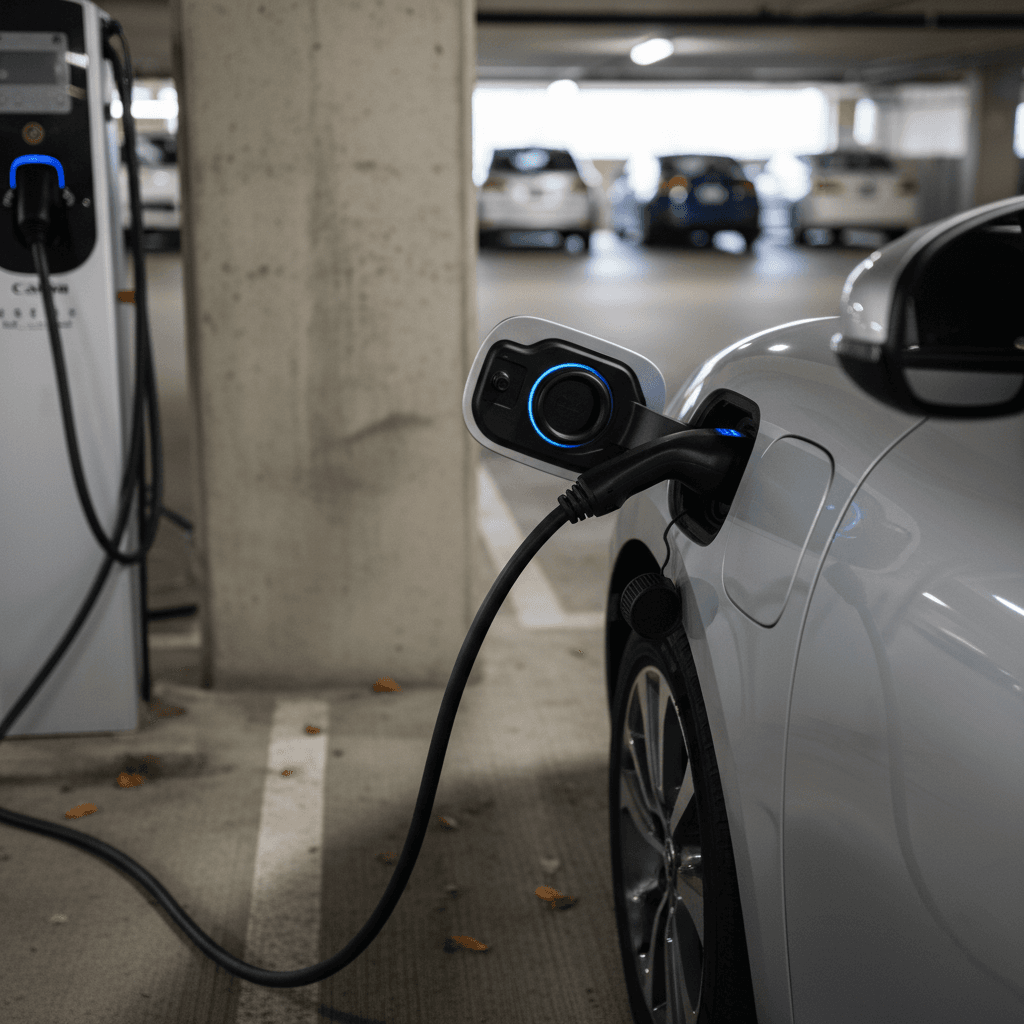
Level 2 chargers are the backbone of Columbia’s public network: you’ll see them in office parks, parking garages, and near retail. They use a 240‑volt connection and typically add 20–30 miles of range per hour, depending on your car.
- Great for: 2–4 hour shopping trips, workdays, gym sessions
- Where: Corporate offices, Columbia Association facilities, parking decks, hotels
- Connectors: J1772 or Tesla’s NACS (often with built‑in adapters or dual cables)
DC fast charging – your road‑trip and emergency tool
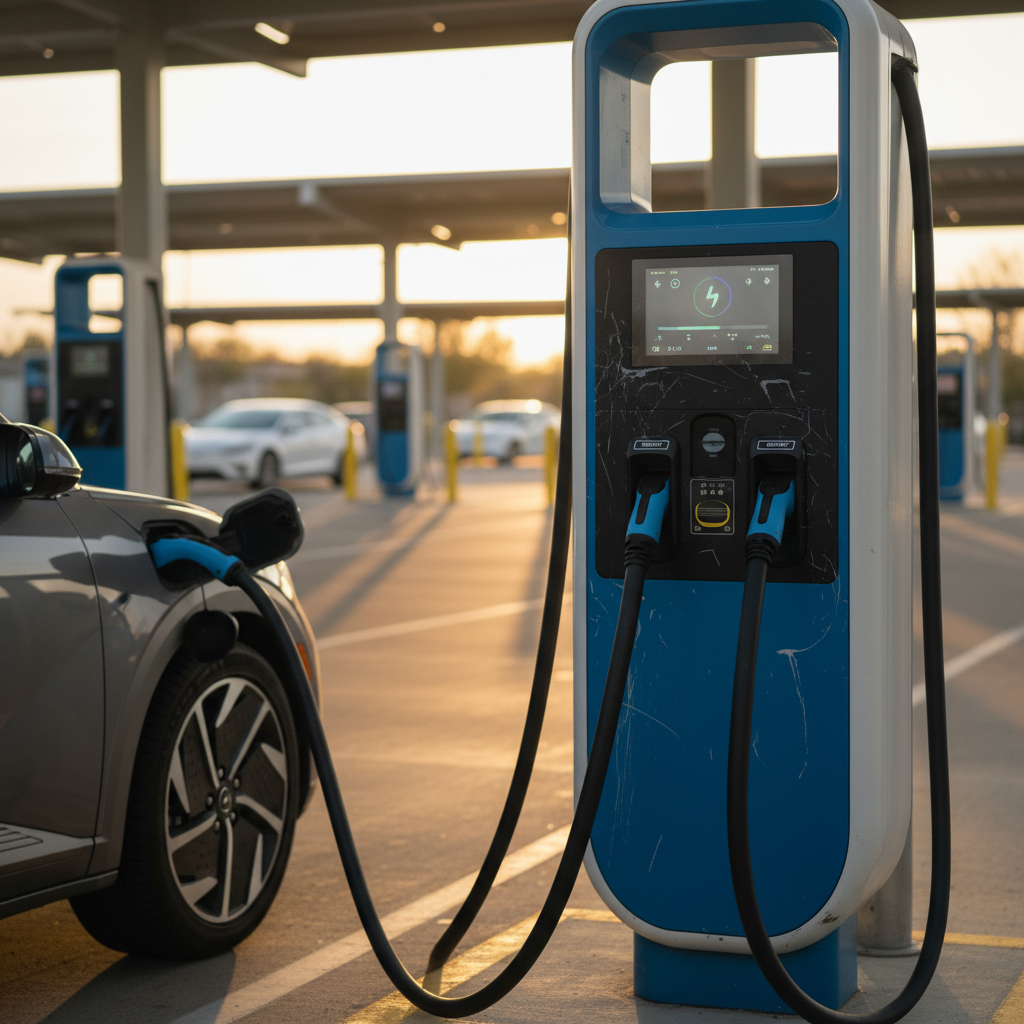
DC fast chargers (sometimes called Level 3) live mostly along I‑95, Route 175, and Route 100 corridors and at large travel plazas. Power ranges from about 50 kW up past 150 kW, adding 150–200+ miles of range in 30–40 minutes on many modern EVs.
- Great for: Long‑distance trips, fast top‑ups, apartment dwellers
- Where: Highway travel plazas, big‑box parking lots, some grocery centers
- Connectors: CCS, CHAdeMO (fading), and increasingly NACS/Tesla
How to see everything at once
Public EV charging hotspots in and near Columbia, MD
Exact station lists change month to month, but a few patterns are stable. Around Columbia, public charging clusters around shopping centers, office parks, and commuter corridors. Think of these as your “anchor” locations when you’re planning where to plug in.
Typical charging clusters around Columbia
Where you’re most likely to find plugs today
Retail & grocery centers
Several plaza-style shopping centers around Columbia, think grocery‑anchored strips and lifestyle centers, host Level 2 chargers, often operated by ChargePoint, EVgo, or a utility partner.
- 2–8 ports per site is common
- Good for 1–3 hour top‑ups while you shop
- Some locations also layer in a DC fast pair
Office parks & medical campuses
Large employers and medical campuses near Broken Land Pkwy, MD‑175, and MD‑108 frequently provide Level 2 chargers for employees and visitors.
- Access can be public, semi‑public, or restricted
- Often priced modestly or even free
- Best if you’re parked for half a day
Highway & travel plazas
Just outside Columbia proper, especially along I‑95 and I‑295, you’ll find DC fast charging hubs at travel plazas, big‑box retailers, and gas‑station convenience stores.
- Multiple 150 kW+ stalls
- Mix of CCS and Tesla/NACS
- Built for 15–40 minute stops
Common EV charging station archetypes near Columbia
Use this as a mental model, exact locations and operators will shift, but the patterns hold.
| Location type | Typical power | Best for | Usual stay | Gotchas |
|---|---|---|---|---|
| Grocery plaza Level 2 | 6–10 kW | Weekly errands, commuters | 1–2 hours | May require store app or network card; check posted fees |
| Office park Level 2 | 6–7 kW | All‑day parking | 4–8 hours | Some are employee‑only; check for access restrictions |
| Mall or lifestyle center | 6–7 kW + some DC fast | Weekend shopping, dinner + movie | 2–4 hours | Time limits or idle fees if you stay plugged in after charging |
| Highway DC fast hub | 50–350 kW | Road trips, quick top‑ups | 20–40 minutes | Per‑kWh prices can be 2–3× home rates |
| Hotel chargers | Level 2 | Overnight stays | 8–12 hours | Sometimes reserved for guests or valet‑only |
Always confirm details in a live app before driving to any specific station.
Planning road trips from Columbia: I‑95 and beyond
Columbia is essentially a feeder town to the great American test track: I‑95. Whether you’re driving to New York, the Outer Banks, or down to Richmond, you’re never far from a DC fast charger, if you use the right tools and give your plan five minutes of thought.
Route‑planning checklist for Columbia‑based EV trips
1. Start from at least 70–80% charge
Top up at home or at a nearby Level 2 before you ever hit the interstate. Leaving town nearly full gives you more choice about which highway charger to use, and which crowded, overpriced one to skip.
2. Use a route‑planning app
Let your car’s native nav or apps like A Better Routeplanner or PlugShare build a route along high‑reliability fast chargers. Set realistic preferences for minimum arrival state‑of‑charge and desired stop length.
3. Aim for big hubs, not one‑off stations
Prefer highway sites with 4+ DC fast stalls over lonely single‑charger installs. In the Columbia–Baltimore–D.C. region, redundancy is your friend when a stall is broken or iced.
4. Factor in weather and speed
Cold snaps on I‑95 or a heavy right foot can trim winter range by 20–30%. Give yourself a buffer; try to arrive at fast chargers with ~10–20% remaining instead of running it to single digits.
5. Know your connector options
Most non‑Tesla EVs still rely on CCS fast charging, but the region is adding NACS/Tesla plugs quickly. If your car uses a NACS adapter, double‑check compatibility and adapter firmware before a big trip.
6. Build in one “optional” stop
On longer routes, mentally mark one backup stop. If traffic, headwinds, or kids derail your perfect plan, you have an easy Plan B without anxiety.
Don’t treat I‑95 chargers like gas pumps
What it really costs to charge in Columbia, MD
Maryland is unusually transparent about the math. At public stations around Columbia, you’re generally paying more per kWh than you would at home, but you’re buying convenience: primo parking, quick top‑ups between meetings, road‑trip speed. Over a year, the right blend of home and public charging can keep costs in check.
Public charging around Columbia
Pricing varies by network and host, but think of public charging in three rough bands:
- Free or subsidized Level 2 – Some workplaces, hotels, and public facilities eat the cost to attract visitors or meet sustainability goals.
- Paid Level 2 – Often billed per kWh or per hour; effective energy rates commonly land around $0.18–$0.34/kWh.
- DC fast charging – Highway and travel‑plaza chargers often cost the most on a per‑mile basis, but they buy back your time.
Used strategically, public charging can turn errands into fuel stops and dramatically cut time spent thinking about range.
Home charging economics
For many Maryland drivers, home charging with time‑of‑use rates runs closer to $0.07–$0.16 per kWh. That’s often half the cost of public DC fast charging.
For a typical EV driving 10,000–12,000 miles a year at 3–4 miles per kWh, that difference can mean $300–$500 in annual savings if most of your energy comes from your garage instead of public stations.
Yes, a Level 2 home charger and potential panel upgrades carry upfront cost, but Maryland’s rebate programs and federal credits can soften that hit through at least mid‑2026.
Home charging in Columbia: when public stations aren’t enough
If you live in a single‑family home or townhome with off‑street parking, Columbia practically begs you to install a Level 2 charger. Public stations then become your safety net and road‑trip tool, not your daily lifeline.
Steps to getting a home Level 2 charger in Columbia
1. Check your electrical panel
Most modern Level 2 chargers like a 240‑volt, 40‑amp circuit. Older 100‑amp panels, common in pre‑1990 homes, may need an upgrade to handle the extra load safely.
2. Talk to a licensed electrician
Have a local electrician evaluate capacity, distance from panel to parking spot, and code requirements. Ask them to quote separately for the circuit, charger install, and any panel upgrade.
3. Pick a smart Level 2 unit
Look for a 32–48 amp charger with Wi‑Fi, scheduling, and utility integration. Smart features make it easy to automate off‑peak charging and document usage for rebates.
4. Apply for Maryland’s EVSE rebate
Maryland’s Electric Vehicle Supply Equipment (EVSE) Rebate Program can cover up to <strong>50% of the eligible project costs</strong> for residential installations, capped at $700 per charger, while funds last.
5. Stack federal benefits if you can
Through June 30, 2026, a federal tax credit can cover <strong>30% of home charger hardware and installation</strong>, up to $1,000, assuming your project meets location and tax‑liability requirements.
6. Enroll in off‑peak or EV‑specific utility rates
BGE, Pepco, and other Maryland utilities offer EV‑friendly plans where overnight charging can cost a fraction of daytime or public‑station rates. Set your charger to start after 11 p.m. and forget about it.
Safety isn’t optional at 240 volts
Maryland incentives that can lower your charging costs
One quiet advantage of being an EV driver in Columbia: you benefit from both state‑level programs and federal tax credits aimed at charging infrastructure, at least through mid‑2026, under current law.
Key incentive programs relevant to Columbia drivers
Always confirm current eligibility before you spend a dollar.
Maryland EVSE Rebate Program
Through the state’s EVSE Rebate Program, residential customers can receive up to 50% of eligible costs, capped at $700 per charger, for Level 2 installations at home. Businesses and multi‑unit dwellings can qualify for larger per‑site rebates.
Funding is first‑come, first‑served each fiscal year, so timing matters.
Federal EV charger tax credit
Under current rules, home chargers installed and placed in service by June 30, 2026 may qualify for a federal tax credit of 30% of hardware and installation costs, capped at $1,000.
Commercial installs can access bigger dollar amounts if they meet labor and geographic requirements.
Utility TOU & rebate programs
Maryland utilities, including BGE and Potomac Edison, offer EV‑friendly rebates and time‑of‑use rates. Some programs provide bill credits or partial rebates if you install a qualifying smart charger and share usage data.
The payoff: dramatically cheaper overnight charging.
New rules, new wrinkles
Matching a used EV to Columbia’s charging reality
Buying a used EV in 2026 is a little like buying a condo: location and infrastructure matter as much as square footage. Around Columbia, the right used EV + the right charging plan can give you luxury‑car smoothness for compact‑car money.
If you have reliable home charging
- Range: Anything rated ~220+ miles EPA can feel effortless for a Columbia commute, even with winter losses.
- Battery health: Focus on verified state of health; a car that fast‑charges rarely and lives on Level 2 is your friend.
- Public charging role: Occasional backup and road trips only.
In this scenario, you’re essentially refueling in your sleep. Public stations are optional drama, not a way of life.
If you’ll lean on public charging
- Range: More is better; 250+ miles buys you flexibility when a favorite station is down.
- Fast‑charging curve: Look for models that hold high charge rates from ~10–60%; that’s what makes 20–30 minute stops work.
- Connector support: CCS today, NACS tomorrow, adapters and upcoming retrofits matter.
Here, think of Columbia’s retail Level 2 sites as your routine and highway hubs as your lifeline.
Where Recharged fits in
Ready to find your next EV?
Browse VehiclesLocal etiquette and pro tips for smoother charging
- Treat public chargers like gas pumps with a built‑in lounge. Once you’ve added the range you need, move on so the next driver can plug in, even at Level 2 sites.
- If you must stay parked after a full charge at a busy destination, unplug and leave a note with your return time. In some garages, unplugged cars can be politely swapped around.
- Check for idle fees at DC fast stations; these can kick in after your session ends and turn a coffee stop into an expensive lesson.
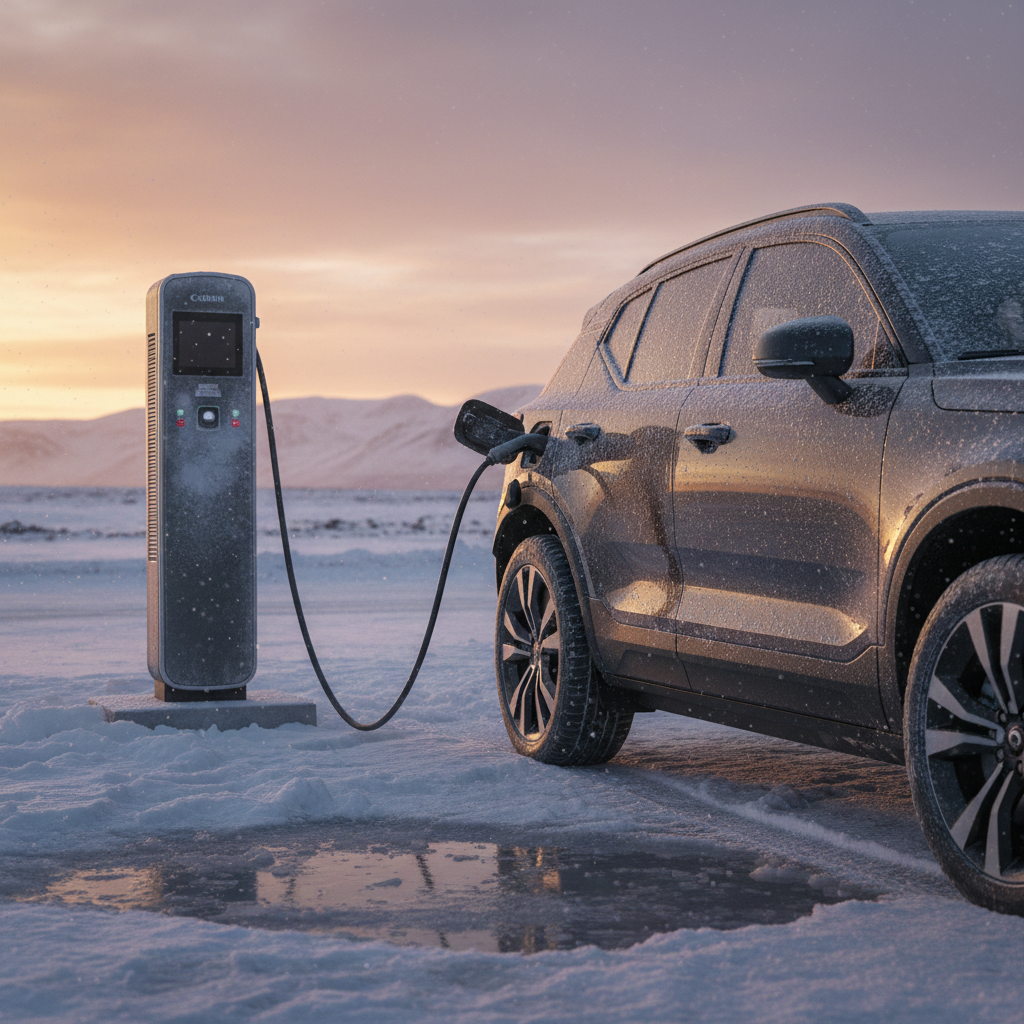
- In winter, precondition your battery while plugged in, especially before DC fast charging from Columbia up into colder country. You’ll see faster charge rates and better efficiency.
- Keep a Plan B station in your head. If a favorite charger near Columbia Mall is down or blocked, you’ll already know your backup before your dashboard even blinks.
“Public charging works beautifully when drivers treat it like shared infrastructure, not private parking with a cord attached.”
EV charging stations in Columbia, MD: FAQ
Frequently asked questions for Columbia EV drivers
Bottom line: how to make Columbia work for your EV
Columbia, Maryland isn’t a science‑fiction EV utopia, but it’s quietly excellent for electric drivers who play to its strengths. Treat public chargers at groceries, offices, and highway stops as convenience and backup, not your primary fuel source. Let a home Level 2 charger, subsidized by state and federal programs where possible, do the heavy lifting. And when you’re shopping for your next EV, especially a used one, prioritize battery health and fast‑charging behavior so you can actually enjoy the growing web of Level 2 and DC fast stations around you.
If you’re ready to match your lifestyle in Columbia to the right car, explore used EVs on Recharged. Every vehicle includes a Recharged Score battery health report, transparent pricing, and expert EV‑specialist support, so when you pull up to that next charger outside the mall or on I‑95, you know exactly what your range and charging speeds should look like.