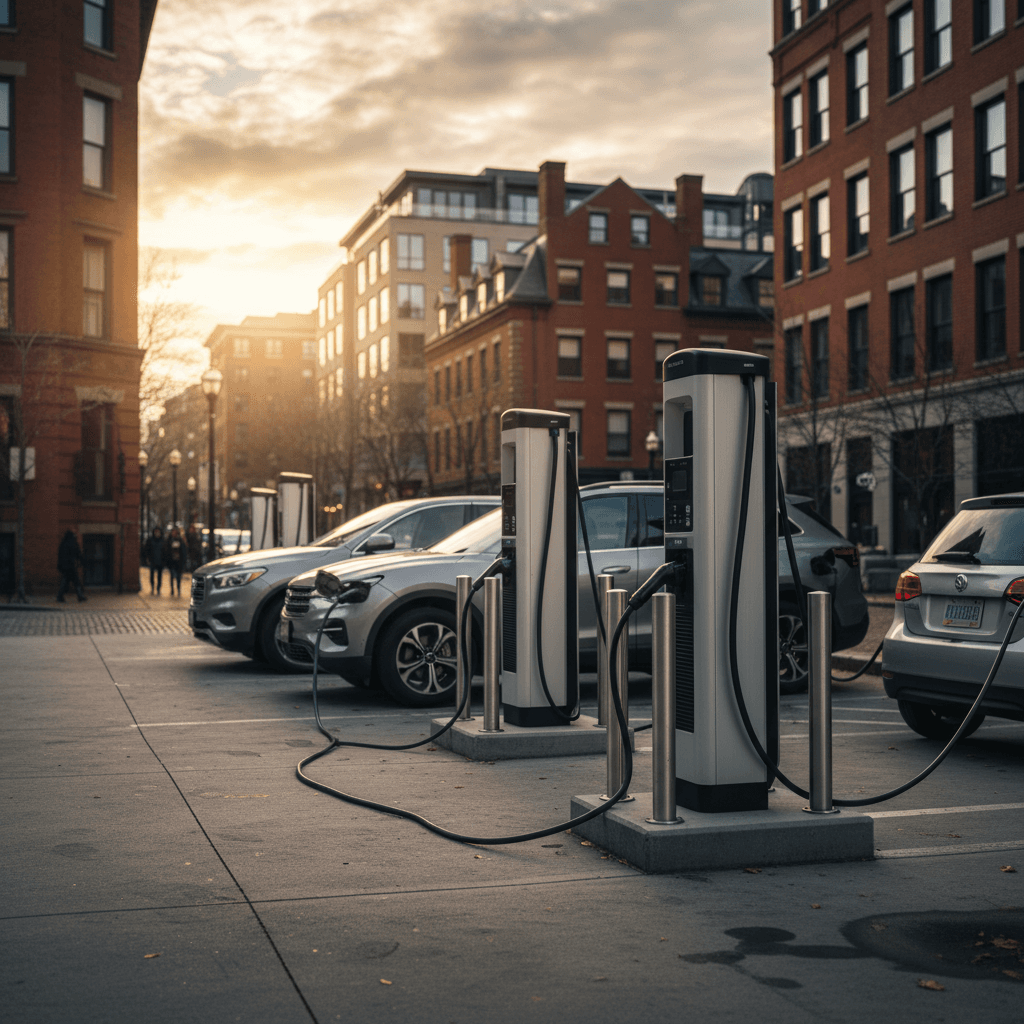
If you drive an electric car in Greater Boston, you’re in better shape than you might think. The region is quietly becoming one of the strongest places in the country for EV charging stations in Boston, MA, from curbside Level 2 plugs in dense neighborhoods to faster DC charging near highways and shopping centers.
Quick snapshot for 2026
Why Boston Is a Strong EV Charging City
Boston has two forces pushing hard on EV charging: aggressive state climate policy and simple on-the-ground necessity. Massachusetts has some of the highest public charger coverage in the country, and Boston’s dense, largely garage‑free housing stock means the city knows it must make public and curbside charging work if EV adoption is going to keep climbing.
Boston & Massachusetts EV Charging by the Numbers
Under Boston’s zero‑emission vehicle roadmap, the city has set a goal that nearly every household should be within about a five‑minute walk of a public EV charger. You can already see that taking shape with curbside pilots, chargers in municipal lots, and utility‑backed build‑outs in workplaces and garages.
Think "network" not "single station"
How Many EV Charging Stations Are in Boston, MA?
Exact numbers move month to month, but here’s a reasonable 2026 picture of EV charging stations in Boston, MA:
Approximate EV Charging Availability in and Around Boston
Ballpark figures to give you a feel for charging density in the Boston area. Counts include Level 2 and DC fast chargers and change frequently as new sites come online.
| Area | Estimated Public Ports | Typical Mix | Notes |
|---|---|---|---|
| City of Boston proper | ~700–900 | Mostly Level 2 | Downtown garages, hospitals, universities, municipal lots, curbside pilots. |
| Within ~15 km of downtown (Boston + nearby suburbs) | ~1,300+ | 96% Level 2, ~4% DC | Includes Cambridge, Somerville, Brookline, Quincy, etc. |
| Whole state of Massachusetts | 1,800+ stations | Heavier DC along highways | Strong coverage in metro Boston, Worcester, Springfield, Cape corridors. |
Use these numbers as directional guidance, not as a real‑time directory. Always confirm availability in an app before you drive.
Don’t treat these counts as live data
Types of EV Chargers You’ll Find in Boston
Most public EV charging stations in Boston, MA fall into three buckets. Knowing the difference helps you choose the right spot for your schedule and budget.
Common Charger Types Around Boston
Match the charging level to how long you plan to stay parked.
Level 1 (120V outlets)
Slow but steady, adding ~3–5 miles of range per hour.
- Usually found at home, not as public stations.
- Occasionally available at workplaces or older garages.
- Good for overnight top‑ups if you have dedicated parking.
Level 2 (240V)
The backbone of public charging in Boston.
- Common at municipal lots, universities, hospitals, and curbside pilots.
- Add ~20–35 miles of range per hour for most EVs.
- Best for 2–4 hour errands, workdays, or overnight in a garage.
DC Fast Charging
High‑power charging for road trips and quick top‑ups.
- Typically 50–350 kW, depending on site.
- Found near highways, big retail centers, and key downtown hubs.
- Can add 100+ miles in 20–40 minutes on many modern EVs.
Watch for power limits
Major Charging Networks in Boston (and Where They Tend to Be)
Boston doesn’t rely on a single provider. You’ll see a mix of national networks, automaker networks, and city‑ or utility‑backed chargers. That’s good news, it means more competition, more redundancy, and more chances to find an open plug near where you actually live and work.
Key EV Charging Networks Serving Boston, MA
These are the networks you’re most likely to encounter across Greater Boston, plus what they’re best for.
| Network | Typical Locations | Best Use Case | Notes |
|---|---|---|---|
| ChargePoint | Workplaces, garages, universities, municipal lots | Daily Level 2 charging | Huge footprint; pricing set by site owner, so costs vary. |
| EVgo | Downtown, shopping centers, some highway sites | Urban DC fast charging | Useful near Fenway, downtown, and some suburban retail hubs. |
| Electrify America | Highway exits, major retail | Road trips, quick top‑ups | High‑power DC fast charging; great for I‑90, I‑95, Route 3 corridors. |
| Tesla Supercharger (with adapters) | Highways, shopping centers | Fast charging for Tesla + NACS‑equipped non‑Teslas | By 2026, many new non‑Tesla EVs can use NACS/adapter access at select sites. |
| Municipal & utility programs | City lots, curbside pilots | Neighborhood Level 2 | Often run by or in partnership with the City of Boston and local utilities. |
Install at least one app from each column if you drive in and around Boston regularly.
Build a two‑network toolkit
Curbside EV Charging in Boston Neighborhoods
If you rent in South Boston, Allston, or the North End, you probably don’t have a dedicated driveway. Boston knows that, which is why the city has been piloting curbside EV charging, Level 2 stations installed right at the curb in residential neighborhoods.
How curbside charging works
- Stations are reserved for actively charging EVs during posted hours.
- You pay for electricity, typically via a QR code, app, or RFID card.
- Rate structures are similar to other public Level 2 stations (per kWh, per hour, or both).
- Many curbside units are designed to keep sidewalks as clear as possible, look for slim posts and overhead cable management.
Where you’ll see it first
- Pilot sites in South Boston and other dense residential neighborhoods.
- Near multi‑family buildings without off‑street parking.
- Close to bus routes and bike lanes as part of broader street redesigns.
- Gradual expansion as the city collects data on usage and demand.
Boston’s long‑term goal
What EV Charging Costs in Boston, MA
Let’s talk about what really matters day to day: how much it costs to fill your “tank.” Boston isn’t the cheapest electricity market in the country, but EVs still usually beat gas on a cost‑per‑mile basis, especially if you can do a big share of your charging at home.
Typical 2026 EV Charging Costs in Boston
Approximate costs based on prevailing 2026 electricity rates and public charging tariffs in the Boston area.
| Charging Scenario | Where You Charge | Approx. Price | Rough Cost per Mile* |
|---|---|---|---|
| Home Level 2 (typical condo/house) | Garage or driveway on a residential rate plan | $0.22–$0.30/kWh | ~6–9¢/mile |
| Public Level 2 (paid) | Garages, municipal lots, curbside pilots | $0.30–$0.45/kWh or time‑based | ~8–13¢/mile |
| Public Level 2 (free) | Some workplaces, retailers, universities | $0.00 (parking may still cost) | Effectively 0¢/mile for energy |
| DC Fast Charging | Highways, retail hubs | $0.40–$0.65/kWh equivalent | ~10–16¢/mile |
Actual prices vary by provider, time of day, and your car’s efficiency, but these ballpark numbers are a useful starting point.
For context, a typical gas car in Boston running around 30 mpg on $3.50–$4.00 per gallon gas lands in the ballpark of 12–13¢ per mile. That means heavy DC fast‑charging use can get close to gas costs, but a home‑heavy routine usually keeps your EV solidly cheaper per mile.
Watch idle fees at DC fast chargers
Best Apps for Finding EV Charging Stations in Boston
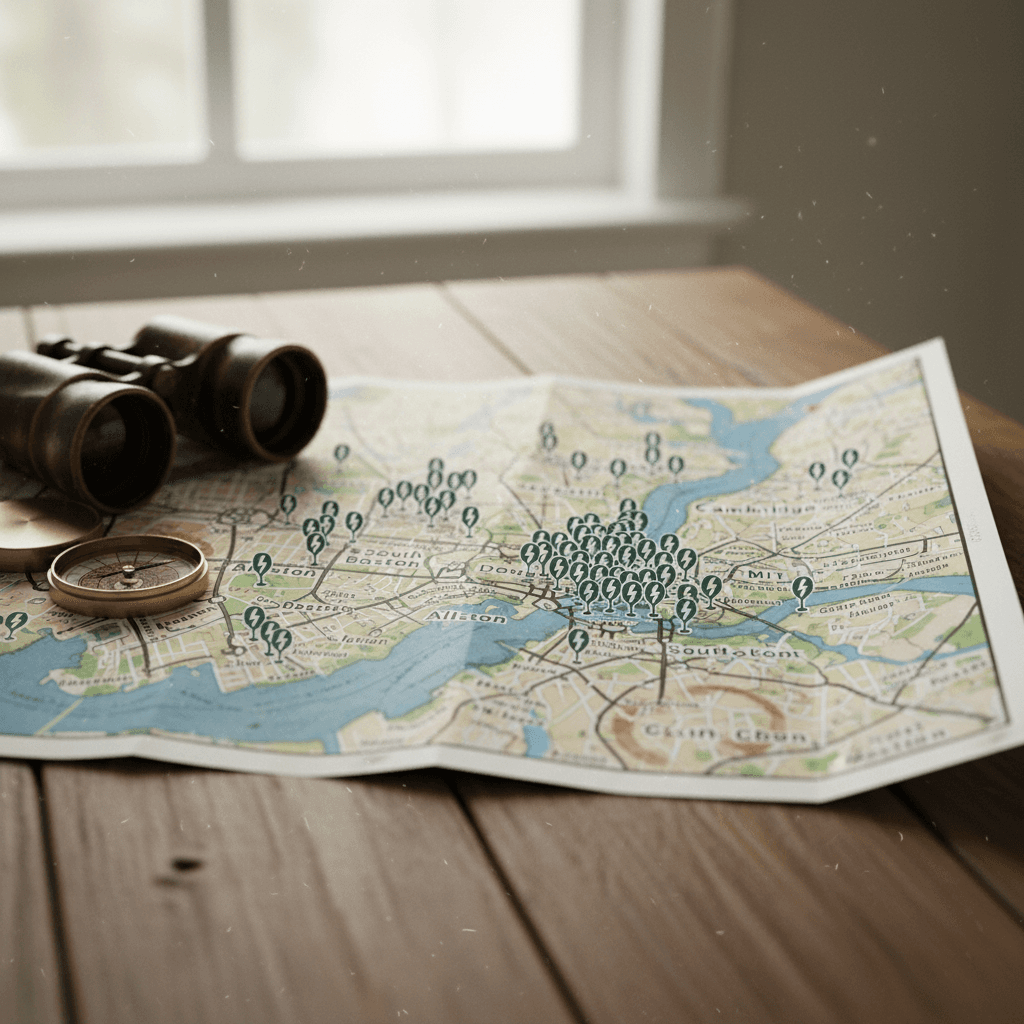
There is no single perfect app, but a small toolkit will make your life a lot easier. For EV charging stations in Boston, MA, think in layers: a community map, a couple of network apps, and a backup.
Core Apps Boston EV Drivers Should Install
1. PlugShare or ChargeHub for the big picture
These community‑driven maps pull in most public chargers across networks and let drivers review stations. Great for spotting clusters around a neighborhood or planning a new commute.
2. ChargePoint for everyday Level 2
ChargePoint has one of the biggest footprints in Boston‑area garages, campuses, and workplaces. If you frequently park in structured garages, this is almost mandatory.
3. EVgo for urban fast charging
EVgo focuses on DC fast charging in dense areas. Handy if you’re topping up near Fenway, Back Bay, or shopping centers without heading out to the interstates.
4. Electrify America for highway runs
If you’re headed to New York, Maine, or the Cape, Electrify America sites along I‑90, I‑93, and I‑95 make life easier. Their app helps you see real‑time stall availability and pricing.
5. Tesla app (if your EV supports NACS)
By 2026, many new non‑Tesla EVs can use at least parts of the Supercharger network via built‑in NACS ports or adapters. The Tesla app is essential for activating those sessions.
Create a "Plan B" folder on your phone
Smart Charging Strategies for Boston EV Drivers
How you use EV charging stations in Boston, MA will look very different if you have a driveway in Roslindale versus a street‑parking situation in Southie. Here are a few realistic playbooks you can borrow.
Charging Playbooks for Common Boston Lifestyles
Street Parker in Southie or Allston
Anchor your routine to a couple of nearby curbside or municipal Level 2 chargers, even if it means a short walk.
Use PlugShare or ChargeHub to bookmark evening and early‑morning stations that tend to be open.
Top up 2–3 nights per week rather than hunting for a huge charge once a week.
Keep an eye on your building or neighborhood association, many are pushing for dedicated EV spots or chargers in shared lots.
For road trips, plan on DC fast charging at highway sites; don’t rely solely on city stations.
Condo or House with Off‑Street Parking
Install a Level 2 home charger if your panel can support it; look into state or utility rebates to cut installation costs.
Schedule charging for off‑peak hours if your utility offers time‑of‑use rates.
Use public chargers mostly as a backup or bonus top‑up when parking at a garage or shopping center.
Before buying your EV, confirm its onboard AC charging rate so your home setup isn’t more powerful than the car can use.
On road trips, treat public fast charging like fuel stops: plan around every 2–3 hours of driving.
Downtown Commuter with Garage Access
If your workplace or parking garage offers Level 2, that can be your primary fuel source, essentially turning your commute into a daily charge cycle.
Compare parking rates between garages that include charging and those that don’t; sometimes the all‑in packages are cheaper than you’d think.
Leave DC fast charging for days when you’re running late or need a quick boost before evening plans.
If chargers are always full, talk to facility management, consistent waitlists are a strong case for adding more ports.
Coordinate with other EV‑driving colleagues to share tips on which floors or corners have the most reliable stations.
Suburban Family Doing Weekend Trips
Rely on home Level 2 for most charging; aim to start weekend trips with 80–100% battery.
Use Electrify America, EVgo, and PlugShare to map fast‑charging stops on the way to ski mountains, beaches, or college visits.
When booking hotels, filter for on‑site Level 2 charging, you’ll wake up Monday with a full battery and no extra time spent.
In winter, add an extra buffer before long drives; cold temps and heater use can trim your effective range.
Check charger status on the day‑of; stations along popular corridors can be busier during holidays and school breaks.
EV Charging Tips for City Parking and Boston Winters
Boston adds two wrinkles for EV drivers: tight, expensive parking and classic New England winters. Neither is a deal‑breaker, but both reward a little planning.
- Favor chargers in covered or underground garages when snow is in the forecast; they’re less likely to get iced‑over or blocked.
- If you park on the street, keep a short, flexible charging window in mind, don’t expect to own a curbside charger all night if demand is high.
- Precondition your battery and cabin while still plugged in before a winter drive; it protects range and comfort.
- Expect slower charging speeds in very cold weather, especially at fast chargers; your battery’s thermal management system needs time to warm up.
- Keep your main charging cables clean and free of packed snow or salt to avoid connector issues over time.
Mind the snowbanks
How Recharged Helps Boston Drivers Pick the Right EV for Local Charging
Charging isn’t just about plugs, it’s about pairing the right car with the way you actually live in Boston. That’s where buying a used EV through Recharged can simplify things.
Why Recharged Matters If You Rely on Boston’s Charging Network
Choosing the right used EV makes daily charging easier and cheaper.
Battery health you can trust
Every Recharged vehicle comes with a Recharged Score Report, including verified battery health. If you’ll be leaning on Level 2 and DC fast chargers around Boston, knowing how much real‑world range you have matters more than brochure numbers.
Model match for your routine
Recharged EV specialists can help you choose models that do well in dense urban charging environments, good cold‑weather performance, solid AC charging speeds, and decent fast‑charge curves.
They’ll talk through your specific pattern: street parking, daily commute, weekend trips, and favorite neighborhoods.
Financing, trade‑ins & delivery
Recharged can help you handle financing, trade‑ins, instant offers or consignment, and even nationwide delivery to the Boston area, all through a fully digital experience.
Prefer to talk in person first? You can also work with their EV specialists at the Recharged Experience Center in Richmond, VA and arrange shipping home.
Ready to find your next EV?
Browse VehiclesPlan your charging before you buy
FAQ: EV Charging Stations in Boston, MA
Frequently Asked Questions About EV Charging in Boston
Bottom Line: EV Charging in Boston Is Already Good, and Getting Better
Between curbside pilots, packed‑in Level 2 coverage, and a growing lattice of DC fast chargers along the interstates, Boston is already one of the more forgiving American cities for going electric. You’ll still need to be thoughtful, especially if you street‑park or drive long winter commutes, but the days of hunting for a single lonely charger are fading fast.
If you’re thinking about your first used EV, or your next one, don’t treat charging as an afterthought. Sketch out the EV charging stations in Boston, MA you’re likely to use, then choose a car that fits that pattern. Recharged can help you do exactly that with transparent battery health reports, fair pricing, and EV‑savvy guidance, so the network that’s already out there feels like it was built just for you.