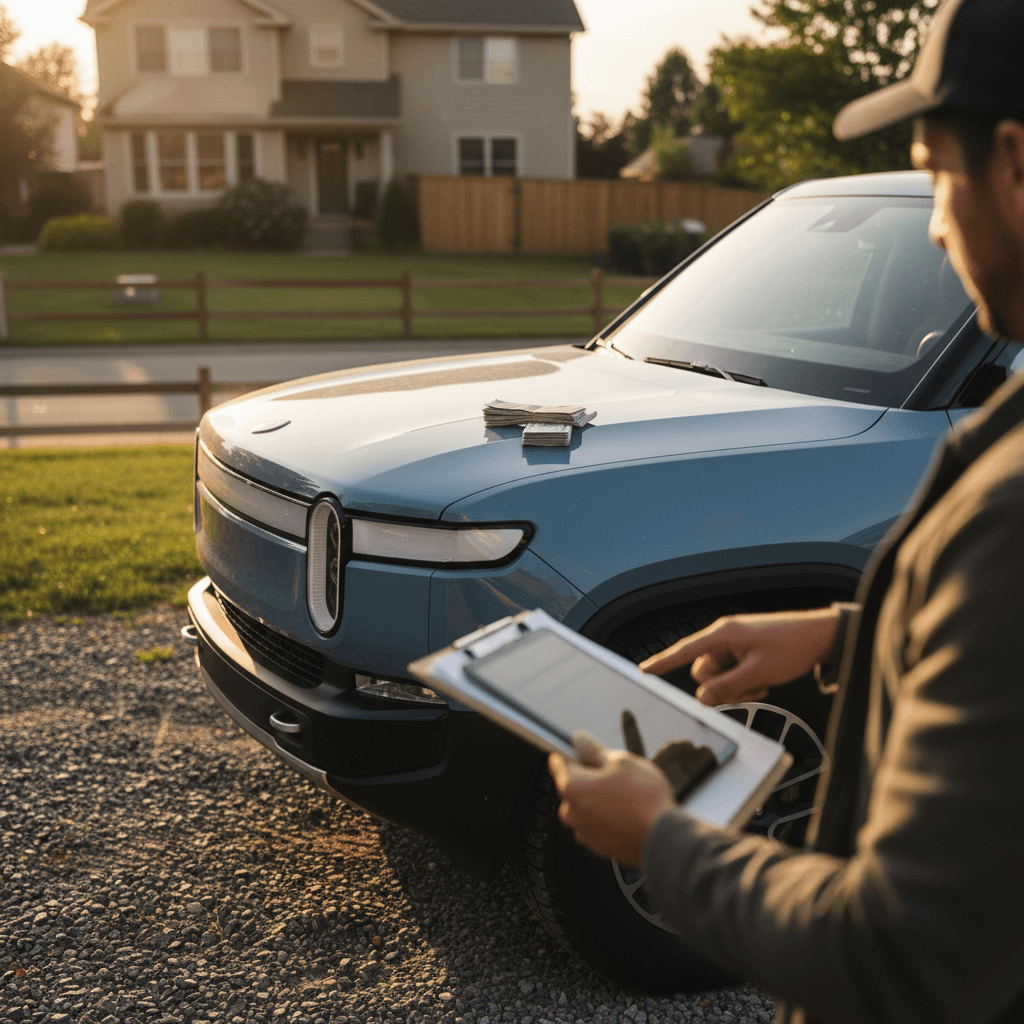
Selling a Rivian R1T in a private sale is a bit different from selling a gas pickup. You’re not just handing over a truck, you’re transferring software, charging access, and years of driving data. Done right, a private sale can net you thousands more than a trade‑in, but you need a clear plan from pricing to the Rivian ownership transfer.
What this guide covers
Why Sell Your Rivian R1T in a Private Sale?
More money in your pocket
Online appraisal tools show that private‑party values for the Rivian R1T often land several thousand dollars above trade‑in offers, especially on well‑optioned trucks with Max or Large packs and desirable colors or wheels. Dealers and direct‑from‑OEM trade‑ins build in margin for reconditioning, profit, and transportation. A private sale lets you capture more of that value if you’re willing to do the legwork.
More control over the process
In a private sale you decide when to list, how to present your R1T, who drives it, and what you’ll accept. You can answer detailed questions about software updates, real‑world range, and charging experience, things a non‑EV‑specialist dealer often can’t. And if you’re upgrading to another EV, you can time the sale to minimize days without a vehicle.
The trade‑off
Step 1: Set the Right Price for Your Rivian R1T
Your starting price does two jobs: it attracts serious buyers and leaves room to negotiate. With the Rivian R1T, trim, battery, software options, and current incentives all matter.
How your Rivian R1T’s value stacks up
- Use multiple valuation tools (Edmunds, KBB, etc.) and focus on private‑party values, not trade‑in numbers.
- Adjust for your exact spec: battery pack, dual vs tri‑motor, wheel package, interior, and notable options like off‑road upgrades.
- Factor in mileage, cosmetic condition, and any accident history. A clean, low‑mile truck with documented service and no damage can justify pricing near the top of the range.
- Search marketplace listings (Cars.com, Autotrader, EV‑specific sites) for similar R1Ts in your region to see real‑world asking prices, then price within that band.
- Decide on a strategy: list slightly above your bottom line (to allow for negotiation) but not so high that you scare away educated EV shoppers.
Aim for a pricing band, not a single number
Step 2: Prepare Your R1T, Details That Matter to EV Buyers
EV shoppers scrutinize different things than traditional truck buyers. Range, charging speed, and software history matter as much as dings and tires. A few hours of prep can translate directly into a faster sale and stronger offers.
Rivian‑specific prep checklist
1. Deep clean inside and out
Wash, clay, and wax the exterior, clean the glass, and dress the tires. Vacuum the cabin, wipe down surfaces, clean the gear tunnel and frunk, and remove personal items. EV buyers expect a near‑new feel on a premium truck.
2. Fix obvious, low‑cost issues
Replace worn wiper blades, burned‑out bulbs, and cabin air filters; address curb‑rashed wheels or minor paint touch‑ups where affordable. You don’t have to make it perfect, but clear neglect spooks buyers.
3. Gather Rivian service and software records
Pull service invoices from your Rivian account and note major software updates, recalls, or hardware upgrades. Organized paperwork reassures buyers about how the truck has been cared for.
4. Document charging and range behavior
Take screenshots or photos showing typical range at your usual state of charge, recent efficiency (mi/kWh), and a few sample road‑trip legs if you have them. Range confidence is a top concern for first‑time EV buyers.
5. Check tires and brakes
Measure tread depth and note tire brand/model and approximate mileage. If tires are near the wear bars, either replace them or be upfront and reflect it in your price.
6. Prepare keys and accessories
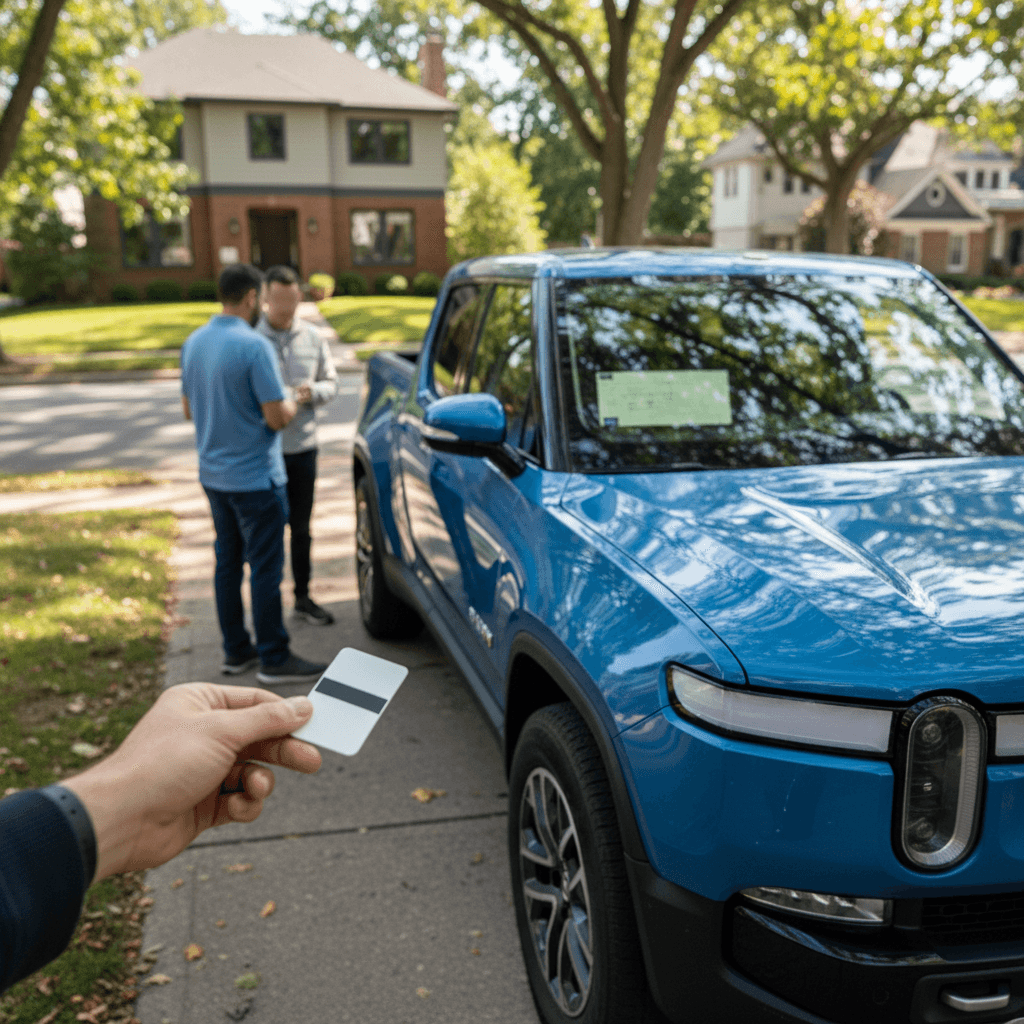
Locate all key cards, fobs, tow hook, charging cable (if included), manuals, and any accessories (rack systems, floor liners, bed covers). Buyers love seeing a complete, ready‑to‑use package.
Leverage third‑party battery health
Ready to find your next EV?
Browse VehiclesStep 3: Create a Listing and Market Your Rivian R1T
A Rivian shopper is usually more informed than the average used‑car buyer. They want to know exactly what they’re getting, down to software options and your real‑world experience. Your listing should answer most of their questions before they ever message you.
Where to list your R1T
Cast a wide net, but prioritize channels that attract EV‑savvy buyers.
Mainstream classifieds
Sites like Autotrader, Cars.com, and Facebook Marketplace offer huge reach. Expect more tire‑kickers and EV newcomers, so your description needs extra education around charging and ownership.
EV‑focused marketplaces
Platforms like Recharged focus on used EVs and buyers who already understand charging and range. You’ll often see more serious inquiries and better‑informed negotiations.
Owner communities
Rivian forums and EV Facebook groups can be excellent places to find enthusiasts who already know the truck. Always follow group rules and move sensitive conversations (pricing, payment) off‑platform.
- Use a clear, descriptive title: “2024 Rivian R1T Adventure Max Pack • 12k miles • Clean Title.”
- Lead with the key facts: year, trim, battery, motor configuration, mileage, color, accident history, and whether you’re the original owner.
- Highlight EV‑specific selling points: home charging setup, typical range, road trip experience, access to DC fast charging networks, and any protection plans that transfer.
- Include 15–25 high‑quality photos: exterior all around, interior, bed and gear tunnel, frunk, wheels/tires, infotainment screens, and any flaws up close.
- Be transparent about blemishes, curb rash, or prior repairs. Buyers are much more forgiving when they don’t discover surprises in person.
Shoot like a pro with your phone
Step 4: Screen Buyers and Manage Test Drives Safely
Your R1T is a high‑value, high‑tech vehicle. Treat test drives as business appointments, not casual hangouts. The goal is to identify serious buyers, keep yourself safe, and protect the truck and your data.
How to handle inquiries and test drives
1. Pre‑qualify by message or phone
Before meeting, ask basic questions: whether they’ve driven an EV before, how they plan to pay (cash, financing, credit union), and timing for purchase. Non‑answers or hostility are red flags.
2. Meet in a safe, public place
Choose a busy, well‑lit location like a bank parking lot or police‑station “safe exchange” area. Avoid inviting strangers to your home for first meetings.
3. Confirm license and insurance
Always see and photograph a valid driver’s license. If they’ll drive alone, verify active insurance. For high‑value vehicles, riding along is often the smartest choice.
4. Control the route
Plan a 15–20 minute loop that shows off the truck: surface streets, freeway on‑ramp, and a brief stretch at highway speed. Point out one‑pedal driving, drive modes, and how the truck regen feels.
5. Protect your data during drives
Before they arrive, log out of personal apps, unpair your phone from Bluetooth, and remove home/work addresses from navigation favorites. Treat the truck as if you were about to hand it to a stranger, because you are.
Never let your R1T leave without you
Step 5: Handle Payment and Avoid Scams
Because the R1T is expensive, you’ll encounter more sophisticated scam attempts. Decide up front which payment methods you’ll accept and stick to them. The safest options are slow and slightly inconvenient, that’s a trade‑off worth making for a secure transaction.
Safer ways to get paid for your R1T
Prioritize methods you can verify while the truck is still in your possession.
Bank wire transfer
Meet at the buyer’s bank or your own. Have the buyer initiate a wire to your account while you’re present. Wait for confirmed, cleared funds (not just a pending notice) before signing the title or handing over keys.
Cashier’s check (verified)
If you accept a cashier’s check, insist on meeting at the issuing bank. Ask a teller to verify the check’s authenticity and that funds will be honored. Counterfeits are common; independent verification is essential.
Credit union or bank financing
Many buyers arrange a loan through their credit union. In that case, you’ll typically work with a loan officer who pays you or the lienholder directly and handles title work. The process may feel like a small private‑party “closing.”
Payment red flags
Step 6: Paperwork, Title Transfer, and EV Tax Credit Questions
Paperwork rules vary by state, but the basics are the same everywhere: prove you own the truck, sign it over correctly, and give the buyer what they need to register it. With an EV, you’ll also field questions about tax credits and incentives.
Key documents for a Rivian R1T private sale
Check your state DMV site for exact forms and notarization requirements.
| Item | Who Provides It | Notes |
|---|---|---|
| Title (or electronic title release) | Seller | Shows you as owner or lienholder. If you have a loan, expect an electronic or paper lien release from your lender. |
| Bill of sale | Usually seller drafts | Include VIN, sale price, date, odometer, and buyer/seller names and addresses. Some states have their own form. |
| Odometer disclosure | Seller | May be part of the title or separate. Fill out exactly as required to avoid issues later. |
| Lien release (if financed) | Lender | Your bank or credit union must confirm the lien is satisfied before the buyer can get clear title. |
| State‑specific DMV form(s) | Varies | Some states require a “Notice of Transfer” or “Release of Liability” that you file separately, do this immediately after the sale. |
| Maintenance & charging records | Seller (optional but smart) | Service summaries, receipts, and any third‑party battery health reports help the buyer feel confident and can justify your price. |
Always keep copies of everything you sign and provide to the buyer.
What about EV tax credits?
Step 7: Transfer Rivian Ownership, App Access, and Data
Selling a connected vehicle like the R1T means dealing with more than keys and title. You need to remove your access to the truck and get it properly associated with the buyer so they can use the Rivian app, software features, and charging network, and you can’t track or control a vehicle you no longer own.
How to handle the Rivian side of the sale
1. Remove personal data before hand‑off
Sign out of streaming and navigation accounts, clear saved addresses, unpair your phone and wearables, and delete garage‑door codes. Treat the truck as if you were handing your unlocked smartphone to a stranger.
2. Provide a clean bill of sale and title copy
Rivian will not transfer in‑app ownership until they see proof of new ownership, typically a registration, completed title, or bill of sale that clearly shows the VIN and buyer’s name. Make digital copies (PDF or photos) for the buyer and for yourself.
3. Have the buyer create a Rivian account
Ask the buyer to set up a Rivian account with their email and contact info before or immediately after the sale. This speeds up their side of the ownership‑transfer request.
4. Submit ownership transfer to Rivian
Either you or the buyer can open a support ticket or fill out Rivian’s ownership‑transfer form with the VIN, buyer information, and supporting documents. Response times vary from a day or two to a couple of weeks, so manage the buyer’s expectations.
5. Coordinate app and key access
Until Rivian completes the transfer, you may still see the truck in your app. Avoid using remote features once the truck changes hands. If needed, you can temporarily add the buyer as a driver so they can use the app while the formal transfer is in progress.
6. Confirm removal from your account
Once Rivian validates the paperwork, the vehicle should disappear from your account and app. Log in and verify this; if you still see the R1T, follow up with support so you’re not tied to a vehicle you no longer own.
Don’t leave digital doors open
Private Sale vs Trade‑In vs Selling Through a Marketplace
In a softening EV market, Rivian and dealers frequently offer tempting trade‑in and loyalty incentives. It’s worth comparing those against what you can realistically achieve in a private sale, and against a third option: selling through a specialist like Recharged.
Which route fits you best?
Think about time, hassle, and total dollars, not just the top‑line price.
Private sale
- Pros: Highest potential price; full control over timing and terms; you meet the next owner.
- Cons: You handle marketing, screening, test drives, paperwork, and Rivian transfer yourself.
Trade‑in to Rivian or dealer
- Pros: Fast and convenient; can stack with factory incentives on a new R1T/R1S or another EV.
- Cons: Lower valuation; limited say over how your truck is represented or resold.
Sell with Recharged
- Pros: EV‑specialist support, Recharged Score battery health diagnostics, expert pricing help, and nationwide buyer reach.
- Cons: You may share fees or margin in exchange for a simpler, more transparent process.
Where Recharged fits in
Rivian R1T Private Sale FAQ
Frequently asked questions about selling your R1T
Final Thoughts and Next Steps
Selling a Rivian R1T in a private sale isn’t difficult, but it does demand more structure than selling an old gas pickup. You’re managing pricing, presentation, payment risk, state paperwork, and a digital hand‑off inside Rivian’s ecosystem. If you set a realistic asking price, prepare the truck thoughtfully, screen buyers, insist on safe payment, and close the loop on title and app transfer, you’ll walk away with more money and a buyer who feels great about their new electric truck.
If you decide you’d rather not shoulder all of that yourself, consider working with an EV‑specialist marketplace like Recharged. You’ll still benefit from the premium that late‑model Rivian R1Ts command with informed buyers, but with guided pricing, verified battery‑health reporting, help with financing, and support through to delivery. However you choose to sell, a little preparation now will pay off when the right buyer shows up with funds ready and a smile on their face.