When drivers start asking about EV charging station installation cost, what they really want to know is, “Am I about to open a reasonable bill, or a money pit?” The honest answer is that costs range from well under $1,000 for a simple home setup to well into six figures for a commercial DC fast charging site. The good news: once you understand what drives the price, you can control it.
Bottom line up front
Why EV charging station installation costs vary so much
Two neighbors can install similar chargers and end up with bills that differ by thousands of dollars. The charger hardware itself is only part of the story. Electrical capacity, distance from your panel, local labor rates, and permitting rules all move the needle. For commercial sites, add trenching, signage, accessibility upgrades, networking, and sometimes a new transformer into the mix. That’s why your friend’s “$800 install” might not be realistic for your situation, and why a clear breakdown matters.
Quick price ranges: home vs. commercial EV charger costs
Typical EV charging station installation cost ranges (U.S., 2025)
Home EV charging station installation cost breakdown
Most EV owners in the U.S. will eventually install a Level 2 home charger, a 240‑volt unit that can add 20–40 miles of range per hour and fully recharge overnight. In 2025, a typical homeowner spends roughly $900–$2,500 all‑in for equipment and installation, but the spread can be wider depending on your home’s electrical system.
Estimated cost breakdown for a home Level 2 EV charger (2025)
Approximate U.S. cost ranges for a standard single‑family home installation. Real quotes will vary by region and site conditions.
| Cost item | Typical range (USD) | Notes |
|---|---|---|
| Level 2 charger hardware | $300 – $1,200 | Wall‑mounted, 30–48A, Wi‑Fi or app control optional. |
| Wiring, conduit & materials | $200 – $800 | Cable, conduit, breaker, mounting hardware. |
| Electrician labor | $400 – $1,500 | Higher if panel is far from parking or walls need opening. |
| Permit & inspection fees | $50 – $500 | City or county electrical permit plus final inspection. |
| Panel upgrade (if needed) | $500 – $2,000+ | Only if you lack spare capacity or your panel is outdated. |
| Optional accessories | $50 – $300 | Cable management, pedestal, surge protection, signage. |
| Total typical range | $900 – $2,500+ | Simple installs fall near the low end; complex jobs go higher. |
Think of the charger itself as just one line item in your overall project budget.
Tip: Start with your electrical panel
Real‑world home installation scenarios
What homeowners actually pay for Level 2 charging
Three common installation scenarios and realistic cost expectations.
1. Simple, same‑wall install
House type: Newer home with panel in garage
- Charger: $500
- Short run of conduit and wire
- Permit plus 2–3 hours of labor
Typical total: $900–$1,400
2. Moderate, opposite side of house
House type: Panel in basement, driveway on far side
- Charger: $600–$900
- Longer wire run, some drywall patching
- Higher labor time and permit cost
Typical total: $1,500–$2,500
3. Panel upgrade required
House type: Older 100A service, already near max load
- Charger: $500–$800
- New 200A panel or service upgrade
- Utility coordination and inspection
Typical total: $2,500–$4,000+
Don’t DIY a 240V charger
Commercial EV charging station installation cost breakdown
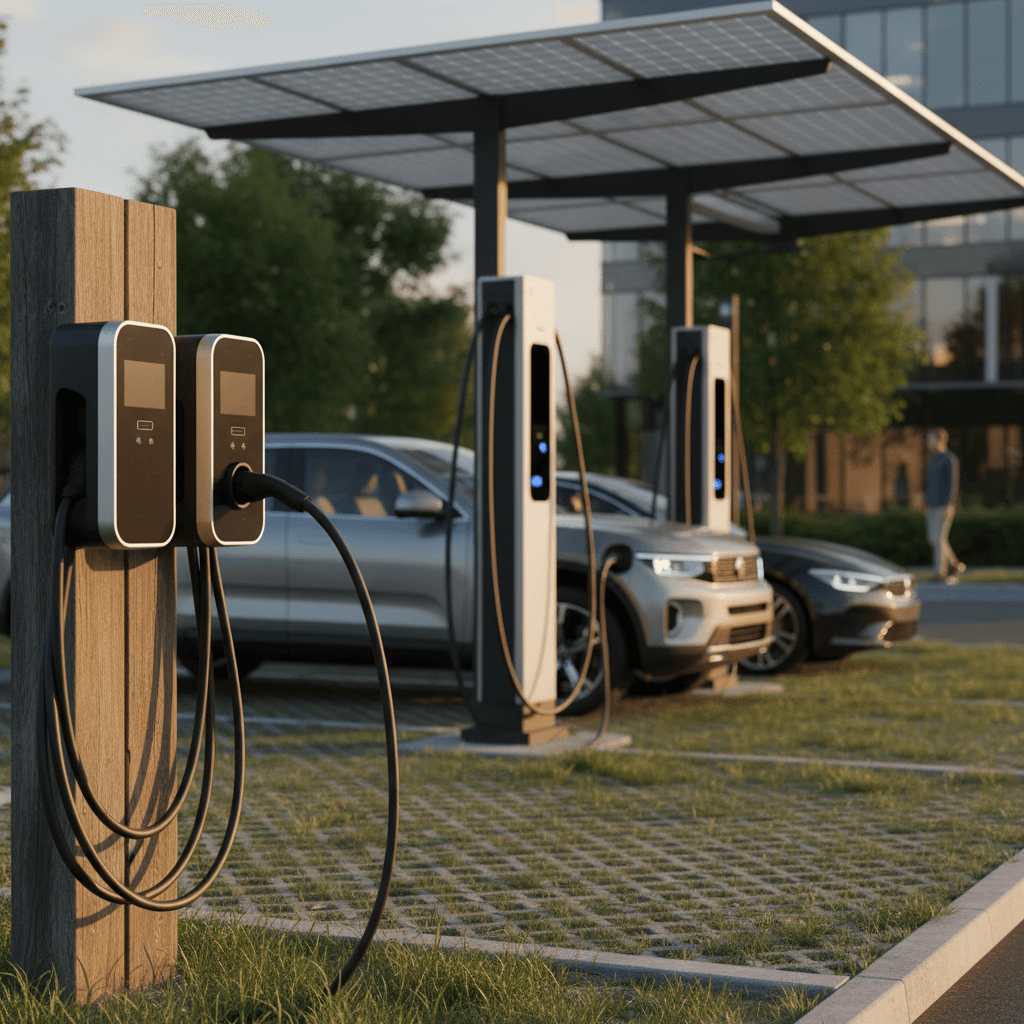
Once you move from a single home charger to workplace, retail, or fleet charging, the costs change character. You’re not just mounting a box on a wall; you’re building infrastructure. For Level 2 commercial chargers, expect roughly $3,000–$12,000+ per port installed, depending on power level and site complexity. For DC fast charging (DCFC), it’s realistic to plan for $80,000–$250,000+ per site, and sometimes more for high‑power hubs.
Typical commercial EV charging station cost ranges (per project)
High‑level ranges for small to mid‑size commercial EV charging projects in 2025.
| Scenario | Scope | Typical installed cost | Notes |
|---|---|---|---|
| Small office / retail | 2–4 Level 2 ports | $15,000 – $50,000 | Basic trenching, signage, and networking. |
| Multi‑unit residence | 4–12 Level 2 ports | $40,000 – $150,000 | Load management often required; mix of guest and assigned spots. |
| Fleet depot (mix) | 8–20 L2 + 1–2 DC fast | $200,000 – $600,000+ | Panel/transformer upgrades, complex load planning. |
| Public DC fast site | 2–6 DCFC stalls | $250,000 – $1M+ | High‑power hardware, major civil and utility work. |
Actual costs depend heavily on site layout, utility access, and how future‑proof you want the installation to be.
Commercial charger cost components
Where the money actually goes in a business‑grade EV charging project.
1. Hardware
- Level 2: about $600–$2,500 per port
- DC fast: roughly $30,000–$140,000+ per unit
- Higher power output and multiple connectors cost more.
2. Installation & site work
- Labor, conduit, trenching, concrete/asphalt saw cuts
- Bollards, striping, wheel stops, and lighting
- Accessibility upgrades for ADA compliance
3. Power & networking
- Panel and transformer upgrades where needed
- Utility coordination and possible demand charges
- Network hardware, cellular or Ethernet backhaul
Economies of scale matter
7 key factors that drive EV charging station costs
- Charger type & power level. Level 1 uses existing 120V outlets and may cost nothing beyond the portable cord. Level 2 (240V) adds real installation cost but is still approachable for homeowners and small businesses. DC fast charging requires expensive hardware plus heavy electrical infrastructure.
- Distance from electrical panel. Longer wire runs and complex pathways (finished walls, ceilings, or underground conduit) add material and labor cost quickly.
- Electrical capacity. If your main panel or service can’t support an additional 40–80A circuit at home, or 200A+ for commercial, upgrades drive the price up.
- Local labor & permitting. Electrician rates and permit fees vary widely by state and even city. Urban areas often carry higher hourly costs and stricter inspection regimes.
- Site conditions. Concrete vs. asphalt, room for equipment pads, space for ADA‑compliant spots, and drainage all affect civil work costs for commercial projects.
- Smart features & networking. Wi‑Fi/app control at home adds modest cost; commercial OCPP‑compliant networks and payment systems add both upfront and recurring expenses.
- Future‑proofing. Installing a larger conduit, extra panel space, or transformer capacity today can cost more now but save substantial money when you add chargers later.
Tax credits, rebates & incentives that lower your cost
Sticker price isn’t the end of the story. Between federal tax credits, state and utility rebates, and occasional automaker programs, it’s common for homeowners and businesses to shave 20–50% off their EV charging station installation cost, if they plan ahead and keep receipts.
Major incentive buckets for EV charging in 2025–2026 (U.S.)
Exact programs change often, but these are the main levers to check before you sign a contract.
Federal tax credit (home)
The federal EV charger credit currently allows many homeowners to claim 30% of qualifying purchase and installation costs, up to $1,000, via IRS Form 8911. Under current law, this credit is scheduled to end on June 30, 2026, so timing matters.
Business tax incentives
Businesses can also claim federal incentives for commercial EV charging projects if they meet labor and location criteria. The rules are more complex, but the impact can be significant on six‑figure projects.
State & local programs
Many states, cities, and air quality districts offer additional rebates, sometimes covering several hundred dollars per home charger or thousands per commercial port. Utilities frequently run limited‑time programs as well.
Utility rebates & rate plans
Some utilities provide upfront rebates for approved chargers or even direct‑install programs. Others offer special EV‑only time‑of‑use rates that won’t change your install cost but will reduce your monthly charging bill.
How Recharged fits in
Ready to find your next EV?
Browse VehiclesHow to budget and get accurate quotes
Whether you’re wiring a single‑family garage or a small retail lot, the process for getting a realistic number is similar. You’ll want to define what you need, gather comparable quotes, and then evaluate them with an eye toward total cost of ownership, not just the cheapest upfront price.
Step‑by‑step: getting reliable EV charger installation quotes
1. Define how fast you really need to charge
For most commuters, a 32–40A Level 2 charger is plenty for overnight home charging. Fleets and retail sites may need higher power but can often mix slower Level 2 with a few faster options.
2. Document your site with photos
Take clear photos of your electrical panel (with the door open), the parking area, and any obstacles between them. This lets contractors do a more accurate remote assessment and saves everyone time.
3. Ask for line‑item quotes
Request that each estimate separates hardware, labor, permitting, and any panel upgrade. Line‑item detail makes it much easier to compare bids and spot where one contractor is making assumptions.
4. Confirm permits and inspections are included
Make sure every quote clearly states who will pull the permit, schedule inspections, and handle any corrections required by the inspector. Surprises here can add both time and cost.
5. Discuss future expansion
Ask what it would cost to oversize conduit or panel capacity now in case you add more chargers later. In many cases, spending a bit more today substantially reduces the cost of stage two.
6. Check references and experience
EV charging is no longer experimental, but you still want an electrician or contractor who has installed chargers before, not someone learning on your dime.
Budgeting for home charging
For a typical homeowner, it’s reasonable to budget $1,200–$2,000 for a Level 2 charger and installation before incentives. If your panel is newer and close to the garage, you may land below that number. If you’re in an older home or high‑cost metro area, aim toward the top of the range, then let incentives pull the net cost back down.
Budgeting for small business sites
A small office or retail site installing a couple of Level 2 ports will often see project budgets in the $15,000–$40,000 range, especially once you include design, signage, and basic civil work. The key is to make sure your plan aligns with how long vehicles will realistically park there.
Cost‑saving tips from the retail side of EVs
After years of talking with shoppers on both the vehicle and infrastructure side, a few patterns keep coming up. The biggest savings rarely come from hunting for the rock‑bottom electrician; they come from smart scoping and avoiding overbuild.
Practical ways to trim your EV charger installation cost
Focus on the decisions that move the needle, not just squeezing the installer.
Right‑size the project
Don’t buy a 19.2kW home charger if your EV only accepts 11kW AC and your panel is stretched. A well‑matched 40A unit can be cheaper to install and still cover your daily driving easily.
Optimize charger location
At home and at businesses, placing the charger closer to the panel can cut labor and materials dramatically. A five‑foot conduit run is a lot cheaper than a 50‑foot trench.
Leverage incentives early
Check federal, state, and utility incentives before you pick hardware or a contractor. Many programs require approved equipment or pre‑approval; missing that step can cost you hundreds or thousands of dollars.
Use load management
For multi‑unit residential or fleet sites, networked chargers that share a fixed power budget can avoid an expensive service upgrade while still delivering adequate charging.
Plan for resale value
A professionally installed home charger can boost resale appeal, especially for EV‑heavy markets. If you’re shopping a used EV through Recharged, factor the cost of adding home charging into your total ownership budget.
Value reliability over the cheapest bid
A slightly higher bid from a contractor with strong EV experience and support history often pencils out better than saving a few hundred dollars upfront and fighting reliability headaches later.
Avoid these common mistakes
EV charging station installation cost: FAQ
Frequently asked questions about EV charging station installation cost
Choosing the right charging investment for you
The key to managing EV charging station installation cost isn’t chasing the lowest possible number, it’s matching the charger to how you actually drive and park. For most households, a thoughtfully placed Level 2 home charger installed by a qualified electrician is a one‑time improvement that delivers years of convenience. For businesses, right‑sizing power levels, planning for future expansion, and leveraging incentives can turn a daunting line item into a strategic amenity.
If you’re still weighing whether an EV fits your life, remember that the vehicle and the charger are two sides of the same coin. When you shop for a used EV on Recharged, you get transparent battery health data, fair pricing, and EV‑savvy support that includes talking through home and workplace charging options. That way you don’t just buy an electric vehicle, you buy an ownership experience that makes sense for your budget, your home, and your daily drive.