Open any EV spec sheet and you’re smacked with numbers: 7.2 kW onboard charger, 170 kW DC fast charging, 77 kWh battery. If all you want to know is “How fast will this thing charge?”, the jargon doesn’t help. This guide breaks down EV charging speed explained in kW, in plain English, with real‑world examples, so you can make smarter decisions about home charging, road trips, and which EV to buy.
The big idea
Why EV charging speed in kW actually matters
You don’t think in kilowatts. You think in time: how long until you can leave, and how much range you’ll have when you do. But kW is the language every charger and every EV speaks. It determines:
- How many miles of range you gain per hour of charging
- Whether a “fast” public charger will actually be fast for your specific car
- If a Level 2 home charger is worth the installation cost for your lifestyle
- How painful (or painless) road‑trip charging stops will feel
- What kind of charging pattern will be easiest on a used EV’s battery over the long term
Once you know how to read kW numbers, you can look at a charger, or a used EV listing on Recharged, and immediately translate specs into real time and real miles, instead of marketing spin.
kW vs kWh: the 10‑second explanation
kW: power (speed)
kW (kilowatts) is like the width of the hose. It’s how quickly energy can flow into your battery at a given moment.
- Higher kW = faster charging (up to your car’s limit).
- Chargers are advertised in kW: 7.2 kW, 11 kW, 50 kW, 150 kW.
- Your car also has a max AC and DC kW it can accept.
kWh: capacity (size)
kWh (kilowatt‑hours) is the size of the tank. It’s how much energy your battery can store.
- Battery packs: 50 kWh, 77 kWh, 100 kWh.
- Range is mostly a function of kWh × efficiency.
- Filling from 10% to 80% means moving a certain number of kWh into the pack.
Rule of thumb
Charging levels explained: typical kW at Level 1, Level 2, and DC fast charging
In North America, EV charging is usually described in three “levels.” Under the skin, that’s just different ways of getting kW into the pack.
Common charging levels and realistic kW
These are typical real‑world power ranges; your exact numbers will depend on your vehicle and the specific charger.
| Charging level | Voltage & current (typical) | Power range (kW) | Use case |
|---|---|---|---|
| Level 1 (AC) | 120V, 12–16A | 1–1.9 kW | Overnight charging on a standard outlet; best for low‑mileage drivers |
| Level 2 (AC) | 240V, 16–48A | 3.3–11.5 kW (some up to ~19 kW) | Home and workplace charging; ideal daily solution for most owners |
| DC Fast (Level 3) | 400–800V DC, high current | 50–150 kW (older/urban sites), 150–350 kW (newer sites) | Highway fast charging and quick top‑ups on the go |
Charging levels put into kW so you can quickly compare options.
Don’t trust the biggest number blindly
From kW to miles: how fast are you really charging?
Most drivers don’t care whether they’re charging at 7.2 kW or 9.6 kW. They care about miles of range per hour. That depends on your EV’s efficiency, but we can use a middle‑of‑the‑road estimate, around 3 miles per kWh for many compact and midsize EVs.
Approximate miles of range gained per hour
Efficiency changes the math
Five things that actually limit your charging speed
You pull up to a 150 kW fast charger, plug in, and see… 72 kW. What gives? Real‑world EV charging is a negotiation between the car, the charger, and the environment. Here are the main bottlenecks:
Key factors that cap your real‑world kW
1. Your EV’s onboard charger (for AC charging)
The onboard charger in your vehicle converts AC to DC. If your car has a 7.2 kW onboard charger, that’s the ceiling for Level 2, even if your wall box can deliver 11 kW.
2. Your EV’s DC fast‑charging limit
Every model has a published max DC rate (e.g., 100 kW, 150 kW, 250 kW). You’ll only see that peak for a slice of the session; the car will ramp up, then taper off.
3. State of charge (SoC) when you plug in
Fast charging is fastest when your battery is low. From around 10–50% you may see near‑peak kW; past 60–70%, most cars aggressively taper to protect battery health.
4. Battery temperature
Cold batteries charge slowly. Some EVs can precondition the pack before a fast charge. If you skip that feature or arrive with a very cold pack, expect lower kW.
5. The station and the grid behind it
Shared cabinets, aging equipment, and local grid limits can all hold speeds down. A “150 kW” label doesn’t guarantee you’ll get that much, especially if another car is plugged into the same unit.
Cold weather tax on kW
Charger kW ratings vs your EV’s max kW
The sticker on the box and the number in the brochure are only half the story. To understand how fast you’ll actually charge, you have to match charger capability with vehicle capability.
How charger and EV limits interact
Think of it as the smaller of two pipes controlling the flow.
Case 1: Charger is faster than the car
Example: 11 kW home charger, EV with 7.2 kW onboard AC charger.
You’ll only ever see ~7.2 kW. The car is the bottleneck. Paying for more capacity in the wall box doesn’t buy you more speed for this vehicle.
Case 2: Car is faster than the charger
Example: EV can handle 11 kW AC, but you plug into a 3.6 kW workplace charger.
Now the station is the bottleneck. The car is capable of more, but the infrastructure can’t deliver it.
How Recharged helps here
Ready to find your next EV?
Browse VehiclesDoes faster charging hurt battery health?
The short answer: very fast, very frequent DC fast charging can accelerate battery wear, but the effect depends on how the car is engineered and how you use it. The battery management system (BMS) in modern EVs is obsessive about protecting the pack, and that’s why it tapers power so aggressively at higher states of charge.
- Occasional DC fast charging for road trips is fine for most EVs.
- Living on DC fast charging (daily use) is harder on the pack than Level 2 home/work charging.
- Keeping the battery between roughly 10–80% for daily driving is kinder than regularly topping to 100% and leaving it full and hot.
- Overnight Level 2 at modest kW is generally a battery’s happy place.
Gentle charging habits that still feel convenient
Home charging: how many kW do you really need?
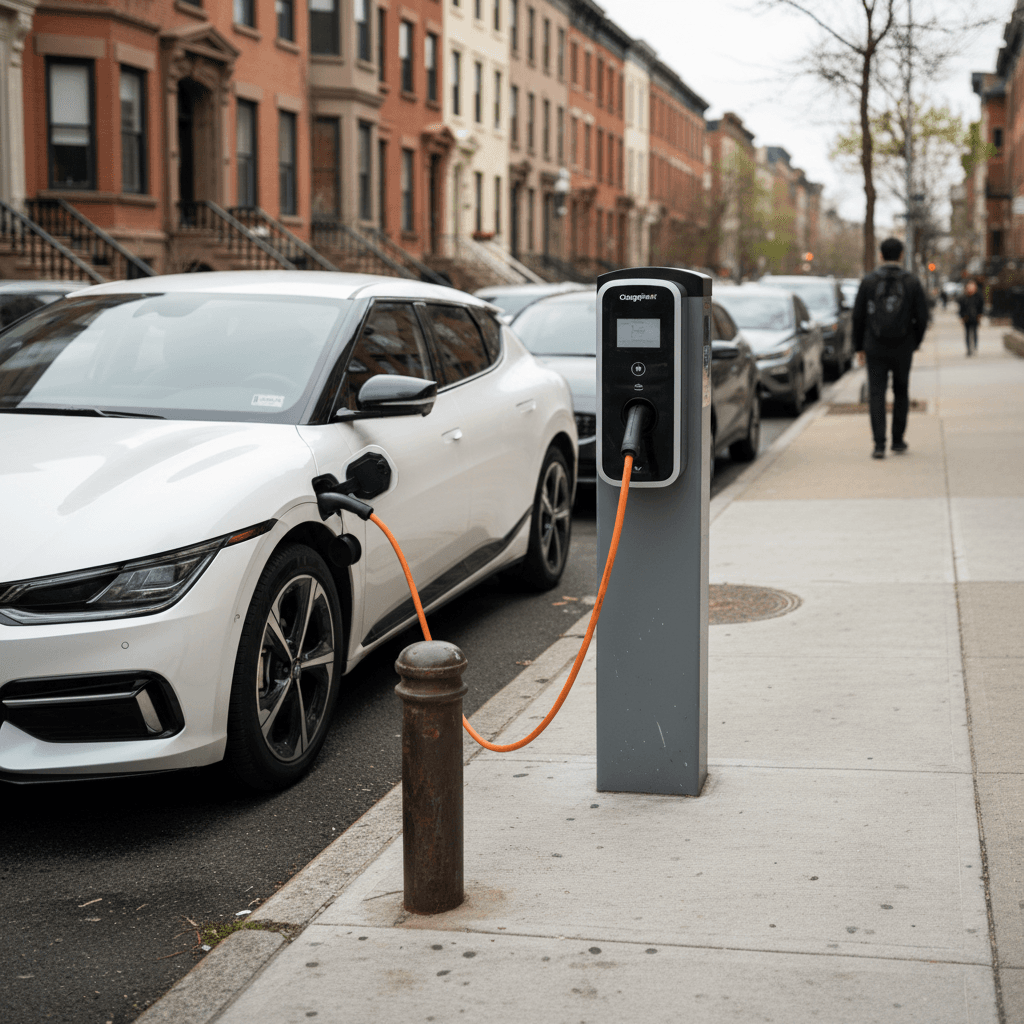
For home charging, more kW is not always better; it’s about matching charging speed to your driving pattern and your home’s electrical capacity. Most drivers don’t need to turn their driveway into a mini fast‑charge station.
Right‑sizing home charging by lifestyle
Pick the kW that matches your reality, not your fear of running out.
Low‑mileage urban driver
Daily miles: 10–25
Suggested: Level 1 (1–1.9 kW) or modest Level 2 (3.3–4.8 kW).
A standard 120V outlet may cover your needs if you plug in every night.
Typical commuter
Daily miles: 25–60
Suggested: Level 2 in the 7.2–9.6 kW range.
Gives you a full day’s driving back in 2–4 hours.
High‑mileage or multi‑EV home
Daily miles: 60+ per car, or two EVs sharing.
Suggested: Level 2 at 9.6–11.5 kW where panel capacity allows.
Let one car charge early evening, the other overnight.
Electrical panel reality check
If you’re shopping for a used EV on Recharged, you can also factor in the onboard AC charging rate. A car limited to 6.6 or 7.2 kW is still an excellent daily driver if your home setup and commute are aligned with that speed.
Public fast charging strategy for road trips
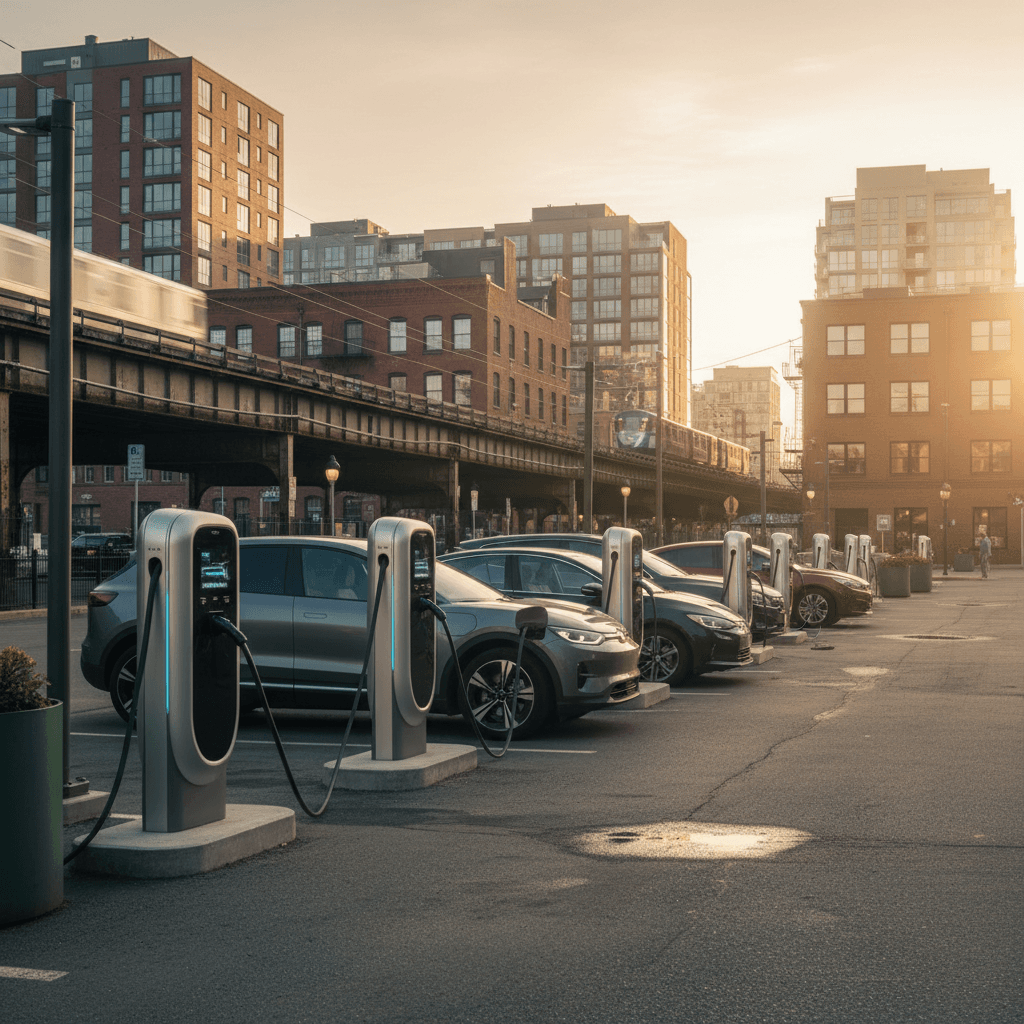
On the highway, the game changes. You’re time‑limited, not outlet‑limited, and kW numbers suddenly matter a lot. Here’s how to turn charging curves into an efficient road‑trip routine.
Smart fast‑charging habits
Arrive low, leave around 60–80%
Most EVs charge fastest between ~10–60% state of charge, then taper. It’s often quicker overall to make two shorter stops in that window than one long slog to 100%.
Prioritize chargers that match your car’s peak kW
If your EV maxes at 120 kW, a 150 kW station is usually “enough.” Chasing a 350 kW unit won’t magically double your speed.
Use preconditioning when available
If your car can pre‑warm the battery before a fast charge, use it. Warm packs take higher kW sooner, especially in cold climates.
Watch the curve, not just the peak
Two cars might both advertise 150 kW, but if one holds 120 kW to 60% and the other tapers at 40%, their real‑world stop times are very different.
Think in time, not percentage
If the charger has slowed to a trickle past 80%, it may be faster to unplug and hit the road, topping up again later if needed.
Used EVs and older fast‑charge limits
Used EV buyers: what to pay attention to with charging speed
Charging specs are one of those details that can move a used EV from “maybe” to “absolutely” or “hard pass” once you think about how you’ll live with the car. It’s not just about the biggest number on the spec sheet.
Three charging questions to ask about any used EV
Match the car’s strengths to your reality, not someone else’s marketing brief.
1. How fast does it AC charge?
Look for the onboard charger rating (e.g., 6.6, 7.2, 11 kW). If you’ll mostly charge at home, this may matter more than its DC peak.
2. What’s the DC fast‑charge peak, and curve?
The headline number (100, 150 kW) is useful, but reviews that show actual charging curves are gold. They reveal how long the car sustains high kW.
3. What’s the real battery health?
Degraded packs don’t usually change peak kW dramatically, but they shrink usable kWh, so the same kW buys you fewer miles. Recharged’s battery health diagnostics make this visible up front.
Why battery reports matter with charging speed
FAQ: EV charging speed explained in kW
Frequently asked questions about kW, kWh, and charging speed
Key takeaways: making kW work for you
You don’t have to become an electrical engineer to understand EV charging speed, you just need to see how power in kW, battery size in kWh, and your own habits fit together. Size your home charging to your daily miles, pick fast‑charging capability that matches your road‑trip ambitions, and remember that the car’s limits matter just as much as the station’s.
If you’re considering a used EV, those kW and kWh numbers are easiest to interpret when you can also see verified battery health and fair pricing in one place. That’s exactly what you get with every listing on Recharged: a Recharged Score Report, expert EV‑specialist support, and flexible options for financing, trade‑in, and nationwide delivery. Once you understand charging speed, you’re not just buying an electric car, you’re choosing how you want your daily life with it to feel.