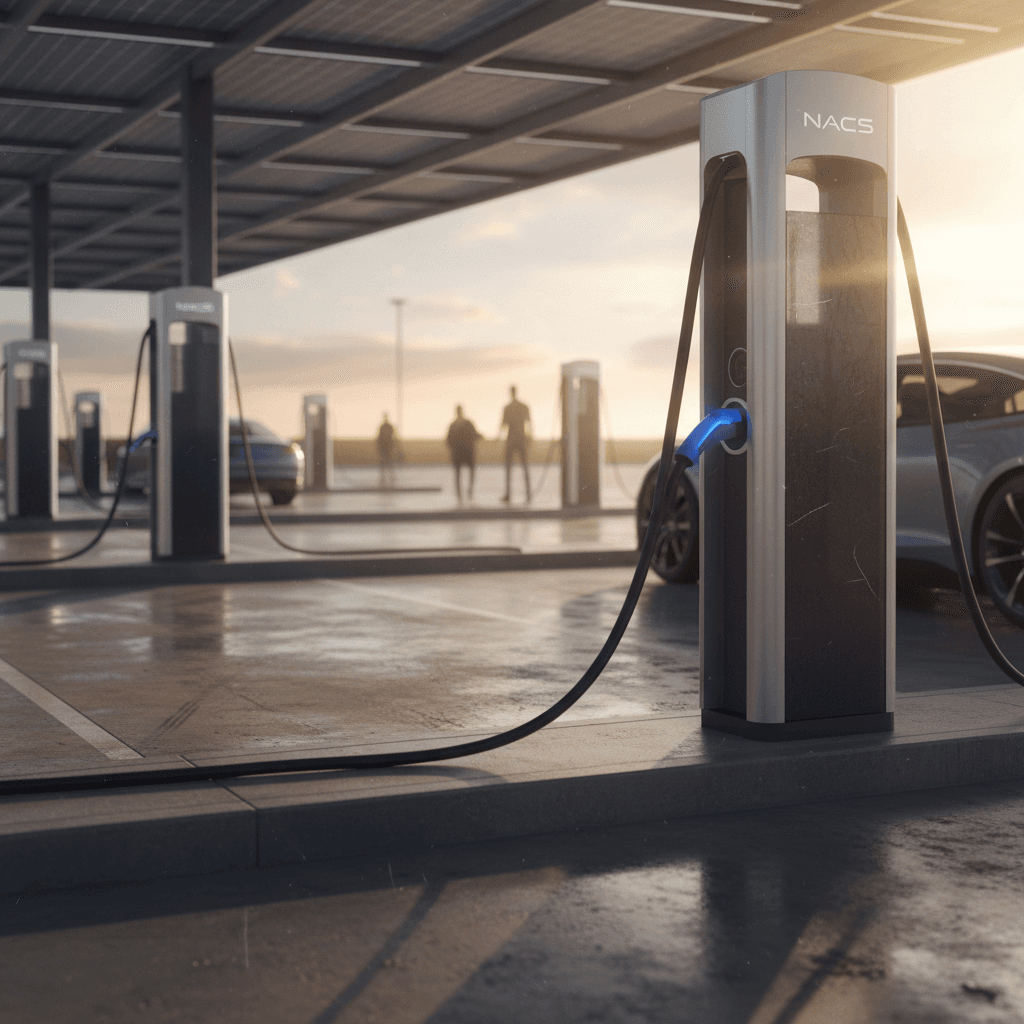
Pull into a well-designed EV charging hub at night and it feels less like a lonely gas station and more like an airport gate: bright lights, multiple high‑power chargers, cars coming and going, people grabbing coffee while their batteries gulp electrons. These hubs are quickly becoming the backbone of long‑distance electric driving in the U.S.
Quick definition
What is an EV charging hub?
The term charging hub doesn’t have a strict legal definition, but in everyday use it describes a multi‑charger site designed for higher traffic and higher power than the lonely pedestal charger behind a hotel. Where a regular public station might offer one or two plugs, a charging hub typically has four to a few dozen fast‑charging stalls in one place, with enough power on tap to run several at high speed simultaneously.
- Multiple charging stalls (often 4–20+), usually including DC fast chargers (50–350 kW+)
- Dedicated parking layout for easy in‑and‑out access, even for larger vehicles
- Good lighting, clear signage, and cameras for safety
- Often co‑located with food, restrooms, or retail
- Designed for short, frequent stops instead of all‑day parking
Think “mini charging airport,” not parking‑lot afterthought
Charging hub vs regular station: what’s the difference?
Typical public charging spot
- 1–2 chargers in the corner of a lot
- Often just Level 2 (6–11 kW)
- Little or no shelter, seating, or signage
- Fine for topping up while you shop or work
Modern charging hub
- Cluster of high‑power DC fast chargers
- Several EVs can charge at once
- Co‑located with food, restrooms, or lounge space
- Designed as a destination stop on a road trip, not an afterthought
Charging hub vs ordinary station at a glance
How a purpose‑built EV charging hub compares to a basic public charger.
| Feature | Regular public charger | Charging hub |
|---|---|---|
| Number of fast chargers | 0–2 | 4–20+ |
| Typical power per stall | 7–11 kW (Level 2) | 150–350 kW (DC fast) |
| Ideal stop length | 2–8 hours | 15–45 minutes |
| Best use case | Workplaces, overnight, destination parking | Highway travel, fleet turns, rideshare, logistics |
| Amenities | Maybe a coffee shop nearby | Food, restrooms, seating, lighting, often 24/7 |
| Redundancy if one is down | You might be out of luck | Usually another stall free or coming free soon |
For road trips, a true charging hub is the EV equivalent of a freeway travel plaza.
Not every “fast charger” is a hub
Inside a modern charging hub in 2025
Behind the scenes, a charging hub is part power plant, part data center. The visible part is the neat row of dispensers with cables and screens. The invisible part is a serious amount of infrastructure, step‑down transformers, switchgear, often onsite batteries, and a software brain orchestrating who gets how much power.
Charging hubs in today’s U.S. infrastructure
Key components of a charging hub
What’s working for you while you grab a snack
High‑power dispensers
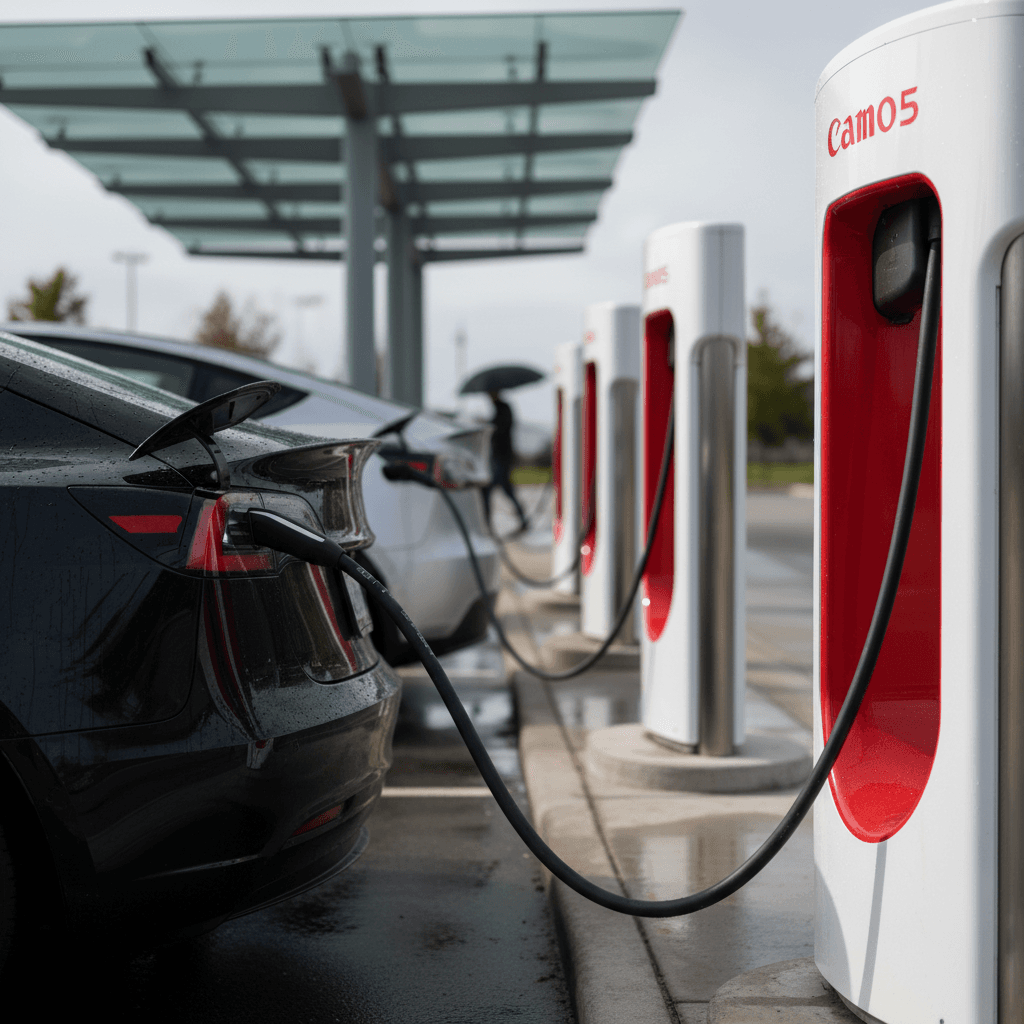
These are the posts you plug into. Modern hubs often support NACS and CCS connectors, with power ratings from 150 kW up to 350 kW or more.
Onsite energy storage
Some hubs include big battery packs that buffer the grid. They can reduce demand charges and keep power flowing during brief grid hiccups.
Smart load management
Software constantly juggles power between stalls so multiple cars can charge quickly without blowing past the site’s grid capacity.
Reliability is finally catching up
Who benefits most from charging hubs?
Everyone gets something out of charging hubs, but some drivers benefit more than others. If your EV life is mostly home charging and short trips, hubs are your road‑trip escape hatch. If you don’t have home charging, they can be your lifeline.
Four driver types who love charging hubs
If you see yourself here, hubs should be on your mental map
Road‑trippers and families
On long drives, charging hubs turn a stressful detour into a predictable 20–40 minute break. With multiple fast stalls and restrooms or food, they’re simply easier to live with than single‑plug stations.
Apartment & urban drivers
If you can’t charge at home, a nearby hub can act as your weekly “fuel stop.” One 30–45 minute session can cover several days of city driving, especially in efficient EVs.
Delivery & rideshare drivers
For drivers who live in their car, time is money. A reliable charging hub with high‑power DC stalls and 24/7 access can make or break your shift economics.
Fleets & depots
Fleet operators increasingly build private charging hubs at depots. The playbook is the same: clustered chargers, smart load management, and predictable turn‑times for each vehicle.
Good sign: you see multiple brands using the same hub
How fast can you charge at a hub?
“Fast” is a slippery word in charging. A hub might advertise 350 kW, but your actual speed depends on your car’s max DC rate, your state of charge, battery temperature, and how the site shares power across stalls.
Typical charging hub speeds by EV type
Rough, real‑world expectations for a healthy battery on a modern fast charger.
| EV type & battery | Peak DC rate | 0–80% at a good hub* | Miles of range per 10 min |
|---|---|---|---|
| Small crossover (60–70 kWh) | 120–170 kW | 25–35 minutes | 60–90+ miles |
| Family SUV (80–100 kWh) | 150–250 kW | 30–40 minutes | 70–100+ miles |
| Older EV (40–60 kWh, 50 kW limited) | 50 kW | 40–60 minutes | 40–60 miles |
| Premium 800V EV (e.g. 350 kW‑capable) | 230–270 kW typically | 18–25 minutes | 90–150+ miles |
Actual speeds vary by model, temperature, and state of charge, but this gives you a ballpark.
Fast hubs can expose weak batteries
How to find charging hubs on your route
The good news: you don’t have to guess which stations are real hubs; the apps already know. The trick is using the filters and details that many drivers ignore.
Three reliable ways to locate charging hubs
Use more than one tool, just like checking weather on two apps
Your car’s built‑in nav
Most EVs will route you via fast chargers and estimate arrival state of charge. Look for sites with many stalls, high power (150 kW+), and recent check‑ins.
Charging network apps
Apps from major networks, Tesla, Electrify America, EVgo, ChargePoint and others, let you filter by connector, power, amenities, and number of stalls. Many clearly label “plaza” or “flagship” sites that are true hubs.
Aggregation apps
Third‑party tools like PlugShare, A Better Routeplanner, or your favorite EV route planner show all networks together, plus user photos and reliability notes.
Checklist: choosing the right hub for your stop
1. Filter for DC fast and your connector
Make sure you’re seeing DC fast chargers (not just Level 2) and select the right plug type, NACS, CCS1, or CHAdeMO if you’re in an older Leaf.
2. Prioritize 150 kW+ sites with 4+ stalls
Power and stall count are your two big quality‑of‑life metrics. A 4‑stall, 150 kW site will usually beat a lonely 50 kW charger for trip time.
3. Scan recent user reviews
Look for comments in the last week or two. Keywords like “half the units down” or “credit card reader broken” are red flags.
4. Check amenities and hours
For late‑night travel, verify the restroom situation and opening hours. A 24/7 charger next to a 9 p.m.‑closing café can still mean a long, cold wait.
5. Have a backup hub within 10–20 miles
On long stretches, it’s smart to keep a second hub in mind in case your first choice is busy, offline, or feels sketchy when you arrive.
Let the car do the math, then sanity‑check it
Practical tips for using a charging hub
Once you’ve arrived at a hub, the dance is simple but not always intuitive, especially if you’re coming from gas‑station muscle memory. A few habits will make every stop smoother for you and everyone around you.
Charging‑hub etiquette and efficiency
1. Don’t obsess over 100%
Fast chargers work best from low state of charge up to about 70–80%. After that, speeds taper hard. It’s usually faster overall to unplug early and hit another hub later.
2. Park so others can reach the cables
Line up squarely in the marked space. Pulling too far forward or backward can block neighboring stalls, especially at short‑cable sites.
3. Move your car when you’re done
When charging finishes, or you’ve hit your target level, unplug and re‑park if you’re staying for food. Many networks add idle fees if you sit connected too long.
4. Watch for paired stalls
Some sites share a power cabinet between two chargers (often labeled A/B). If the hub is busy, skipping a paired stall next to a car already charging can get you a faster session.
5. Bring your own adapter if needed
In the NACS transition era, carrying the right adapter can dramatically expand your hub options, especially for non‑Tesla EVs tapping into Superchargers.
Rain, cold, and crowded hubs
Why charging hubs matter when you’re buying a used EV
If you’re shopping for a used EV in 2025, you’re not just buying a car; you’re buying into a charging reality. Charging hubs can turn a modest‑range EV into a perfectly workable road‑trip machine, or reveal that a tired battery isn’t up for the job.
1. Test the car at a real hub
Before you commit, try to fast‑charge the vehicle at a proper charging hub. See how quickly it ramps up, whether it hits its advertised peak speed, and how stable the rate is between 10–60% state of charge.
If the session is dramatically slower than expected, and you’ve ruled out cold weather or a clearly struggling site, that’s a useful data point.
2. Pair hub behavior with hard battery data
This is where a Recharged Score battery report becomes powerful. Recharged measures real battery health on every used EV we list, so you can connect the dots: lab‑grade data plus real‑world fast‑charging behavior.
Together, those two views help you answer the question that really matters: Can this car comfortably live at today’s charging hubs for the next several years?
How Recharged helps
Ready to find your next EV?
Browse VehiclesThe future of EV charging hubs
From the outside, hubs don’t look radically different year to year, still concrete, cables, and coffee. Underneath, the economics and technology are changing quickly. The broad direction of travel is clear: more hubs, more power, more comfort, and more plug types supported by default.
What’s coming next for charging hubs
Expect the good ones to feel less like chores and more like planned pit stops
More high‑power sites
Fast‑charging ports in the U.S. are on track to cross 100,000 within a couple of years if current growth holds, with many of those concentrated in hub‑style locations.
Connector convergence
With NACS widely adopted, new hubs are increasingly offering native support for Tesla‑style plugs alongside CCS, reducing the adapter gymnastics of the early EV era.
Better amenities, not just more plugs
The most competitive hubs are already adding shaded parking, indoor seating, Wi‑Fi, and predictable food options. Think “rest stop you’d actually choose,” not “least‑bad option.”
The charging hub is the new highway rest area, and the networks that treat it that way, designing for dwell time, not just kilowatts, will win the long game.
Who pays for all this?
Charging hub FAQ
Frequently asked questions about charging hubs
Bottom line: how to make charging hubs work for you
A well‑designed EV charging hub turns the biggest psychological hurdle of electric ownership, public charging, into something routine. Not glamorous, maybe, but predictable. When you know how to spot real hubs on the map, how to interpret their power ratings, and how your particular EV behaves on fast chargers, long drives stop feeling like experiments.
If you’re already an EV driver, start treating charging‑hub stops like fuel‑strategy moves, not emergencies: arrive with a buffer, unplug around 70–80%, and favor larger sites with good reviews. If you’re shopping for a used EV, pair a fast‑charge test at a local hub with an objective Recharged Score Report so you know how the car will really behave on today’s infrastructure, not just how it looked in a brochure years ago.
The grid will keep evolving, connectors will keep converging, and new hubs will keep appearing at highway exits you’ve never noticed before. The upside for you is simple: every year, it gets a little easier to point an electric car at the horizon and just go.