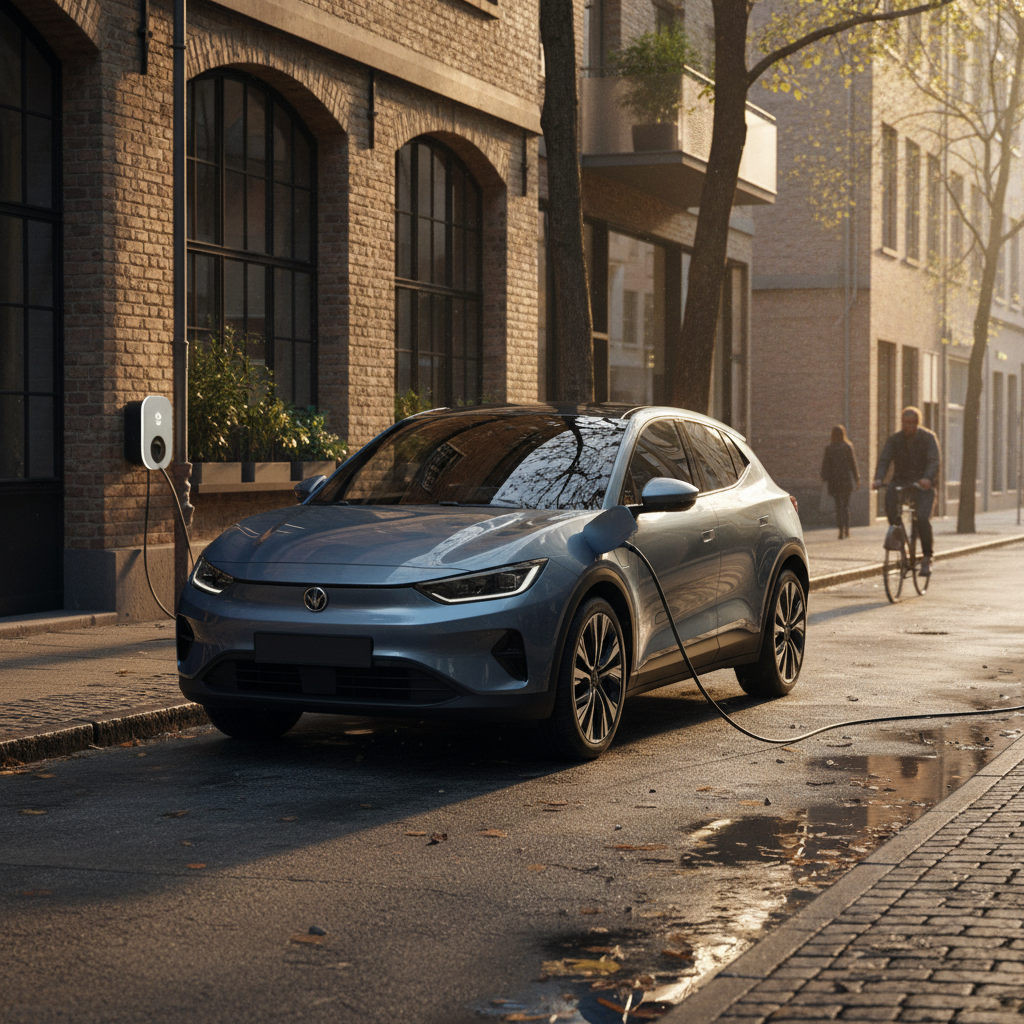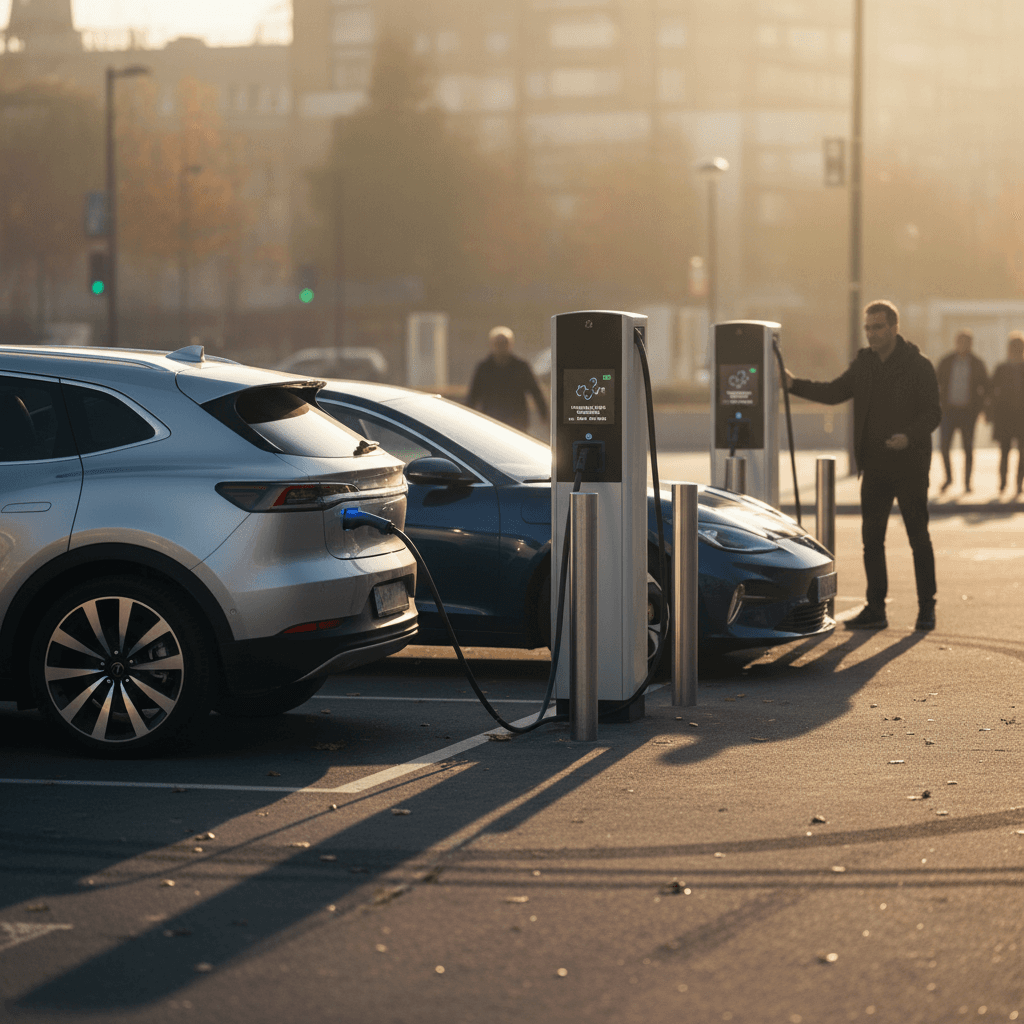
Pull into a busy charging lot today and you’ll see it all: drivers circling for a spot, cars sitting at 100% while others wait, handwritten notes under wipers, and the occasional argument by a DC fast charger. As EVs go mainstream, an EV charging etiquette guide is no longer “nice to have”, it’s how we keep shared chargers useful, safe, and drama‑free.
Think of chargers as fuel pumps with a line
Why EV charging etiquette matters in 2026
By 2026, public charging stations in many U.S. cities and along major highways see heavy use during evenings, weekends, and holidays. Networks have responded with idle fees (charging you by the minute once your session ends), time limits, and signage that politely begs you not to camp on the charger. Good etiquette isn’t just about being nice; it can save you money and keep your trip on schedule.
The changing public charging landscape
With that crowding comes a new social contract. The basics: move when you’re done, don’t treat chargers like reserved parking, and never touch someone else’s car or cable unless you’re sure it’s acceptable and safe.
10 golden rules of EV charging etiquette
You don’t need to memorize a law book, just a short list of habits that keep everyone rolling. Think of these as the **10 golden rules** of EV charging etiquette, whether you’re in a used Nissan LEAF, a new Hyundai IONIQ 5, or a Tesla using the NACS standard.
- Use chargers when you need energy, not just because the spot is open.
- Do not park in a charging space unless you’re actively charging.
- Move your car promptly after charging finishes, especially at DC fast chargers.
- Avoid charging to 100% on DC fast when others are waiting, aim for 80–90% and move on.
- Never unplug another driver’s car unless there’s clearly established permission or a real emergency.
- Keep cables tidy, no tripping hazards or connectors lying in puddles.
- Respect posted time limits and idle fees.
- At shared chargers (apartments, workplace), coordinate with others and use apps or notes to share fairly.
- Don’t shame newcomers, public charging is confusing; offer help instead of sarcasm.
- Leave the charger, and the spot, clean and ready for the next driver.
A simple sanity check
DC fast charging etiquette on road trips
Most “charger drama” happens at DC fast chargers along highways. Speeds are high, stakes are higher, and people are often traveling with kids, pets, or an appointment to make. Here’s how to keep your stress level down and your reputation up.
Fast charger priorities: speed, fairness, and safety
Three things to balance every time you plug into a DC fast charger
Charge just enough
Plan to arrive around 10–20% and leave around 70–85% if chargers are busy. That’s usually the fastest way to travel, and it frees the stall sooner for others.
Stay within reach
When you’re DC fast charging, don’t disappear to a movie or a long sit‑down meal. Stay close enough that you can move within a few minutes of your session ending.
Follow site rules
Pay attention to posted time limits, power-sharing notes, and idle fee policies. They’re designed to keep chargers available and reduce arguments.
Step‑by‑step: Polite behavior at a busy DC fast charger
1. Park correctly and don’t block traffic
Pull fully into the spot so others can pass behind you. Don’t park diagonally or string cables across traffic lanes just to reach your port.
2. Plug in, confirm speed, then step away
Start the session, make sure you’re actually charging at a reasonable rate, and only then grab coffee or hit the restroom.
3. Set an alarm for your estimated completion time
Use your car’s app or your phone. Give yourself a few minutes of buffer so you’re back before idle fees or angry looks start.
4. Move as soon as practical after charging ends
You don’t have to sprint, but aim to move within 5–10 minutes of your session finishing when others are waiting.
5. Don’t hog high‑power stalls
If your car tops out at 50 kW, there’s no need to monopolize the only 250 kW post on site while others who can use the power are waiting.
6. Communicate if you absolutely can’t move
If you’re sick, traveling solo with small kids, or feel unsafe walking back at night, it’s okay to prioritize safety, but accept that other drivers might be frustrated. A polite note on the dash explaining why can defuse tension.
What about unplugging a finished car?
Level 2 and destination charging etiquette
Level 2 chargers, at hotels, restaurants, downtown garages, and shopping centers, are slower and feel more like regular parking. That’s exactly why people tend to misuse them. Here’s how to be the person everyone hopes pulls in next.
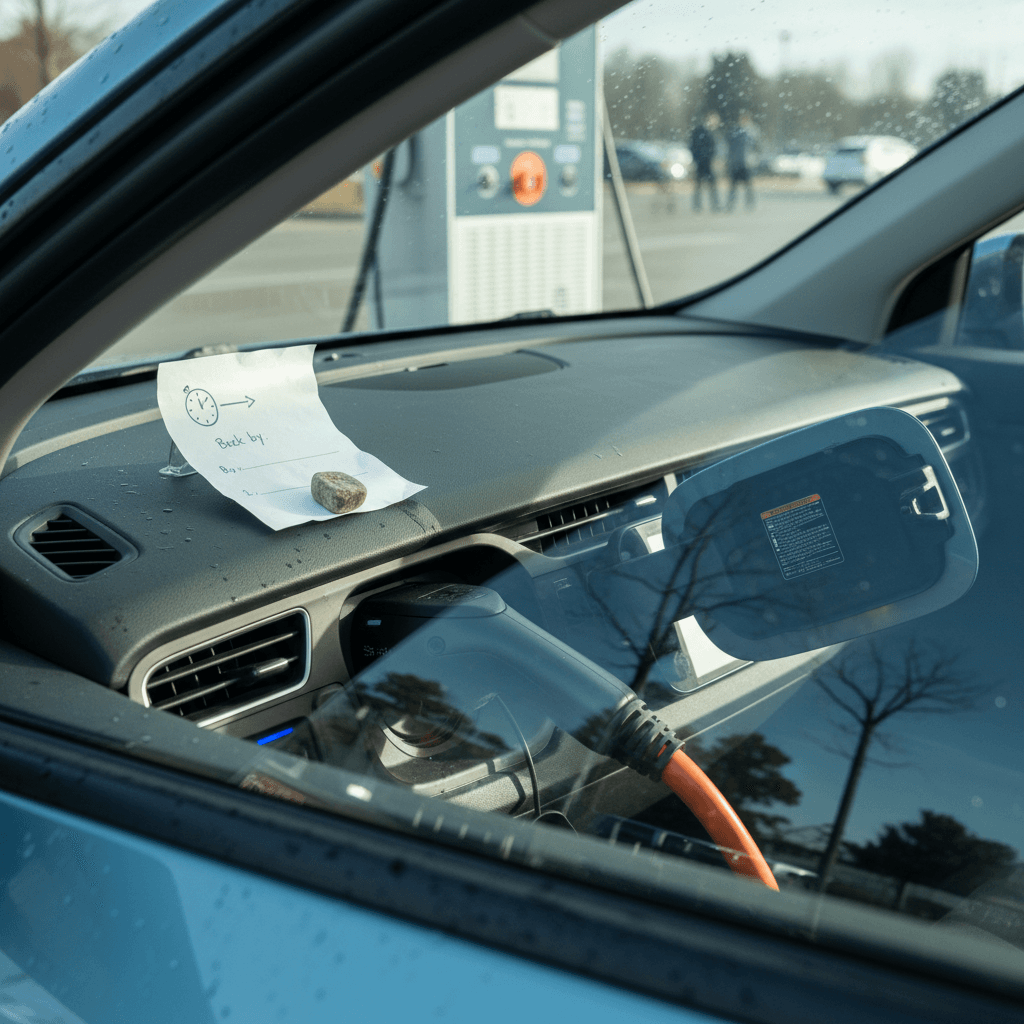
At hotels and overnight stops
- Share the wealth: If there are more EVs than plugs, consider charging to a comfortable state of charge (say 80–90%), then moving your car so someone else can charge overnight.
- Talk to the front desk: Some hotels keep a sign‑up sheet, QR code, or key system for EV spaces. Follow whatever system they’ve put in place.
- Use a note: A simple “Charging until ~11 p.m., OK to unplug after” on your dash lets others know you’re thinking of them.
At restaurants, malls, and downtown garages
- Match your stay to your charge: If you’re only staying an hour, you don’t need to charge from 20% to 100%. Stop when you have what you need plus a buffer.
- Don’t ‘top off’ at 95%: Using a public charger for tiny top‑ups while others are low is like filling to the brim at a busy gas station.
- Watch the cable: Coil the cord on the holder and keep connectors off the ground when you leave.
A small gesture that goes a long way
Home, apartment, and shared parking etiquette
At a detached home with your own driveway, etiquette is mostly about not running cords across sidewalks and not hogging street chargers. In apartments, condos, and townhomes with shared parking, the social math gets more complicated because every plug is politics.
Don’t DIY dangerous charging
If you’re shopping for a used EV and you know you’ll be charging in a shared garage, factor that into your choice. A smaller‑battery commuter car that sips power may be easier to keep topped up on limited plugs than a big‑battery SUV. At Recharged, our specialists can help you think through charging fit, not just price and range, before you buy.
Workplace EV charging etiquette
Workplace chargers are a huge perk, free or cheap miles while you’re at your desk. They’re also a common source of friction when a few cars treat them as personal parking spots. A little structure goes a long way.
Workplace charger etiquette at a glance
Use this quick comparison to stay on good terms with coworkers and facilities staff.
| Situation | Do | Don’t |
|---|---|---|
| Arriving with plenty of range | Leave the spot for a coworker who’s low if chargers are limited. | Plug in ‘just because it’s free’ and sit there all day. |
| Arriving very low on range | Plug in, then move your car once you’ve added enough to comfortably get home. | Expect to occupy the charger 8+ hours every day. |
| Shared chargers on a schedule | Use sign‑up sheets, apps, or simple time blocks (e.g., morning/afternoon). | Ignore posted rotations or erase other people’s names. |
| Hybrid or PHEV drivers | Charge if you truly need electric range for a long drive or emissions rules. | Monopolize chargers when full EVs are waiting and you have a gas engine backup. |
| Communication with coworkers | Be transparent in Slack or email about charger use and needs. | Let resentment build silently until HR has to referee. |
When in doubt, check with your facilities or sustainability team; many companies adopt simple written charging policies as EV adoption grows.
Ask for a clear policy
How to handle conflict and "charger drama"
Sooner or later, you’ll arrive at a charger and someone will be blocking it, or you’ll come back to your car and find a note on your windshield. How you respond can escalate things, or turn strangers into allies.
If someone is blocking the charger
- Start with curiosity, not accusation: They might be new to EVs, confused by the app, or genuinely stuck.
- Look for contact info: Some drivers leave a phone number or unit number on the dash. A polite text beats a passive‑aggressive note.
- Know when to get help: If a gas or EV car is clearly abusing the spot at a mall or office, involving security or management is better than a shouting match.
If someone is upset with you
- Check the facts first: Did you overstay a time limit or miss your alarm? If so, a simple apology goes a long way.
- Don’t take it personally: Many people bring broader range anxiety and EV frustrations into these moments.
- Offer a solution: “I’ll move right now” is better than arguing over who’s technically right.
Avoid public confrontations when you can
EV charging etiquette is basically about empathy. Assume the other driver is just trying to get home, too, and act accordingly.
Planning ahead so you rarely need etiquette heroics
The best etiquette is the kind you barely have to think about because you rarely end up at 2% battery fighting over the last plug. A little planning, especially with a used EV whose range may be lower than when it was new, keeps you out of trouble.
Smart planning habits to avoid charger conflict
1. Know your real‑world range
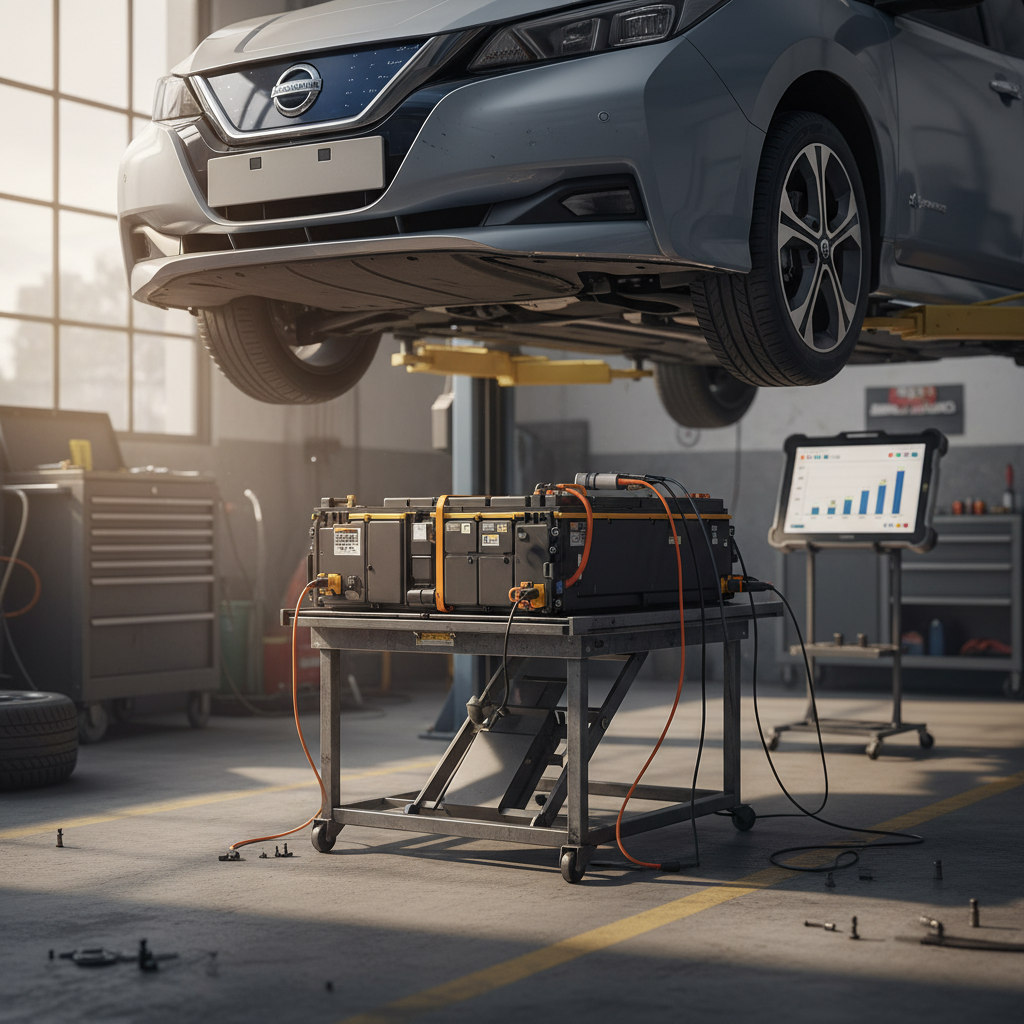
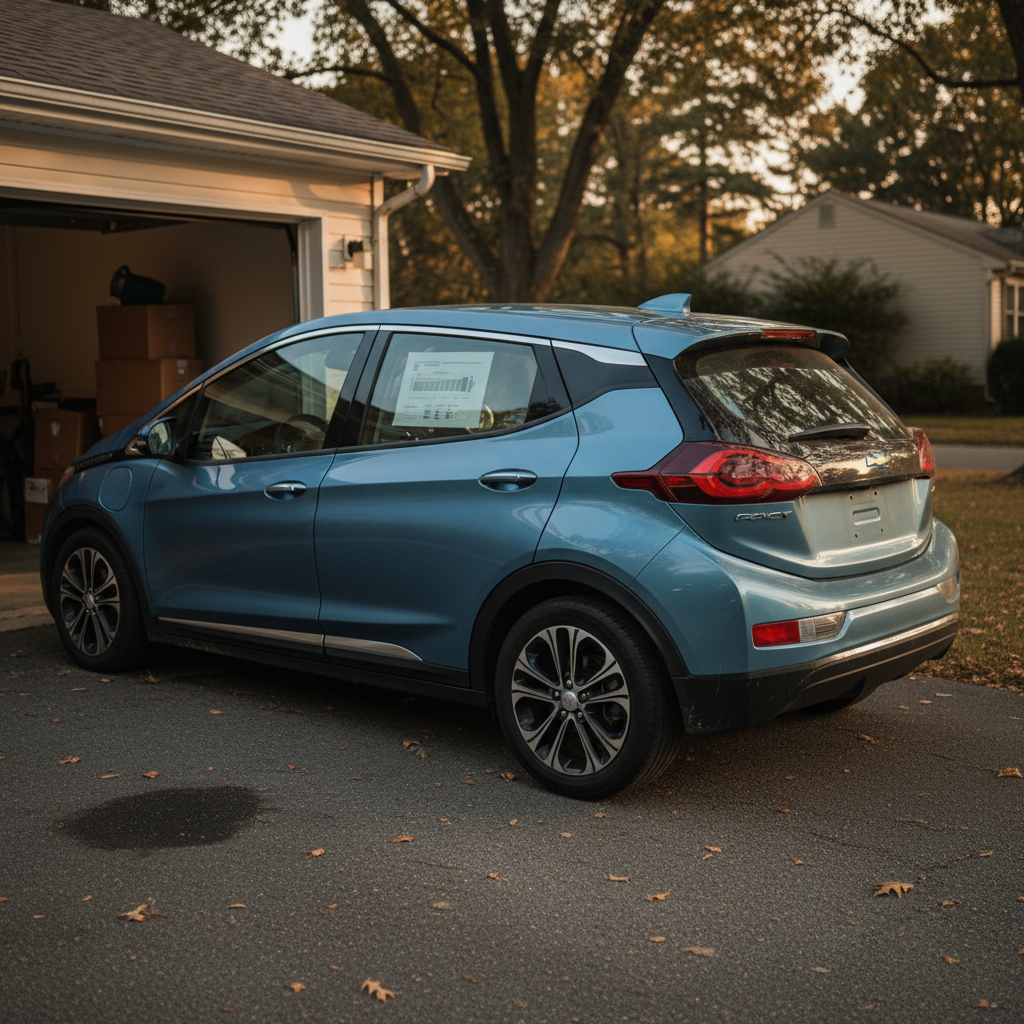
Batteries age and driving styles differ. If you bought a used EV, look at its battery health (tools like the <strong>Recharged Score</strong> can help) and build your plans around what the car actually does, not its original window sticker number.
2. Use multiple charging apps
Relying on a single map can burn you. Keep 2–3 apps handy so you can check occupancy, pricing, and recent check‑ins before you arrive.
3. Leave buffer for the last leg
Aim to arrive at your final destination with at least 10–20% left, not 1%. It gives you options if chargers are down or full.
4. Favor home and workplace charging
Whenever possible, treat public DC fast charging as a trip tool, not your daily fuel. That reduces your exposure to busy sites and tense situations.
5. Have a Plan B (and C) on road trips
When you map a long drive, note backup chargers within 10–20 miles of your primary stop. That way, if a station is full, you’re not stuck making bad etiquette choices out of desperation.
Buying with charging in mind
EV charging etiquette FAQ
Common EV charging etiquette questions
Key takeaways for stress-free EV charging
EV charging etiquette isn’t a secret club handshake; it’s just the shared understanding that we’re all trying to get where we’re going without turning every plug into a battleground. Use chargers when you truly need them, move when you’re done, keep your cables tidy, and treat other drivers’ time the way you’d like them to treat yours.
If you’re shopping for a used EV, or trying to make the most of the one you have, thinking about where and how you’ll charge is just as important as trim packages or 0–60 times. Recharged is built around that reality: every vehicle comes with a Recharged Score battery health report, fair market pricing, and EV‑savvy guidance so you can pick a car that fits your real charging life, not just the highlight reel. With the right car and a little etiquette, public charging becomes just another smooth part of the drive, not the most stressful stop on your trip.