If you grew up on oil changes and muffler shops, EV car service feels like stepping into an alien world. No oil, no timing belt, no “tune‑up” every 30,000 miles, yet electric cars still need care. The question isn’t whether an EV needs servicing; it’s what to service, how often, and how much it really costs compared with a gas car.
Big picture
How EV car service differs from gas maintenance
Gas car service is about the engine
- Regular oil and filter changes
- Spark plugs, ignition coils, fuel filters, timing belts
- Transmission fluid, exhaust system, emissions controls
- Lots of heat, vibration, and moving parts to wear out
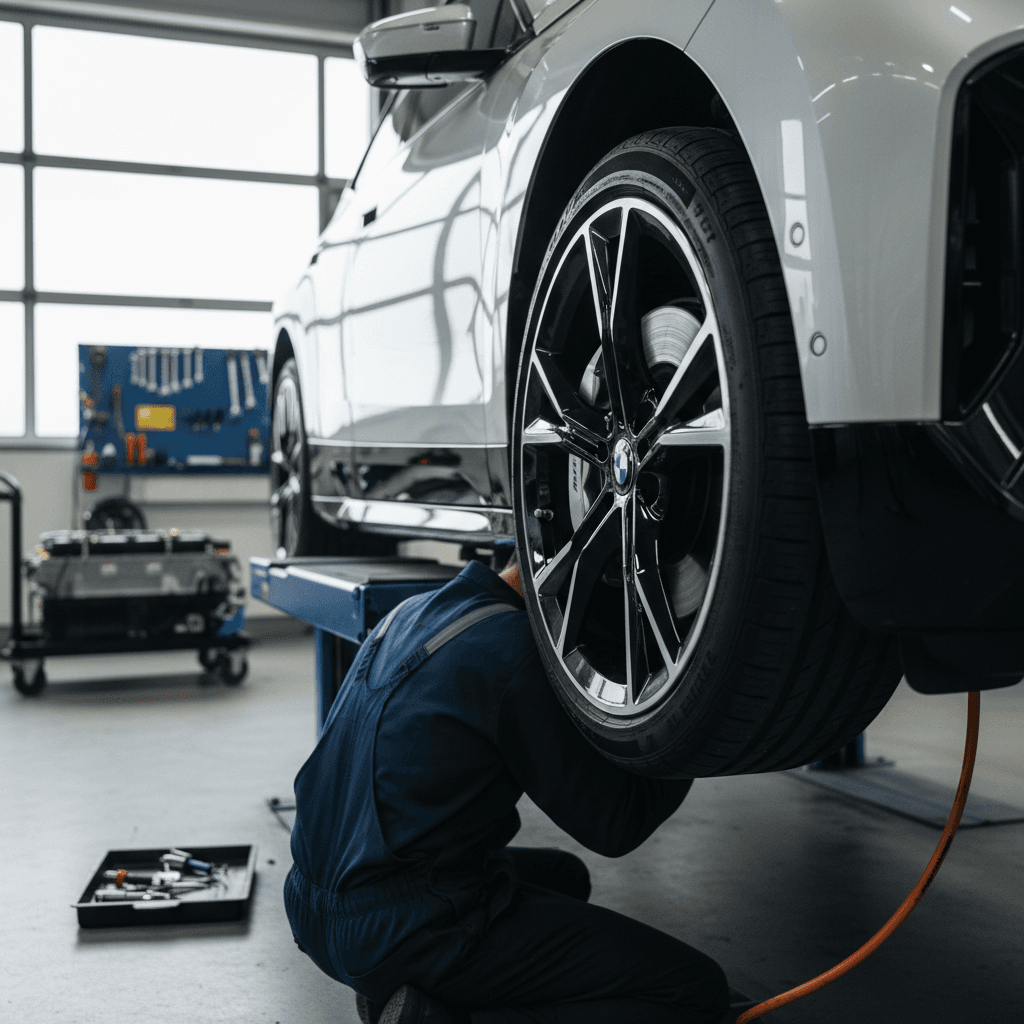
EV car service is about everything else
- Battery, electronics, and cooling system
- Tires, brakes, suspension, steering
- Cabin filters and fluids like brake fluid
- Software updates and diagnostics (often over‑the‑air)
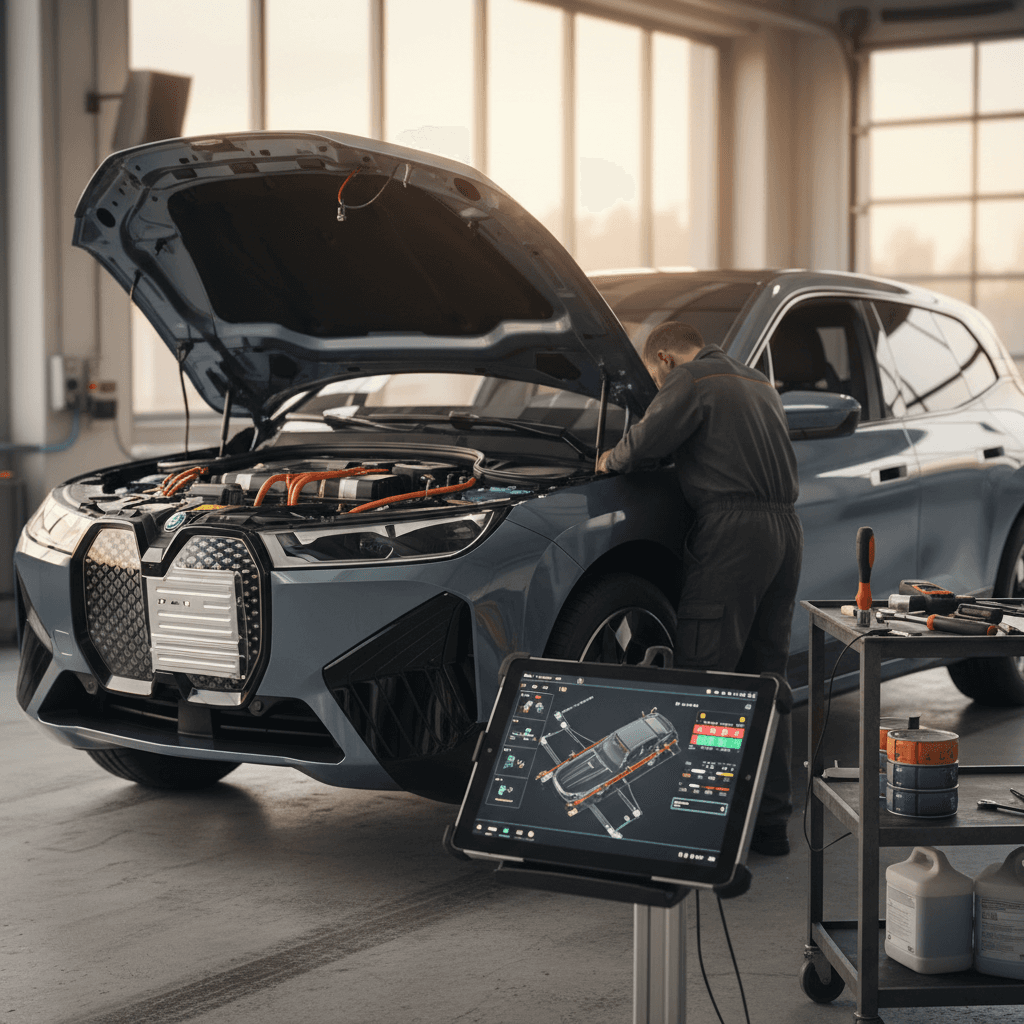
An EV powertrain (battery, inverter, electric motor, single‑speed gearbox) has far fewer parts than a combustion engine and multi‑speed transmission. There’s no oil to change, no exhaust to rust out, no fuel pump or injectors to clog. That’s why many owners are shocked at how short the service menu is when they show up for their first EV car service.
Think "inspection" not "tune‑up"
What maintenance your EV actually needs
Core EV car service items
What almost every electric car will need over time
Tires & alignment
- Tire rotation every 6,000–7,500 miles
- Wheel alignment checks annually or after big potholes
- Tire replacement roughly every 25,000–40,000 miles depending on driving style
Brake system
- Brake inspection at least once a year
- Brake fluid change every 3–4 years (varies by brand)
- Clean and lube caliper slides in rust‑prone climates
Fluids & filters
- Cabin air filter every 2–3 years
- Coolant for the battery/drive unit roughly every 8–10 years (model‑specific)
- Wiper blades and washer fluid as needed
- Suspension and steering checks, especially on heavier SUVs and crossovers
- High‑voltage system inspection if the car shows warnings or after collision damage
- Air‑conditioning service (important because many EVs use the A/C loop to cool the battery)
Don’t ignore the boring stuff
Typical EV service costs in 2025
EV car service vs gas: 2025 cost snapshot
Sample EV car service costs vs common gas services
These are typical retail prices in many U.S. markets as of late 2025; your local shop may vary.
| Service item | EV cost (approx.) | Gas car cost (approx.) | Notes |
|---|---|---|---|
| Tire rotation | $60–$100 | $60–$100 | Same for both; EVs may need it slightly more often |
| Cabin air filter | $50–$120 | $50–$120 | Similar pricing, labor adds up at dealerships |
| Brake fluid change | $120–$200 | $120–$200 | Same job, same price |
| Standard oil change | N/A | $80–$150 | EVs don’t use engine oil |
| Transmission service | Rare / N/A | $200–$400 | Most EVs use sealed single‑speed gearboxes |
| Spark plugs & tune‑up | N/A | $300–$800 | Dozens of small parts that simply don’t exist on an EV |
EVs don’t eliminate service, they just move the money away from the engine bay.
The headline is simple: EV car service isn’t free, but it’s predictably cheaper and less frequent, especially once you’re past the new‑car novelty period and just living with the thing day‑to‑day.
Battery health: the centerpiece of EV car service
For a gas car, service is about keeping the engine alive. For an EV, the traction battery is the story. It’s the most expensive component on the vehicle, the source of most online anxiety, and the key determinant of real‑world range and resale value.
- Lithium‑ion packs in modern EVs typically lose only a small percentage of capacity per year when cared for properly.
- Most manufacturers back the battery with 8–10 year, 100,000‑mile (or more) warranties against excessive degradation.
- Day‑to‑day, you experience battery health as usable range, how far the car actually goes on a charge compared with when it was new.
What a good battery health report shows
This is exactly why every vehicle on Recharged comes with a Recharged Score Report. It includes verified battery health diagnostics, so you’re not buying a mystery pack. You see range, degradation estimates, and fair market pricing in one place, before you sign anything.
Service schedule patterns for popular EVs
Every brand publishes its own maintenance schedule, but once you strip away the marketing, three clear patterns emerge across most modern EVs.
How most EV service schedules are structured
1. Short‑interval tire & brake checks
Most EVs call for a visit every 6,000–10,000 miles for tire rotation and a general safety inspection. Many owners combine this with seasonal tire swaps in snowy states.
2. Medium‑term cabin and brake fluid service
Around the 2–4 year mark, you’ll see recommendations for cabin air filter replacement and brake fluid changes. These aren’t EV‑specific, they’re just basic car hygiene.
3. Long‑interval coolant and drivetrain checks
At 8–10 years, some brands specify fresh coolant for the battery and drive unit and a more detailed inspection of the high‑voltage system. These are infrequent but important from a longevity standpoint.
Good habit: annual "EV physical"
EV service pitfalls to avoid
Common EV car service mistakes
These are the ways people accidentally burn money, or range, on otherwise low‑maintenance cars.
Skipping tire care
Using the wrong shop
Abusing fast charging
Ignoring software alerts
High‑voltage safety isn’t optional
Servicing a used EV: what to check first
With a used gas car, your pre‑purchase ritual is well known: compression test, leak‑down, fluid checks, and a mechanic with a grim expression. For a used EV, the checklist is different, and in many ways more straightforward.
First‑service priorities for a used EV
1. Battery state of health & range
Ask for a recent <strong>battery health report</strong>, not just the dash gauge. You want to know estimated remaining capacity and whether any modules are weak. Every vehicle on Recharged includes this as part of the Recharged Score.
2. Charging behavior
Test AC (Level 2) and, if possible, DC fast charging before you buy. Confirm the car charges at expected speeds and that connectors, ports, and cables are clean and undamaged.
3. Tires, brakes & suspension
EV weight can be hard on suspension components and inner tire shoulders. A quick alignment check and underbody inspection will reveal most issues.
4. Software, recalls & connectivity
Make sure the car is on current software, with any safety‑related recalls completed. For app‑connected cars, confirm that account transfer and remote features work properly.
5. Service history & climate
Where the car lived matters. Hot‑climate, fast‑charged highway cars age batteries faster than mild‑climate commuters. Ask for service records even if they’re shorter than you’re used to with gas vehicles.
Where Recharged fits in
Ready to find your next EV?
Browse VehiclesHow Recharged handles EV car service on used vehicles
Because EV car service is different from gas maintenance, buying a used electric car should be different too. Recharged’s whole model is built around making the invisible parts of EV ownership, battery health, service history, and real‑world range, visible before you commit.
1. Deep battery diagnostics
Every vehicle receives a Recharged Score that includes battery health, estimated range, and pack behavior. It’s more than a plug‑in OBD scan; it’s a dedicated EV assessment designed to answer the question that matters most: How healthy is this pack, really?
2. Mechanical & safety inspection
Specialists inspect tires, brakes, suspension, steering, and high‑voltage components, flagging anything that could affect safety or long‑term costs. You see what was found and what was fixed, not just a generic “multi‑point inspection” stamp.
3. Ownership support
From explaining your first service interval to helping you plan home charging, Recharged offers EV‑specialist support and a fully digital buying experience, plus an Experience Center in Richmond, VA if you prefer to talk things through in person.
Financing and service go together
EV car service FAQ
Frequently asked questions about EV car service
The bottom line on EV car service
EVs don’t need pampering so much as attention in the right places. Where gas cars demand constant tribute in oil, belts, and engine work, EV car service focuses on the parts that carry the weight: tires, brakes, suspension, cooling, and, above all, the battery.
Get those basics right, and the ownership experience feels almost shockingly low‑drama. That’s the opportunity in the used EV market right now: lower running costs, falling prices, and, if you buy from a seller that understands electric cars, radical transparency about battery health and service needs. That’s the niche Recharged was built to serve, so when you’re ready for your next EV, you’re not just taking a test drive, you’re seeing the car’s whole story.