If you’ve been hunting for EV car lease deals lately, you’ve probably noticed two conflicting trends: ads touting shockingly low monthly payments, and headlines about tax credits disappearing and lease prices climbing. The reality in late 2025 is more complicated than the billboards suggest, but if you know where to look and how to do the math, leasing can still be a smart, low-risk way to get into an electric car.
Quick snapshot: EV leasing in 2025
Why EV leasing blew up, and what changed in 2025
To understand today’s EV car lease deals, you need to know why leasing became the default way to get an electric car in the first place. Between 2022 and 2024, leasing went from a niche option to the dominant way to finance new EVs, climbing from under 20% of EV transactions to around 45–60% in some quarters. The driver wasn’t just consumer preference; it was policy design.
The rise of EV leasing in the U.S.
From 2022 through September 2025, a key feature of U.S. policy allowed finance companies to treat leased EVs as commercial vehicles, letting them claim the full $7,500 federal credit even when the customer wouldn’t have qualified. On paper the bank got the credit, but in practice, a lot of that value was baked into sub-$300 monthly payments on vehicles with sticker prices well north of $40,000.
Big policy shift as of September 30, 2025
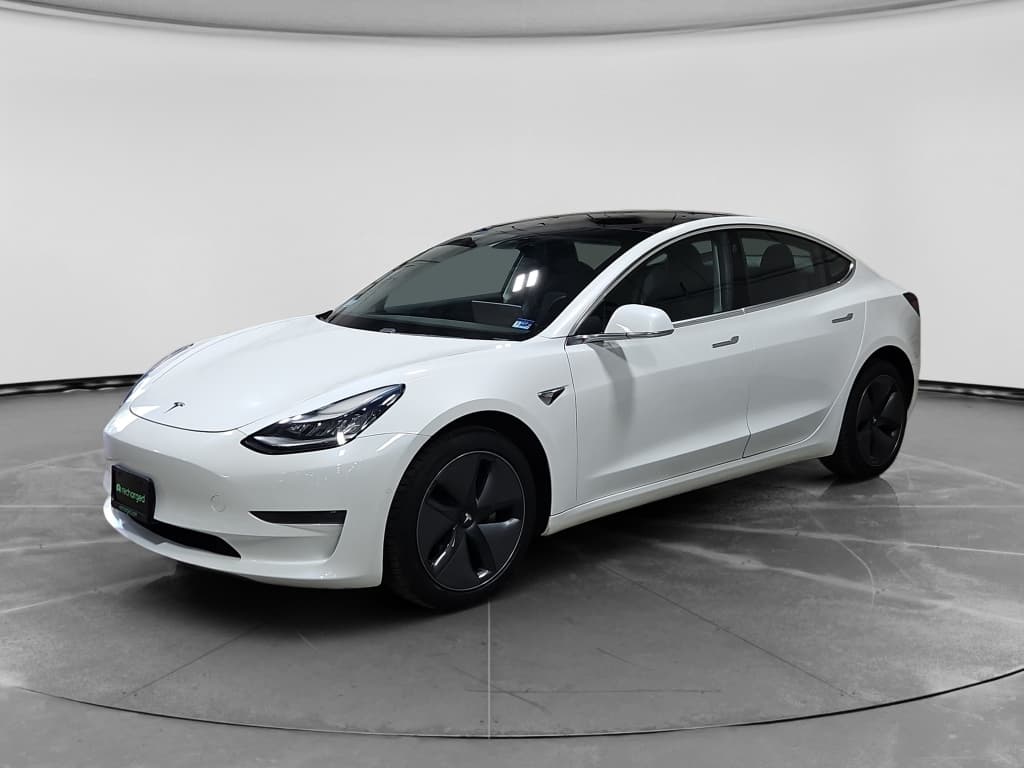
We’re now in a transition phase. Some manufacturers have already raised lease rates, Tesla, for example, bumped Model 3 and Model Y lease prices after the credit expired, while others like GM and Ford have used discounts and internal programs to keep certain headline lease specials alive through year end. For you as a shopper, this means the gap between a genuinely good deal and a mediocre one is wider than it was a year ago.
How EV car lease deals work today
An EV lease isn’t fundamentally different from a gas-car lease: you’re paying for depreciation plus interest and fees over a fixed term, then giving the car back. What’s different with EVs is how uncertain residual values, rapidly improving tech, and incentives shape those numbers.
Key pieces of an EV lease
Four numbers that determine whether a deal is actually good
MSRP & cap cost
The starting price (MSRP) minus discounts and incentives becomes your capitalized cost. Bigger discounts here directly lower your payment.
Residual value
The bank’s guess at what the EV will be worth at lease-end (often 45–60% after 3 years). Higher residual = lower monthly payment.
Money factor
The lease equivalent of an interest rate. Multiply by 2,400 to approximate APR. A lower money factor can offset a weaker discount.
Fees & term
Acquisition fee, doc fees, disposition fee, mileage allowance, and term length (24–48 months) all influence your total cost.
With EVs, banks tend to build in more conservative depreciation assumptions because batteries, charging standards, and software are evolving fast. That’s actually good news for you as a lessee: if the EV is worth much less than expected when the lease ends, it’s the bank’s problem, not yours. If it somehow holds value better than expected, you can often buy it for the preset residual and keep the upside.
Why many first-time EV drivers should consider leasing
What counts as a good EV lease deal in 2025?
Because the federal credit is gone and brands are reacting differently, you can’t benchmark EV car lease deals with a single magic number. Instead, think in terms of ratios and total out-of-pocket cost.
Rule-of-thumb benchmarks for EV lease value
These rough guardrails help you quickly categorize an EV car lease deal before you dive into the fine print. Numbers assume a mainstream non-luxury EV with a price in the $35,000–$50,000 range.
| Metric | Strong deal (post-credit era) | Borderline | Probably walk away |
|---|---|---|---|
| Monthly payment vs MSRP | ~0.5–0.7% of MSRP with around $3,000–$4,000 due at signing | 0.8–1.0% of MSRP | Over 1.1% of MSRP unless heavily optioned |
| Due at signing | Under $4,000 total, including first payment and fees | $4,000–$5,000 | Above $5,000 on a mainstream EV |
| Lease term | 24–36 months | 39 months | 48+ months (ties you to older tech) |
| Mileage allowance | 12,000–15,000 miles/year | 10,000 miles/year | Under 10,000 miles/year without cheap overage rates |
These aren’t hard lines, but they’ll keep you from wasting time on obviously bad offers.
Simple quick-test formula
Examples of strong EV car lease deals
Concrete examples make this less abstract. Actual offers change month to month and often vary by region, but 2025 has produced some clear standouts that illustrate what “good” looks like in the current environment.
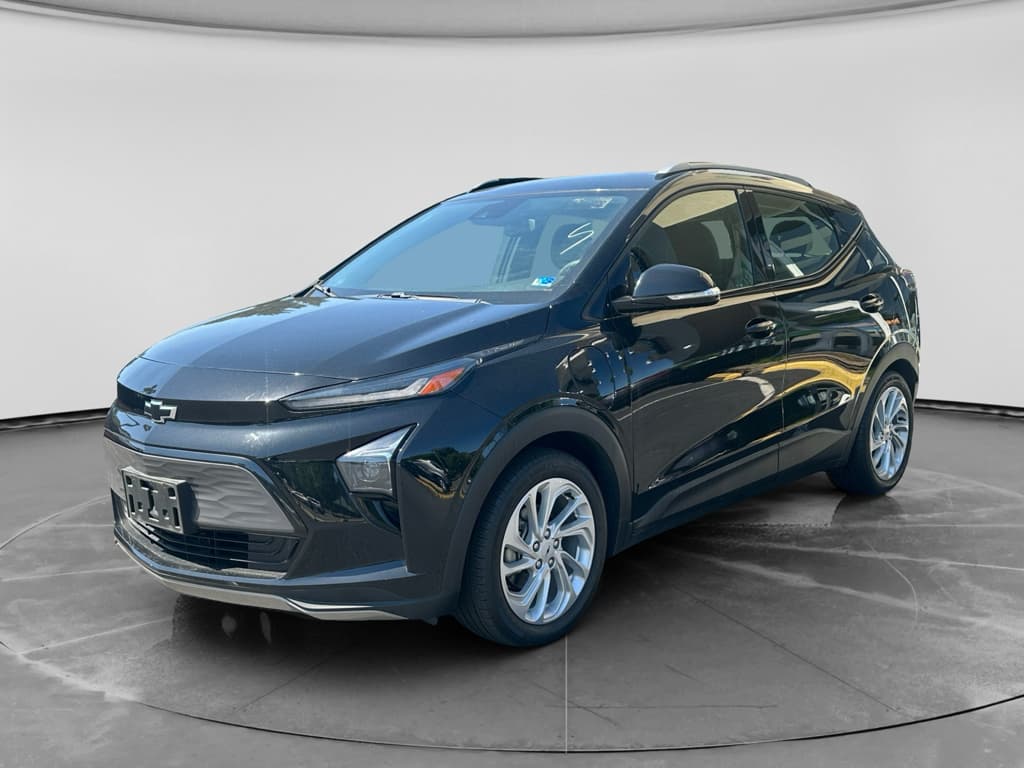
- A compact electric SUV like the Chevrolet Equinox EV LT offered around mid‑2025 for roughly $249–$319 per month on a 24‑month lease with about $2,300–$3,600 due at signing, on a vehicle with more than 300 miles of rated range.
- A mainstream crossover such as the Kia Niro EV Wind advertised at about $149 per month for 24 months with $3,999 down earlier in 2025, despite a mid‑$40,000 MSRP.
- Early deals on the Honda Prologue and similar Ultium-based models that dipped into the high‑$100s per month in ZEV states for short terms with several thousand dollars due at signing.
Why these numbers matter more than the specific models
- Short term (24–36 months)
- Well under 1% of MSRP per month
- On models where the automaker is chasing volume or clearing out 2025 inventory

Lease vs buy an electric car: which makes sense now?
When leasing an EV makes more sense
- First EV, lots of unknowns. You’re unsure about range, charging access, or how an EV fits your life.
- Tech FOMO. You expect meaningful improvements in range and charging in 2–3 years and want flexibility.
- High-depreciation segments. You’re eyeing a segment where new models are coming fast (compact crossovers, entry-luxury SUVs).
- Short-term certainty. You want a predictable payment, factory warranty coverage the whole time, and an easy exit.
When buying an EV may be smarter
- Long-term keeper. You tend to drive cars 8–10 years and rack up miles.
- Home charging + cheap electricity. Low running costs compound the more you drive.
- Comfort with used markets. You’re willing to buy a used EV at today’s softened prices and keep it.
- You find real purchase discounts. Deep dealer discounts or low‑APR financing may beat the value of current lease programs.
Think in total cost, not just monthly payment
How to compare EV lease offers step by step
7-step checklist for comparing EV car lease deals
1. Normalize the term and mileage
Compare leases on the same footing: 36 months vs 36 months, 12,000 miles/year vs 12,000. An offer that’s cheap partly because it only allows 10,000 miles/year may not be a real bargain once you price the overage fees.
2. Calculate total out-of-pocket
Add due at signing, monthly payments over the full term, and any mandatory fees (like disposition or purchase option fees). This is the only fair way to compare two deals.
3. Look beyond the headline brand
In 2025, some of the best EV car lease deals are on <strong>less-hyped models</strong> that automakers need to move. Don’t ignore a solid Equinox EV or Niro EV deal just because your friends all drive Teslas.
4. Check residual value and money factor
Ask the dealer explicitly: what’s the residual percentage and the money factor? High residual + low money factor is a good combo. If both are weak, it’s probably not a competitive program.
5. Factor in insurance and taxes
Some EVs, especially performance and luxury models, are expensive to insure. Make sure you get an insurance quote and understand how your state taxes leases before you sign.
6. Consider charging costs and access
Home charging access, public charging prices in your area, and your commute pattern will affect the real monthly cost difference between EVs and gas cars. Don’t forget to price this into your decision.
7. Read buyout and wear-and-tear clauses
On EVs, the <strong>lease-end buyout</strong> can be an important option if residuals turn out to be low. Also be realistic about any excess wear-and-tear or mileage you’re likely to face.
Used EVs and the future of lease deals
Here’s the twist: while new EV lease programs are losing some of their policy tailwinds, the used EV market is just starting to benefit from the wave of leases written in 2022–2024. Many of those vehicles will roll back to market in the next two to three years, right as more shoppers are looking for lower-price options.
Why used EVs will reshape deals
If you’re open to buying instead of leasing, this flood of returning EVs will matter more to you than any single month’s lease program. It’s exactly the segment where a company like Recharged lives: we’re focused on making used EV ownership transparent, from battery health to fair pricing and real‑world running costs. In a market where residual guesses are often wrong, real data matters.
How Recharged helps if you’re comparing lease vs used
Ready to find your next EV?
Browse VehiclesCommon pitfalls with EV car lease deals
Avoid these mistakes when signing an EV lease
Most bad EV lease experiences come down to a few predictable traps
Chasing the lowest monthly payment
A rock-bottom monthly payment with a huge due-at-signing amount often isn’t cheaper than a higher monthly with less cash down. Always compare total cost over the full term.
Underestimating miles
EVs are fun to drive and cheap to “fuel,” so you may drive more than expected. Overage charges of $0.20–$0.30 per mile add up quickly.
Ignoring lease-end fees
Disposition fees, purchase option fees, and excess wear-and-tear charges can turn a decent deal into an expensive one if you’re not prepared.
Be careful with experimental brands and very long terms
EV car lease deals: FAQ
Frequently asked questions about EV car lease deals
Bottom line on EV car lease deals
EV car lease deals in 2025 aren’t the across-the-board bargains they were when the $7,500 federal credit was quietly propping them up, but targeted offers can still be excellent if you know how to evaluate them. The key is to ignore the marketing hype and focus on total cost of driving, residual assumptions, and how long you actually want to live with this generation of EV tech.
If you’re experimenting with your first electric car and value flexibility, leasing a well-supported mainstream EV on a short term makes a lot of sense. If you’re ready to commit and want to capture the long-term economic upside of low running costs, the growing used EV market, with transparent tools like the Recharged Score to demystify battery health, may offer even better value than a new-car lease. Either way, understanding how these deals are built will help you turn the current policy reset from a risk into an opportunity.