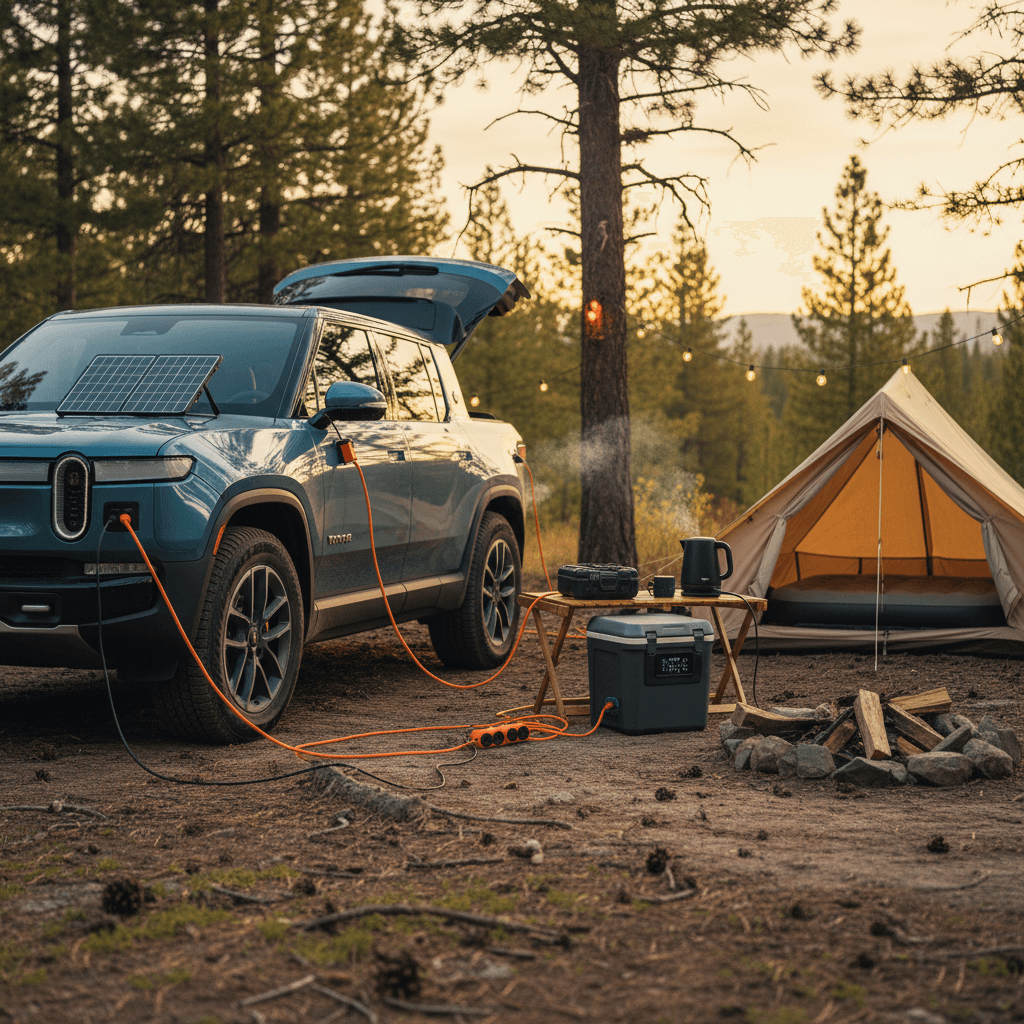
Using an electric vehicle for camping used to sound like a range‑anxiety nightmare. In reality, with the right EV camping gear setup, your car can become a quiet, climate‑controlled basecamp that’s cheaper to run than a gas SUV and far more pleasant to sleep in. This guide walks you, step by step, through planning, gear, and power so you know exactly what to pack and how to set up at your next campsite.
Who this guide is for
Why EVs Make Surprisingly Good Campers
Key Advantages of Camping in an EV
Understanding the benefits helps you decide how much gear you really need.
Silent, Fume‑Free Power
Stable Climate Control
Built‑In Power Source
The trade‑off is that your car’s battery now handles both driving and living. That means your gear choices should prioritize efficiency and safety. The rest of this guide is organized as a simple, repeatable process you can use for any trip, from a one‑night local shakedown to a week‑long road‑trip adventure.
Step 1: Plan Your Trip and Power Needs
EV Camping Power & Range: Quick Reference
Before you buy any new gear, decide what kind of trip you’re preparing for. A minimalist overnight test within 50–60 miles of home demands very different planning than a four‑night national‑park loop.
Trip & Power Planning Questions
1. How many nights and how far from home?
Short, 1–2‑night trips within a single charge radius are ideal for your first EV camping outing. For longer trips, plan charging stops using apps like PlugShare or your vehicle’s built‑in planner.
2. Will you have shore power at camp?
A powered campsite with 120V or 240V outlets turns your EV into a rolling cabin with essentially unlimited electricity. If you’ll be off‑grid, you’ll lean more on your main battery and portable power station.
3. What climate and season are you camping in?
Cold weather can reduce driving range and increase heater use at camp. In hot climates, plan for shade, ventilation, and efficient fans instead of relying solely on AC all night.
4. Which passengers are coming along?
A solo sleeper in a compact hatch has different needs than a family of four in an electric SUV. Gear choices for sleeping, cooking, and storage all follow from how many people and pets you’re hosting.
5. How much driving will you do between campsites?
If you’re relocating every day, build in DC fast‑charging stops along your route. If you’re base‑camping in one spot, having a Level 2‑equipped campsite or nearby public charger matters more.
Start with a shakedown trip
Step 2: Choose Your EV Camping Sleep Setup
Your sleep setup drives nearly every other gear decision. Do you sleep inside the vehicle, in a tent, or a mix of both? Each option affects insulation, privacy, and how much you depend on the car’s climate system.
Sleeping Inside the EV
This is the classic "camp mode" setup, rear seats folded, mattress or pad in the cargo area, and the cabin sealed against weather.
- Pros: Best weather protection, most secure, fast to set up, easy overnight charging if you’re already plugged in.
- Cons: Less headroom, limited space for gear, more condensation without window vents or fans.
- Best for: Solo travelers or couples in hatchbacks, crossovers, and wagons.
Sleeping in a Tent or Annex
Here your EV becomes a power and storage hub while you sleep in a tent, rooftop tent, or tailgate annex that seals to the open hatch.
- Pros: More living space, easier with kids or pets, better airflow in mild weather.
- Cons: More susceptible to weather and noise, slightly more complex setup.
- Best for: Families, longer trips, or hot‑weather camping where you want more breeze.
Check your rear seat fold and length
Core Sleep Gear by Setup Style
Match your primary sleeping style with the right foundational gear.
| Item | Inside EV | Tent / Annex | Either Setup |
|---|---|---|---|
| Insulated sleeping pad or mattress | ✔ (low‑profile, fits folded seats) | Optional (depends on tent style) | , |
| 12V or USB fan | ✔ (reduce condensation) | ✔ (airflow in tent) | ✔ |
| Reflective window covers | ✔ (privacy & insulation) | Optional | ✔ (for heat control while parked) |
| Compact camp chairs | Optional | ✔ | ✔ |
| Tailgate tent or hatchback awning | Nice‑to‑have | ✔ (extra covered space) | ✔ |
| Earplugs & eye mask | ✔ | ✔ | ✔ |
You don’t need all of this, pick the column that fits how you actually plan to sleep most nights.
Step 3: Build Your EV Camping Power System
Power is where EV camping really differs from traditional car camping. Your goal is to keep lights, devices, and maybe a fridge running without draining so much battery that you’re stressed about getting to the next charger.
The Three Building Blocks of EV Camping Power
Most setups combine at least two of these pieces.
1. Vehicle 12V & USB Ports
2. Vehicle‑to‑Load or Onboard Outlets
3. Portable Power Station
Aim for low‑draw, long‑running devices
Power System Setup Checklist
1. List everything you plan to power
Phones, laptops, lanterns, a portable fridge, CPAP machine, fan, write it all down. Look at the wattage labels on each item so you know which ones are energy hogs.
2. Decide where each device gets power
Route small electronics through USB ports or a power station, and reserve any 120V vehicle outlet or V2L adapter for higher‑draw gear used briefly (like a kettle or induction plate).
3. Add up expected overnight usage
A 12V fridge might average 40–60W, a fan 10–20W, and LED lights even less. Over 8 hours, that’s often just a few hundred Wh, well within what a mid‑size power station or your EV’s camp mode can handle.
4. Choose the right size power station (if needed)
For light use and weekend trips, ~300–500 Wh is often enough. For multi‑day off‑grid or a fridge plus laptops, consider 700–1000+ Wh and optional folding solar panels to top up during the day.
5. Pack quality extension cords and strips
Outdoor‑rated cords and surge‑protected strips keep your setup tidy and safer around kids, pets, and damp ground. Avoid running cords where you might pinch them in doors.
Avoid resistance heaters on your main battery
Step 4: Essential EV Camping Gear Checklist
Once you understand how you’ll sleep and power your campsite, you can build an EV‑friendly packing list. Think in systems: sleep, power, cooking, comfort, and safety.
Must‑Have Gear for an EV Camping Setup
Sleep & Comfort
A fitted mattress or pads for your chosen layout, insulated blanket or sleeping bag rated for your coldest expected temperature, eye mask, earplugs, compact pillows, and a small USB or 12V fan for airflow.
Power & Lighting
EV charge cable, portable power station if you use one, USB cables, headlamps, a pair of warm‑white LED lanterns, and one outdoor‑rated extension cord with a compact power strip.
Charging & Adapters
Your OEM Level 1 portable EVSE, plus adapters appropriate for North American campsites (for example, NEMA 14‑50 for 50A RV pedestals, and a heavy‑duty 15A plug for standard outlets). Store them in a dedicated pouch.
Cooking & Food Storage
A small butane stove or efficient 1‑burner propane stove, lighter, collapsible cookware, utensils, cutting board, and either an efficient 12V or 120V compressor cooler or a traditional ice chest as a no‑power backup.
Climate & Weather Control
Reflective window shades, a windshield sunshade, bug‑net window screens or vent inserts, compact umbrella or tarp, and camp‑friendly clothing layers instead of relying solely on the car’s heater or AC.
Safety & Recovery
First‑aid kit, compact fire extinguisher rated for electrical fires, tire repair kit and inflator, jumper cables or a jump pack (for 12V support), headlamp with extra batteries, and paper maps for backup navigation.
Pack smarter, not heavier
Step 5: Safe Charging at Campgrounds and RV Parks
In North America, many serviced campsites use the same outlets found at RV parks. That’s great news for EV owners, but only if you understand what you’re plugging into and charge politely.
- 15A household outlet (NEMA 5‑15, 120V): Standard wall plug. With your Level 1 charger, expect roughly 2–3 miles of range per hour of charging, fine for topping up overnight.
- 30A RV outlet (NEMA TT‑30, 120V): Common at RV sites. Despite the higher amperage, many EVs will still limit themselves to around 12–16A on 120V, so don’t expect dramatically faster charging than a normal outlet.
- 50A RV outlet (NEMA 14‑50, 240V): The gold standard for EVs. Paired with a compatible portable Level 2 EVSE, it can add 20–30+ miles of range per hour depending on your car’s onboard charger.
Always ask before you plug in
RV Pedestal & Campsite Charging Safety
1. Inspect the outlet before use
Look for melted plastic, discoloration, or loose sockets on 14‑50 or TT‑30 outlets. If anything seems off, skip that pedestal, no free night is worth a cooked plug or damaged EVSE.
2. Use a quality EVSE and adapters
Stick with UL‑listed portable chargers and heavy‑duty adapters rated for RV use. Ultra‑cheap adapters can overheat under continuous load.
3. Dial back the amperage
Even if a 50A outlet is available, setting your portable EVSE to 24–32A is easier on old campground wiring and reduces voltage sag. Many EVs let you limit current from the in‑car charging screen as well.
4. Protect cords from traffic and weather
Route cables where people won’t trip, keep connectors off the wet ground, and avoid pinching cords in doors or windows. A small rubber doorstop can keep the hatch or door lightly closed over a cable without crushing it.
5. Share fairly with neighbors
If your charging will fully replenish the battery by midnight, consider stopping then so you’re not tying up scarce pedestal capacity the entire night, especially at popular parks.
Step 6: Pack for Storage & Organization in an EV
Interior volume, not just range, determines how easy EV camping feels. A tidy, repeatable system beats throwing random totes in the trunk and searching for your headlamp at midnight.
Smart Storage Zones for EV Campers
Assign every item a “home” so setup and teardown stay fast.
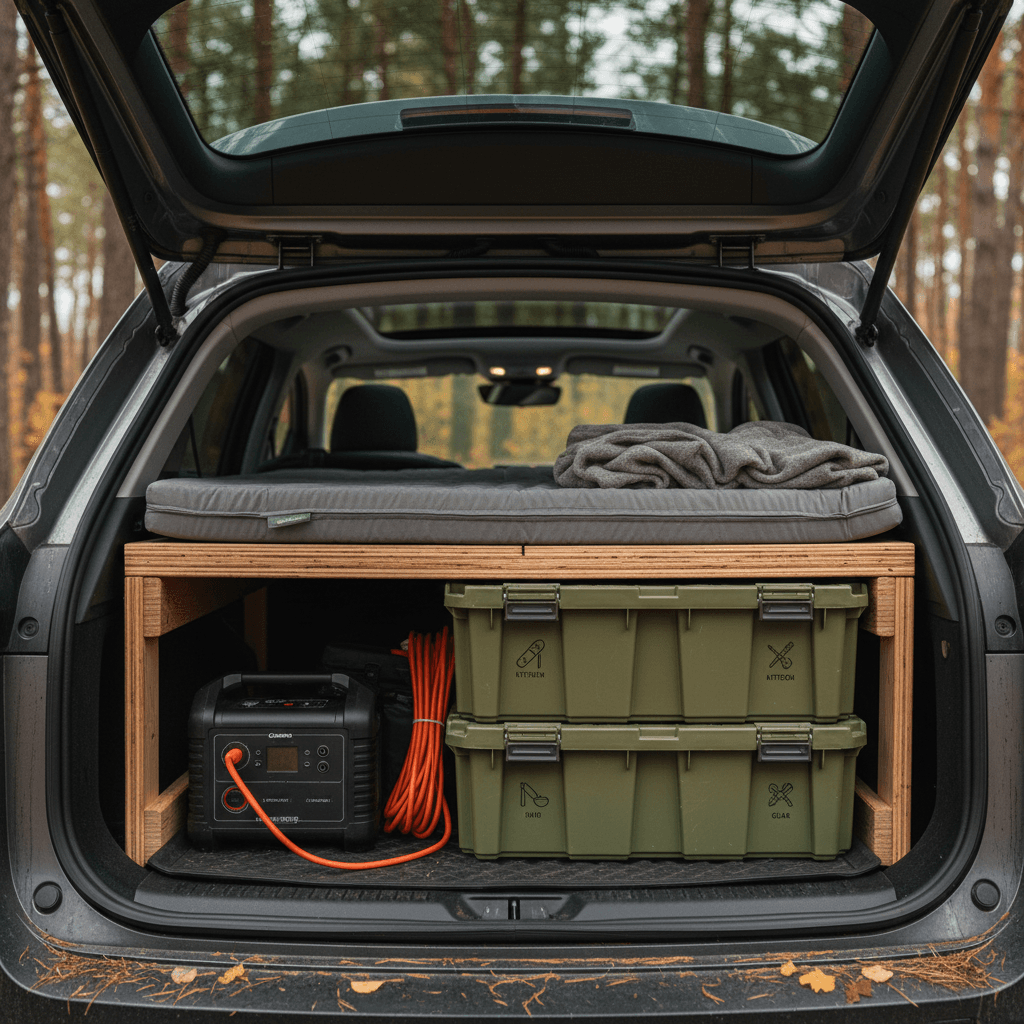
Under‑Bed or Trunk Zone
Cabin Daily‑Use Zone
Power & Charging Zone
Color‑code your bins
Sample EV Camping Setups for Different Drivers
Three Real‑World EV Camping Gear Setups
Urban Weekender in a Compact EV
Folding rear seats with a tri‑fold foam mattress and simple reflective window covers.
OEM Level 1 charger used on standard 120V campsite outlet; no extra adapters.
One 300–500 Wh portable power station for phones, headlamps, and a small fan.
Soft cooler with ice packs instead of an electric fridge to keep power use low.
Single‑burner butane stove, one pot, one pan, and nesting utensils.
Family Road Trip in an Electric SUV
Roof box or hitch cargo tray for bulky items like chairs and extra water.
Tailgate tent or hatchback awning plus interior sleeping for the kids on a platform.
Portable Level 2 EVSE and 14‑50 adapter to use 50A RV hookups when available.
700–1000 Wh power station running a 12V fridge, fans, and device charging.
Pre‑planned DC fast‑charging stops between campgrounds using apps and in‑car nav.
Off‑Grid Adventure with an Electric Truck
Truck‑bed sleep setup with drawers or bins underneath, plus insulated topper or tent.
Use onboard 120V or 240V outlets for short bursts (cooking, power tools) and a power station for all‑night loads.
Folding solar panels to top up the power station during the day while the truck is parked.
Full camp kitchen kit with induction cooktop or electric kettle used in short cycles.
More conservative driving range buffer (30–40%) to account for off‑road terrain and elevation.
EV Camping Gear & Setup FAQ
Frequently Asked Questions About EV Camping Gear
Bringing It All Together with Recharged
A smart EV camping gear setup isn’t about buying the most equipment, it’s about matching your sleep system, power plan, and storage to the way you actually travel. When you get those three pieces right, your electric vehicle turns into a quiet, efficient basecamp that’s just as happy running string lights and fans as it is cruising you to the next trailhead.
If you’re still shopping for the right EV, starting with a transparent picture of battery health and real‑world range removes a lot of guesswork. Every used EV sold through Recharged comes with a Recharged Score Report that verifies battery condition and fair market pricing, plus EV‑savvy guidance on charging and road‑tripping. You can browse vehicles online, explore financing, value your trade‑in, and even arrange nationwide delivery, then head straight from your driveway to your favorite campsite with confidence.