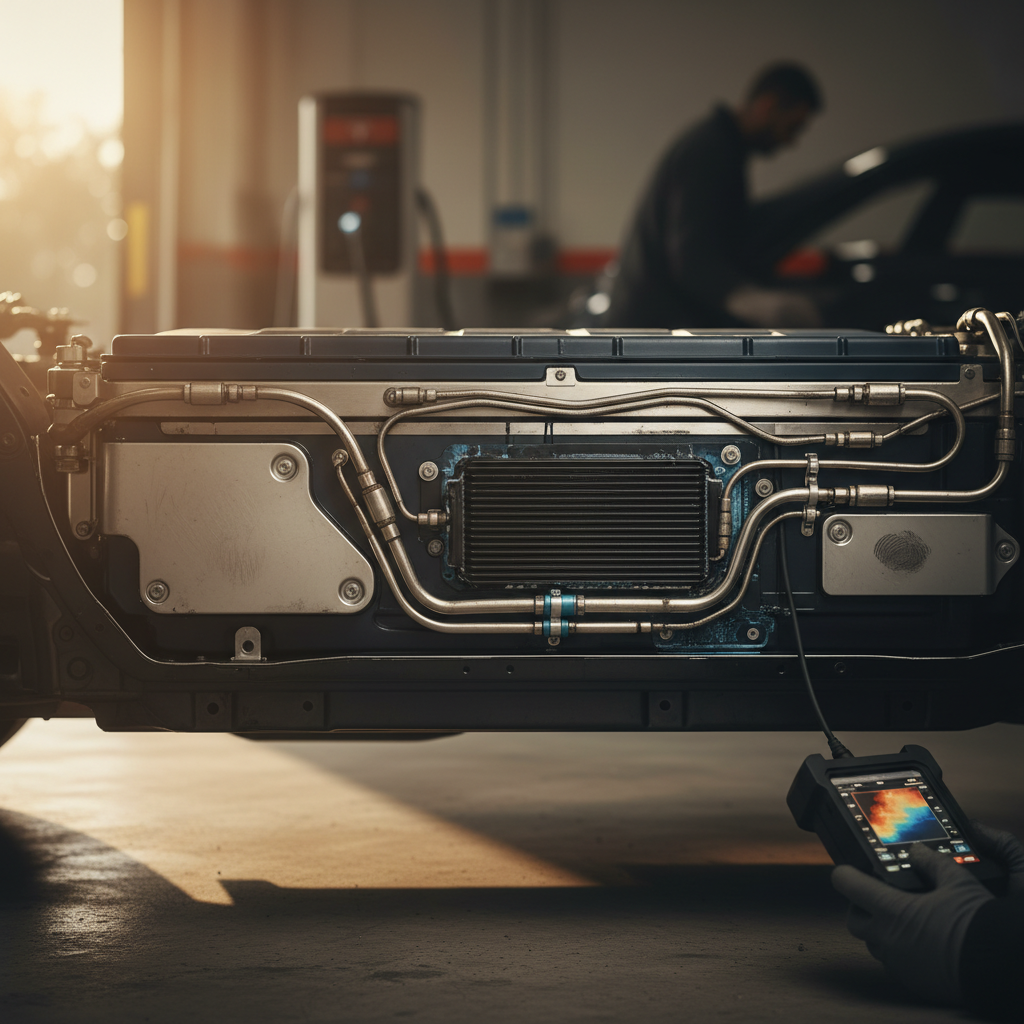
If you’re new to electric vehicles, EV braking can feel a little mysterious. Your car slows when you lift off the accelerator, there’s a “B” mode or regen setting on the shifter, and people keep talking about “one‑pedal driving.” Underneath all of that are two systems, regenerative and friction brakes, working together to keep you safe and stretch your range.
Big picture
What is EV braking, in plain English?
In a gasoline car, pressing the brake pedal tells hydraulic calipers to squeeze metal discs, turning your car’s motion into heat. All of that energy is wasted. In an EV, braking is smarter: the car first uses the electric motor to slow you down and send energy back into the battery, and only adds conventional brakes when it needs extra stopping power or at very low speeds.
- Regenerative brakes: Motor runs as a generator, slowing the car and pushing electricity back into the battery.
- Friction brakes: Traditional pads and rotors that create friction and heat, just like a gas car.
- Brake blending: The car’s computer decides, in milliseconds, how much of each to use based on how hard you’re stopping and how much grip the tires have.
Think of it like this
How regenerative braking actually works
At its core, regenerative braking is an energy‑recovery system. When you’re cruising, the motor uses electricity from the battery to create torque and spin the wheels. When you slow down, the car flips that process: the wheels spin the motor, the motor becomes a generator, and electricity flows back into the battery instead of out of it.
Step‑by‑step: what happens when you slow
- You lift off the accelerator or touch the brake pedal.
- The inverter commands the motor to resist rotation, creating a braking force.
- The motor now acts like a generator, making electrical energy.
- A DC converter and battery management system route that energy into the high‑voltage battery (within safe limits).
- If more braking is needed, the friction brakes automatically join in.
Why regen feels different
- Deceleration starts the moment you lift off, not just when you hit the pedal.
- The slowdown is smooth and consistent rather than “grabby” like some gas‑car brakes.
- Regen is strongest at moderate speeds and when the battery isn’t full or very cold.
- At walking speeds, friction brakes do almost all the work, so the last few feet can feel more like a normal car.
How efficient is regenerative braking?
EV braking vs gas-car braking
From the driver’s seat, you still have a right pedal to go and a left pedal to stop. Underneath, though, the systems are very different. Understanding those differences helps you drive an EV smoothly and avoid surprises when you first experience strong regen.
EV braking vs gas-car braking at a glance
How braking in an electric vehicle compares to what you’re used to in a conventional gas car.
| Feature | Electric Vehicle (EV) | Gas / ICE Vehicle |
|---|---|---|
| Primary way of slowing | Electric motor acting as generator (regenerative braking) | Hydraulic friction brakes only |
| Energy use | Recovers some energy into the battery | All kinetic energy lost as heat |
| Pedal feel | Often more consistent, can be tuned via drive modes | Fixed by hardware, can feel “grabby” or soft |
| Low‑speed stopping | Friction brakes take over completely | Friction brakes all the time |
| Brake wear | Usually slower thanks to regen doing most work | Pads and rotors wear faster, especially in city driving |
Both systems are safe and capable; EVs simply use energy more intelligently.
Don’t worry about safety
How much range does regenerative braking really add?
You’ll sometimes hear wild claims about regen “charging the car for free.” The truth is more down‑to‑earth, but still very worthwhile. Most modern EVs recover a significant portion of the energy normally lost in braking, but not all of it, and not in every situation.
- City driving: Stop‑and‑go traffic is where regen shines. Constant slowing and starting gives your EV many chances to recapture energy, often adding roughly 10–30% to effective range compared with driving the same pattern without regen.
- Hilly routes: Long descents let the car harvest energy for extended periods. It’s common to watch your range estimate climb on a downhill stretch.
- Highway cruising: At steady speed with little braking, regen doesn’t have much to do. You’ll see far less benefit than in town.
- Cold or full battery: When the battery is very cold or near 100% state of charge, regen power is limited to protect the pack, so more braking falls to the friction system.
A simple rule of thumb
One-pedal driving and regen modes
Many EVs now offer one‑pedal driving or adjustable regen modes. Instead of coasting freely when you lift off the accelerator, the car applies strong regenerative braking as soon as you ease off, often bringing you all the way to a stop without touching the brake pedal.
Common EV braking and regen modes
Exact names differ by brand, but the ideas are similar.
Low / Normal regen
Feels closer to a gas car when you lift off the pedal.
- Longer coasting
- Less deceleration off‑throttle
- Good for highway cruising
High / Max regen
Strong deceleration as soon as you ease off the accelerator.
- Enables one‑pedal driving
- Great in city traffic
- Can feel abrupt until you’re used to it
Auto / Smart regen
Car adjusts braking strength based on traffic, navigation and grade.
- Smoother in mixed driving
- Reduces driver workload
- Often the best default for new EV drivers
Give yourself a week
How EV brakes keep you safe: brake blending
Behind the scenes, your EV manages an enormous amount of complexity every time you slow down. The system constantly decides how much of the stopping force comes from regenerative braking and how much from friction brakes, while coordinating traction control, ABS, and stability systems.
When regen does the heavy lifting
- Light to moderate braking at medium speeds
- Battery at a comfortable state of charge and temperature
- Good tire grip and straight‑line deceleration
- Downhill grades where sustained regen is available
When friction brakes step in
- Hard, emergency stops where you need maximum deceleration
- Very low speeds, where regen torque is limited
- When the battery is cold or nearly full and can’t accept much charge
- On bumpy or slick surfaces, to keep braking predictable and stable
Trust the pedal
Driving tips to get the most from regen
You don’t need to be an engineer to benefit from EV braking. A few simple habits can make your driving smoother, extend your range, and keep your passengers more comfortable.
Simple habits for better EV braking
1. Look further ahead
Scan traffic and lights early so you can ease off the accelerator well before you need to stop. That gives the car more time to slow you on regen alone instead of wasting energy in a hard stop.
2. Use stronger regen in town
In city or suburban driving, try a higher regen or one‑pedal mode. It’s especially helpful in stop‑and‑go traffic and often reduces fatigue on your right foot.
3. Coast when it makes sense
On the highway, a lower regen setting and gentle lifts off the pedal can be more efficient than constantly slowing and re‑accelerating hard.
4. Watch the power/regen gauge
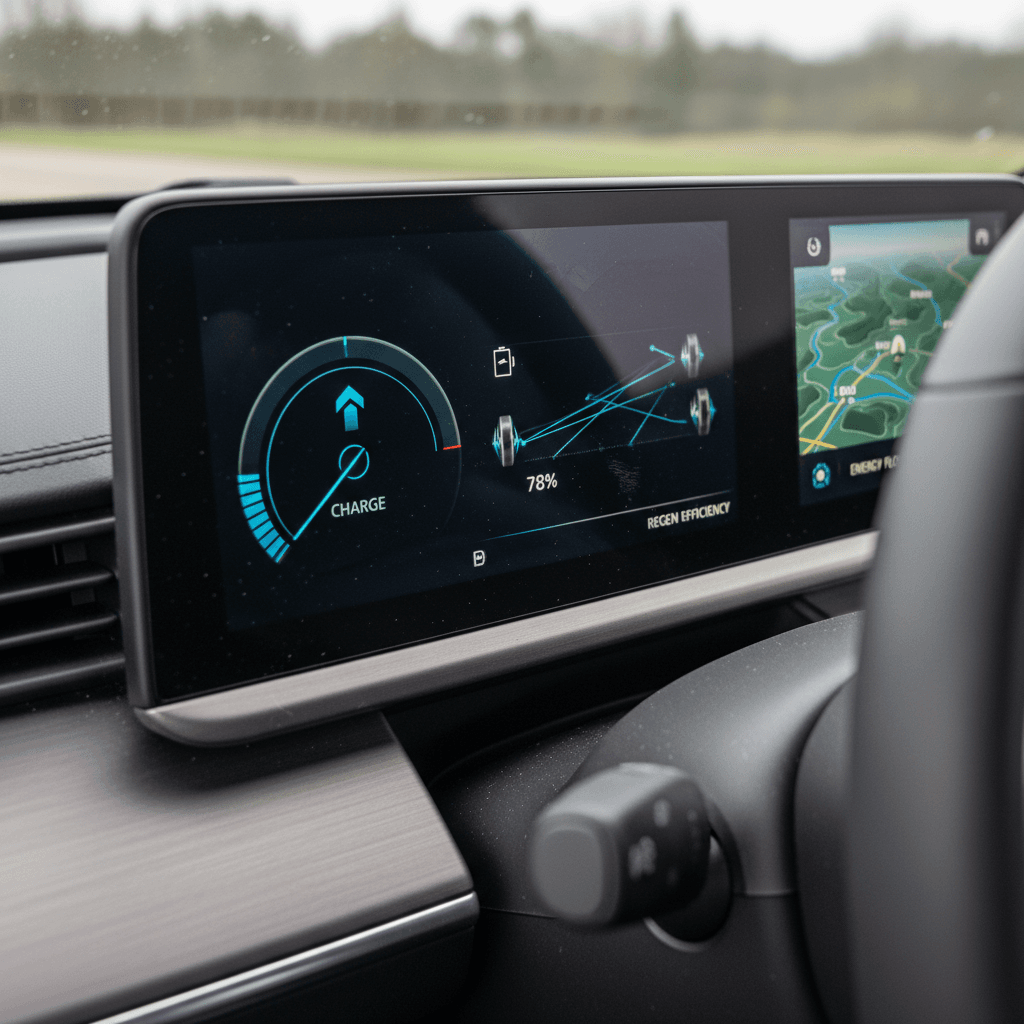
Most EVs show when you’re using power vs adding it back. That gauge is a great teacher, aim to keep it in the regen zone as you slow smoothly.
5. Be extra smooth in the wet or snow
Modern EVs are very good in low‑grip conditions, but smoother pedal inputs give the computers an easier job and help avoid surprises.
Bonus: smoother passengers
Do EV brakes last longer? Maintenance and costs
Because regenerative braking handles so much of the everyday slowing, EV friction brakes typically work less than in a comparable gas car. That often translates into longer pad and rotor life, and lower maintenance costs over time, especially if most of your miles are in town or on hilly routes where regen is active frequently.
EV brake maintenance: what’s different, what’s not
Less wear doesn’t mean zero maintenance.
What usually lasts longer
- Brake pads and rotors often see much less use thanks to regen.
- Fluid can stay in better shape because the system runs cooler overall.
- Many owners go far beyond 50,000 miles before needing major brake work.
What still needs attention
- Brake fluid should still be changed on the manufacturer’s schedule.
- Calipers and slides can seize if never exercised; occasional hard stops keep them healthy.
- Rust on rotors can be an issue on cars that sit a lot or live in salty climates.
Use your friction brakes sometimes
What EV braking means when you’re buying used
If you’re considering a used EV, braking is part of the ownership story in two ways: how the car was driven and how it was maintained. A city‑driven EV with lots of regen may have brake pads that are barely worn at 60,000 miles, or rusted rotors if it spent too much time parked.
Questions to ask or test
- Does the car track straight and stop smoothly in a firm stop?
- Do you hear grinding, scraping, or pulsing under light braking?
- Does the parking brake hold the car securely on a slope?
- Does regen feel consistent, or does it fade quickly at certain speeds?
How Recharged can help
Every vehicle sold through Recharged comes with a Recharged Score Report that covers battery health plus a full mechanical inspection, including brakes. Our EV‑specialist team can walk you through what’s normal for that model, what’s been serviced, and what to budget for down the road.
If you’re trading in or consigning your current EV, we’ll factor its brake and battery condition into a transparent offer, so you’re not guessing about hidden wear and tear.
EV braking FAQ
Frequently asked questions about EV braking
Key takeaways on EV braking
EV braking combines two systems, regenerative and friction brakes, to give you smooth, safe deceleration while recapturing energy that gas cars simply throw away. Learn how your car’s regen modes work, drive with a bit more anticipation, and you’ll enjoy quieter stops, fewer trips to the shop for pads and rotors, and a little extra range on every drive.
If you’re moving into your first electric vehicle, or your next one, understanding how EV braking works is part of being a confident owner. When you shop with Recharged, you get expert guidance on how each model behaves, a transparent look at brake and battery health through the Recharged Score Report, and flexible options for financing, trade‑in, or consignment. That way you can focus on enjoying the drive, not worrying about what’s happening when you lift off the pedal.