If you grew up with oil changes every 5,000 miles, the idea of an electric vehicle service center can feel a little mysterious. EVs clearly have fewer moving parts than gas cars, yet you still hear about costly battery work, slow repairs, and uncertain long‑term reliability. The reality sits somewhere in the middle, and understanding it will save you time, money, and stress over the years you own your EV.
EV service is simpler, but different
Why electric vehicle service centers matter in 2025
As of 2025, hundreds of thousands of new EVs are joining U.S. roads every year, and many of the early cars are now hitting high mileages. That’s when you find out whether your chosen EV service center is just “EV‑friendly” on paper or genuinely ready to support you for the long haul. The stakes are higher with electric cars: a missed software update can sideline driver‑assist features, and an incorrect high‑voltage repair can turn into a very expensive mistake.
EV service and ownership trends in 2024–2025
Think beyond the first owner
What actually needs servicing on an EV
The first surprise for many new owners is how short the routine EV maintenance list really is. There’s no engine oil, no spark plugs, no timing belt, and in many cases no multi‑gear transmission to service. Instead, most visits to an EV service center focus on inspections, software, tires, and brakes.
Key EV maintenance categories
What your service center should be checking, and how often
High‑voltage battery & electronics
Includes the traction battery, inverter, onboard charger, and DC/DC converter.
- Software & firmware updates
- Battery health checks & thermal system inspection
- High‑voltage cabling and connector inspection
Chassis, brakes & suspension
EVs are heavy and have instant torque, so chassis components work hard.
- Suspension and steering components
- Brake pads, rotors & fluid
- Alignment checks, especially after pothole hits
Tires & wear items
Tires often wear faster on EVs due to extra weight and torque.
- Tire rotations every 6,000–8,000 miles
- Tread and sidewall inspections
- Cabin air filter and wiper replacement
Don’t ignore tire wear
How often your EV needs a service visit
Most manufacturers now recommend a general checkup for their EVs every 12–18 months, or roughly every 10,000–15,000 miles. That’s a big contrast with the old pattern of oil changes two or three times a year. The typical visit looks more like an annual physical than major surgery: a multi‑point inspection, software check, tire rotation, and a few fluid checks.
Typical EV service intervals (general guideline)
Always follow your owner’s manual, but this gives you a ballpark sense of what a good EV service center will recommend.
| Service item | Typical interval | Notes |
|---|---|---|
| Tire rotation | 6,000–8,000 miles | Critical for even wear on heavier EVs. |
| Cabin air filter | 15,000–30,000 miles | More often in dusty or urban areas. |
| Brake fluid check | Every 2–3 years | Replace as needed based on moisture content. |
| Coolant / battery thermal system inspection | Every 5–7 years | Some brands specify mileage (e.g., 75k–150k). |
| High‑voltage system visual inspection | Every visit | Look for damage, corrosion, connector issues. |
| Alignment check | As needed | After curb impacts, tire replacements, or uneven wear. |
Intervals may vary by brand and model; check your service booklet for exact requirements.
Good news on service frequency
Types of electric vehicle service centers
Not all service centers are created equal, and with EVs the differences matter more than ever. You’ll generally be choosing among four options: a factory dealership, an independent EV‑certified shop, a mobile service provider, or doing a small amount of work yourself.
1. OEM dealer EV service center
Dealers for brands like Ford, Hyundai, Kia, BMW, Mercedes‑Benz, and others have been building out dedicated EV bays, special tools, and high‑voltage training. For warranty work, recalls, and complicated diagnostics, the dealer is almost always your first stop.
- Pros: Direct factory support, access to technical bulletins and recalls, genuine parts, seamless warranty handling.
- Cons: Higher labor rates, busier service lanes, and sometimes longer wait times for EV appointments.
2. Independent EV repair shops
Independent shops with EV training and equipment are growing quickly across the U.S. Many are started by technicians who cut their teeth at dealer EV programs.
- Pros: Often lower labor rates, more flexible scheduling, and a personal relationship with the techs.
- Cons: Coverage varies by region; some can’t perform warranty or recall work even if they’re highly skilled.
3. Tesla and direct‑to‑consumer brands
Companies like Tesla operate their own service centers and often offer mobile service that comes to your home or office.
- Pros: Deep model‑specific expertise, integrated app scheduling, and over‑the‑air fixes that can prevent shop visits.
- Cons: Coverage can be thin outside major metros, and some locations are booked days or weeks out.
4. Mobile EV service providers
Mobile service vans can handle many light‑duty jobs, software updates, minor repairs, some recalls, without you ever stepping into a waiting room.
- Pros: Convenience, no waiting room, ideal for busy households or fleets.
- Cons: Limited to lower‑risk jobs; anything involving high‑voltage disassembly usually goes to a fixed shop.
Where Recharged fits in
How to choose the right EV service center
Choosing an electric vehicle service center is a lot like choosing a doctor. Training, experience, bedside manner, and transparency all matter. The right shop will save you thousands over the life of the car, and the wrong one can turn even a simple visit into a headache.
Checklist: evaluating an EV service center
1. Confirm brand and model expertise
Ask how many EVs like yours the shop services each month. A center that sees your model regularly will diagnose issues faster and know which updates or recalls apply.
2. Ask about high‑voltage training and equipment
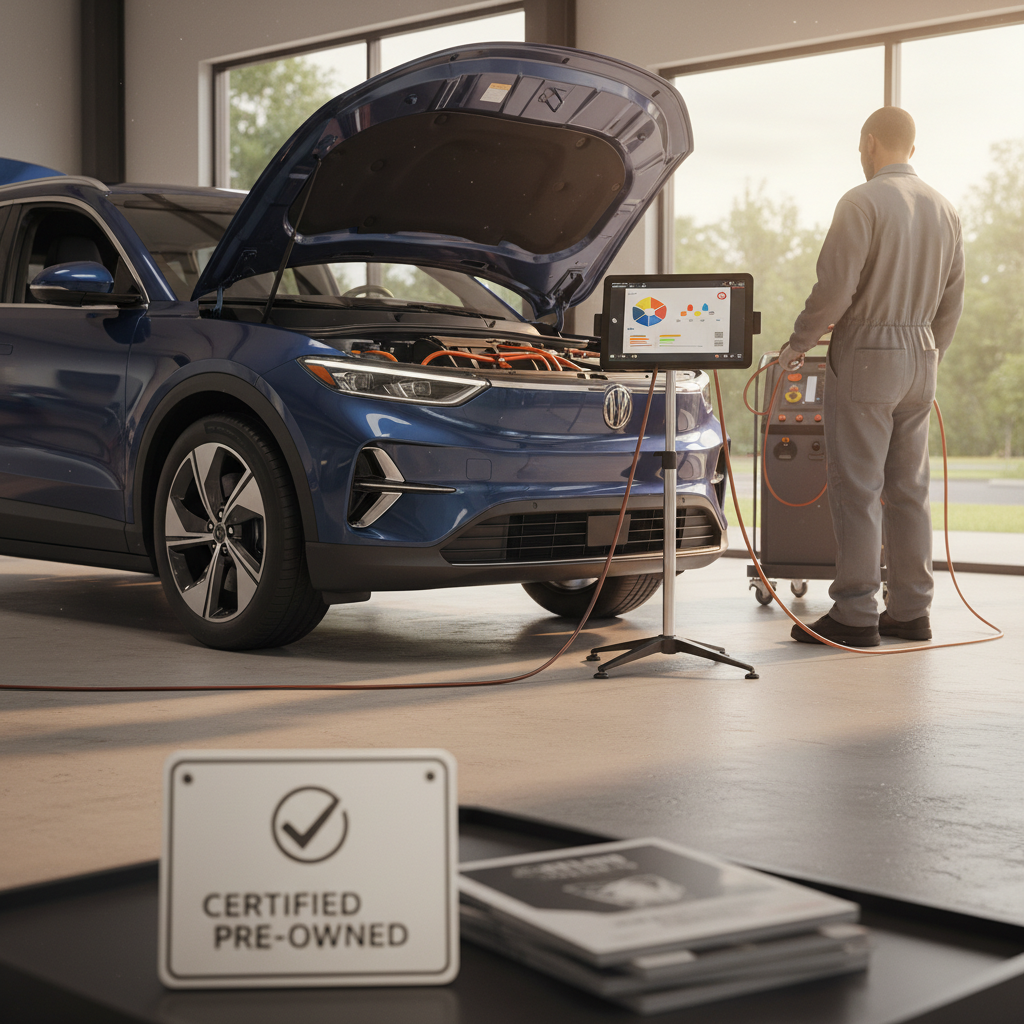
Look for technicians who are factory‑trained or EV‑certified, and confirm the shop has insulated tools, safety gear, and the correct diagnostic equipment for your brand.
3. Review labor rates and parts policies
Dealers often charge more per hour, but independents may use aftermarket parts. Ask for their hourly rate, how they source parts, and whether they’ll show you worn components they recommend replacing.
4. Check software and diagnostic capabilities
Modern EVs are rolling computers. Make sure the center can apply manufacturer software updates, read manufacturer‑specific codes, and reset systems correctly after repairs.
5. Look at service reviews from EV owners
Filter online reviews by your vehicle model whenever possible. You’re looking for patterns: clear communication, accurate estimates, and issues fixed right the first time.
6. Understand turnaround times and loaner options
Ask how long the average EV repair takes and whether loaners, rental discounts, or rideshares are available. With EVs, parts backorders can stretch repair times.
Be cautious with generalists
What EV service visits typically cost
One of the big advantages of an EV is that routine maintenance costs are lower and more predictable. That said, some components, especially tires and complex electronics, can be more expensive when they do need attention. Your electric vehicle service center should be willing to walk you through a written estimate before any work begins.
Typical EV service costs (out of warranty, ballpark ranges)
Actual prices vary by region, brand, and model, but this gives you an order‑of‑magnitude sense of common EV services.
| Service | Approximate cost range | Notes |
|---|---|---|
| Annual inspection + tire rotation | $120–$250 | Higher end at premium brands or high‑cost cities. |
| Brake service (pads/rotors, one axle) | $250–$600 | Less frequent than gas cars thanks to regenerative braking. |
| New set of EV‑rated tires | $800–$1,400 | Performance EVs on 20"+ wheels sit at the top end. |
| Cabin air filter replacement | $50–$150 | Often combined with an inspection visit. |
| Battery coolant service (where specified) | $300–$900 | Intervals vary widely; some manufacturers call for this only once. |
| High‑voltage component repair | Highly variable | Can run into thousands; see warranty coverage before paying out of pocket. |
Use these figures as rough planning tools rather than quotes. Always ask your service center for a written estimate.
The big‑ticket scenario: battery pack replacement
Battery health diagnostics and longevity
Battery health is the topic that keeps many prospective EV buyers up at night. You’re right to pay attention, your traction battery is the single most expensive part on the car, but real‑world data shows that modern packs are holding up better than many early skeptics predicted. The key is having solid, objective information about your particular vehicle.
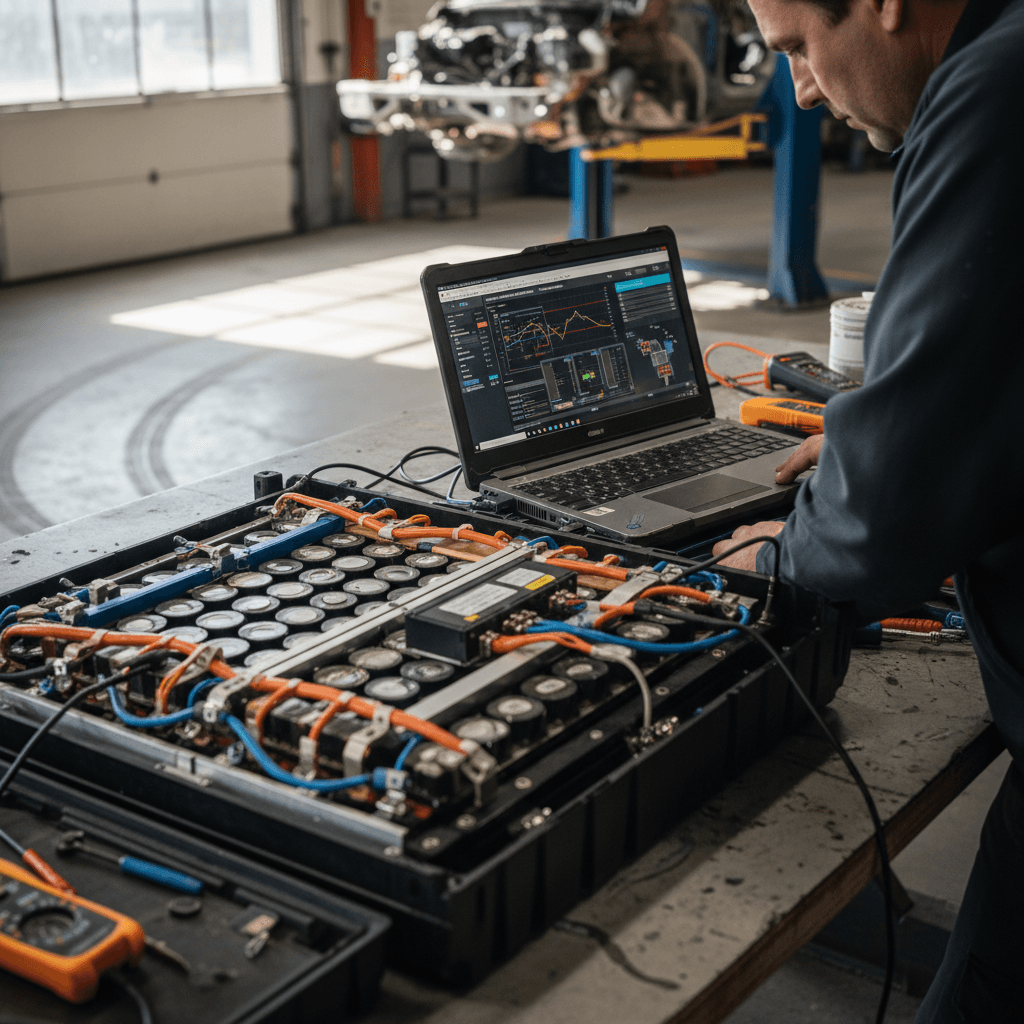
What good battery diagnostics should include
Questions to ask your service center, or your seller
State of health (SoH)
Ask for an estimated percentage of remaining battery capacity relative to new. A detailed report breaks this down by pack, module, or even cell groups.
Thermal system performance
Healthy batteries stay within a tight temperature window. Your report should flag cooling system issues or unusual temperature differences.
Degradation pattern
Degradation is rarely linear. A good shop (or seller) will put your car’s data in context, age, mileage, charging habits, and compare it to similar vehicles.
How Recharged approaches battery health
Ready to find your next EV?
Browse VehiclesCommon EV service pain points and how to avoid them
Even at excellent shops, EV service isn’t perfect. Owners most often complain about slower repair times, parts delays, and communication gaps when software issues are involved. The good news is that with a bit of planning and the right questions, you can avoid many of the usual frustrations.
- Longer repair times than gas cars. EV‑specific parts and high‑voltage training are still catching up. Book non‑urgent visits in advance and ask about parts availability before dropping your car off.
- Inconvenient scheduling. Popular EV service centers can book out days or weeks. Use app scheduling where available and look into mobile service for minor work.
- Software misdiagnoses. Some issues that feel “mechanical” are actually resolved with software updates, or vice versa. Make sure your shop is running the latest diagnostic software.
- Unclear estimates. EV labor lines can look unfamiliar compared with traditional repairs. Ask your advisor to walk you through each line item in plain language before you approve it.
- Tire surprises. Heavy EVs can chew through performance tires quickly. Have your service center measure and note remaining tread at every visit so you can budget ahead.
Use service visits to your advantage
DIY vs professional EV service: where to draw the line
Modern EVs are engineered with safety in mind, but that doesn’t mean every job is DIY‑friendly. High‑voltage systems demand respect. A good rule of thumb: if the job touches the orange‑cased cables or anything rated above 60 volts, it belongs in an electric vehicle service center, not your driveway.
Smart DIY tasks
- Tire care: Checking pressure, patching small punctures with a proper kit, and swapping between seasonal wheel sets.
- Cabin filters & wipers: Straightforward replacements on many models; check a reputable guide before you start.
- Visual inspections: Looking for tire damage, fluid leaks, or loose underbody panels after winter or rough roads.
- Software management: Accepting over‑the‑air updates and keeping your app and vehicle connected.
Jobs for the pros
- High‑voltage work: Anything involving the main battery, inverter, DC fast‑charge hardware, or orange‑cased cables.
- Brake hydraulics: Blending regenerative and friction braking requires proper bleeding procedures and calibration.
- Suspension & steering: Heavier EVs put more load on these components; torque specs and alignment are critical.
- Warranty or recall work: Always have these handled at an authorized service center so coverage stays intact.
Electric vehicle service center FAQ
Frequently asked questions about EV service centers
The bottom line on choosing an EV service center
Electric vehicles upend a lot of old assumptions about car service. You’ll visit the shop less often, and many routine items cost less than you’re used to. But when issues do arise, especially with software or the high‑voltage system, you need an electric vehicle service center that truly understands these cars. Focus on training, experience with your model, diagnostic capabilities, and clear communication. If you’re still shopping, consider starting with a used EV whose battery health and service history are already documented, like the vehicles listed on Recharged. That way, you enter ownership knowing exactly what to expect from your service visits in the years ahead.