If you live where snowstorms are measured in feet, not inches, it’s natural to ask: can an electric car really handle a blizzard? Between range loss in the cold, horror stories about dead batteries, and images of cars stranded on interstates, it’s a fair question, especially if you’re considering a used EV as your daily driver.
Short answer
Can EVs Really Handle a Blizzard?
Start with what a blizzard actually throws at any vehicle: low traction, low visibility, extreme cold, and the possibility of getting stuck for hours. EVs and gas cars both struggle with those conditions, but they fail in different ways.
- EV strengths: instant torque for controlled starts, very low center of gravity for stability, fine traction control from electric motors, efficient cabin heat while idling.
- EV weaknesses: reduced range in cold weather (often 20–40% at very low temps), slower DC fast charging with a cold battery, limited public charging in rural areas.
- Gas-car strengths: fast to refuel and widely available fuel, range is affected less by cabin heat.
- Gas-car weaknesses: risk of carbon monoxide poisoning if the tailpipe is buried in snow, idling burns fuel quickly, and traction is no better without proper tires.
Reality check
How Cold and Snow Actually Affect EVs
Most of the scary headlines about EVs in winter are really about lithium-ion batteries and physics, not some unique EV flaw. Cold temperatures slow down the chemical reactions inside the battery and increase the energy needed to heat the cabin.
Cold-Weather Effects on EVs
What changes when the temperature drops?
Battery chemistry slows
Cabin heat is expensive
Thermal management matters
Across a wide set of tests and owner data, it’s common to see 10–30% less range around freezing, and up to roughly 40% loss around 0–20°F on longer drives with full cabin heat. That sounds dramatic, but if your EV has plenty of buffer versus your normal daily driving, it’s manageable.
Plan your winter buffer
Traction and Handling: EVs vs Gas Cars in Snow
When the snow is falling sideways and the plows can’t keep up, traction and stability matter more than anything. Here, EVs often punch above their weight.
Why EVs feel planted in snow
- Low center of gravity: The battery pack lives in the floor, so the car is less likely to feel tippy or unsettled in quick maneuvers.
- Fine-grained traction control: Electric motors can meter torque to the wheels much more precisely than a gas engine and traditional transmission.
- Dual-motor AWD: Many EVs use one motor per axle (or even per wheel), enabling very quick torque shuffling to the tires with grip.
Where drivers still get into trouble
- Wrong tires: All-season tires become "no-season" tires in real snow. A good set of winter tires matters more than AWD badges.
- Overconfidence in instant torque: EVs can dig their way into a snowbank just as effectively as they can dig out of one.
- Ground clearance: Many crossovers are fine in 4–8 inches of snow, but deep drifts will stop most EVs and gas cars alike.
Key takeaway on snow handling
Range Loss in a Blizzard: What to Expect
Driving in an actual blizzard is usually slow, stop‑and‑go, and stressful, exactly the scenario where people worry about running out of juice. The good news is that low speeds help efficiency. The bad news is that you’ll likely run the heat the entire time.
Cold-Weather Range: Ballpark Numbers
In practical terms, if your EV is rated for 250 miles, you might see something like 150–200 miles of comfortable winter range in a heavy storm, depending on speed, temperature, wind, and how toasty you like the cabin.
Don’t plan to “zero” in winter
Charging an EV During a Winter Storm
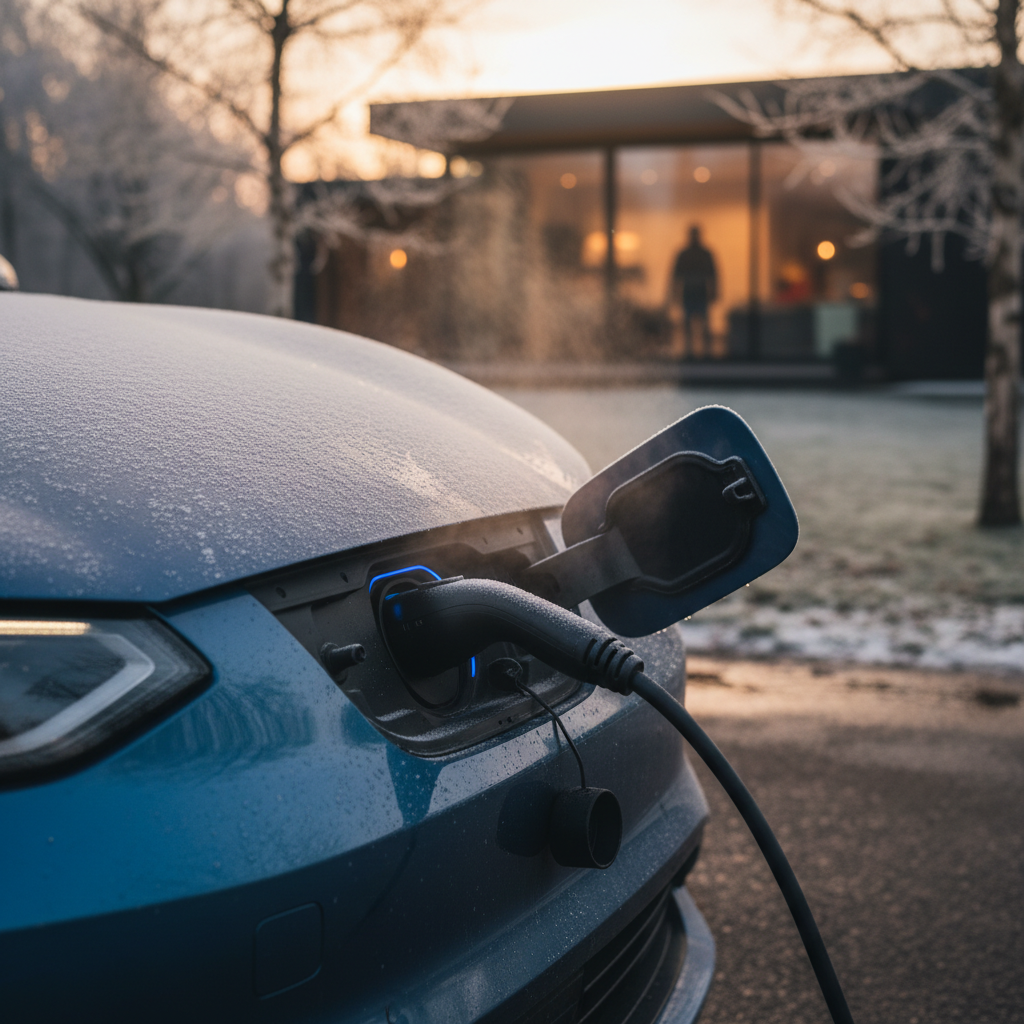
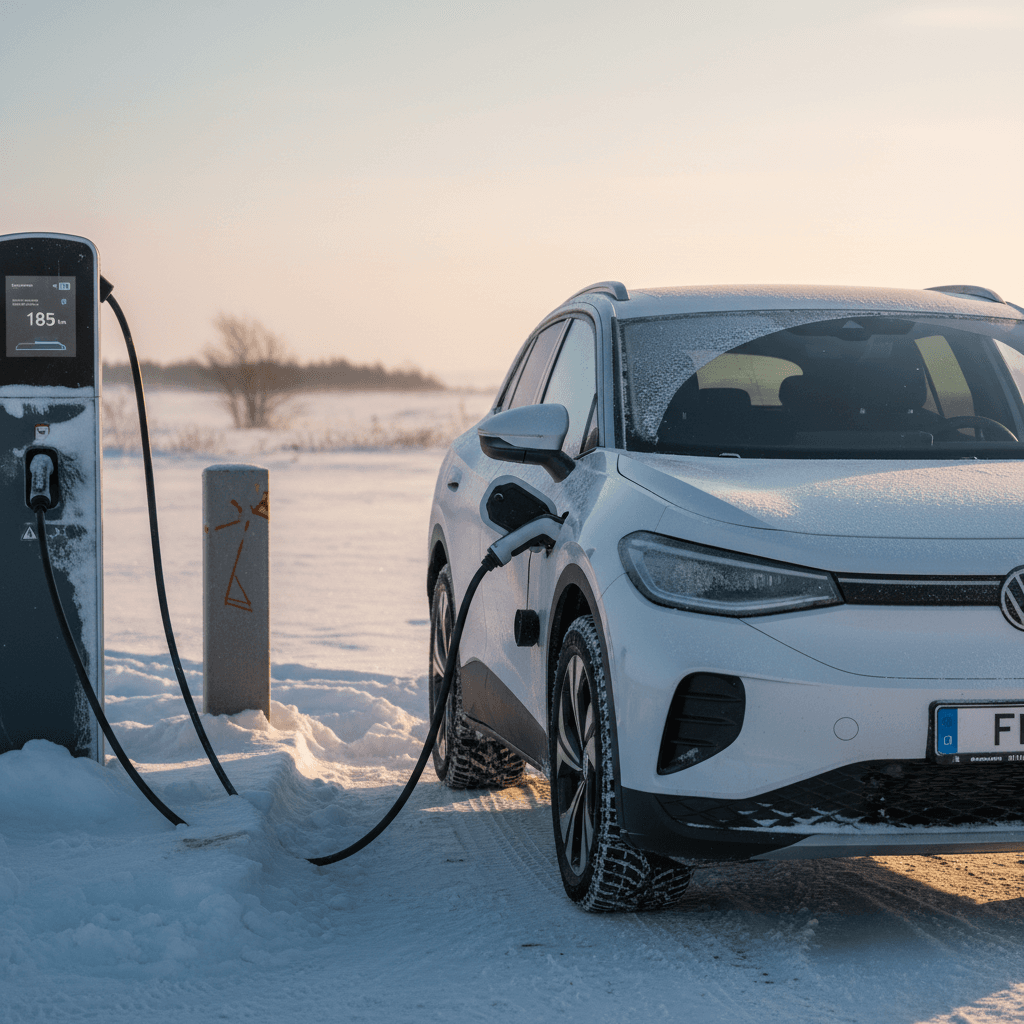
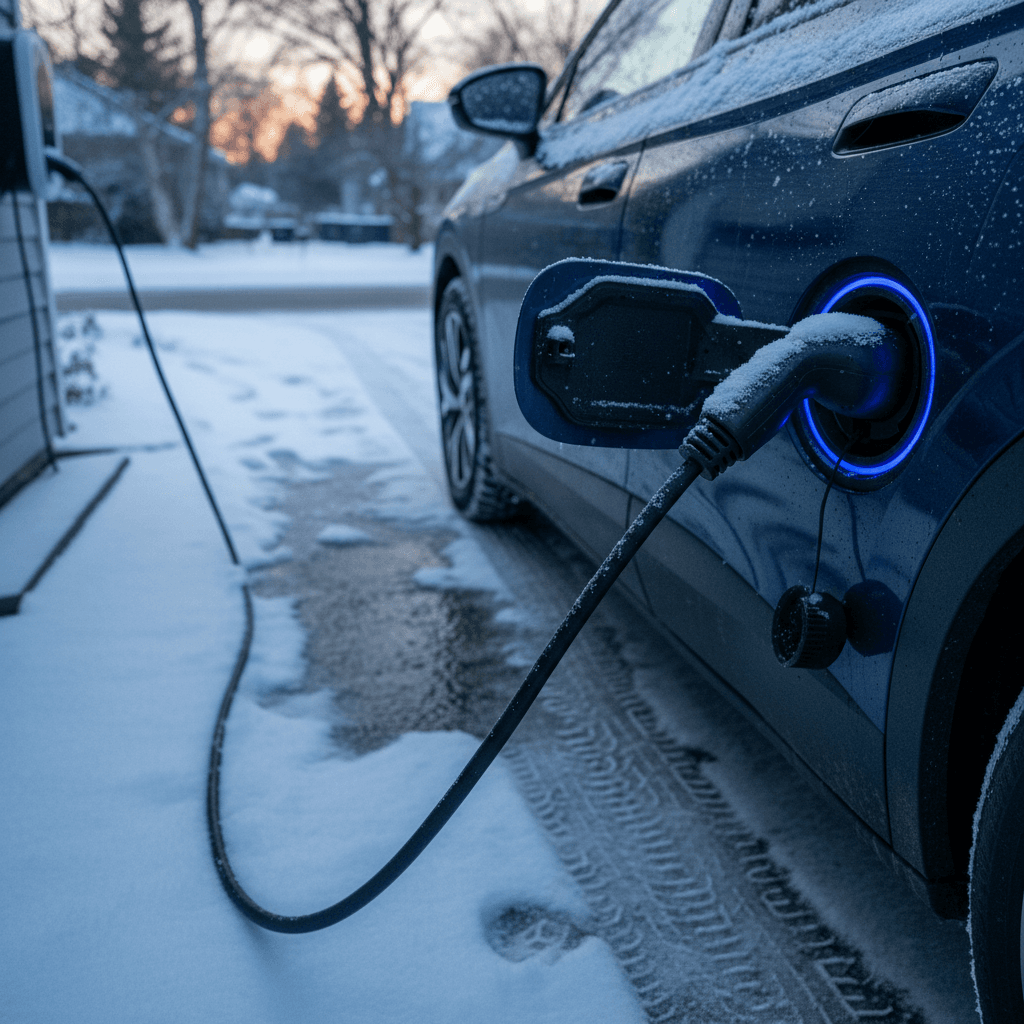
Cold affects charging in two ways: it can make it harder for the car to start charging quickly, and it can make it harder for you to physically use the charger if everything is buried in snow and ice.
Winter Charging Realities
What changes when it’s below freezing
DC fast charging slows down
Home charging is your friend
Make charging easier in a blizzard
If you’re relying on public fast charging for a long winter trip, build in extra time. A stop that’s 20 minutes in mild weather might take 30–40 minutes when it’s 10°F and the pack is cold-soaked.
What If You Get Stuck in Traffic or a Snowbank?
This is where the anxiety really spikes: miles‑long backups during a blizzard, cars trapped on an interstate for eight or ten hours. The key question becomes: How long can an EV keep you warm if you’re not moving?
EVs idle very efficiently
- At zero speed, an EV uses energy mainly for the heater, lights, and screens, not for turning an engine.
- Real‑world tests have shown many EVs can heat the cabin for 12–24 hours on a full battery, depending on temperature and settings.
- Seat and steering‑wheel heaters use much less energy than blasting cabin heat; they’re your friend if you’re stuck.
Why gas cars aren’t bulletproof either
- A gas car must idle the engine to keep you warm, burning fuel the entire time.
- If the tailpipe is blocked by snow, idling can cause carbon monoxide buildup inside the cabin.
- Run low on fuel in a shutdown highway situation and you face similar risks to a low‑battery EV.
Safety first if you’re stranded
Blizzard Prep Checklist for EV Owners
Pre-Storm EV Prep
1. Start with a healthy buffer
Aim to leave home or your last reliable charger with <strong>at least 80–90% charge</strong> when a storm is forecast, especially for rural routes.
2. Precondition while plugged in
Use your app or in‑car settings to <strong>warm the cabin and battery</strong> before you unplug. That way the grid, not your battery, pays for most of the initial heating.
3. Mount real winter tires
If you routinely drive in snow and ice, a quality set of winter tires will do more for safety than AWD alone, whether your car is electric or gas.
4. Pack a winter kit
Include an ice scraper, shovel, traction aids or sand, blankets, extra gloves and hats, power bank for your phone, non‑perishable snacks, and water.
5. Plan conservative routes and backups
Use a planner (or your car’s nav) that shows chargers, and identify <strong>at least one backup stop</strong> in case your first choice is down or unreachable.
6. Keep your EV plugged in at home
If you can, <strong>leave the car plugged in</strong> during extreme cold. The car can draw power from the grid to maintain battery temperature and state of charge.
Think like a pilot, not a passenger
Best EV Features for Winter Weather
If you regularly drive in harsh winters, some EV features make blizzards significantly less stressful. When you’re shopping, especially for a used EV, these are worth prioritizing.
Winter-Friendly EV Features
What to look for if snow is in your forecast
Heat pump HVAC
Battery preconditioning
Heated everything
Dual-motor AWD
Reliable home Level 2 charging
Good app & remote control
Buying a Used EV for Winter Climates
If you’re shopping the used market and wondering whether an electric car can handle your next blizzard, the answer depends less on the logo and more on the specific vehicle and its battery health.
Used EV Winter Buying Priorities
Key questions to ask when evaluating a used EV for cold-weather duty
| Question | Why it matters | What “good” looks like |
|---|---|---|
| Does it have a heat pump? | Improves winter range and comfort by using energy more efficiently. | Factory heat pump or cold-weather package installed on most trims. |
| What’s the verified battery health? | Degraded packs have less usable range, which winter further reduces. | Independent or OEM report showing strong state of health and capacity. |
| Is there AWD or at least traction control? | Helps get moving and stay stable on snow and ice. | Dual-motor AWD, or a single-motor setup with effective traction control. |
| Can you charge at home? | Home Level 2 reduces dependence on public chargers during storms. | Dedicated 240V circuit and charger, or at least a plan to install one. |
| Are winter tires included or affordable? | Tires are the biggest safety upgrade you can buy for snow. | A good set of winter tires on separate wheels, or budget to buy them. |
Combine these checks with a trusted inspection and verified battery report.
How Recharged can help
If you’re moving from a gas SUV to your first used EV, it’s worth reading a broader primer on EV charging basics and used EV buying checklists so you’re not learning the fundamentals for the first time during a blizzard.
Winter EV Driving FAQ
Frequently Asked Questions About EVs in Blizzards
Bottom Line: Can an Electric Car Handle a Blizzard?
Taken in isolation, cold weather range loss makes EVs look fragile. Put that in context, though, and the picture changes: traction is often better, cabin heat is safer, and idling is more efficient than in a gas car. The real determinant of whether an electric car can handle a blizzard isn’t the badge on the grille, it’s your preparation and your expectations.
If you size your battery and routes with winter in mind, invest in proper tires, leverage preconditioning and home charging, and carry a basic storm kit, an electric car can be a confident, comfortable tool for surviving serious winter weather. And if you’re shopping the used market, a platform like Recharged, where every vehicle includes a verified battery health report and EV‑savvy guidance, can help you match the right EV to your climate before the next big storm hits.