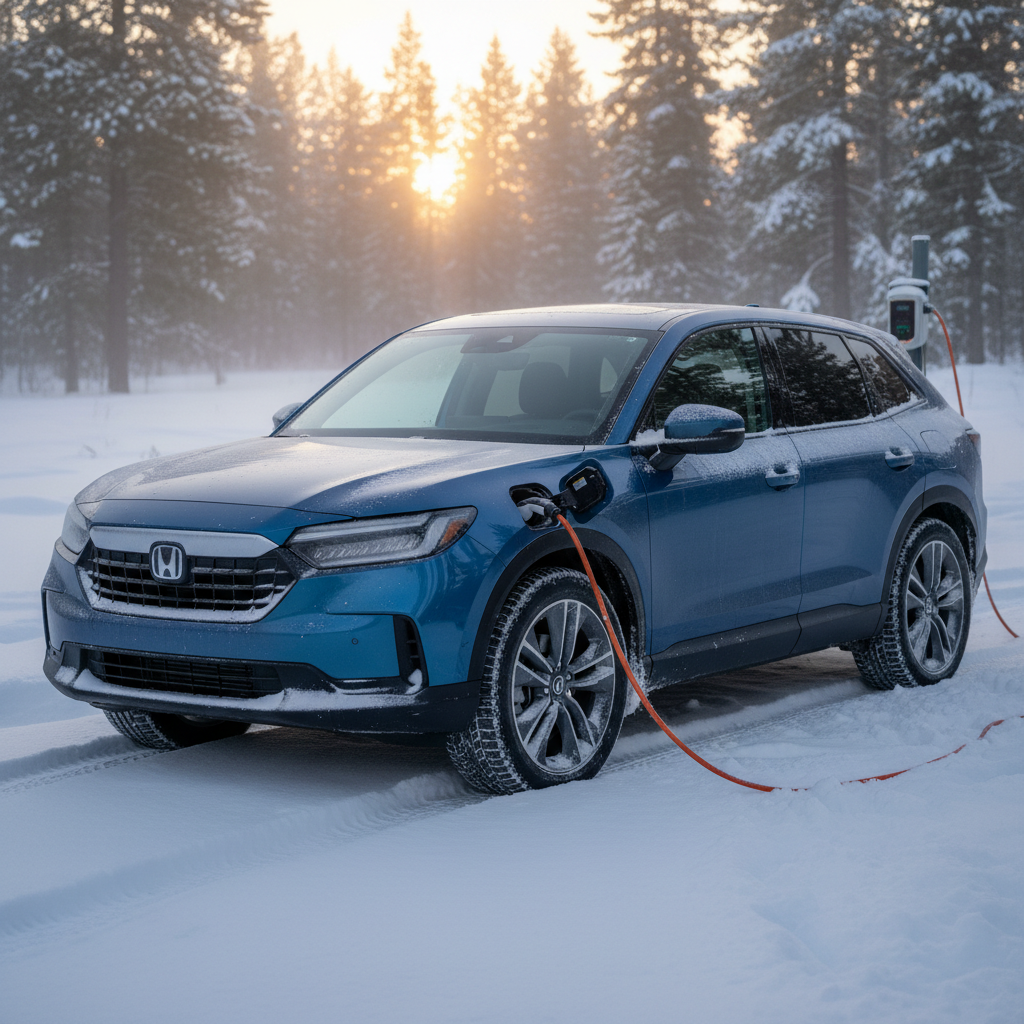
If you’re trying to decide between an electric vehicle and a gasoline car, the first practical question is usually, “What’s the real cost per mile of an EV vs gas?” With 2025 energy prices shifting under your feet, sticker price alone doesn’t tell you much. Cost per mile does.
Key takeaway up front
How much does an EV cost per mile in 2025?
Typical 2025 cost per mile: EV vs gas
To turn those ranges into something you can actually use, let’s ground them in real 2025 price data. In the U.S. this year, average regular gasoline prices are hovering around $3.10 per gallon, while average residential electricity is about $0.17 per kWh. Your local numbers might be a bit higher or lower, but they’re likely in that ballpark.
Most modern EVs use about 25–30 kWh per 100 miles in mixed driving, that’s 0.25–0.30 kWh per mile. A typical gas car on the road today gets around 25–30 mpg. When you plug those efficiencies into the formulas we’ll walk through, you get the cost-per-mile ranges above.
Don’t get lost in the averages
EV cost per mile vs gas: quick side‑by‑side examples
To make “electric vehicle cost per mile vs gas” less abstract, here are three simplified scenarios using realistic 2025 prices. These aren’t lab numbers; they’re meant to feel like real cars driven in the real world.
Example comparisons: EV vs gas cost per mile
Illustrative 2025 examples using reasonable assumptions. Your exact costs will vary by model and local prices.
| Scenario | Assumptions | EV cost per mile | Gas cost per mile |
|---|---|---|---|
| City commuter | EV: 28 kWh/100 mi, home charging $0.17/kWh Gas: 28 mpg, $3.10/gal | EV: (28 × 0.17) / 100 ≈ $0.048/mi | Gas: 3.10 / 28 ≈ $0.11/mi |
| Efficient hybrid vs efficient EV | EV: 25 kWh/100 mi, $0.17/kWh Hybrid: 45 mpg, $3.10/gal | EV: (25 × 0.17) / 100 ≈ $0.043/mi | Hybrid: 3.10 / 45 ≈ $0.07/mi |
| Road‑trip heavy driver | EV: 30 kWh/100 mi, 50% home $0.17/kWh, 50% fast charge $0.40/kWh Gas: 30 mpg, $3.10/gal | EV blended rate ≈ $0.29/kWh → (30 × 0.29) / 100 ≈ $0.087/mi | Gas: 3.10 / 30 ≈ $0.10/mi |
Energy cost only – purchase price, taxes, and maintenance are covered later.
Don’t assume EVs are always cheaper per mile
The simple formulas you can plug your own numbers into
You don’t need a spreadsheet to compare electric vehicle cost per mile vs gas. Two short formulas do the job. Grab your latest utility bill and a recent gas receipt, plus efficiency numbers for the vehicles you’re comparing.
Cost-per-mile formulas
Use these for any EV or gas car, new or used.
Formula for EV cost per mile
EV energy cost per mile =
(Electricity price per kWh × EV kWh per 100 miles) ÷ 100
Example: Electricity $0.17/kWh, EV uses 27 kWh/100 mi:
(0.17 × 27) ÷ 100 = $0.0459 per mile
Formula for gas cost per mile
Gasoline fuel cost per mile =
Gas price per gallon ÷ vehicle mpg
Example: Gas $3.10/gal, car gets 28 mpg:
3.10 ÷ 28 = $0.111 per mile
- Look up your residential electricity rate on your bill (in $/kWh). If you have time‑of‑use pricing, note peak vs off‑peak.
- Find your EV’s efficiency in the window sticker, Monroney label, or EPA listing, typically kWh/100 miles.
- For gas, note the price per gallon you actually pay and your vehicle’s real‑world mpg (the EPA rating is a decent starting point).
- Drop the numbers into the formulas and compare the two cost‑per‑mile results.
- Multiply each by your annual miles (for many drivers, 10,000–15,000 mi/year) to see total yearly fuel cost.
Shortcut for quick back‑of‑the‑napkin math
Where EVs win big, and where gas still competes
Where EVs shine on cost per mile
- Steady commuting with home charging. If you drive a predictable daily route and plug in at home overnight, your energy mix is cheap and consistent.
- High‑mileage drivers. The more you drive, the more each penny of savings per mile adds up, especially if you bought your EV used at a discount.
- Regions with cheap electricity. Places with abundant hydro, wind, or nuclear tend to have lower rates, making EV miles particularly cheap.
- Stop‑and‑go traffic. EVs use very little energy while sitting in traffic and recapture energy when slowing down.
Where gas can remain competitive
- Heavy road‑trip usage with fast charging. DC fast charging can cost 2–3× your home rate, especially on paid networks.
- Very efficient hybrids. A 50+ mpg hybrid at $3.10/gal is hard to beat purely on fuel cost.
- High‑electricity‑price markets. In a few states with 30–40¢/kWh residential rates, cheap gas and a good hybrid may match or beat an EV per mile.
- No home charging. If you rely exclusively on public chargers, your EV fuel costs will track closer to gas.
Beware of oversimplified marketing claims
Home charging vs public fast charging cost per mile
For most owners, the single biggest lever on EV cost per mile is how much of your charging happens at home versus at paid public chargers. Think of it as the difference between eating at home and at an airport restaurant.
Typical 2025 charging costs and cost per mile
Illustrative numbers, always check your local rates.
Home Level 2 (best case)
- Electricity: ~$0.17/kWh
- EV efficiency: 27 kWh/100 mi
- Cost/mi: (0.17×27)/100 ≈ $0.046
- Charge mostly overnight at home.
Public Level 2
- Energy price: often $0.25–$0.35/kWh equivalent
- Same 27 kWh/100 mi EV
- Cost/mi: ≈ $0.07–$0.09
- Still usually cheaper than gas, but gap is smaller.
DC fast charging
- Energy price: commonly $0.35–$0.55/kWh
- Same 27 kWh/100 mi EV
- Cost/mi: ≈ $0.09–$0.15
- On some networks, similar to or higher than gas cost per mile.
Use time‑of‑use (TOU) rates to hack your cost per mile
Used EVs: how battery health affects your true cost per mile
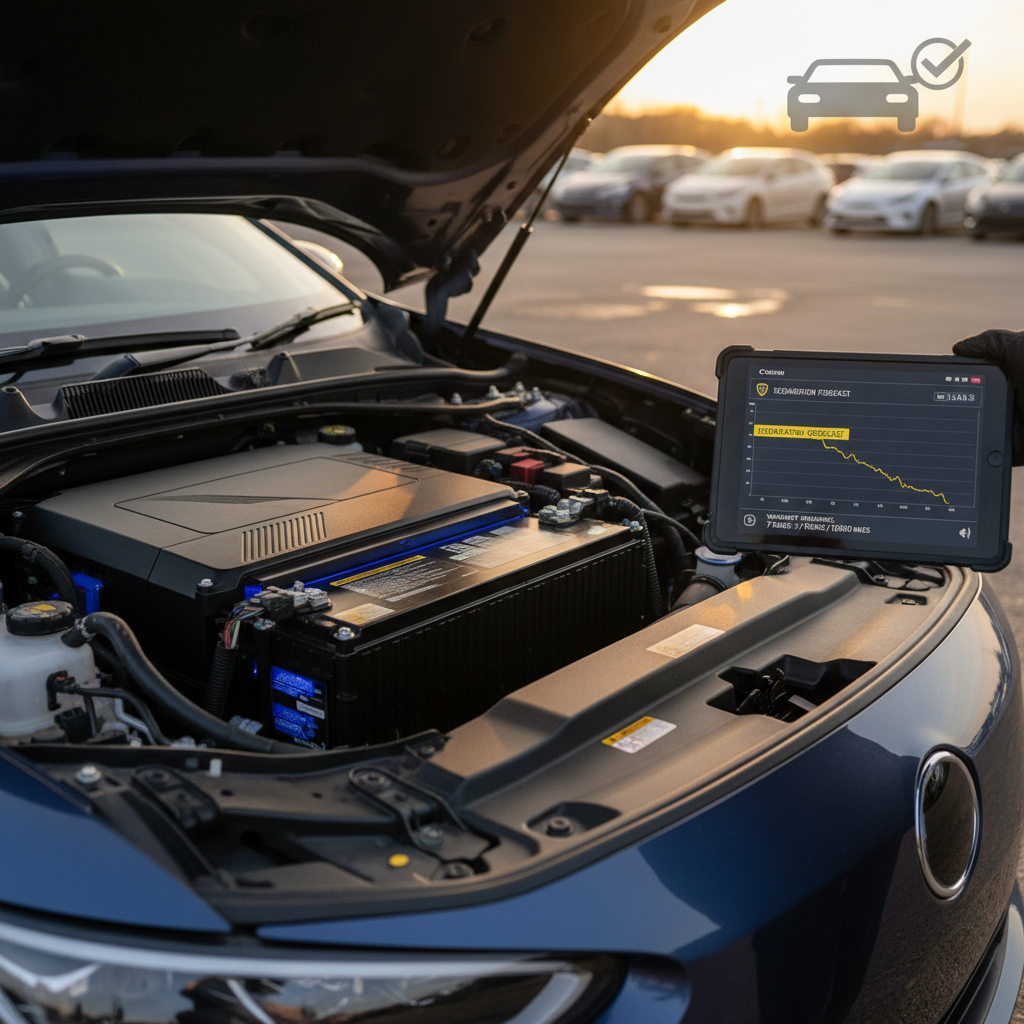
When you’re looking at used EVs, cost per mile isn’t just about electricity vs gas; it’s also about battery health. A degraded battery doesn’t just reduce range, it can nudge your energy cost per mile upward and affect total ownership cost.
How battery health ties into cost per mile
Why Recharged grades every car’s pack, not just its paint.
Energy use and degradation
An older EV with a worn battery might use slightly more energy per mile (for example, 29 kWh/100 mi instead of 26) due to changes in pack behavior and thermal management.
That may only add 1–2¢ per mile, but over 12,000 mi/year that’s $120–$240 in extra electricity.
Range, planning, and time cost
Degradation cuts range, which doesn’t change electricity cost per mile directly but can increase your time and fast‑charging dependence if you’re constantly stretching to reach chargers.
That’s why a transparent battery report is as important as the fuel economy label on a gas car.
How Recharged helps on the used side
Beyond fuel: maintenance and total cost of ownership
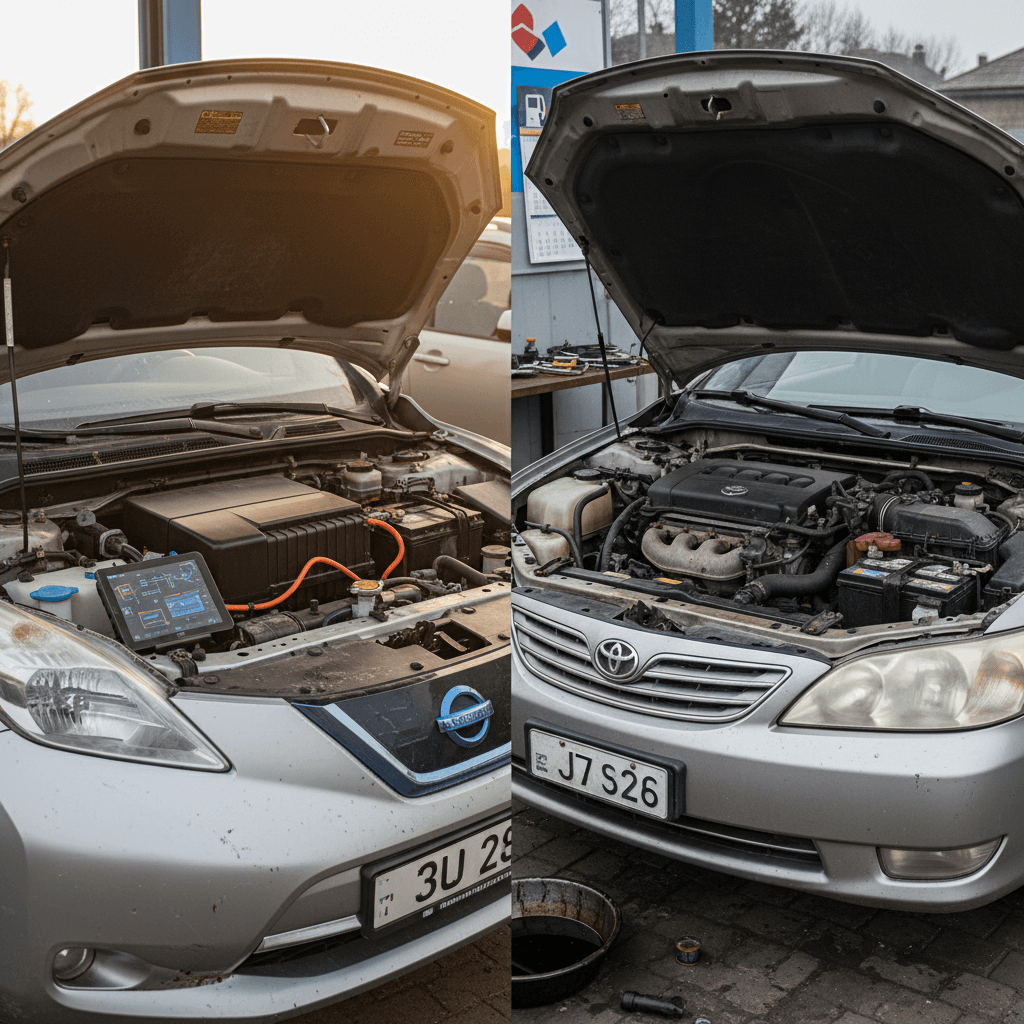
Fuel is only part of the story. To understand how electric vehicle cost per mile vs gas plays out over years, you also have to account for maintenance and repairs. This is where EVs usually tilt the long‑term math in their favor, even when fuel savings alone look modest.
Typical maintenance and repair cost patterns
High‑level view; real costs depend on model, age, and how you drive.
| Category | EV tendency | Gas car tendency | Impact on cost/mi |
|---|---|---|---|
| Oil & routine engine service | No oil changes, fewer moving parts. | Regular oil changes, belts, plugs, filters. | EVs often save several hundred dollars over 5 years, worth a few cents per mile. |
| Brakes | Regenerative braking reduces pad wear. | Pads and rotors wear faster, especially in traffic. | EV advantage, especially in city driving. |
| Complex components | Battery and power electronics are expensive but rare failures early on. | Transmissions, exhaust systems, fuel systems can be failure points. | Risk profile differs; extended warranties can matter for both. |
| Unexpected repairs on older vehicles | Less data for very high‑mileage EVs; battery pack risk looms large but is low‑probability on many models. | Well‑known patterns: transmissions, head gaskets, emissions equipment as vehicles age. | On a used vehicle, inspection quality and history often matter more than the fuel type. |
Think of these as directions, not guarantees. Always look at data for the specific models you’re comparing.
Don’t ignore battery replacement risk
How to estimate your own EV vs gas break-even point
Once you know the cost per mile for an EV and a gas car, the next logical question is, “How long until the EV pays off?” You don’t need to model every variable to get a useful answer; a simple break‑even framework will get you close enough to make a decision.
5‑step break‑even estimate
1. Calculate fuel cost per mile for both vehicles
Use the formulas earlier in this guide with your actual electricity and gas prices, and realistic efficiency numbers for the specific vehicles you’re considering.
2. Estimate your annual miles
Use your odometer history, commute length, or insurance statement. 10,000–15,000 miles per year is common, but what matters is <strong>your</strong> number.
3. Compute annual fuel cost for each vehicle
Multiply cost per mile by annual miles. For example, $0.05/mi EV × 12,000 mi = $600/year; $0.12/mi gas × 12,000 mi = $1,440/year.
4. Compare upfront prices and financing
If the EV costs $4,000 more than the comparable gas car, and you save $800 per year in fuel and maintenance, your simple payback period is around 5 years.
5. Stress‑test with realistic scenarios
Run a few “what ifs”: higher gas prices, more fast charging, different electricity rates, or a change in commute. If the EV still looks good under reasonable variations, it’s a robust choice.
Leaning on financing to spread the math out
Ready to find your next EV?
Browse VehiclesFAQ: electric vehicle cost per mile vs gas
Common questions about EV vs gas cost per mile
Bottom line: should you switch to an EV now?
In 2025, the simple story is this: if you have access to home charging and you’re not paying extreme electricity rates, an EV’s cost per mile is usually meaningfully lower than a comparable gas car’s, even with gas around $3 a gallon. If you’re dependent on paid public charging or you drive a very efficient hybrid, the gap shrinks and the answer becomes more case‑by‑case.
Either way, thinking in cost‑per‑mile terms puts you ahead of most shoppers. It forces you to connect energy prices, efficiency, and your actual driving into one clear picture instead of relying on slogans. And when you’re ready to explore specific vehicles, especially used EVs, shopping through Recharged gives you transparent battery health data, fair pricing, financing, and expert EV support, so your spreadsheet and your driveway both end up in the right place.