Under the skin of every modern electric vehicle is a surprisingly sophisticated electric vehicle cooling system. It doesn’t just keep the cabin comfortable. It manages the temperature of the battery pack, electric motor, and power electronics so your EV can charge quickly, deliver full power, and stay safe over hundreds of thousands of miles.
Cooling in EVs vs. gas cars
Why electric vehicle cooling systems matter
Lithium-ion batteries operate best in a relatively narrow window, typically around 20°C to 45°C (68°F to 113°F). Outside that range, they lose performance and age faster; in extreme cases, they can enter a dangerous condition called thermal runaway. A well-designed electric vehicle cooling system keeps temperatures in that sweet spot during hard acceleration, hill climbs, and fast charging, as well as in winter cold snaps and summer heat waves.
Why EV thermal management is a big deal
For you, that translates into more consistent range, faster and more reliable fast charging, and a battery that retains more of its capacity by the time you’re ready to sell or trade in your EV.
EV thermal management 101: What needs cooling?
The three main systems your EV cooling setup protects
Each has different temperature limits and cooling needs
1. High-voltage battery
- Generates heat whenever you accelerate, brake regeneratively, or charge.
- Must stay within a tight temperature band for safety and long life.
2. Motor & gearbox
- Windings and magnets heat up under heavy load or towing.
- Gear oil needs stable temperature to protect bearings and gears.
3. Power electronics
- Switching losses create concentrated hot spots.
- Cooling keeps them efficient and prevents premature failure.
In many newer EVs, these are tied into an integrated thermal management system that can shuffle heat around. For example, it might pull waste heat from the motor to warm a cold battery, or use the A/C refrigerant circuit to chill the pack before a fast charge.
Battery cooling systems: Heart of EV thermal management
The most important part of any electric vehicle cooling system is the Battery Thermal Management System (BTMS). Its job is to heat, cool, and balance battery cell temperatures so they stay uniform, cell‑to‑cell and module‑to‑module, while you drive and charge.
- Typical target window: roughly 20°C–45°C (68°F–113°F) for most EV packs.
- Key goals: keep maximum temperature down, minimize temperature differences across the pack, and react quickly to spikes during fast charging.
- Tools: coolants, pumps, valves, chillers, heaters, sensors, and smart software running in the battery management system (BMS).
Air cooling vs. liquid cooling vs. advanced approaches
Air-cooled battery systems
Some early EVs and hybrids used (or still use) forced-air cooling, blowing cabin or outside air through ducts over battery modules.
- Lower cost and simpler hardware.
- Less effective in very hot climates or under repeated fast charging.
- Can struggle to keep temperature differences small across the pack.
Air cooling can be adequate for small packs with modest power demands, but it’s being phased out of most new long-range EV designs.
Liquid-cooled battery systems
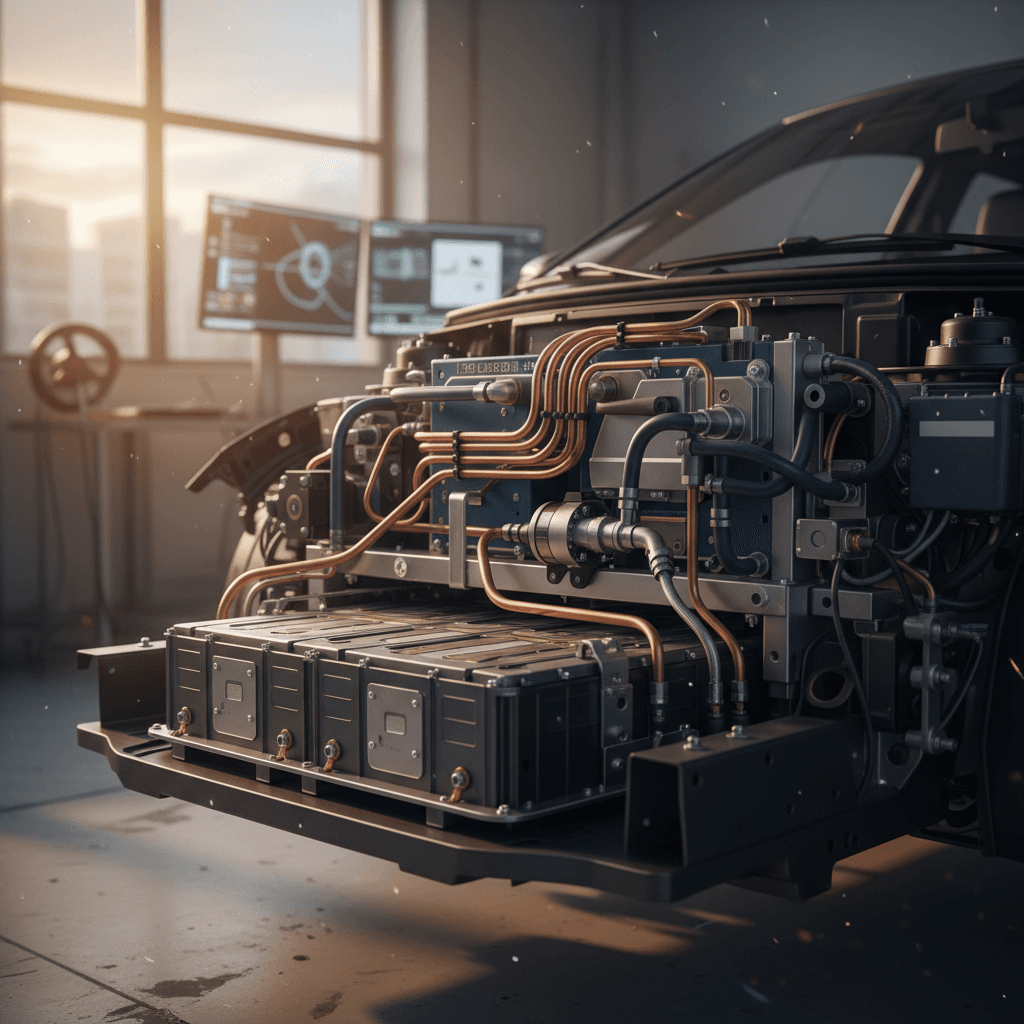
Most modern EVs rely on liquid cooling using a water‑glycol mix circulating through channels or plates near the cells.
- Much higher heat capacity than air, so it can pull heat out quickly.
- Allows precise temperature control for each section of the pack.
- Can also pre‑heat the battery using electric heaters or heat‑pump loops.
Liquid cooling is effectively the standard for contemporary long‑range EVs because it balances cost, performance, and safety very well.
Emerging technologies
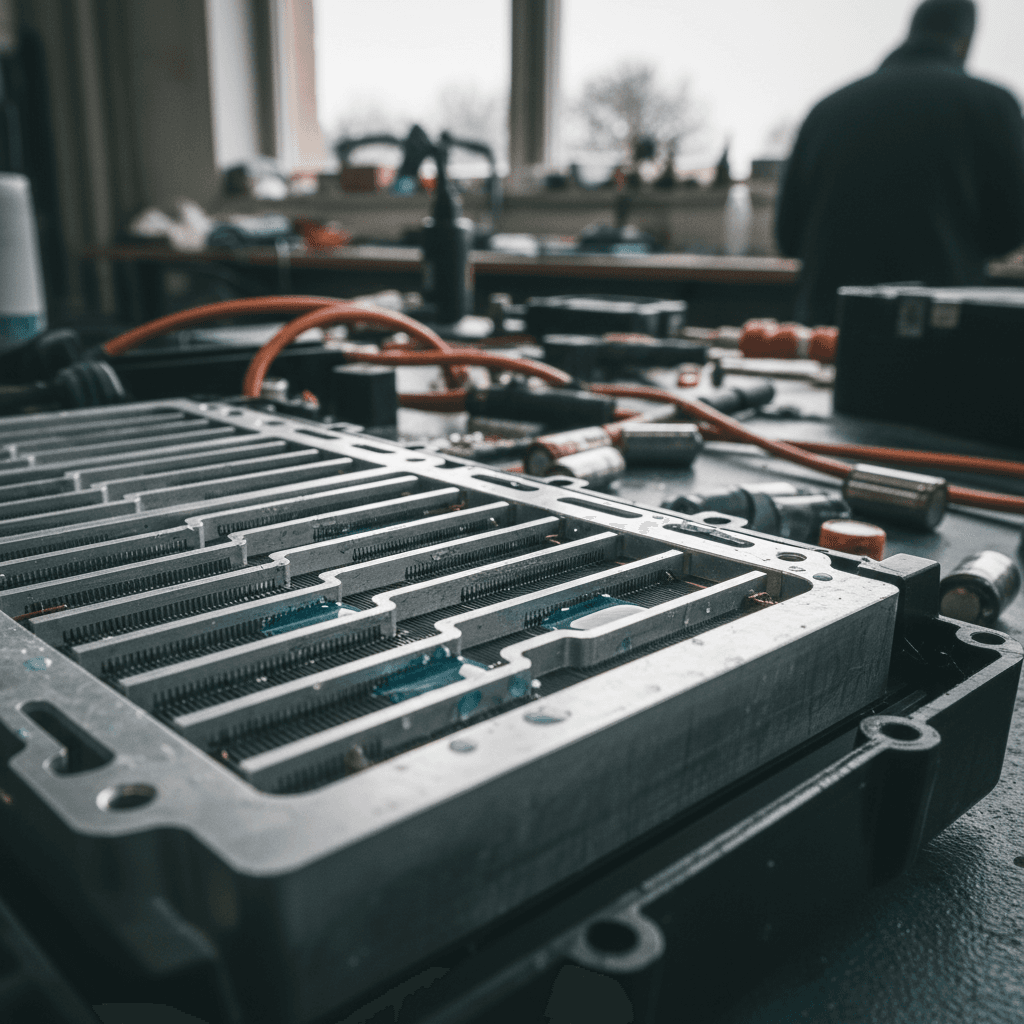
Heating the battery in cold weather
Cooling is only half the story. In cold climates, the thermal system also has to heat the pack before fast charging or spirited driving. Cold cells can’t accept charge quickly and can experience extra wear if you push them too hard too soon.
- Dedicated electric resistive heaters or heat‑pump loops warm coolant before it enters the pack.
- Preconditioning routines automatically start when you navigate to a fast charger or set a departure time in the app.
- Some systems steal a little waste heat from the motor or power electronics to help bring the pack up to temperature.
Real-world tip
Cooling the motor and power electronics
The traction motor, inverter, and onboard charger don’t store energy the way the battery does, but they generate concentrated heat in small areas. That makes local hot spots a concern, especially during towing, mountain driving, or repeated high‑speed runs.
How EVs keep critical drivetrain parts cool
Electric motor cooling
- Oil spray or flooded stators that carry heat away from windings.
- Water‑glycol jackets around the motor casing.
- Internal fans routing air across rotors and stators in some designs.
Inverter & electronics cooling
- Thermal interface materials move heat into aluminum plates.
- Coolant loops may be shared with the battery or kept separate.
Integrated thermal circuits
- Heat pumps move energy where it’s needed most.
- Smart valves route coolant between subsystems.
Why integration matters
Key EV cooling system designs and technologies
Common battery cooling system designs in modern EVs
You won’t always see these terms on a window sticker, but understanding them helps you compare vehicles and ask sharper questions at the dealership, or when reviewing a used EV report.
| Design | Typical use | Pros | Cons |
|---|---|---|---|
| Forced-air cooling | Older EVs, some hybrids | Low cost, simple | Limited heat removal, struggles in hot climates and fast charging |
| Liquid cooling plates | Most mainstream EVs | Excellent control, proven, scalable | More components and plumbing, potential for coolant leaks if poorly designed |
| Immersion cooling | Select high‑performance or commercial packs | Superb temperature uniformity and fast heat removal | Higher cost, more complex service requirements |
| Phase-change materials (PCM) | Supplement to other systems | Smooths temperature spikes, improves uniformity | Adds weight and packaging complexity, still emerging in road cars |
Most long‑range EVs have moved to liquid‑cooled packs with integrated thermal management for motors and electronics.
How to spot a modern cooling system
How cooling impacts range, fast charging, and climate performance
An electric vehicle cooling system doesn’t just prevent overheating, it quietly shapes how the car behaves in everyday driving. Range, fast charging, and even cabin comfort are all affected by how heat is moved around.
Range and efficiency
A pack that runs too hot or too cold is a less efficient pack. Your EV wastes more energy keeping itself within limits, and internal losses rise.
- Hot conditions: The system may ramp up cooling, drawing extra power and trimming range.
- Cold conditions: The car uses energy to warm the pack and cabin, and may temporarily limit power.
- Good news: Smart thermal management and heat pumps in newer EVs reduce this penalty substantially.
Fast charging consistency
DC fast charging dumps large amounts of energy into the battery quickly, which generates significant heat. If the cooling system can’t keep up, the car will throttle charging speed to protect the cells.
- Preconditioned, well‑cooled packs sustain higher kW for longer.
- Inconsistent cooling leads to varied charging curves from one stop to the next.
- Thermal limits are often why a “250 kW capable” car doesn’t sit at 250 kW for long.
Real-world benefit for drivers
Cooling, safety, and thermal runaway protection
A robust electric vehicle cooling system is also a safety system. Lithium‑ion cells store a lot of energy in a small volume. If they’re abused, damaged, or overheated, they can enter thermal runaway, where temperature and pressure rapidly climb and can lead to venting, fire, or, in worst cases, pack failure.
- Temperature sensors distributed throughout the pack feed data to the BMS many times per second.
- Software limits power or charging current if temperatures approach limits.
- Cooling circuits and, in some designs, fire‑resistant barriers and vent paths help manage worst‑case events.
- Some newer research focuses on smart separators and multi‑stage cooling strategies to slow or prevent thermal runaway propagation.
Important perspective
What to look for in an EV cooling system when you’re shopping
You won’t see “battery cooling system” as a trim line item, but you can absolutely evaluate how serious an automaker is about thermal management. That’s especially important if you live in a region with hot summers, cold winters, or plan to do a lot of fast charging or towing.
Questions to ask about an EV’s cooling system
1. Does it use liquid battery cooling?
For long‑range EVs, <strong>liquid‑cooled packs</strong> are the norm. Ask your salesperson or check the spec sheet. If the vehicle relies only on air cooling, understand that fast‑charging and high‑load performance may be limited.
2. Is there battery preconditioning for fast charging?
Look for features that let the car automatically warm or cool the battery before a DC fast‑charge stop. It’s often triggered via navigation to a charger in the onboard nav or app.
3. How does it handle extreme climates?
Ask how the car behaves in very hot or very cold conditions: Does it limit power? How is range affected? Does it have a heat pump for more efficient cabin and battery heating?
4. Are motor and inverter on a shared loop?
Integrated systems can be efficient, but they must be well‑engineered. If you plan track days, towing, or mountain driving, look for evidence of robust testing and thermal protections.
5. What are the DC fast‑charging expectations?
Don’t just look at peak kW. Ask how long the car can hold higher power on a typical 10–80% session and whether that changes as the pack heats up.
6. Is there a clear thermal warranty story?
Read the battery warranty terms. While they won’t spell out the cooling design, a strong warranty on capacity retention is a sign the automaker trusts its thermal management.
Bring a checklist to the test drive
Used EVs, cooling history, and battery health
In the used market, you can’t see inside the cooling channels or the battery cells, but you can look at outcomes. Good thermal management leaves a paper trail in the form of healthy state of charge behavior, stable range, and solid diagnostic results.
Why cooling history matters
Two identical EVs can age very differently based on how their thermal systems were used and maintained.
- Frequent DC fast charging in desert heat with no preconditioning stresses cells and cooling loops.
- Years in cold climates without proper warm‑up can accelerate certain degradation mechanisms.
- Neglected coolant changes (where required) may increase corrosion risk in cooling plates or channels.
How Recharged helps de‑risk used EV cooling unknowns
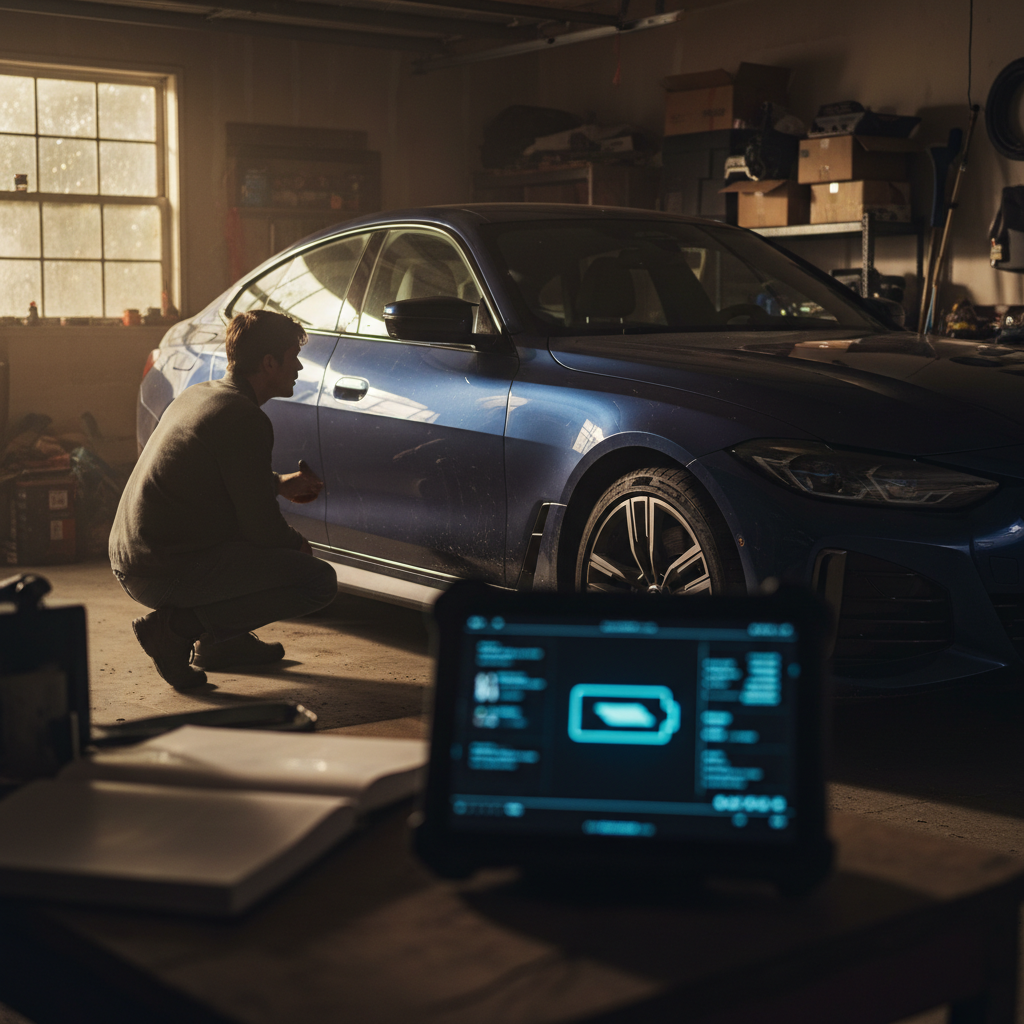
Every vehicle sold through Recharged includes a Recharged Score Report with verified battery health diagnostics, fault‑code checks, and a look at how the pack behaves under load.
- We analyze battery performance to infer how well thermal management has protected the pack over time.
- Our EV specialists can explain typical behavior for that model, like how it limits power when hot or cold.
- You get transparent, data‑driven insight instead of guesswork about the most expensive component in the car.
Leaning on experts
FAQ: Electric vehicle cooling systems
Frequently asked questions about EV cooling systems
The bottom line on electric vehicle cooling systems
The electric vehicle cooling system is one of the least visible but most important technologies in any EV. It protects the battery, the most expensive component, while keeping the motor, inverter, and cabin operating in their comfort zones. In practice, that means better range, more consistent fast‑charging, and a safer, longer‑lived vehicle.
As you compare models or shop the used market, paying attention to how each vehicle manages heat will help you separate engineering that’s merely adequate from truly robust designs. And if you’d like a data‑driven view into a used EV’s battery and thermal history, Recharged can back your decision with transparent diagnostics, fair market pricing, and EV‑specialist support from your first online search to delivery.