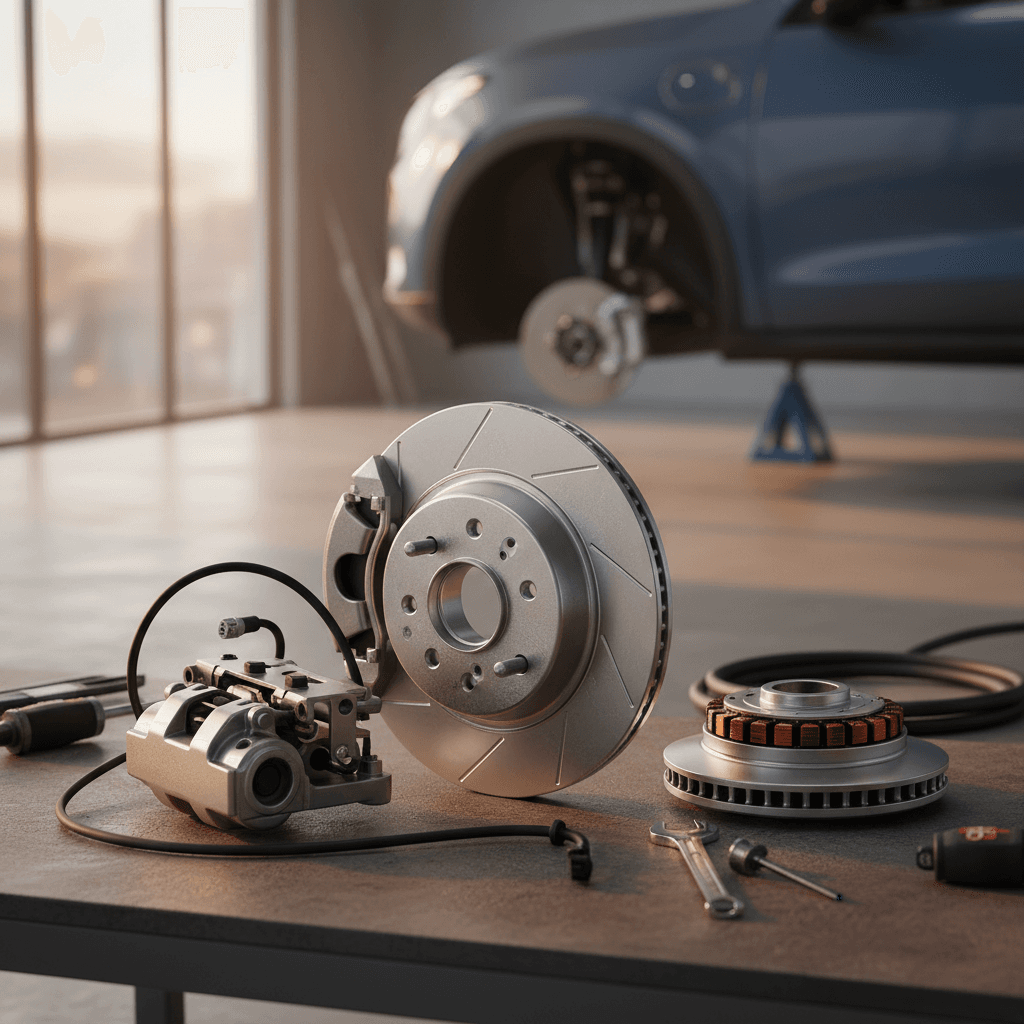
When you first drive an electric car, the electric vehicle brake system is one of the biggest surprises. The car slows the moment you lift off the accelerator, the brake pedal can feel different from a gas car, and yet service intervals often stretch far longer. Understanding what’s going on under your right foot will make you a more confident owner, and a smarter shopper if you’re looking at a used EV.
Big picture
How an electric vehicle brake system differs from a gas car
On the surface, EV brakes look familiar: discs, calipers, a brake pedal. Under the skin, though, the system is managed very differently. A conventional car relies almost entirely on hydraulic friction brakes and a bit of passive engine braking. An electric vehicle replaces engine braking with regenerative braking, the drive motor becomes a generator when you slow down, and blends that with friction brakes under computer control.
Conventional (gas) car brakes
- Hydraulic system connects pedal to calipers.
- Engine braking adds some drag when you lift off the throttle.
- Friction brakes handle almost all slowing and stopping.
- Pad and rotor replacements can be frequent in city driving.
Electric vehicle brakes
- Electric motor provides strong regenerative braking.
- Computer blends regen and friction for smooth deceleration.
- Friction brakes step in for hard stops or low‑speed creep.
- Brake pads often last well beyond 100,000 miles in real‑world use.
Because regen does so much work, ignoring friction brakes for years can create its own problems, more on that in the maintenance section.
Comfort tip for new EV drivers
Core components of an EV brake system
The main building blocks
Same hardware you’re used to, plus some high‑tech helpers
Electric motor & inverter
High‑voltage battery
Friction brakes
Control and safety electronics
Why EV braking is so smooth, and so complex
Brake control unit
Wheel speed & pedal sensors
ABS, ESC & fail‑safes
Regenerative braking explained
At the heart of the electric vehicle brake system is regenerative braking. Because an electric motor and a generator are fundamentally the same device, your EV can flip the motor from “push” to “pull” in a few milliseconds. When you lift off the accelerator, the control system tells the motor to resist rotation and send energy back into the battery instead of drawing it out.
- You lift off the accelerator or start to press the brake pedal.
- The car’s control unit calculates how much deceleration you’re asking for and how much regen the battery and motors can safely handle.
- It commands the drive motor(s) to generate electricity, creating a retarding torque that slows the wheels.
- If you ask for more deceleration than regen can provide, like in a panic stop, the friction brakes automatically add more stopping power.
- ABS and stability systems make sure individual wheels don’t lock up, modulating both regen and friction as needed.
Why regen braking matters
When regen can’t help much
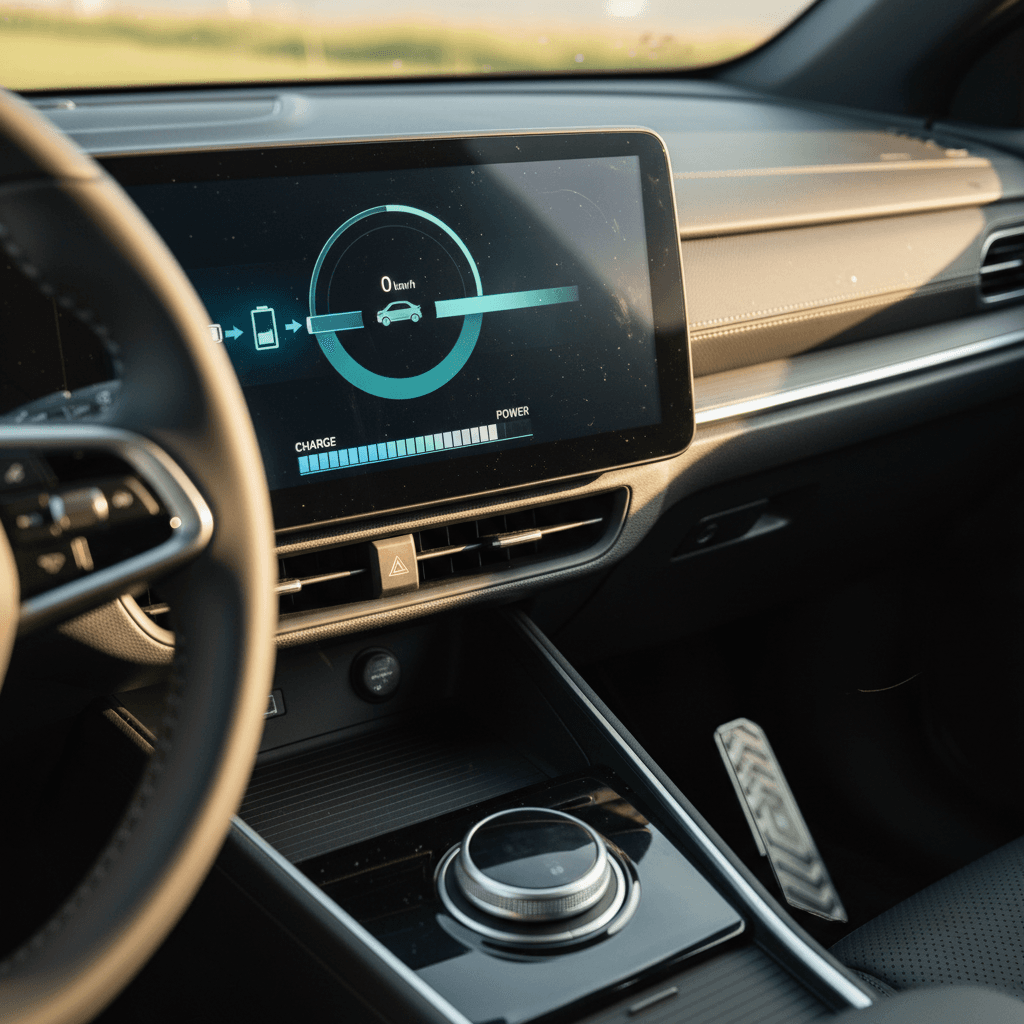
Brake‑by‑wire in modern electric vehicles
Because so much of an EV’s braking is done electrically, most modern electric and hybrid vehicles use some form of brake‑by‑wire. Instead of a simple mechanical link from pedal to master cylinder, your pedal movement is interpreted by sensors and a control unit that decides how much regen and how much hydraulic braking to apply.
How brake‑by‑wire works day to day
- Pedal position sensors tell the controller exactly how quickly and how hard you’re braking.
- The system first maxes out regenerative braking within traction and battery limits.
- An electro‑hydraulic module or electric calipers add friction braking as needed.
- The car blends the two so the pedal feels consistent, regardless of how much regen is available.
Redundancy and safety
- Multiple sensors and computers provide backup information in case one fails.
- Many systems can fall back to a more conventional hydraulic mode if the electronics misbehave.
- Autonomous‑ready designs add extra redundant pumps and actuators so the car can still stop itself even with multiple failures.
You might only ever notice this as a dashboard warning light and a change in pedal feel if the system drops into a backup mode.
Why EVs pushed brake‑by‑wire forward
How electric vehicle brakes feel on the road
If this all sounds complex, that’s the point, the car is doing a lot of work so you don’t have to think about it. From the driver’s seat, the electric vehicle brake system should simply feel predictable and confidence‑inspiring. That said, the sensations are different enough from a gas car that it’s worth knowing what’s normal and what isn’t.
Common EV braking experiences
What you’ll notice, and what it means
Strong decel on lift‑off
Consistent pedal feel
Mode‑dependent behavior
Test drive checklist
EV brake life, maintenance, and common issues
One of the quiet financial perks of EV ownership is how long the brakes can last. Because regen does so much work, pads and rotors often go far longer between replacements than in a comparable gas car. But that can create a false sense of security, these components still age, can corrode, and absolutely need periodic attention.
Essential EV brake maintenance
1. Follow the inspection schedule
Even if the pads are barely worn, have the brake system inspected at the intervals in your owner’s manual. Technicians should check pad thickness, rotor condition, caliper slides, and flexible lines.
2. Prevent corrosion on seldom‑used brakes
In climates with road salt or moisture, lightly using the friction brakes on each drive helps keep rotors clean. Some EVs even have a calibration mode that deliberately uses friction brakes to scrub rust.
3. Watch for uneven pad deposits
Long stretches of gentle regen followed by occasional hard friction stops can create uneven pad material on the rotors. If you feel pulsing through the pedal, it’s time for a closer look.
4. Don’t neglect brake fluid
Brake fluid still absorbs moisture over time, which can reduce boiling point and promote internal corrosion. Even in an EV, periodic fluid changes are cheap insurance for safety and long‑term reliability.
5. Pay attention to software updates
Automakers routinely refine brake‑by‑wire tuning via over‑the‑air updates. If your car’s braking behavior changes noticeably after an update, read the release notes and, if needed, have a technician verify operation.
When to stop driving and call for help
What to check in the brake system when buying a used EV
If you’re considering a used electric vehicle, the brake system is a key part of the overall health picture. The twist with EVs is that low pad wear doesn’t necessarily mean the system is in great shape, and a car that’s sat parked for long stretches can have more brake issues than one that’s been driven regularly.
Used EV brake checks you shouldn’t skip
Ask these questions or have a pre‑purchase inspection done
Visual condition & service history
Road‑test performance
Warning lights & diagnostic codes
Total cost picture
How Recharged simplifies used EV brakes
Ready to find your next EV?
Browse VehiclesFuture trends in electric vehicle brake systems
The next generation of electric vehicle brake systems is being shaped by two forces: the push toward higher levels of driver assistance and autonomy, and the ongoing drive to reduce weight and complexity. Both point toward more sophisticated brake‑by‑wire setups and, eventually, fully electric actuation at each wheel.
Where EV brake technology is headed
From today’s systems to what you’ll see on the next wave of EVs
| Technology | What it is | Why it matters for you |
|---|---|---|
| Integrated brake control units | Compact modules that combine ABS, stability control, boost, and brake‑by‑wire into one box. | Reduces weight and improves response time, often giving a firmer, more consistent pedal feel. |
| Electro‑mechanical wheel brakes | Electric motors at each caliper apply pads directly, with no central hydraulic lines. | Creates natural redundancy for autonomous driving and can reduce maintenance and fluid‑related issues. |
| Smarter regen control | Software that better predicts traffic and topography to optimize regen automatically. | More energy recovered with less effort from the driver, plus smoother transitions between regen and friction. |
| Advanced diagnostics | Systems that monitor pad wear, rotor condition, and fluid quality in real time. | Earlier warnings, fewer surprises, and more precise service intervals, especially valuable on used EVs. |
Automakers are already piloting many of these technologies on premium EVs and high‑end hybrids.
“Braking is no longer just a mechanical system, it’s a core part of the EV’s energy management, safety, and driver‑assistance strategy.”
Electric vehicle brake system FAQ
Frequently asked questions about EV brake systems
Key takeaways for EV owners and shoppers
The modern electric vehicle brake system is a long way from the simple hydraulic setups most of us grew up with. Regenerative braking, brake‑by‑wire control, and smarter diagnostics all work together to stretch pad life, save energy, and prepare cars for increasingly capable driver‑assistance features. Your job as an owner, or a used‑EV shopper, isn’t to master the engineering, but to recognize what “normal” feels like, stay ahead of basic maintenance, and insist on a thorough inspection before you buy.
If you want help evaluating a used EV’s brakes alongside its battery health and pricing, Recharged was built for exactly that. Every car comes with a Recharged Score Report, EV‑specialist guidance, and flexible options like financing, trade‑in, and nationwide delivery. That way, the only surprise when you hit the brakes on your first road trip is just how smoothly, and quietly, the car comes to a stop.