Pop quiz: would you rather have a 60 kWh battery that’s healthy, or an 80 kWh pack that’s been beaten like a rental scooter? When you’re shopping for an electric vehicle, electric vehicle battery capacity looks like a simple number on the spec sheet. In reality, it’s the beating heart of the car, determining range, performance, charging time, and how valuable that EV will feel in 5 or 10 years.
kWh in one sentence
What electric vehicle battery capacity really means
Think of battery capacity as the size of your EV’s fuel tank, except the fuel is electricity. It’s measured in kilowatt-hours (kWh). One kWh is the energy it takes to run a 1,000‑watt appliance for one hour. If your EV has a 75 kWh battery, in theory it could deliver 75 kW of power for one hour, or 15 kW for five hours, and so on.
- Capacity (kWh) = how much energy the battery can store
- Consumption (kWh/100 mi) = how efficiently the car uses that energy
- Range (miles) = capacity ÷ consumption, adjusted for real‑world conditions
- State of health (SoH) = how much of that original capacity is still usable after years of driving
Don’t confuse kW and kWh
Typical EV battery capacities in 2025
Battery capacity benchmarks in 2025
On the low end, you’ll see city‑focused EVs around 40–50 kWh. Mainstream family EVs roam between 60 and 80 kWh. Big luxury SUVs, trucks, and performance models stretch north of 90 kWh, some well into triple digits. More capacity buys more range, more weight, and more cost, two out of three of those are not your friends.
Rough EV battery capacity bands and what they’re good for
These are generalized bands; each specific model’s efficiency and aero will shift the real numbers.
| Battery size (kWh) | Typical use case | Approx. EPA range | Who it suits best |
|---|---|---|---|
| 35–45 kWh | City / second car | 120–180 miles | Urban commuters, short‑hop drivers, households with multiple cars |
| 46–60 kWh | Mainstream compact/crossover | 190–260 miles | Most US drivers with home charging and occasional trips |
| 61–80 kWh | Family + light road‑trip duty | 250–320 miles | Suburban families, regular weekend travel |
| 81–100 kWh | Long‑range / premium | 300–380 miles | Frequent highway travelers, sparse charging regions |
| 100+ kWh | Large SUVs / trucks | 330–450+ miles | Towing, heavy loads, long‑distance interstate use |
Capacity is only half the story, vehicle efficiency and your usage pattern matter just as much.
Beware spec‑sheet hero numbers
How battery capacity affects real‑world range
Range obsession is the national sport of EV forums. Capacity absolutely matters, but not in isolation. The car’s efficiency, the weather, your right foot, and how you charge all push the real‑world range up or down.
1. Do the back‑of‑napkin math
To get a rough sense of range from electric vehicle battery capacity, divide the battery size by the car’s consumption:
- Example efficient EV: 60 kWh battery ÷ 27 kWh/100 miles ≈ 220 miles
- Example less‑efficient SUV: 80 kWh ÷ 33 kWh/100 miles ≈ 240 miles
Bigger battery, similar range, because the SUV is dragging a brick‑shaped house through the air.
2. Real‑world range haircut
Now subtract what the spec sheet doesn’t tell you:
- Highway speed: cruising at 75 mph can cut range 15–25%
- Cold weather: winter can cost another 10–30% depending on climate
- Roof racks / bikes: aero drag adds up quickly
- Towing: halve the rated range and you’re in the ballpark
Suddenly, that 300‑mile EPA number looks more like 200–230 miles on a fast winter highway stint.

Why 250 “honest” miles are usually enough
Battery capacity, charging time, and performance
Capacity doesn’t just influence how far you go. It changes how you live with the car, how long you spend plugged in and how the car feels from behind the wheel.
Three ways capacity changes the EV experience
Range is only the first‑order effect. Here’s what else that big battery is doing.
Charging time
A bigger battery takes longer to fill at the same charging power:
- At 11 kW home AC, a 60 kWh pack takes ~6 hours from low to full.
- An 80 kWh pack at the same 11 kW takes closer to 8 hours.
DC fast charging narrows the gap, but you still push more energy into a larger tank.
Vehicle weight
More capacity means more cells, more modules, more mass.
- Heavier EVs ride nicely but can feel less agile.
- Extra weight also raises energy consumption, partially offsetting the range gains.
Performance and power
Manufacturers often pair larger batteries with more powerful motors.
- Bigger pack = more current available = more peak power.
- But chemistry and cooling matter as much as capacity.
Don’t assume the “big battery” version is the only one that’s quick, check the specs.
Fast charging myths
Battery chemistry: LFP vs NMC and why it matters
Underneath that tidy kWh number is chemistry, lithium‑ion, but not the AA battery in your TV remote. Today most EVs use either NMC (nickel‑manganese‑cobalt)‑based packs or LFP (lithium iron phosphate). Both routinely deliver 200,000+ miles of service, but they behave differently in terms of energy density, cost, and longevity.
NMC and similar chemistries
- Higher energy density: more kWh per pound, so easier to hit big range numbers.
- Better cold‑weather performance versus early LFP designs.
- Higher cell cost and reliance on materials like cobalt and nickel.
You’ll see NMC‑type packs in many long‑range and performance EVs.
LFP (lithium iron phosphate)
- Lower energy density: you need a bit more physical battery for the same kWh.
- Excellent cycle life: very resistant to degradation, happy with daily 100% charges.
- Lower cost per kWh and improved fire resistance.
Increasingly common in mass‑market models, where durability and value matter more than ultimate range bragging rights.
What this means for used EV shoppers
Capacity, degradation, and battery health over time
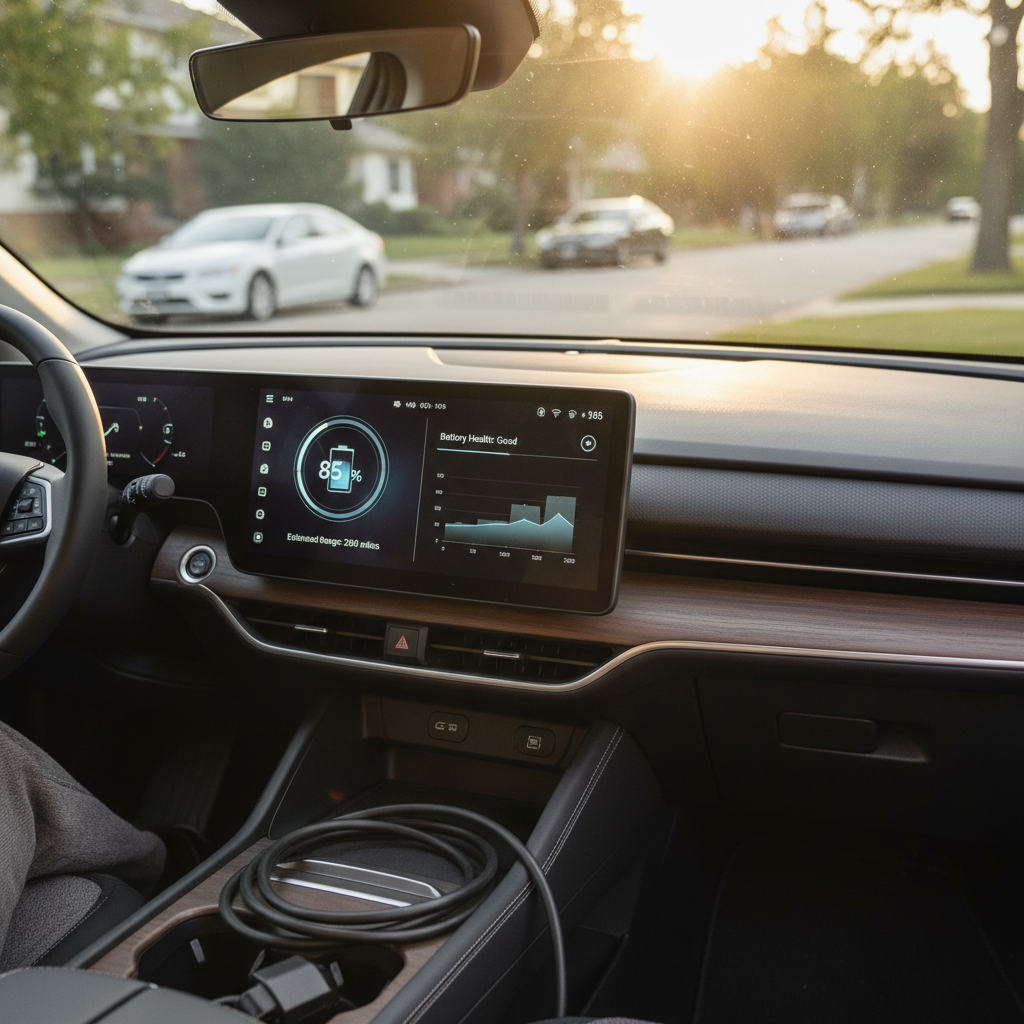
Here’s the good news: modern EV batteries are aging better than the internet panic would have you believe. Long‑term tests on popular EVs show many still retaining around 90% of their original capacity after years and six‑figure mileage. That means a 77 kWh pack might still hold about 70 kWh after four years of heavy use.
- Most manufacturers warrant the battery to retain around 70% capacity over 8 years or roughly 100,000 miles.
- Real‑world data from taxis, fleets, and early‑adopter EVs show slow, gradual degradation rather than a sudden cliff.
- Heat, frequent DC fast charging, and keeping the pack at 0% or 100% for long periods are the main enemies of battery health.
Heat is the silent capacity killer
Habits that preserve your battery capacity
1. Live in the middle
Try to keep daily use between about 20% and 80% state of charge. Many cars let you set a charge limit for daily use and only fill to 100% before a road trip.
2. Use fast charging strategically
DC fast charging is fine for road trips, but if you can, rely on Level 2 home or workplace charging for routine use to reduce thermal stress on the pack.
3. Avoid chronic 0% moments
Occasional deep discharges are okay; making a habit of limping into the driveway at 1% is not. Give the car some buffer whenever you can.
4. Mind the climate
In very hot or cold weather, precondition the car while it’s plugged in so the battery (and cabin) are at a comfortable temperature before you drive away.
The grim, early‑EV fear that batteries would fall off a cliff after a few years just hasn’t materialized in the data. They fade, but they fade slowly.
How much EV battery capacity do you actually need?
The right battery size isn’t “as big as possible.” It’s the smallest pack that comfortably does your life without anxiety. Beyond that point you’re just hauling around expensive, heavy insurance.
Choosing capacity by how you actually drive
Daily urban commuter
Drives: 20–40 miles most days, occasional weekend trip.
Recommended capacity: <strong>45–60 kWh</strong>.
Why: Easy 150–220 real‑world miles, plenty of buffer.
Pro tip: Prioritize charging access over max range; a reliable Level 2 charger at home or work is worth more than 20 extra kWh.
Suburban family, mixed driving
Drives: school runs, sports, Costco, regional trips.
Recommended capacity: <strong>60–80 kWh</strong>.
Why: 230–300 miles of usable range makes get‑in‑and‑go road trips realistic.
Pro tip: Look for cars with efficient highway consumption and good DC fast‑charging curves, not just big batteries.
Road‑trip warrior
Drives: frequent interstate journeys, business travel.
Recommended capacity: <strong>75–100 kWh</strong>, plus a strong fast‑charging network.
Why: Fewer charging stops and more flexible route planning.
Pro tip: Study the charging map along your usual routes. A slightly smaller battery on a great network often beats a huge pack in a desert of plugs.
Towing / adventure use
Drives: trailers, campers, mountain roads.
Recommended capacity: <strong>90+ kWh</strong> where available.
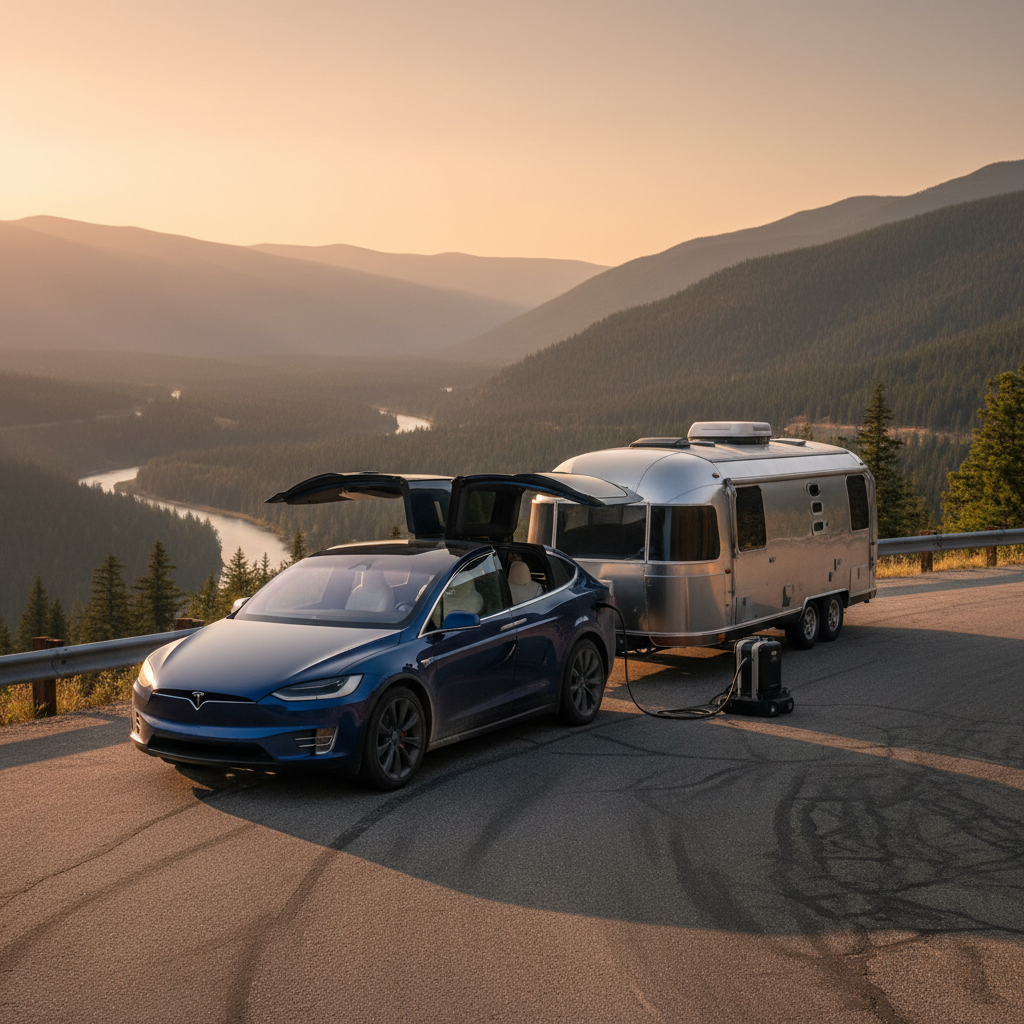
Why: Towing can slash range by half; you need overhead.
Pro tip: If you tow long distances often, a plug‑in hybrid or efficient ICE tow vehicle may still be the tool for that specific job, at least for now.
Match the battery to your parking situation
Reading battery capacity when you’re buying used
With a used EV, you’re not buying the original battery capacity, you’re buying what’s left. Two cars with the same pack size on the brochure can behave very differently in the real world if one has lived a hard, hot, fast‑charged life and the other has spent its days on a mild suburban commute.
Four questions to ask about a used EV’s battery
You’re not just buying a car; you’re buying an electrochemistry experiment in progress.
1. What was the original capacity?
Start with the factory spec: was this a 40 kWh car, a 64 kWh one, or a 100 kWh beast? That frames everything else. A 10% loss on a 100 kWh pack still leaves ample range; the same loss on a 40 kWh city car stings more.
2. How much usable capacity remains?
Some manufacturers display battery health or usable capacity in a service menu or app. Better yet, use an independent report, this is where Recharged’s Battery Health Diagnostics and Recharged Score come in, giving you a verified view of the pack’s condition.
3. How was it charged?
A history of home Level 2 charging and moderate climates is ideal. A life spent at hot, max‑output fast chargers isn’t necessarily a deal‑breaker, but it deserves a closer look at state of health.
4. Does the price reflect reality?
Two similar EVs can deserve different prices if one has materially more remaining capacity. At Recharged, every car’s pricing factors in battery health so you’re not paying top dollar for a tired pack.
How Recharged derisks used EV battery capacity
Ready to find your next EV?
Browse VehiclesQuick test‑drive checks for real‑world capacity
Reset a trip meter
Start with a full or nearly full battery, reset Trip A, drive a known route at normal speeds, and note energy consumption (kWh/100 mi). Compare that to the original EPA or WLTP numbers.
Watch the % drop
On a longer drive, watch how quickly the state of charge ticks down versus miles driven. If 10% consistently buys you far fewer miles than expected, ask for a detailed battery health report.
Check charging behavior
If possible, plug into a Level 2 or DC fast charger and see if the car reaches its expected power levels. A pack that throttles early may be protecting itself, which can be a sign of aging or a software cap.
EV battery capacity FAQ
Frequently asked questions about EV battery capacity
Key takeaways: getting the most from your EV battery
Battery capacity is the most emotionally charged number in the EV world, but it doesn’t have to be mysterious. Start with how you actually live, your commute, your climate, your charging options, and work backward to the smallest electric vehicle battery capacity that covers that life without stress. Then pay close attention to battery health, especially when shopping used, because you drive capacity, not theory.
If you’re browsing used EVs, this is exactly what Recharged was built to simplify. Every car carries a Recharged Score Report with verified battery diagnostics, pricing that reflects real‑world capacity, and access to EV specialists who speak fluent kWh. You bring your driving habits; we’ll help you find a battery, and a car, that fits them.