If you’re searching for an “electric vehicle 1”, you’re probably thinking about your first EV or trying to figure out if basic Level 1 charging at home will be enough. You’re not alone. As incentives shift and prices move, a lot of shoppers are wondering whether now is the moment to make the jump, and how to do it without making an expensive mistake.
Quick take
What “electric vehicle 1” really means
The phrase “electric vehicle 1” isn’t a specific model name. In practice, shoppers and dealers often use it loosely in three ways: to mean a driver’s first electric vehicle, to reference basic Level 1 charging, or to describe an entry-level EV with modest range and features. Regardless of which definition you had in mind, the core questions are the same: Will an EV fit your life, can you charge it conveniently, and how do you avoid overpaying?
Three ways people use “electric vehicle 1”
Different words, same core decision: is this the right first step into EVs?
Your first EV
Looking to replace a gas car with your first electric vehicle. You care about range, reliability, and total cost more than fancy tech.
Level 1 charging
Wondering if you can get by with the 120-volt charger that plugs into a standard household outlet instead of installing new hardware.
Entry-level EV
Shopping for a value-focused EV, often used, with enough range for daily driving but without the price tag of a brand‑new flagship model.
How to focus your search
Is a Level 1 charger enough for your first EV?
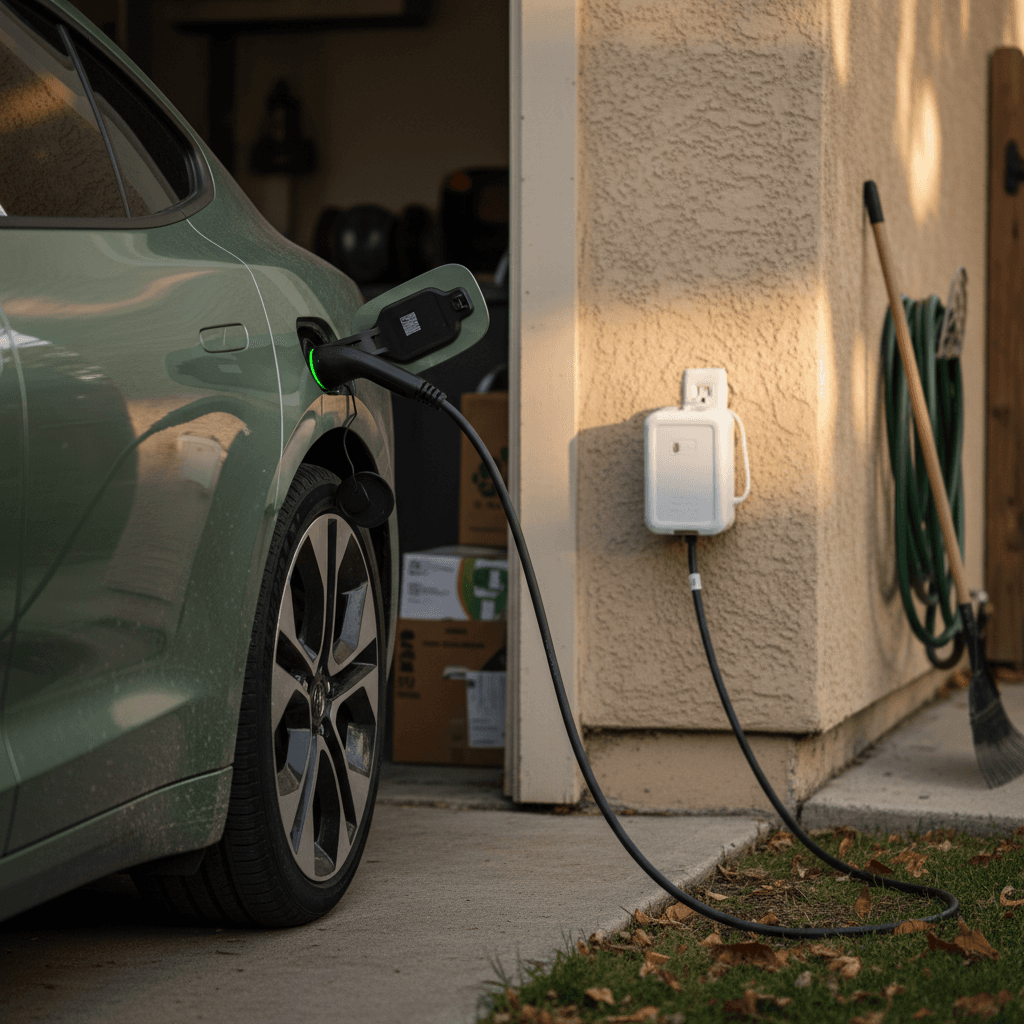
Most EVs ship with a Level 1 charging cable that plugs into a standard 120‑volt household outlet. It’s the slowest way to charge, but also the simplest, no electrician, no permits, no wall box. The key question: does it keep up with your real-world driving?
Level 1 vs. Level 2 charging at a glance
- If you drive under 30–40 miles per day and can plug in every night, Level 1 is often enough.
- If you regularly drive over 60 miles per day or can’t plug in at home, you’ll likely want a Level 2 charger or reliable workplace/public charging.
- Cold weather, heavy use of climate control, and highway speeds all reduce range and make faster charging more valuable.
Watch your outlet
The real costs of owning your first electric vehicle
When drivers talk about an “electric vehicle 1,” they’re often really asking, “Is this going to save me money or cost me more?” The answer depends on how you buy, how you charge, and how long you plan to keep the car.
Upfront and monthly costs
- Purchase price: New EVs still tend to cost more than equivalent gas cars, but used EV prices have fallen sharply as more 3–5‑year‑old leases come back.
- Financing: Many lenders now treat EVs like any other car loan. Marketplaces like Recharged let you shop vehicles and financing in one place.
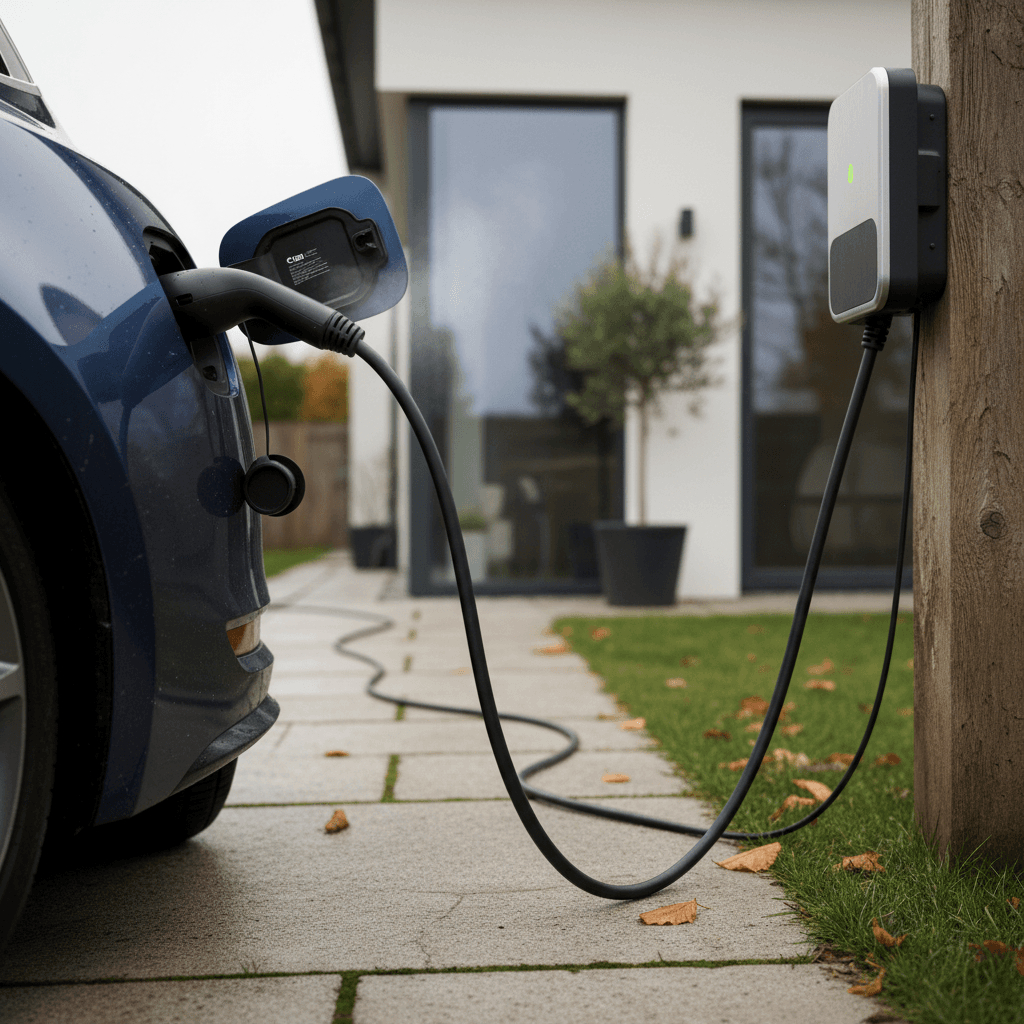
- Home charging: Level 1 uses the outlet you already have. A Level 2 installation typically runs a few hundred to a couple thousand dollars depending on your panel and wiring.
Fuel, maintenance, and resale
- Fuel: On average, electricity is cheaper than gasoline on a per‑mile basis, especially if you can charge overnight at home.
- Maintenance: No oil changes, fewer moving parts, and regenerative braking all reduce routine service costs.
- Resale: EVs depreciate quickly in the first few years but can be strong values on the used market. Battery health and warranty coverage are major drivers of resale value.
About incentives and timing
Why battery health matters more than almost anything else
In a gasoline car, you worry about engine compression or transmission wear. In an electric car, battery health is the headline story. Pack condition affects range, performance, resale value, and how long you can keep the vehicle before a major repair.
Three battery questions to answer before you buy
If you can’t get clear answers, walk away, no matter how attractive the price looks.
1. State of health (SoH)
Ask for a numerical battery health score or State of Health reading, not just “it seems fine.” A pack at 90–95% of original capacity is typical for many 3–5‑year‑old EVs.
2. Realistic range
Compare the estimated range at 100% charge today with the original EPA rating. A modest drop is normal; large gaps can signal heavy fast‑charging or high mileage.
3. Warranty coverage
Most modern EVs include an 8‑year battery warranty with a mileage cap. Check the in‑service date and miles to see how much protection is left.
How Recharged helps on battery health
Ready to find your next EV?
Browse VehiclesChoosing between a new and used electric vehicle
If you think of “electric vehicle 1” as your test drive of EV life, you’ve got two main paths: buy or lease new, or pick up a used EV that someone else already took the depreciation hit on. Both routes can work; they just solve different problems.
New vs. used EV for your first electric vehicle
How typical new and used EV options compare for first-time buyers.
| Factor | New EV | Used EV |
|---|---|---|
| Upfront price | Highest, even with discounts | Typically 20–40% less than new |
| Incentives | Often eligible for federal/state credits | Sometimes eligible for used‑EV credits |
| Battery health | Near 100%, full warranty | Varies; health and remaining warranty are critical |
| Technology | Latest range, safety tech, infotainment | 1–3 generations behind but still very usable |
| Risk level | Low mechanical risk, predictable costs | Very dependent on prior use and charging habits |
| Best for | Drivers planning to keep the car long‑term | Value‑seekers and shoppers testing EV life |
These are general patterns, specific deals, incentives, and local market conditions can tilt the math either way.
How to decide in 30 seconds
How to evaluate a used EV with confidence
Used EVs are where a lot of value lives in 2025, but they’re also where misunderstandings about batteries, warranties, and charging can get expensive. A structured checklist helps you separate solid cars from problem children.
Used EV checklist for your first purchase
1. Start with the battery report
Ask for <strong>documented battery diagnostics</strong>, not just “it holds a charge.” On Recharged, this lives in the Recharged Score Report; elsewhere, you may need a third‑party inspection.
2. Verify charging hardware and history
Confirm the car comes with a <strong>working Level 1 cable</strong> and, if advertised, a Level 2 cord or adapter. Ask how often the previous owner fast‑charged and where they typically charged.
3. Check software and recalls
Make sure the vehicle is on the <strong>latest software</strong> (many EVs improve range and charging behavior over time) and that open recalls have been addressed.
4. Understand remaining warranties
Read the fine print on <strong>battery and drivetrain coverage</strong>. A few years of warranty remaining can be worth thousands if something goes wrong.
5. Look at total cost, not just price
Compare insurance quotes, expected electricity costs, and any needed charger installation work before you commit. A cheap EV that forces you into daily DC fast‑charging can be a false bargain.
Building a simple charging strategy for your “EV 1”
You don’t need a complicated charging plan for your first EV. You do need a realistic routine that matches your driving, your housing situation, and the car you pick.
Scenario A: Level 1 at home, occasionally public
- You park in a driveway or garage with a reliable 120‑volt outlet.
- You drive under 40 miles most days.
- You plug in every night and wake up to 40–60 miles of added range.
- You use public fast charging mainly for road trips or unexpected long days.
This is the simplest “electric vehicle 1” setup and works surprisingly well for many suburban and small‑city drivers.
Scenario B: Level 2 at home or work
- You can install a 240‑volt Level 2 charger or have consistent workplace charging.
- Your commute is longer, or your climate is very cold or very hot.
- You want the flexibility to arrive home nearly empty and still be full again by morning.
This setup costs more up front but makes EV life feel almost indistinguishable from driving a gas car, just without the gas station stops.
Apartment and condo workarounds
Common pitfalls first-time EV buyers should avoid
EVs are different enough from gas cars that first‑time buyers tend to stumble in the same places. Knowing where others have tripped makes it much easier to avoid repeating their mistakes.
Top mistakes with a first electric vehicle
If you skip these checks, even a great EV can become a headache.
Ignoring charging reality
Buying on price or brand without mapping out where and how you’ll charge is the fastest way to regret. Start with your outlets and local stations, then pick the car.
Underestimating weather impact
Range drops in very cold or very hot weather, especially at highway speeds. Build in cushion if you live where winters are harsh or summers are extreme.
Skipping the fine print
Battery warranties, mileage limits, and fast‑charging policies matter. Read them carefully, particularly on older used EVs and off‑lease vehicles.
Red flag for used EV shoppers
Electric vehicle 1: Frequently asked questions
Electric vehicle 1: Frequently asked questions
Bottom line: Is now the right time for your first EV?
If you’ve read this far, “electric vehicle 1” isn’t just a search term, you’re genuinely considering your first EV. Whether you end up with a basic commuter you can charge from a standard outlet or a more capable model with Level 2 at home, the fundamentals are the same: understand your daily mileage, your charging options, and the health of the battery you’re buying.
The good news is that the EV market has never offered more choice, especially on the used side. If you pair a realistic charging plan with a solid battery report and financing that fits your budget, your first EV can be the cheapest and easiest car you’ve ever owned day-to-day.