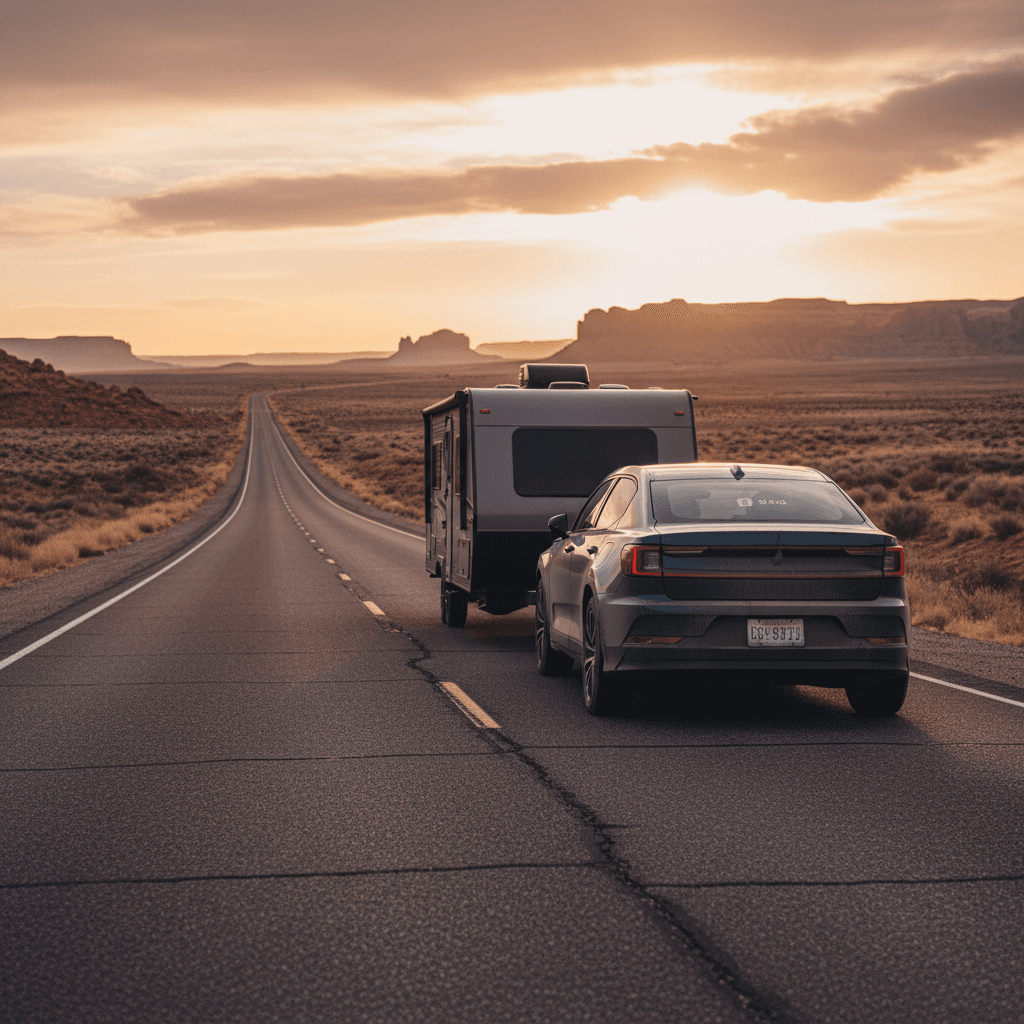
If you’re eyeing a Polestar 2 and wondering whether it can tow a camper, utility trailer, or even just a couple of e‑bikes, you’re not alone. The Polestar 2’s towing capacity is respectable for a compact EV, but the real question is how much range loss you’ll see when you hitch something to the back. Let’s dig into what this car can safely pull, how towing affects range in the real world, and how to plan trips without white‑knuckle anxiety.
Quick answer
Polestar 2 towing basics: what it’s really built to pull
Polestar designed the 2 as a sporty electric fastback first and a tow vehicle second. With the factory‑installed retractable tow bar, it’s rated to tow small to medium loads, think compact camping trailers, small boats, utility trailers, and bike carriers, rather than big travel trailers. That makes it a great match if you like to camp light or haul gear on weekends, but it’s not a substitute for a full‑size truck or SUV.
- Front‑ or all‑wheel drive depending on year and trim
- Battery sizes from ~70 kWh usable to ~82 kWh usable depending on model year and configuration
- Factory tow bar option with specific towing and tongue‑weight limits
- No towing recommended without the proper hitch and wiring, this isn’t a “just slap on a U‑Haul hitch” kind of car
Check your exact car
Towing capacity by model year and region
Here’s how Polestar 2 towing capacity generally shakes out as of 2025–2026. We’ll keep it high‑level and practical so you can quickly see what your car can handle.
Polestar 2 factory towing capacity overview
Approximate factory ratings for the Polestar 2 with the OEM tow bar. Always verify against your own vehicle documentation before towing.
| Market / spec | Model years (with tow bar) | Max braked trailer weight | Unbraked trailer weight | Typical tongue weight limit |
|---|---|---|---|---|
| U.S. (most trims) | 2021–2025 | ≈2,000 lbs (≈900 kg) | ≈1,000 lbs (≈450 kg) | ≈200 lbs (≈90 kg) |
| Europe / many ROW markets | 2021–2025 | 1,500 kg (≈3,300 lbs) | 750 kg (≈1,650 lbs) | 75–100 kg depending on trim |
| No factory tow bar | Any | Not approved for towing | Not approved | 0 – towing not recommended |
U.S. ratings tend to be slightly lower than some European markets due to different regulations and testing protocols.
Braked vs. unbraked trailers
The headline: a Polestar 2 with the factory tow package is happiest with loads up to about 2,000 lbs in North America and up to 1,500 kg in Europe. Stay well under those numbers if you plan to tow in mountains, extreme heat or cold, or at highway speeds for long stretches.
How towing affects Polestar 2 range
Every EV pays a price in range when you tow. The Polestar 2 is no exception. You’re adding weight, frontal area, and rolling resistance, and you’re often doing it on the highway, where aero drag hurts you most. The result is that your consumption can easily double with a big, boxy trailer, and it can creep up 20–40% even with bikes or a small cargo trailer.
Typical Polestar 2 range impact when towing
Don’t plan off the EPA number
Real-world range loss examples with different loads
Let’s put some realistic numbers to this. Exact results vary with terrain, temperature, and how fast you drive, but these ballpark examples line up with what Polestar 2 owners report in the wild and with general EV towing behavior.
Polestar 2 towing and range scenarios
Use these as planning baselines, then add a safety buffer.
Two e‑bikes on a hitch rack
Load: ~120–150 lbs including rack
Speed: 65–70 mph
Typical hit: 10–20% range loss
This is the easiest scenario. Your aero profile barely changes, and the added weight is modest. A 2024 Long Range Single Motor rated at 320 miles might reasonably deliver 240–280 miles in mild weather.
Small teardrop or pop‑up camper
Load: 1,200–1,800 lbs braked
Speed: 60–65 mph
Typical hit: 30–40% range loss
Keep it low and narrow and slow it down a little, and your Polestar 2 can make this work. That same 320‑mile car might feel more like a 180–220 mile EV while towing.
Tall box trailer or full-size caravan
Load: 2,000–3,000+ lbs
Speed: 65–70+ mph
Typical hit: 40–50%+ range loss
This is the toughest duty cycle. Expect frequent fast‑charge stops and treat the Polestar 2 as a 130–180 mile EV at best. In bad weather, it can dip lower.
Use distance, not percentage, to plan
Planning road trips in a Polestar 2 while towing
Towing in a Polestar 2 is less about raw capacity and more about trip rhythm. You’ll stop more often, but those stops can be short if you plan around fast chargers and realistic legs. Here’s how to build a towing‑friendly route.
Road-trip planning checklist for Polestar 2 towing
1. Start with honest range assumptions
Take your EPA range and cut it by 30–50% depending on how big and boxy your trailer is. Use the lower number as your planning baseline, not the optimistic one.
2. Shorten your charging legs
Aim for 80–120 mile legs between DC fast chargers when towing. That keeps you out of the nervous “will we make it?” zone, especially in wind or rain.
3. Prioritize high-power chargers
Look for 150 kW+ stations where possible. The Polestar 2 can take advantage of higher power peaks on road trips, and you’ll appreciate that when you’re pulling extra weight.
4. Use apps that support trailer routing
Some third‑party apps let you lower your assumed efficiency and add waypoints by range. Even if the Polestar in‑car nav doesn’t know about your trailer, you can plan around it manually.
5. Build in slower scenic legs
Driving 60–65 mph instead of 75 mph makes a huge difference in aero drag. On two‑lane roads, you’ll often use far less energy per mile, trailer or not.
6. Consider campground charging
Many campgrounds have 30A or 50A hookups. With the right adapter and permission, you can slow‑charge overnight and leave each morning with a full battery, even with a trailer attached.
Hitch weight, tongue weight and safety limits
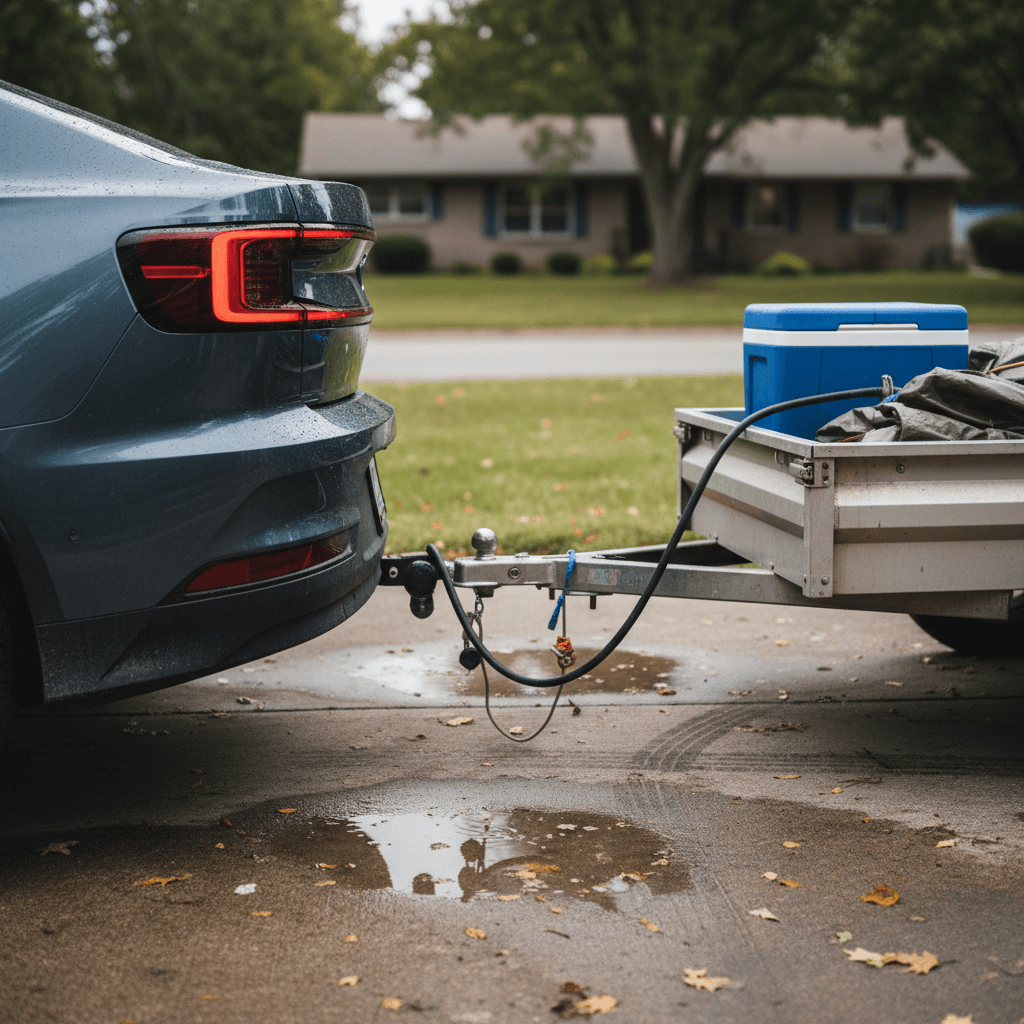
The Polestar 2’s published towing capacity is only half the story. Tongue weight, how much weight rests on the hitch itself, matters just as much for safety and stability, especially with a relatively short‑wheelbase EV.
Typical tongue-weight limits
On most Polestar 2s with the factory tow bar, tongue weight is limited to around 200 lbs (≈90 kg) in North America and roughly 75–100 kg in Europe. That has to cover:
- The trailer’s tongue itself
- Propane tanks, batteries, or gear stored up front
- Downforce from bike racks or cargo carriers
Why it matters
Too much tongue weight can overload the rear axle, compress the suspension, and negatively affect steering and braking. Too little tongue weight can cause trailer sway, especially at highway speeds or in crosswinds.
As a rule of thumb, aim for 10–15% of your trailer’s total weight on the ball, without exceeding the Polestar 2’s tongue‑weight rating.
Don’t forget rack limits
7 ways to minimize range loss when towing
You can’t cheat physics, but you can negotiate with it. These strategies help you keep Polestar 2 range loss under control when you’re hitched up.
- Drive 5–10 mph slower than you normally would on the highway, drag rises sharply with speed.
- Choose the most aerodynamic trailer you can (low, rounded front, narrower than the car).
- Keep tires on both the car and trailer properly inflated for efficiency and stability.
- Use Eco or range‑focused driving modes when available to soften throttle response and optimize climate settings.
- Precondition the battery on the way to fast chargers so you charge quickly and can leave sooner.
- Pack light and keep heavy items low and centered over the trailer axle.
- Avoid strong headwinds and heavy rain when you can; both hammer efficiency in an EV.
Small choices add up
What Polestar 2 towing means for used buyers
If you’re shopping for a used Polestar 2, towing brings two big questions: can the car handle the loads you have in mind, and has towing hurt the battery or drivetrain? The good news is that occasional towing of reasonable weights is well within what the car is engineered to do. You just want to make sure the car you’re looking at hasn’t lived its entire life at max capacity.
Used Polestar 2 towing checklist
What to look for when you plan to tow with a used EV
1. Check battery health
A car that towed heavy trailers in hot climates and fast‑charged constantly might show slightly more degradation. On Recharged, every EV includes a Recharged Score battery health report, so you can see how the pack is holding up before you buy.
2. Inspect the hitch and structure
Look underneath for signs of impact, rust, or backyard wiring. A factory tow bar with clean wiring is ideal; mystery hitches or splices are a red flag.
3. Review service history
Ask about any work on the rear suspension, brakes, or high‑voltage system. Regular maintenance is normal; repeated repairs around the same issue can hint at hard use.
4. Match car to your use case
If you plan to tow often, a Long Range Single Motor Polestar 2 gives you the best buffer. Dual‑motor cars can tow just fine, but they’re usually a bit less efficient.
How Recharged can help
FAQ: Polestar 2 towing capacity and range loss
Frequently asked questions about Polestar 2 towing
Bottom line: Is the Polestar 2 a good tow vehicle?
The Polestar 2 is a sharp, efficient EV that happens to tow pretty well, as long as your expectations are aligned. Its towing capacity is enough for small campers and gear trailers, but you should think of it as a light‑duty adventure partner, not a heavy‑haul workhorse. When you do hook up a trailer, plan for 30–50% range loss, slower highway speeds, and more frequent charging stops, and you’ll be rewarded with a quiet, stable, battery‑powered tow rig.
If you’re shopping used, that’s where Recharged shines. Every Polestar 2 we list comes with a Recharged Score battery health report, fair pricing, and EV‑savvy guidance so you can match the right car to your towing and road‑trip plans. Get the numbers, understand the tradeoffs, and you can tow confidently without giving up the clean, modern feel that drew you to the Polestar 2 in the first place.