If you live in a crowded city, fight for parking, or just don’t need a big vehicle, an electric mini car for adults can make a ton of sense. These tiny EVs are cheap to run, easy to park, and perfect for short trips, if you pick the right type and understand the limits.
Quick definition
What is an electric mini car for adults?
There’s no official U.S. category called “electric mini car for adults,” but in practice you’re looking at two overlapping groups:
- Small city EVs: fully equipped electric cars that are just physically small, think short length, tight turning radius, and easier parking.
- Neighborhood Electric Vehicles (NEVs): federally defined low‑speed vehicles, usually with a top speed around 25 mph and basic safety gear, designed for local streets and short trips.
Both can be driven by adults and fully replace a gas car for the right use case. The main difference is that a small city EV behaves like a “normal” car that happens to be tiny, while an NEV is more like an upgraded golf cart that’s street‑legal in specific areas only.
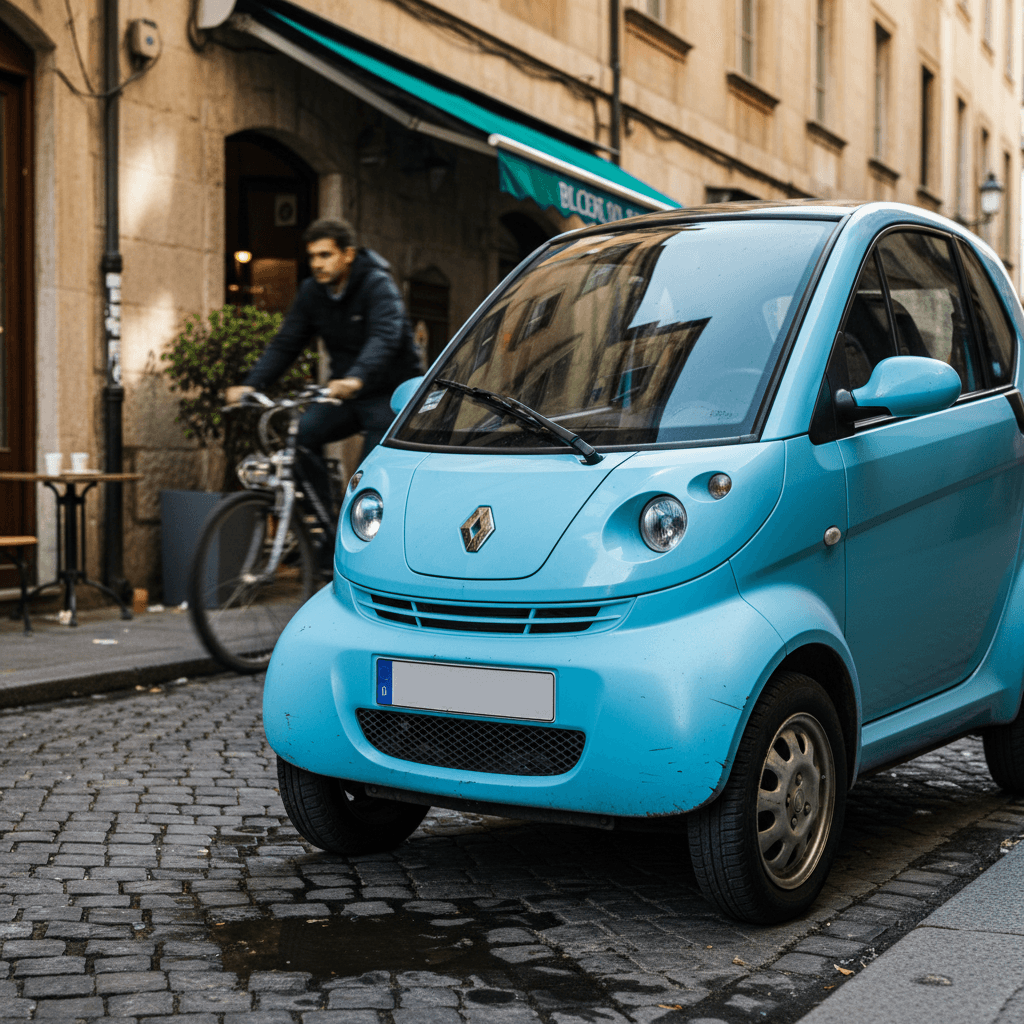
Types of electric mini cars for adults
Three main “mini EV” categories
From golf‑cart‑like NEVs to tiny but fully fledged cars
Neighborhood Electric Vehicles (NEVs)
NEVs are four‑wheel, all‑electric vehicles that meet Federal Motor Vehicle Safety Standard 500 for low‑speed vehicles. They usually:
- Top out around 25 mph
- Operate on streets posted up to ~35 mph (varies by state)
- Use simple lead‑acid or small lithium batteries
- Are popular in retirement communities, resort towns, and campuses
Small city EVs
These are just short, narrow EVs that happen to be easier to park and maneuver:
- Full safety equipment and crash standards
- Typical top speeds well over 70 mph
- Ranges from ~120–260 miles for newer models
- Usable as an only car if your driving needs are modest
Microcars & global minis
Outside the U.S. there’s a big market for ultra‑small EVs, think kei cars in Japan or tiny city hatches in Europe.
Some are trickling into the U.S. in limited form, but most remain foreign‑market only for now due to safety and regulatory differences.
Watch the marketing language
Who an electric mini car actually works for
Great fit if…
- You mainly drive short urban or suburban trips (5–30 miles a day).
- You want easier parking in dense neighborhoods or tight garages.
- You’re replacing a second car used mostly for errands.
- You live in a community that already has lots of golf carts or NEVs on the road.
- You value low running costs over high speed or long range.
Poor fit if…
- You routinely drive on 45–55 mph roads or freeways.
- You need to carry four adults and luggage regularly.
- Winter weather, steep hills, or long rural distances are part of your daily routine.
- You expect luxury‑car levels of refinement and crash safety.
If any of those apply, a compact but conventional EV (like a Kona Electric or Niro EV) may be a safer bet than an ultra‑mini or NEV.
Key specs to compare: range, speed, and size
Typical numbers for electric mini cars
When you compare electric mini cars for adults, focus less on brand marketing and more on hard numbers that match your life. A small city EV with 150+ miles of range and 65–75 mph capability will feel like a “real car.” A low‑speed NEV with 25 mph top speed and 30–40 miles of range is fine for neighborhood errands but risky if you ever need to mix with faster traffic.
Electric mini car comparison: NEVs vs small city EVs
How different types of electric mini cars stack up on the basics.
| Type | Typical top speed | Realistic daily range | Where it’s comfortable | Parking & maneuverability |
|---|---|---|---|---|
| NEV / low‑speed vehicle | ~25 mph | 20–40 miles | Neighborhood streets, resort communities, campuses | Excellent, often shorter and narrower than a subcompact |
| Tiny city EV (e.g., Fiat 500e class) | 70+ mph | 120–160 miles | City streets, short highway hops | Very good, easy street parking and tight garages |
| Small crossover EV (e.g., EX30/Kona size) | 70+ mph | 200–260 miles | Mix of city and highway, light road trips | Good, shorter than most gas SUVs but not quite “micro” |
Use this as a starting point, always check the actual spec sheet for any specific model you’re considering.
Think in terms of your longest regular trip
Street-legal rules for small electric cars in the U.S.
From a legal standpoint, the key distinction isn’t “mini” versus “normal,” it’s low‑speed vehicle versus a fully certified passenger car. U.S. law defines low‑speed vehicles as four‑wheel vehicles that weigh under about 3,000 lb and can travel at least 20 mph but not more than 25 mph. States then decide where they’re allowed to operate.
- Most states allow NEVs on roads with posted limits of 35 mph or less (a few use 30 or 45 mph).
- NEVs must have basics like seat belts, lights, mirrors, windshield, and a VIN, and they’re registered and insured like other vehicles.
- If an NEV is modified to go faster than 25 mph, it can be treated as a regular car and must meet much stricter safety standards.
- Full city EVs are just like any other car in the eyes of the law, if they meet FMVSS passenger‑car standards, they can go wherever their speed and range allow.
Don’t assume “street‑legal everywhere”
Examples of electric mini cars for adults
To make this concrete, here are a few examples of how “electric mini car for adults” looks in the real world in late 2025. Availability will vary, and some of the most interesting tiny EVs are still Europe‑ or Asia‑only, but the patterns are clear.
Real‑world mini EV examples
From U.S.‑market small EVs to global microcars
Fiat 500e (U.S., 2025)
The rebooted Fiat 500e is one of the tiniest modern EVs you can actually buy new in the U.S. It’s strictly a city car with about 149 miles of EPA range and a tiny footprint that slips into spaces other cars pass by.
If you want an adult‑friendly electric mini car with real crash structure and highway capability, this is a strong template.
NEVs & golf‑cart‑style minis
Brands like GEM, Club Car, and others sell street‑legal NEVs that look like enclosed golf carts. They’re perfect for planned communities, downtown cores with 25–30 mph limits, or resort towns.
Adults can drive them with a regular license, but they are not suitable for high‑speed roads.
European & Asian micro EVs
Cars like the Renault 5 E‑Tech, Nissan Micra EV, and various Chinese microcars show what’s possible in markets that embrace tiny city EVs: short length, practical hatchback bodies, and ~190–260 miles of range.
Most aren’t sold in the U.S. today, but they hint at where the global mini‑EV segment is headed.
Small crossovers: still “mini” versus SUVs
Models like the Volvo EX30, Hyundai Kona Electric, and Kia Niro EV are larger than a true microcar but still far smaller than a typical SUV. They offer:
- 200–280 miles of range
- Real highway comfort
- Enough space for adults and cargo
For many buyers, these are the most practical compromise between size and usability.
Costs, financing, and the used EV market
The appeal of an electric mini car for adults is usually cost as much as size. But mini doesn’t automatically mean cheap, and sticker price is only part of the picture.
- New tiny city EVs like the Fiat 500e still start in the low–to–mid $30,000s in the U.S.
- New NEVs can range widely, from under $15,000 for very basic models to well over $20,000 when you add doors, heat, or nicer interiors.
- Used small EVs (older Fiat 500e, BMW i3, Nissan Leaf, etc.) can often be found well under $20,000, sometimes under $15,000, depending on age, mileage, and battery health.
- Charging costs are low: at U.S. residential electricity prices, adding 100 miles of range to a small EV is often just a few dollars.
Where Recharged fits in
Ready to find your next EV?
Browse VehiclesBecause mini EVs are often purchased as commuter or second cars, financing flexibility matters. Many buyers want to keep payments low without signing up for a 7‑ or 8‑year loan on a tiny car they may outgrow. Working with an EV‑focused retailer that understands depreciation and battery health can prevent overpaying for an ultra‑small vehicle that doesn’t match your long‑term plans.
Battery health and longevity in mini EVs
Smaller EVs often have smaller battery packs. That’s great for weight and cost, but it also means you feel degradation sooner: losing 15% of a 40 kWh pack hurts more than losing 15% of a 77 kWh pack. When you shop for a mini EV, especially used, battery health isn’t a detail, it’s the main event.
Why battery diagnostics matter more in small packs
- Ask for a measured state of health (SOH) number, not just “the range seems fine.”
- Understand the original battery size and EPA range so you can interpret SOH; 85% SOH on a small pack can still be usable if your daily miles are low.
- Check how the previous owner used the car, lots of DC fast charging on a small pack can accelerate wear.
- On NEVs with lead‑acid batteries, budget for periodic replacements; on lithium NEVs or city EVs, focus on pack SOH and any warranty coverage left.
At Recharged, every vehicle comes with a Recharged Score Report that includes verified battery diagnostics. That’s especially valuable on compact EVs, where you can’t just “buy extra range” by choosing the bigger battery option, what’s on the window sticker is all you get.
Checklist: how to choose the right electric mini car
Electric mini car buying checklist
1. Map your real driving patterns
Track a typical week of driving. How many miles per day? How often do you exceed 35 mph? The answer will push you toward either an NEV or a full city EV.
2. Decide if NEV limits are acceptable
If most of your trips stay on 25–35 mph streets and you live in an NEV‑friendly community, a low‑speed vehicle could work. If you ever rely on 40–45 mph arterials, treat an NEV as off the table.
3. Set a total cost budget, not just a price cap
Include insurance, charging installation (if any), maintenance, and battery replacement risk. A slightly pricier used EV with a healthy battery can be cheaper over 5–7 years than a cheaper car with a tired pack.
4. Check battery health and remaining warranty
For any used mini EV, insist on a battery health report or have an expert run diagnostics. Verify whether the traction battery is still under factory warranty and what the terms are.
5. Test for comfort and visibility
Mini EVs can have upright seating, short wheelbases, and unusual sightlines. Make sure you’re comfortable over real‑world bumps and that you can see and be seen in traffic.
6. Consider resale and future needs
Ask yourself whether this mini EV will still fit your life in 3–5 years. If your needs may change, prioritize models with broader market appeal and strong used‑EV demand.
FAQ: electric mini car for adults
Frequently asked questions about electric mini cars for adults
Bottom line: should you buy an electric mini car?
An electric mini car for adults can be brilliant if your life fits inside its limits. For dense urban neighborhoods, campus towns, and short‑hop suburban errands, a tiny EV or NEV can slash running costs, simplify parking, and still feel fun and grown‑up to drive. The key is being brutally honest about your real roads, real speeds, and real range needs.
If you only ever drive local streets and your city explicitly supports NEVs, a low‑speed vehicle might be all you need. If you want something that behaves like a normal car but shrunk in the wash, a small city EV, new or used, is usually the sweet spot. And if you’d rather not gamble on battery health or opaque pricing, exploring used small EVs with Recharged’s Score battery diagnostics, fair‑market pricing, financing, and nationwide delivery is an easy way to test‑drive the idea of going mini without giving up adult‑level confidence.