If you’re coming from a Subaru, 4Runner or F-150, the phrase electric four wheel drive vehicles probably conjures images of knobby tires and transfer-case levers. In the EV world, though, four-wheel traction is delivered by software and copper windings instead of driveshafts and differentials, and that changes how these vehicles drive, how they wear, and how you should shop for one on the used market.
Quick definition
What is an electric four-wheel drive vehicle?
A electric four wheel drive vehicle (often badged as AWD in the U.S.) is any battery‑electric or plug‑in hybrid vehicle that can send power to both front and rear axles using one or more electric motors. Instead of a single engine and a long mechanical drivetrain, you typically get a motor near each axle, with the battery pack sandwiched in the floor.
- Most AWD EVs use two motors (front + rear) sharing work.
- A few performance or off‑road toys use four individual motors, one per wheel.
- Some plug‑in hybrids use a gas engine to drive one axle and an electric motor for the other, still giving electric four wheel traction at low speeds.
- Dash badges can say AWD, 4WD or 4MOTION, but the underlying architecture is usually dual‑motor.
How common are electric AWD SUVs and trucks?
Is AWD always labelled “4x4”?
How electric AWD works vs traditional 4x4
Traditional 4x4 (gas/diesel)
- One engine up front, connected to a transmission.
- A transfer case splits torque front/rear.
- Driveshafts and differentials send power to each axle.
- Often a driver‑selectable 2H/4H/4L lever or dial.
- Heavy, with lots of rotating parts and fluid to maintain.
Electric AWD / 4WD
- Electric motors mounted at each driven axle (or at each wheel).
- Battery in the floor feeds power through inverters.
- Software meters torque to the front and rear in milliseconds.
- No multi‑speed transfer case; many EVs use a single gear ratio.
- Almost no extra maintenance versus a two‑wheel‑drive EV.
On the road, that architectural shift matters. Electric four wheel drive vehicles can pre‑emptively shift torque based on wheel sensors, steering angle, yaw rate and traction control data, rather than waiting for a mechanical diff to feel slip. The result is uncanny stability on slick pavement and instant, drama‑free launches even in powerful dual‑motor SUVs.
Torque vectoring magic
Types of electric four wheel drive vehicles
The main families of electric 4WD vehicles
From family haulers to rock‑crawling toys, not all electric four wheel drive vehicles play the same role.
Family AWD SUVs
Think Kia EV9, Tesla Model Y Long Range, Hyundai Ioniq 5/9, Mercedes EQE SUV.
- Two or three rows of seats
- Dual‑motor AWD for all‑weather security
- Ground clearance similar to crossovers, not rock crawlers
Electric trucks & adventure rigs
Examples include Ford F‑150 Lightning, Rivian R1T/R1S and GMC Hummer EV.
- Available four‑motor or high‑output dual‑motor setups
- Serious towing and payload, air suspension on many models
- Off‑road modes, skid plates, locking‑diff emulation in software
Niche off‑road specials
Low‑volume toys like the Vanderhall Brawley GTS or electric side‑by‑sides.
- Extreme suspension travel and ground clearance
- Often four motors, one per wheel
- Sometimes not fully street‑legal, depending on state

U.S. market reality
Benefits of electric 4WD for everyday drivers
- Instant traction in bad weather. Dual‑motor EVs can meter torque more quickly and precisely than a mechanical AWD system, which you really feel pulling away from a slick intersection.
- Smoother, quieter power delivery. No gear changes, clunks or binding in tight turns, just a single, clean surge of torque.
- Better packaging. With no engine up front or driveshaft tunneling through the cabin, EVs often have more interior room and a front trunk, even with AWD.
- Less mechanical complexity. Fewer fluids and wearable AWD components compared with a traditional transfer case + front diff setup.
- Fine‑grained drive modes. Snow, Off‑Road, Tow or Sport modes are often just different software maps, so automakers can tune them very precisely.
If you live with real winters
Limitations and myths about electric 4x4s
Electric four wheel drive: myths vs reality
EVs make fantastic all‑weather machines, but they do have trade‑offs.
Myth: EV 4x4s are useless in the cold
Reality: Range does drop in very cold weather, often 20–30%, because batteries dislike low temps and the cabin heater is electric. But the traction itself in snow is superb, thanks to fine‑grained torque control and stability systems. Plan your charging with a buffer and pre‑heat the cabin while plugged in.
Myth: They can’t go off‑road at all
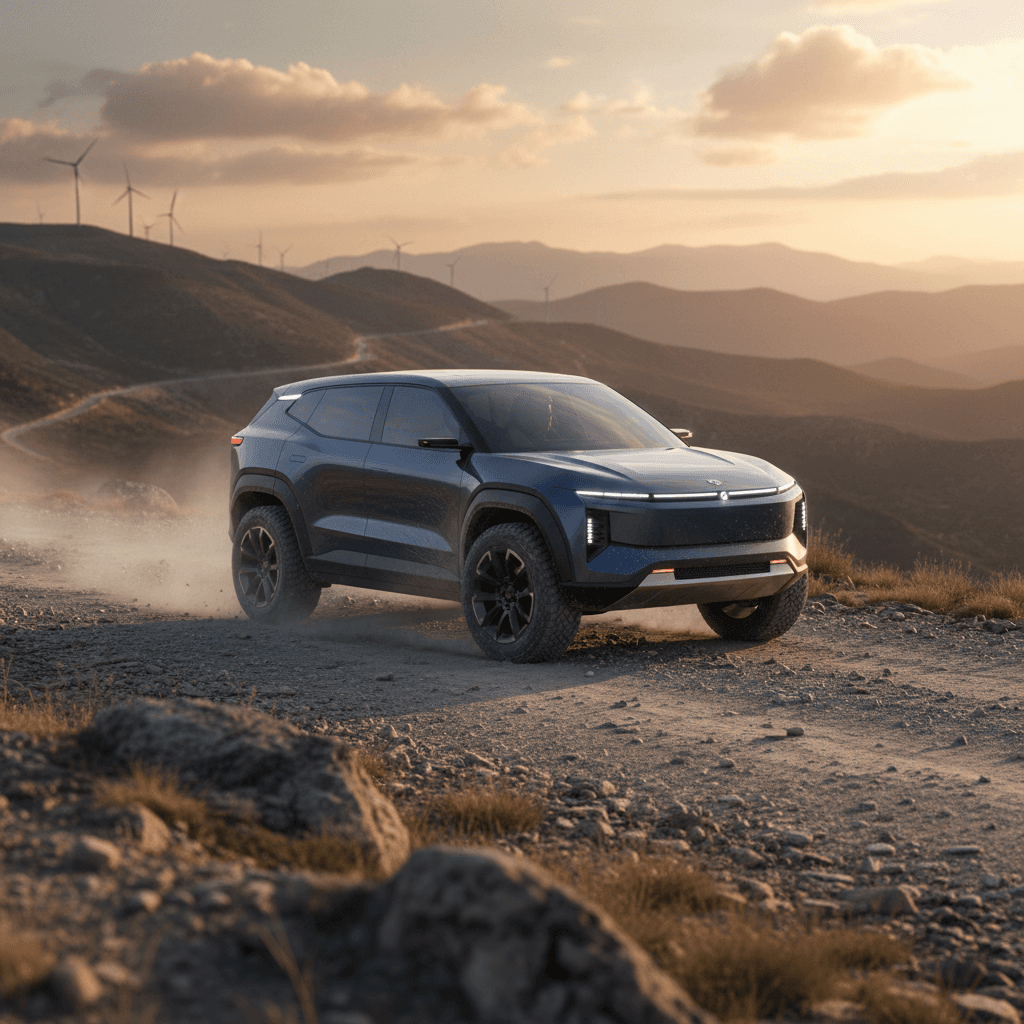
Reality: Many electric four wheel drive vehicles are tuned for light to moderate trails, not Moab rock gardens. Short overhangs, skid plates and real all‑terrain tires still matter. For serious crawling or sustained high‑speed sand work, you’ll want a model engineered for that abuse, and you’ll need to watch battery temps and range.
The big caveat: energy use
Shopping for a used electric AWD SUV or truck
Most shoppers don’t start with a blank sheet of paper; you’re choosing between very real family crossovers, three‑row rigs and trucks. On the used market, that might mean a Kia EV9, Tesla Model Y or Model X, Mustang Mach‑E, Hyundai Ioniq 5/9, or one of the newer electric trucks. The key is to see past the badges and focus on how the AWD system and battery health fit your life.
Used AWD EV checklist
1. Confirm it’s truly AWD
Model lines often mix RWD and AWD trims. Make sure the specific VIN you’re looking at is dual‑motor or otherwise capable of powering both axles, not just a base rear‑drive version with fancy wheels.
2. Look at the battery, not just mileage
In an EV, <strong>effective range</strong> matters more than odometer miles. Ask for a recent battery health report or range test at a given state of charge. With Recharged, every vehicle includes a detailed Recharged Score that quantifies battery health and expected range.
3. Think honestly about your use case
Are you chasing ski trips in Colorado, or just trying not to get stuck leaving Costco in February? Don’t overpay for extreme off‑road hardware you’ll never use when a sensible dual‑motor crossover would be perfect.
4. Check tire type and remaining tread
Aggressive all‑terrain tires look great on a listing, but they add noise and cut range. Budget for a second set of wheels or tires if you want dedicated winter rubber for serious snow climates.
5. Inspect underbody and suspension
AWD EVs are heavy. On a used vehicle, look under the car for off‑road scrapes, bent skid plates, or corrosion. Make sure shocks, bushings and control arms aren’t hammered from carrying a lot of tongue weight or cargo.
6. Understand charging speed
A big, dual‑motor SUV is only as road‑trip‑ready as its charging curve. When you’re comparing used vehicles, look at both peak fast‑charge speed and how long the car holds it from 10–80%.
Where Recharged fits in
Ready to find your next EV?
Browse VehiclesBattery health and range in 4WD EVs
Four wheel drive itself doesn’t magically destroy batteries, but the way people use AWD EVs can. Towing, mountain passes, fast highway driving and frequent DC fast charging all put more thermal stress on the pack. When you’re evaluating an electric four wheel drive vehicle, you’re really evaluating the history of heat and load that battery has seen.
Typical range realities for electric four wheel drive vehicles
These are illustrative, not promises, always check the actual model’s EPA rating and owner reports.
| Use case | Expected real‑world range | What’s happening |
|---|---|---|
| Mild weather, city + suburban mix | 220–250 miles | Stop‑and‑go lets regen braking work, and temps are ideal for the battery. |
| 75 mph highway in good weather | 190–210 miles | Aerodynamic drag dominates at speed, and AWD adds a bit of drag and weight. |
| Cold weather (10–25°F), mixed driving | 160–200 miles | Battery chemistry is less efficient, and cabin + seat heaters draw power. |
| Towing a medium trailer or steep off‑road | 120–170 miles | Higher load means higher current draw and heat; software may reduce peak power to protect the pack. |
How usage cuts into range on a dual‑motor SUV with a nominal 280‑mile EPA rating.
Don’t live at 0–10% state of charge
Winter driving and light off‑roading in an electric 4x4
In winter and on dirt, dual‑motor EVs feel like cheating. The motors can meter torque so delicately that traction control barely has to intervene. But weight, tires and ground clearance still matter, physics hasn’t been repealed just because the drivetrain went digital.
Practical tips for winter and trail use
Use the right tires
AWD is a multiplier, not a miracle worker. A two‑wheel‑drive car on proper winter tires can outperform an AWD vehicle on worn all‑seasons. If you see regular snow, budget for dedicated winter rubber.
Pre‑condition the battery in the cold
Use the vehicle’s app or in‑car settings to pre‑heat the battery and cabin while plugged in. You’ll recover both range and fast‑charging performance.
Watch your ground clearance
Many electric SUVs package the battery in a rigid, well‑protected box, but it’s still the most expensive thing under the car. Avoid ruts and rocks that could contact the pack or cooling lines.
Plan your route like a pilot
If you’re going off‑grid to camp or wheel, build in a generous energy reserve and know exactly where your fallback chargers are. There’s no five‑gallon jerrycan equivalent for electrons, yet.
Off‑road mode ≠ invincibility
Future trends in electric four wheel drive
The next few years will be very kind to drivers who want both traction and efficiency. Automakers are moving toward smarter, more efficient e‑AWD systems: front motors that fully decouple at cruise, four‑motor torque‑vectoring setups in halo vehicles, and 800‑volt architectures that keep heat in check under heavy load.
What’s coming next for 4WD EVs
The hardware is mostly here; the magic is in software and batteries.
Smarter e‑AWD control
Expect continuous updates that refine how your EV sends torque front‑to‑rear in different conditions. Over‑the‑air updates can genuinely improve winter behavior over time.
New battery chemistries
More rugged LFP packs and future chemistries are making it easier to build heavy, dual‑motor SUVs and trucks that tolerate frequent fast charging and towing.
Better route & energy planning
Trip planners are getting better at understanding weather, elevation and even trail conditions, giving you more accurate range estimates for your weekend adventures.
FAQ: Electric four wheel drive vehicles
Frequently asked questions
The bottom line: should your next EV have four wheel drive?
If you live in a mild climate, mostly commute solo and rarely see snow, a rear‑drive EV is often the sweet spot for efficiency and price. But for a huge swath of American drivers, those with kids, gear, steep driveways, ski passes or just a strong dislike of white‑knuckle winter commutes, electric four wheel drive vehicles hit a very particular bullseye: quiet, instant traction with almost no mechanical drama.
The trick is buying the right one, with eyes wide open about range, tires, charging and battery health. That’s where a transparent used‑EV marketplace like Recharged can help. With verified battery diagnostics, fair‑market pricing and EV‑specialist support, you can choose an AWD SUV or truck that fits your life today and still feels like the right call five winters from now.