If you’ve tried to follow electric cars news in 2025, you’ve probably seen two very different stories: headlines about “slowing demand” right next to reports of record-breaking sales. Both are true, depending on where you look. This guide cuts through the noise, walks through the latest EV market, tech, policy, and charging updates, and explains what they actually mean if you’re thinking about buying, selling, or trading in an electric car.
Quick snapshot of 2025 EV news
Why electric cars news matters in 2025
2025 is a pivot year for electric cars. Global sales are still hitting records, but growth has cooled in some regions, incentives are changing, and automakers are rethinking launch plans. For you, that translates to three big questions: Will an EV fit my life? Can I charge it without drama? And is now a smart time to buy new, or scoop up a used EV at a discount?
- Global EV sales are still rising, but not evenly, your experience in the U.S. may look very different from China or Europe.
- Battery tech keeps improving, yet charging infrastructure and pricing can make or break ownership.
- Used EVs are finally hitting the mainstream, and battery health transparency is becoming a must-have, not a nice-to-have.
How to use this guide
Electric cars by the numbers: 2024–2025
Electric car market snapshot
Here’s the tension you’re seeing in electric cars news: globally, EV sales are still climbing fast, but the pace differs by region. China is the engine, nearly half of its new cars are electric and prices there often undercut gas models. Europe is in a breather phase after some subsidies expired. The U.S. is gaining share but more slowly, as shoppers wrestle with prices, charging coverage, and political noise around EV policy.
Don’t confuse “slower growth” with “decline”
Winners and losers: Tesla, BYD, and the rest
For years, “electric cars news” basically meant “Tesla news.” That’s no longer true. Chinese automaker BYD has overtaken Tesla in global EV sales share, and legacy brands like Hyundai, Kia, Ford, GM, and Volkswagen now field serious EV lineups. Tesla is still a major player, but its first-ever annual sales dip, tougher competition, and an aging model range are changing the story.
How major EV players are shifting in 2025
Competition is good news for shoppers, more choice and more deals
Tesla: still central, but pressured
Tesla remains a top EV seller and the face of the NACS charging standard. But its U.S. market share has fallen as more than 100 competing EV models crowd the field. Discounts and new variants aim to keep volume up while buyers wait for genuinely new models.
BYD & Chinese brands: value leaders
BYD now edges out Tesla for global volume, mainly thanks to China and expanding exports. Chinese-built EVs, with lower battery costs, are forcing the rest of the industry to address pricing and efficiency, though tariffs and trade politics will shape how many reach U.S. shores.
Legacy automakers: recalibrating, not retreating
Ford, GM, Stellantis, Hyundai, Kia, and VW have all tweaked their EV timelines, slowing some projects while doubling down on profitable models and crossovers. Expect fewer experiments and more focus on vehicles that match mainstream tastes and price points.
“We’re moving from early-adopter hype to a more pragmatic EV market. That’s when real shoppers, not just enthusiasts, start to win on pricing and choice.”
U.S. EV incentives and policy: What actually changed
A lot of electric cars news out of Washington in 2024 and 2025 focused on the Inflation Reduction Act (IRA) and which EVs still qualify for federal tax credits. The result is messy but important: some models lost eligibility as battery-sourcing rules tightened, while others gained it as automakers shifted production and supply chains.
Key U.S. federal EV incentive headlines for 2025
Always confirm details on the IRS site or with your dealer, but here’s the high-level picture.
| Topic | What it means | Why shoppers care |
|---|---|---|
| Point-of-sale credits | Many eligible new and used EVs can still apply the federal credit directly at the dealer. | You don’t have to wait for tax season to benefit from the incentive. |
| Eligibility limits | Income caps and vehicle price caps still apply, and only some models meet content rules. | The EV you see in an ad may not qualify in your configuration. |
| Leasing workaround | Leased EVs are often treated as commercial vehicles under IRA rules. | Some leases effectively pass through a full credit, even if the car wouldn’t qualify when purchased. |
| Used EV credit | A separate federal credit exists for qualifying used EVs sold by dealers. | This can make a late-model used EV significantly cheaper than a comparable gas car. |
Rules can change mid-year, treat this as a starting point, not the last word.
Practical move: start with incentives, not models
State-level perks still matter too, rebates, HOV-lane access, reduced registration fees, or lower electricity rates for off-peak charging. In some states, those benefits stack on top of federal credits; in others, they’ve been trimmed back. Either way, your out-of-pocket cost for going electric can look very different from a friend’s in another zip code.
Battery tech and range: What’s new, what’s hype
Battery headlines in 2025 swing between “game-changing breakthrough” and “EVs are doomed.” Reality lands in the middle. The big story isn’t one magical chemistry; it’s a steady march toward better value per mile: more range for the money, slower degradation, and more flexible charging options.
Three battery trends behind the electric cars news
Less drama, more quiet progress
Energy density is inching up
New battery packs squeeze more range out of similar-sized packs, especially in compact and midsize crossovers. You may not see a huge range jump on paper, but efficiency tweaks (motors, tires, software) add real-world miles.
Durability is getting better
Most modern EVs already handle 100,000+ miles without major battery drama. Updated chemistries and smarter thermal management are keeping degradation more predictable, critical for the growing used EV market.
Chemistry diversification
Automakers are mixing nickel-rich batteries for maximum range with LFP packs that are cheaper, more durable, and happy living at high states of charge, great for city cars and fleet vehicles.
Be skeptical of “solid-state is here” headlines
Charging infrastructure and NACS: Where you can plug in
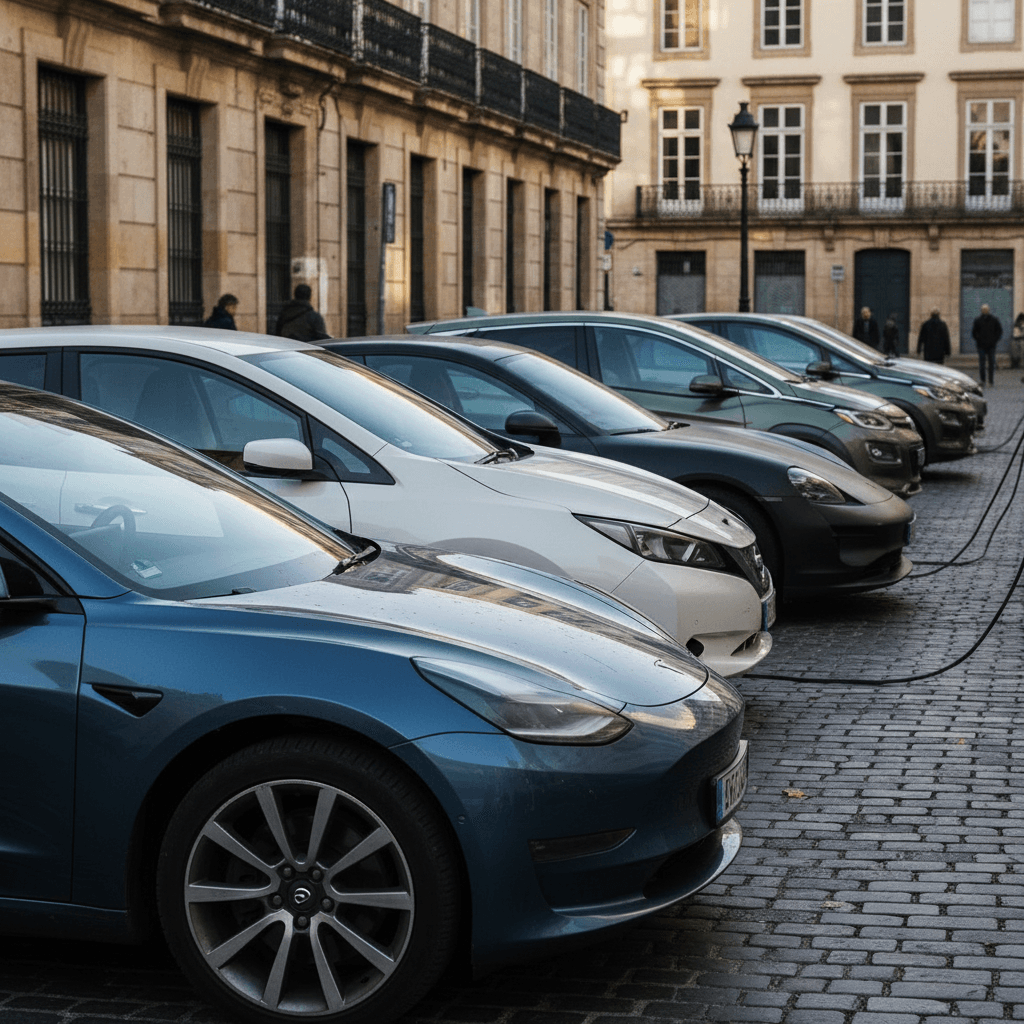
In the U.S., the most practical piece of electric cars news for road trippers is that public fast charging is getting denser, but also more fragmented. Tesla opened parts of its Supercharger network to non-Tesla EVs, many automakers are adopting the North American Charging Standard (NACS) connector, and federal NEVI funds are seeding new stations along major corridors. It’s progress, with caveats.
Tesla Superchargers & NACS
Tesla’s network remains the gold standard for uptime and ease of use. More stations now offer access to non-Tesla EVs via built-in adapters or NACS cables, and an increasing number of 2025-and-later models will ship with NACS ports or include adapters.
In practice, that means your future non-Tesla EV is more likely than ever to charge at Superchargers, though coverage is still rolling out region by region.
CCS, NEVI and the rest
CCS fast chargers from networks like Electrify America, EVgo, and others are still crucial, especially if you’re driving an older EV or one without NACS support. NEVI-funded sites must meet minimum uptime standards, so newer stations should gradually feel more reliable than early “science-project” installs.
For daily life, most owners still do 70–90% of charging at home or work, public fast charging is mainly for road trips and occasional top-ups.
If you’re shopping now, think about connectors
The used EV boom, and battery health concerns
One of the most important but underreported electric cars news stories in 2025 is the rise of the used EV market. Off-lease Teslas, Leafs, Bolts, ID.4s, Mustang Mach-Es, Ioniqs, and others are showing up in volume, often priced well below comparable gas SUVs once you factor in fuel and maintenance savings. The catch? Shoppers are rightly nervous about battery health.
Used EV battery checklist for 2025 buyers
1. Don’t rely on the range estimate alone
The dash range number is influenced by recent driving and weather. It’s a clue, not a diagnosis. Ask for data or a report on battery state of health, not just a test drive around the block.
2. Look for independent battery diagnostics
Tools like the Recharged Score use advanced diagnostics to measure <strong>verified battery health</strong>, not guesswork. That tells you how much usable capacity remains compared to when the car was new.
3. Check charging history and habits
Ask how often the car was DC fast charged and whether it lived at 100% charge. Frequent fast charging or high states of charge aren’t inherently bad in modern EVs, but patterns matter over many years.
4. Compare to similar cars, not new specs
A 5-year-old EV will rarely match its original EPA range. What matters is how it stacks up against similar age/mileage cars, and whether it still meets your daily driving needs with margin.
5. Understand remaining warranty coverage
Most EVs carry separate battery warranties, often around 8 years and 100,000 miles (sometimes more). Know whether you’re still covered, and what the warranty actually promises if capacity drops.
6. Factor in future resale, not just today’s price
An EV with documented, healthy battery performance will be easier to sell or trade later. Transparent diagnostics today protect your options tomorrow.
Where Recharged fits in
Ready to find your next EV?
Browse VehiclesHow 2025 EV trends should shape your buying decision
All this electric cars news is interesting, but the real question is what you should do with it. For most shoppers in late 2025, the decision comes down to your driving pattern, budget, and appetite for new tech. Here’s how to translate the headlines into a plan.
What 2025’s EV landscape means for you
Three common shopper scenarios, and how today’s trends tilt the math
Daily commuter, light road-trips
If you mostly commute and run errands with occasional weekend trips, 200–260 miles of real-world range plus Level 2 home charging is usually plenty. Slower market growth means you may find better pricing and incentives on new compact crossovers or sedans.
Road-trip family hauler
Look for 250+ miles of highway range, strong fast-charging performance, and NACS access (built-in or via adapter). Test-drive with the whole family and map your regular routes against Supercharger and NEVI stations.
Budget-minded used shopper
Falling new-vehicle prices and expiring leases are putting real pressure on used EV pricing. With the right battery health report and, where available, a used EV tax credit, a 2–5-year-old EV can be the best value in the market.
When an EV makes the most sense
- You drive at least 10,000–12,000 miles a year.
- You can reliably charge at home or at work.
- Your typical daily use is well under the car’s real-world range, even in winter.
- You’re planning to keep the car long enough to enjoy fuel and maintenance savings.
When you might wait or go hybrid
- You have no off-street parking and unreliable public charging nearby.
- You regularly tow heavy loads long distances.
- Your main routes lack dense fast-charging coverage, for now.
- You’re extremely sensitive to changes in policy or incentives.
Don’t buy an EV you can’t easily charge
Frequently asked questions about 2025 electric car news
2025 EV news: your questions, answered
Bottom line: 2025 is a reset year for EVs
The biggest electric cars news of 2025 isn’t a single headline, it’s the market growing up. Sales are still climbing, but at a more sustainable pace. Incentives are more targeted, tech is quietly improving, and used EVs are finally getting the serious attention they deserve. That combination means you have more leverage and more options than early adopters ever did.
If you match the car to your charging reality, verify battery health, and take advantage of the incentives and financing available to you, there’s a good chance your next vehicle can be electric without feeling like an experiment. And if you decide a used EV is the right move, Recharged is built to walk you through every step, from comparing models and range to understanding the battery and getting your car delivered to your driveway.